

If you’re constipated on a GLP-1, start with plain water and gentle movement, and reach for polyethylene glycol (PEG 3350, the active ingredient in MiraLAX) if you’re not moving your bowels within a day or two, because it softens stool without the cramping stimulant laxatives can cause.
- Do: sip water steadily through the day, walk after meals, keep meals smaller and less fatty.
- Don’t: load up on fiber all at once, or reach for ondansetron if you also feel nauseated.
Most cases resolve with these steps plus a clinician-guided dose adjustment. Stopping your medication outright is rarely necessary.
Key Takeaways
Constipation on a GLP-1 is caused by slowed gut motility, and it usually responds to hydration, gradual fiber, and PEG 3350 without requiring you to stop treatment.
| Point | Details |
|---|---|
| Start with PEG 3350 | It’s the first-line osmotic laxative for GLP-1 constipation, with relief typically in 48 to 72 hours. |
| Avoid fiber-loading | Add soluble fiber like psyllium gradually over days, not all at once, to prevent bloating. |
| Watch nausea medications | Ondansetron can worsen constipation; ask about alternatives if you’re dealing with both symptoms. |
| Know your red flags | Severe pain, vomiting, inability to pass gas, or blood in stool mean it’s time to call your prescriber. |
| Work with a program built for this | Legacy Meds pairs GLP-1 prescriptions with ongoing provider access to adjust titration when side effects appear. |
Table of Contents
- Quick Relief Steps for Constipation on GLP-1 Medications
- A Stepwise Protocol for Persistent Constipation
- Why Does GLP-1 Cause Constipation?
- Choosing the Right Laxative for GLP-1 Constipation
- When Should You Contact Your Prescriber?
- Preventing Constipation Before It Starts
- GLP-1 Constipation and Other Medications or GI Conditions
- Do Probiotics Help With GLP-1 Constipation?
- Getting Guided Support for GLP-1 Side Effects
- Sources
- FAQ
Quick Relief Steps for Constipation on GLP-1 Medications
Work through these in order rather than jumping straight to a stimulant laxative, which can cause cramping you don’t need on top of an already sensitive gut.
- Check your baseline. Note when you last had a normal bowel movement and what your stool typically looks like before you started semaglutide (Wegovy/Ozempic) or tirzepatide (Zepbound/Mounjaro).
- Hydrate deliberately. GLP-1s blunt appetite and thirst cues together, so people quietly under-drink for days without noticing. Aim for consistent water intake spread across the day, not one big glass at night.
- Move your body. A 10 to 15 minute walk after a meal stimulates colonic contractions more reliably than sitting still.
- Adjust meals. Smaller, less fatty meals move through a slowed gut more easily than large or greasy ones.
- Add soluble fiber gradually. Psyllium (Metamucil) works well here, but introduce it over several days. Dumping a full fiber-loaded diet onto a gut that’s already moving slowly often makes bloating and gas worse, not better.
- Try PEG 3350 if steps 1 to 5 aren’t enough. It draws water into the stool without stimulating colon muscle contractions the way bisacodyl (Dulcolax) does.
Pro Tip: Start PEG 3350 at a lower dose than the box suggests (around half a capful) and increase every two days until you get a comfortable, soft stool. Going in at full dose often causes loose stools and cramping that make people quit too soon.
One more thing worth flagging: if you’re managing nausea with ondansetron, know that it can worsen constipation by further slowing GI transit. Ask your prescriber about alternatives if constipation is already a problem.
A Stepwise Protocol for Persistent Constipation
When home measures aren’t cutting it after a few days, a clearer escalation ladder helps you and your prescriber decide what’s next instead of just waiting it out.
- Prevention layer: hydration, movement, and gradual fiber remain the foundation throughout treatment, not just at the start.
- Osmotic laxative: PEG 3350 daily, titrated to a comfortable dose. Expect a bowel movement within 48 to 72 hours of starting; full regularity may take a couple of weeks of consistent use.
- Short-term stimulant rescue: bisacodyl for a day or two if PEG alone hasn’t worked, used as a rescue tool rather than a daily habit.
- Rectal options for immediate clearance: a glycerin or bisacodyl suppository when you need same-day relief and oral options haven’t kicked in yet.
- Specialist referral: for refractory constipation, red-flag symptoms, or a history of bowel surgery that changes the risk calculation.
Multidisciplinary expert guidance backs a “start low, go slow” approach to dosing and favors stepwise symptom management over automatic discontinuation of the GLP-1 itself. That’s an important distinction: constipation is usually a reason to slow down your dose escalation, not to abandon treatment altogether. If you’re due for a dose increase and constipation is already an issue, ask your prescriber whether holding at your current dose for another cycle makes sense before going up.
Why Does GLP-1 Cause Constipation?
GLP-1 receptor agonists slow gastric emptying and dampen intestinal muscle contractions. Stool then sits longer in the colon, where more water gets reabsorbed, leaving it harder and less frequent, a mechanism confirmed in motility research on incretin therapies.
This isn’t rare. In obesity trials, constipation rates ran from roughly 4 to 12% at lower doses up to about 24% at the higher 2.4 mg dose of semaglutide used in the STEP program, based on a review of SURMOUNT and STEP trial data. Real-world pharmacovigilance data tells a similar story: FAERS analysis found a strong disproportionate signal for constipation with semaglutide, with most GI adverse events clustering in the first month of therapy.
- Symptoms tend to appear or worsen around dose increases, not randomly throughout treatment.
- Nausea often fades faster than constipation does.
- Anyone with a prior history of slow-transit constipation is more likely to notice it early.
Choosing the Right Laxative for GLP-1 Constipation
Not all laxatives work the same way, and picking the wrong one can mean unnecessary cramping or a slower response than you need. Clinical guidance from a continuing-education bulletin on GLP-1 therapy names PEG 3350 as first-line, with stimulants reserved for rescue use.

| Option | Speed of relief | Typical onset | Safety for repeated use | Best use case | Common side effects |
|---|---|---|---|---|---|
| PEG 3350 (osmotic) | Moderate | 48 to 72 hours | Good for daily, ongoing use | First-line, preventive and maintenance | Bloating, loose stool if overdosed |
| Psyllium (bulk-forming) | Slow | 1 to 3 days | Good long-term, needs adequate water | Prevention with good hydration | Gas, bloating if fiber increases too fast |
| Bisacodyl (stimulant) | Fast | 6 to 12 hours | Short-term rescue only | Rescue when PEG hasn’t worked | Cramping, urgency |
| Docusate (stool softener) | Slow | 1 to 3 days | Reasonable for prevention | Mild cases, post-surgical patients | Minimal, mild GI upset |
| Rectal suppository | Very fast | 10 to 15 minutes | Occasional use only | Same-day, immediate clearance | Rectal irritation |
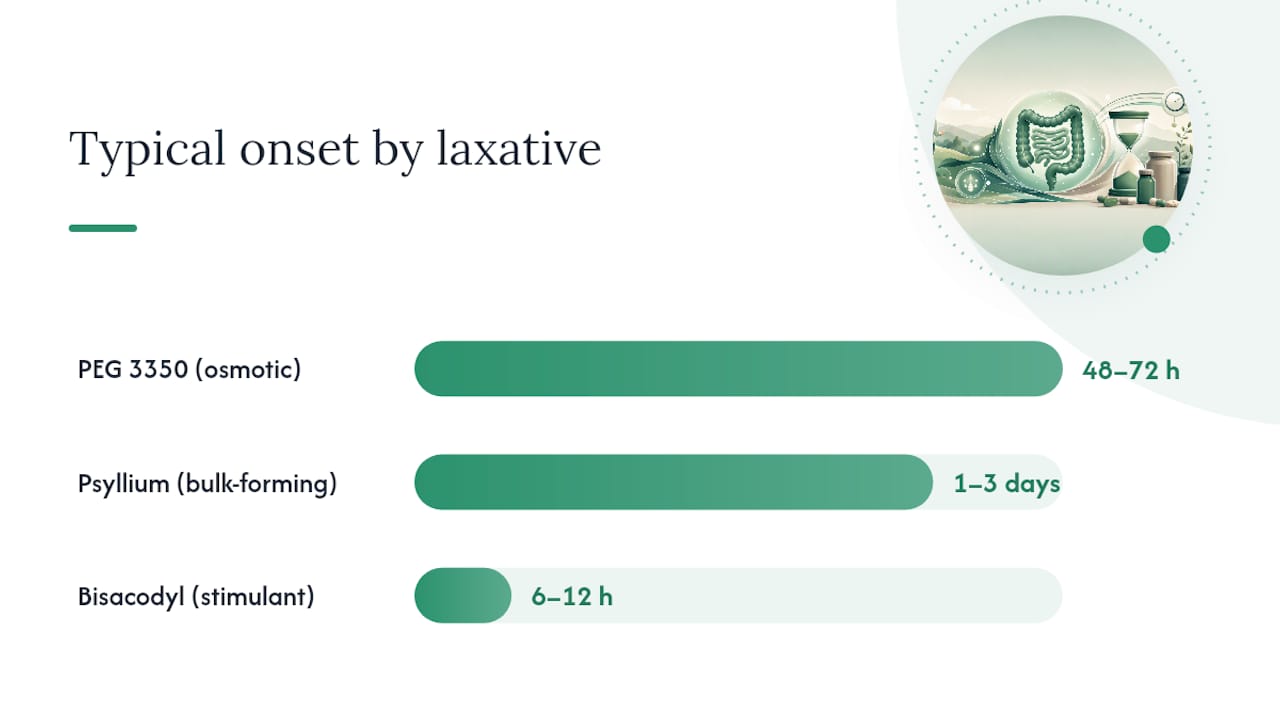
A few practical notes: psyllium needs real water intake to work, not just the powder itself, or it can make things worse. Stimulant laxatives shouldn’t become a daily habit; if you find yourself reaching for bisacodyl more than once or twice a week, that’s a signal to talk to your prescriber. And if you’ve had prior bowel surgery, a history of severe or chronic constipation, or you’re on multiple other medications, mention that up front so your plan accounts for it.
When Should You Contact Your Prescriber?
Most constipation on a GLP-1 responds to self-care within a few days. Certain signs mean it’s time to call, not wait it out.
- Severe or worsening abdominal pain or cramping
- Persistent vomiting
- Visible abdominal distension
- Inability to pass gas or stool at all
- Fever
- Blood in the stool or black, tarry stools
If you’ve gone more than three to four days without a bowel movement despite trying PEG 3350 and the other steps above, call your prescriber rather than escalating laxatives on your own. Before that call, jot down how often you’ve gone, what your stool looks like using the Bristol Stool Chart, and whether nausea or pain comes with it. That detail helps your clinician decide fast, without a round of back-and-forth questions first.
Preventing Constipation Before It Starts
The best time to deal with GLP-1 constipation is before your next dose increase, not after.
- Sip water on a schedule rather than waiting until you’re thirsty. Appetite and thirst signals dull together on these medications, and it’s easy to under-drink without noticing.
- Add soluble fiber gradually over one to two weeks rather than all at once.
- Keep moving daily, even a short walk, and try to use the bathroom at a consistent time each day to build a routine your gut responds to.
- Review your other medications with your prescriber for anything else that slows the gut, like certain antihistamines or opioids.
Pro Tip: If you’ve had constipation issues before starting your GLP-1, some providers recommend pre-loading PEG 3350 about a week before your first dose or before a dose increase, rather than waiting for symptoms to show up.
GLP-1 Constipation and Other Medications or GI Conditions
Constipation rarely happens in isolation, and other medications or existing gut conditions can compound what a GLP-1 is already doing to your transit time. Opioid pain medications, certain antihistamines, iron supplements, and some blood pressure medications all slow the gut independently. Stack one of those on top of a GLP-1 and mild constipation can turn into a stubborn one fast.
Ondansetron deserves particular attention here because it’s so commonly prescribed alongside GLP-1s for nausea, yet it works by slowing GI motility, the same mechanism causing your constipation in the first place. If you’re on both, ask whether prochlorperazine or a nonpharmacologic approach makes more sense for you.
If you have irritable bowel syndrome with a constipation-predominant pattern, prior bowel surgery, diverticular disease, or a history of severe or chronic constipation, your baseline risk is already higher before a GLP-1 enters the picture. This is exactly why documenting your bowel habits before starting therapy matters: clinicians who know your baseline can flag high-risk patients early and set expectations, or even start a preventive laxative regimen, rather than reacting after symptoms are already severe.
Polypharmacy in general, meaning several medications taken at once, raises the odds of an interaction you might not expect. If you’re on multiple prescriptions, a full medication review with your pharmacist or prescriber before starting or increasing a GLP-1 dose is worth the ten minutes it takes.
Do Probiotics Help With GLP-1 Constipation?
Probiotics come up often in conversations about gut health, and it’s reasonable to wonder whether they’d help with GLP-1-related constipation specifically. The honest answer is that the mechanism driving this type of constipation, slowed gastric emptying and reduced intestinal contractions, isn’t primarily about gut bacteria balance. It’s a motility problem, not a microbiome problem, which is why PEG 3350 and hydration tend to outperform probiotic supplements for this particular side effect.

That doesn’t mean gut health habits are irrelevant. A diet with a variety of plant fibers, fermented foods like yogurt or kefir, and adequate hydration supports overall digestive function, and some people report feeling more regular overall when they combine these habits with their GLP-1 routine. But treat probiotics as a general wellness habit rather than a targeted fix for medication-induced constipation. If you want to try one, look for it as an addition to the steps already outlined here, hydration, movement, gradual fiber, and PEG 3350 when needed, not a replacement for them.
Magnesium-based supplements sometimes get mentioned in the same breath as probiotics for this issue. Magnesium citrate does have a genuine osmotic laxative effect, distinct from probiotics, but it’s worth discussing with your prescriber first, especially if you have kidney issues or take other medications that affect electrolyte balance.
A Note on Working With Your Care Team
Most constipation on a GLP-1 is manageable with the simple steps outlined above and, when needed, a dose adjustment made together with your prescriber. Use the stepwise protocol here as your starting point, and write down your symptoms before your next visit so that conversation is quick and productive.
Getting Guided Support for GLP-1 Side Effects
Reading a stepwise protocol is one thing. Having a clinician actually watching your titration schedule and adjusting it before constipation gets bad is another. Legacy Meds pairs every patient with ongoing provider access, so if constipation shows up during a dose increase, you’re not guessing at PEG 3350 dosing alone or wondering whether to push through to your next dose. You get a free provider visit to review symptoms and, if needed, a plan to hold your current dose, add a laxative regimen, or adjust your titration schedule.

That kind of responsive care matters more than it sounds, because the difference between mild, short-lived constipation and a week of misery often comes down to catching it early and adjusting fast. Legacy Meds includes unlimited coaching access as part of its program, with no membership fees or insurance required to get started. If you’re currently on a GLP-1 and managing side effects on your own, or considering starting one and want a program built around ongoing support rather than a one-time prescription, you can start a GLP-1 program with provider support and get your first assessment scheduled.
Sources
- Clinical recommendations to manage gastrointestinal adverse events with GLP-1 RAs (multidisciplinary expert consensus)
- Mechanistic review: GLP-1 effects on GI motility (2026 DOI)
Bring any of these to your next appointment if you want to talk specifics with your prescriber.
This article is general information, not a substitute for advice from a qualified doctor. Consult a qualified healthcare professional about your own circumstances before acting on anything here.
FAQ
What is the best laxative for GLP-1 constipation?
Polyethylene glycol (PEG 3350, sold as MiraLAX) is generally considered first-line because it softens stool osmotically without the cramping associated with stimulant laxatives like bisacodyl.
How do you fix constipation on semaglutide?
Start with consistent hydration, gentle daily movement, and gradual soluble fiber, then add PEG 3350 if you haven’t had a bowel movement within a day or two; a clinician-guided dose adjustment may help if symptoms persist.
How long is too long to not have a bowel movement on semaglutide?
If you haven’t passed stool in three to four days despite trying PEG 3350 and basic self-care, contact your prescriber rather than continuing to wait it out.
Is fiber safe to use for GLP-1 constipation?
Yes, but add it gradually. Introducing a large amount of fiber all at once into an already slow-moving gut often increases bloating and gas instead of solving the problem.
Can Legacy Meds help if I’m already having constipation on my GLP-1?
Yes. Legacy Meds patients get provider visits and ongoing coaching included, so you can get guidance on laxative choice, dose timing, and whether to hold or adjust your titration schedule.