

Yes, you should exercise on semaglutide, and the focus matters more than the sweat. Prioritize resistance training alongside aerobic activity to preserve muscle while the medication drives fat loss. Start gradually, especially during dose escalation, and talk to your prescriber before ramping up intensity. Below: a weekly plan, muscle-protecting nutrition targets, and the safety rules that keep workouts productive instead of risky.
TL;DR:
- Resistance training at 65% or more of one-rep max twice weekly is essential to prevent skeletal muscle loss during semaglutide treatment.
- Consuming 1.2 to 1.5 grams of protein per kilogram of body weight daily, spread across four to five meals, supports muscle preservation.
- Avoid high-intensity workouts during dose escalation and always manage nausea with small, low-fat meals and proper hydration.
- Personalized, supervised exercise programs yield better lean mass retention than generic advice, with simple at-home resistance band routines being effective.
- Regular provider visits and coordinated care improve exercise safety and effectiveness amid medication adjustments and side-effect management.
Table of Contents
- Exercise on Semaglutide: A Weekly Plan That Actually Works
- Protecting Muscle Mass While You Lose Fat
- Managing Side Effects Without Skipping Workouts
- Why Structure Beats Generic Advice
- A Coordinated Approach to Medication and Movement
- Getting Support to Match Your Exercise Plan
- Sources
- FAQ
Exercise on Semaglutide: A Weekly Plan That Actually Works
The goal isn’t more exercise. It’s the right mix, done consistently enough to matter. Physical activity guidelines for Americans call for at least 150 minutes of moderate aerobic activity per week, or 75 minutes of vigorous work, plus resistance training two to three times weekly. That’s the baseline for cardiometabolic health. On semaglutide, resistance training becomes the piece you can’t skip.
A workable week looks like this:
- Monday — Full-body strength session (45 minutes)
- Tuesday — Moderate cardio: brisk walk, cycling, or swimming (30 minutes)
- Wednesday — Full-body strength session (45 minutes)
- Thursday — Mobility and stretching (20 to 30 minutes)
- Friday — Full-body strength session (45 minutes)
- Saturday — Cardio, slightly longer or more vigorous (30 to 45 minutes)
- Sunday — Rest
A sample strength session doesn’t need a gym membership or an hour you don’t have:
- Warm-up: 5 minutes of light cardio plus dynamic stretches
- Three compound movements: squats, push-ups (or bench press), and rows or deadlift variations, 3 sets of 8 to 12 reps
- Two accessory moves: lunges and a core exercise like planks, 2 to 3 sets
- Cooldown: 5 minutes of static stretching
Beginners can substitute bodyweight versions of each lift and still get real strength gains. The Cleveland Clinic’s guidance for GLP-1 patients backs this exact structure, framing resistance training as the non-negotiable half of the equation, with cardio filling in the rest.
Protecting Muscle Mass While You Lose Fat
Here’s the number that should shape your whole approach: some GLP-1 trial participants lost close to 10% of their skeletal muscle mass over 68 to 72 weeks of treatment. That’s not a rounding error. It’s muscle you built over years, gone during a weight-loss window where you had the chance to protect it.
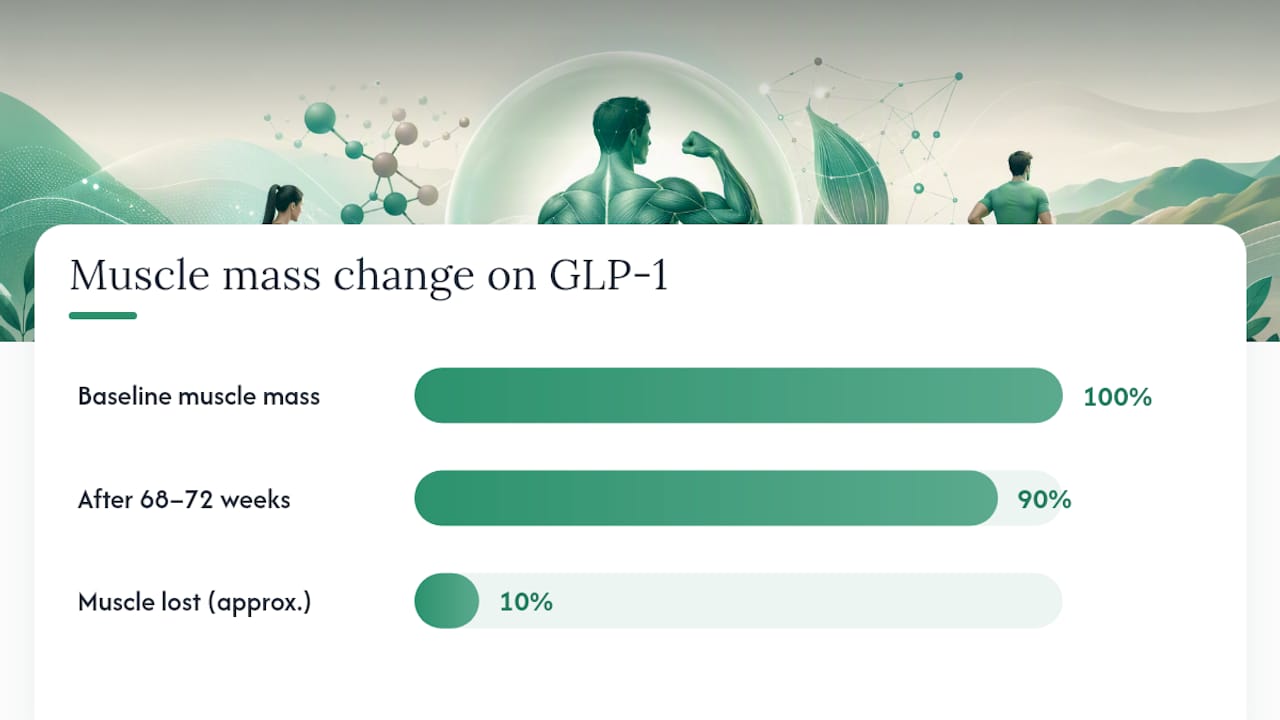
Two levers matter most: protein and resistance intensity.
Protein. Aim for roughly 1.2 to 1.5 grams per kilogram of body weight daily, a range echoed in international consensus guidance on nutrition during GLP-1 therapy. Appetite suppression makes hitting that target harder than it sounds, so structure matters more than willpower.
- Front-load protein at breakfast, before appetite drops for the day
- Keep a protein shake or ready-to-drink option on hand for low-appetite days
- Choose dense sources (Greek yogurt, eggs, lean meat) over volume-heavy ones when you’re full fast
Resistance intensity. Moderate-to-high intensity, aiming for roughly 65% or more of your one-rep max when it’s safe to test that, drives the progressive overload that protects lean tissue. Research on incretin therapies and exercise found supervised resistance training at this intensity largely prevented the lean-mass loss seen without it.
Pro Tip: If full meals feel impossible some days, split your protein target across four or five smaller servings instead of three big ones. It’s easier on a suppressed appetite and just as effective for muscle retention.
Sleep and recovery aren’t optional extras here either. Muscle repairs during rest, and skimping on it while your body is already in a calorie deficit compounds the loss risk.
Managing Side Effects Without Skipping Workouts
Nausea and mild GI upset are the most common reasons people cut a workout short on semaglutide, particularly during dose increases. A few adjustments handle most of it:
- Eat smaller, lower-fat meals before training instead of one large meal
- Hydrate consistently through the day, not just around workouts
- Push back high-intensity sessions until nausea settles, and swap in a walk instead
If you’re also on insulin or a sulfonylurea, low blood sugar is a real risk during exercise, since physical activity itself lowers glucose. Check levels more frequently around workouts and carry fast-acting carbs (glucose tabs, juice) in case symptoms hit.
Timing matters too. Avoid fasted, high-intensity sessions early in your dose escalation, when GI symptoms and energy dips are most unpredictable. A light meal an hour or so before moderate exercise is usually safer than training on empty.

Contact your provider promptly if you experience persistent vomiting, dizziness that doesn’t resolve with rest, chest pain, or signs of dehydration. Legacymeds’ medication safety resource covers the full list of symptoms that warrant a call rather than a wait-and-see approach.
Why Structure Beats Generic Advice
Telling someone to “add more exercise” rarely works. Evidence reviews on GLP-1 therapy consistently show that advice alone leads to poor adherence and continued muscle loss, while individualized, supervised programs hold onto lean mass far more reliably.
You don’t need a personal trainer five days a week to get that benefit. Practical, low-cost options include:
- A resistance-band program you can do at home in under 30 minutes
- A repeatable three-move full-body session (squat, push, pull) done consistently
- A short group class or a handful of sessions with a trainer to check your form early on
Pro Tip: Track one measurable strength marker, like your squat reps at a given weight or your resting step count, and revisit it every four weeks. Progress you can see keeps you consistent longer than a scale number ever will.
Pair that with a periodic check on functional strength or body composition if it’s available, and you’ve got a feedback loop that generic advice never gives you.
A Coordinated Approach to Medication and Movement
Semaglutide works best as part of a plan, not a prescription handed over on its own. Legacymeds structures care around that idea: dose titration coordinated with lifestyle guidance, not separated from it. If you’re building a strength habit or hitting new soreness thresholds, that belongs in your next provider check-in, not something you figure out solo. Pairing regular clinical visits with periodic trainer or physical therapy input, even occasionally, catches problems early and keeps your training aligned with where your dose actually is.
— Bryan
Getting Support to Match Your Exercise Plan
Building the routine above is easier when your medication plan is actually built around you, not a one-size dose schedule. Legacymeds runs clinician-supervised GLP-1 programs, meaning your titration schedule, side-effect management, and exercise questions all get handled by the same provider relationship rather than passed between different offices.
Every patient gets provider visits and ongoing coaching access included, no membership fee and no insurance requirement standing between you and a plan that adjusts as your training load changes. That matters most during the weeks when nausea, energy shifts, or a new resistance program calls for a conversation instead of a guess. If you want a plan that fits your workouts instead of working against them, check the GLP-1 program details to see what starting looks like, or review the pricing and program FAQ first if you have questions before signing on.
Sources
For deeper reading on training design during weight loss, see this body recomposition guide for athletes, plus the CDC’s adult activity guidelines.
This article is general information, not a substitute for advice from a qualified doctor. Consult a qualified healthcare professional about your own circumstances before acting on anything here.
- UC Davis Health examines systemic impact of GLP-1–based therapies
- Randomized trials and reviews on GLP-1 and exercise (PMC article)
- Physical Activity Guidelines for Americans, 2nd edition
FAQ
Should I work out while on semaglutide?
Yes. Combining resistance training with moderate aerobic activity helps preserve muscle and supports better fat-loss outcomes than medication alone, according to trial evidence on GLP-1 and exercise.
What should I avoid while on semaglutide?
Avoid fasted high-intensity workouts during dose escalation, skipping meals before training, and ignoring persistent nausea or dizziness, all of which raise the risk of dehydration or low blood sugar during exercise.
Can you work out while using semaglutide if you feel nauseated?
Light activity like walking is usually fine, but delay intense training until GI symptoms settle, and prioritize smaller, lower-fat meals beforehand to reduce discomfort.
How can I speed up weight loss while on semaglutide without losing muscle?
Add resistance training two to three times weekly at moderate-to-high intensity and hit a protein target of roughly 1.2 to 1.5 grams per kilogram of body weight daily. That combination is what consensus nutrition guidance points to for preserving lean mass while the medication drives fat loss.