

Most people notice appetite changes within the first 72 hours of a semaglutide injection, but measurable weight loss on the scale typically takes 4 to 12 weeks to show up. That gap between “I feel different” and “the number moved” trips up a lot of new patients, mostly because they expect both to happen at once.
Here’s the short version of the timeline:
- First 72 hours: Reduced hunger, smaller portions feel satisfying
- 2 to 4 weeks: Cravings soften further, though the scale may barely budge
- 4 to 12 weeks: Measurable weight loss becomes visible on a weekly trend
- 16+ weeks: Trial-level results emerge, with average losses building toward 15% to 16% of body weight by 68 weeks
Individual response varies a lot based on dose, adherence, and metabolic starting point, so treat these as ranges, not promises, and follow your prescriber’s titration plan rather than someone else’s timeline.
Key Takeaways
| Point | Details |
|---|---|
| Appetite changes first | Most people notice reduced hunger within 72 hours, well before the scale moves. |
| Measurable loss by 4 to 12 weeks | Weekly weight trends typically become consistent within this window. |
| Trial peak around 68 weeks | STEP data show average loss of 15% to 16% of body weight at this milestone. |
| Titration takes 16 to 20 weeks | Reaching the full maintenance dose gradually is normal, not a delay in treatment. |
| Stopping reverses gains | Trial data show weight regain after discontinuation, favoring ongoing treatment. |
| Legacymeds aligns support to this timeline | Personalized titration and unlimited coaching help patients manage each phase without guesswork. |
Table of Contents
- How Semaglutide Suppresses Appetite and Triggers Weight Loss
- Semaglutide Results by Week: The Full Timeline
- What the STEP and SELECT Trials Show About Timing
- Why Your Semaglutide Timeline Might Look Different
- Why Semaglutide’s Early Doses Feel Weak
- When Do Semaglutide Side Effects Show Up?
- How to Know Semaglutide Is Actually Working
- How Legacymeds Supports You Through Every Stage of Treatment
- Sources
- FAQ
How Semaglutide Suppresses Appetite and Triggers Weight Loss
Semaglutide works by activating GLP-1 receptors in the brain and gut, which dulls hunger signals and slows how fast food leaves the stomach. That slower gastric emptying is why a normal-sized meal starts feeling like plenty.

The injection itself is once weekly, and blood levels of the drug reach a peak within days of a dose. But peak drug level and peak effect aren’t the same thing. Full therapeutic exposure builds gradually as the medication accumulates in the body over several weeks of consistent dosing, which is part of why early doses feel milder than later ones.
There are really two separate effects happening on two different timelines:
- Central appetite signaling (brain): This dulls hunger and cravings, often within days, since it depends on receptor activation rather than accumulated dose.
- Peripheral GI effects (stomach and gut): Slower digestion causes early fullness and can also cause nausea, which is why some side effects show up before any real weight change does.
That’s the key mental model. The appetite switch flips fast. The scale catches up slower, especially in the first month while the dose is still low.
Semaglutide Results by Week: The Full Timeline
The pattern most people follow: appetite shifts within days, the scale starts moving within a couple of months, and the bigger trial-level results build over a year or more. Here’s how that plays out in practice.
| Timeframe | What typically happens |
|---|---|
| 0 to 72 hours | Appetite noticeably softer; some mild nausea possible |
| Week 1 | Smaller portions feel satisfying; scale usually unchanged |
| Weeks 2 to 4 | Cravings continue to fade; early, small weight loss for some |
| Weeks 4 to 12 | Measurable weight loss becomes consistent on a weekly trend |
| Weeks 12 to 20 | Titration to maintenance dose completes for most patients |
| Weeks 16 to 68 | Trial-level results accumulate, averaging 15% to 16% loss at 68 weeks |
| Weeks 68 to 208 | Weight loss plateaus and stabilizes with continued treatment |
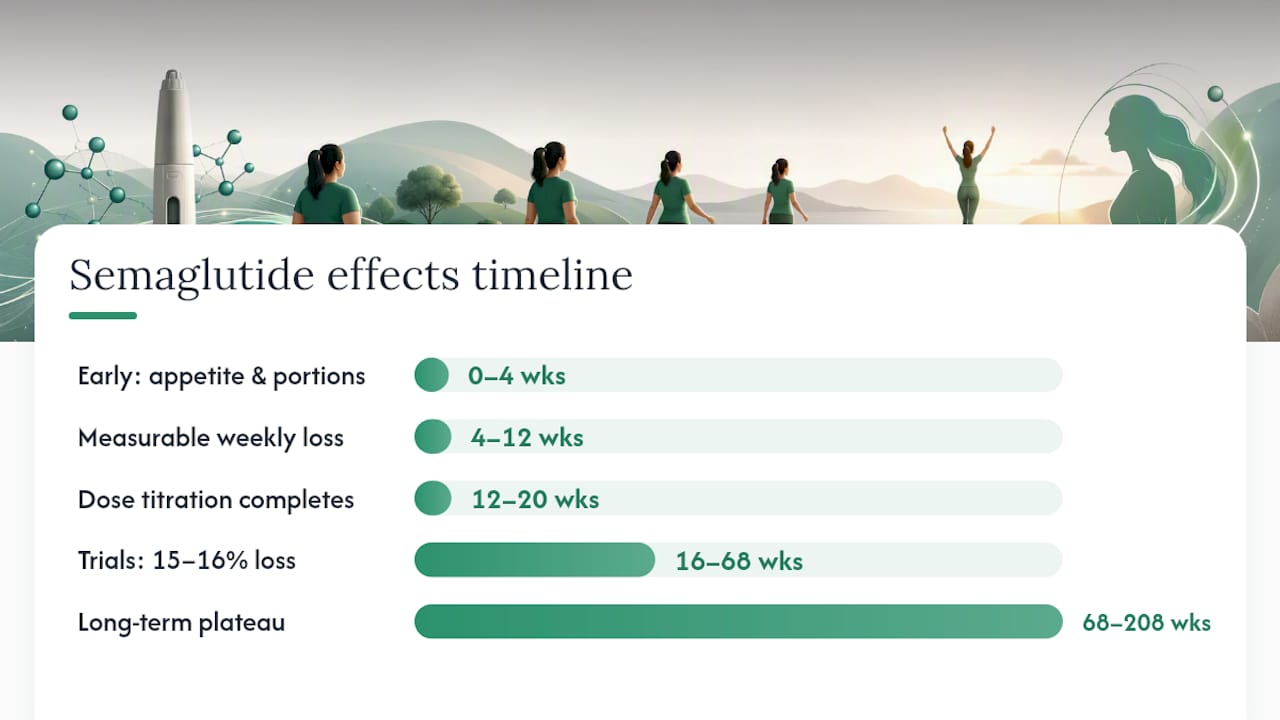
A few things worth flagging inside that table. The 4 to 12 week window is where most people first see a real trend on the scale rather than daily noise.
What does that look like in pounds? A 200-pound person losing 10% would be down 20 pounds; at 15%, that’s 30 pounds. A 250-pound starting point at the same 15% mark works out to roughly 37 to 38 pounds. These are trial averages, not guarantees, and plenty of people land above or below them.
- First trend, not first pound: Don’t judge progress by a single day’s weigh-in. Track a 7-day rolling average instead.
- The plateau isn’t failure: Weight loss naturally slows after the first year as the body reaches a new equilibrium.
- Titration length varies: Some people need extra time at a lower dose before moving up, which shifts the whole timeline later.
What the STEP and SELECT Trials Show About Timing
The clearest evidence on how fast and how much semaglutide works comes from the STEP program, a series of phase 3 trials that put the drug through structured, placebo-controlled testing. Patients on the 2.4 mg maintenance dose lost an average of roughly 15% to 16% of body weight by week 68, with weight loss continuing at a meaningful pace through about week 60 before flattening.
Longer-term data extends the picture further. The SELECT trial followed patients over multiple years and found weight loss held up through 208 weeks, roughly four years, with clinically meaningful reductions maintained across most subgroups. That’s a different question than “does it work” and closer to “does it keep working,” and the answer trends yes as long as treatment continues.
Trial milestones roughly break down like this:
- Week 16: Early trial results already show noticeable separation from placebo
- Week 52: Substantial average weight loss, continuing to build
- Week 68: Peak commonly cited trial figure, ~15% to 16% average loss
- Week 208 (SELECT): Sustained loss maintained years into treatment
One detail that surprises new patients: STEP trial designs that switched some participants to placebo mid-study found those patients regained weight after stopping active treatment. The takeaway isn’t that semaglutide “stops working.” It’s that ongoing therapy, not a fixed course, is what the trial data actually supports for sustained results.
Why Your Semaglutide Timeline Might Look Different
Several factors shift how fast someone responds, and dose exposure is the biggest one. Someone who reaches the full maintenance dose on schedule will typically see faster, larger results than someone who needs extended time at a lower dose for tolerability reasons.
- Adherence: Missed or delayed weekly doses slow accumulation and blunt results.
- Titration pace: A slower ramp-up (common for GI sensitivity) means a slower start, not a worse outcome.
- Baseline metabolic health: People with insulin resistance or type 2 diabetes sometimes respond differently than those without.
- Sex and age: Response magnitude varies across these groups in trial data.
- Genetics: Research has identified genetic predictors that influence both how much weight someone loses and how likely they are to experience side effects.
- Lifestyle inputs: Diet quality and activity level compound with the medication rather than replacing its effect.
If your results feel slower than a friend’s, it’s usually one of these variables at play rather than the medication failing. Genetic and metabolic variability alone can explain a meaningful chunk of the difference between two people on the exact same dose.
Pro Tip: Keep a simple weekly log of weight, appetite level (1 to 10), and any side effects. That pattern is far more useful to your prescriber than a single number on any given day, and it makes dose adjustments more precise.
Why Semaglutide’s Early Doses Feel Weak
Reaching the full 2.4 mg maintenance dose typically takes 16 to 20 weeks, and that slow ramp is intentional, not a flaw. The starting dose exists to reduce nausea and other GI side effects, not to produce weight loss.
A common titration schedule looks like this, though your prescriber may adjust it:
- Weeks 1 to 4: 0.25 mg, a sub-therapeutic dose meant purely for tolerability
- Weeks 5 to 8: 0.5 mg
- Weeks 9 to 12: 1 mg
- Weeks 13 to 16: 1.7 mg
- Week 17 onward: 2.4 mg maintenance dose (for most weight-management regimens)
- Schedules vary by prescriber and by product, so treat this as a general framework, not your specific plan.
- Never adjust your own dose or skip steps; follow the safety guidance your provider sets for your titration.
The practical effect: real weight-loss momentum tends to show up once you’ve spent meaningful time at 1.7 mg or higher, which is exactly why the first month or two can feel underwhelming compared to what you’ve read about the 68-week trial results.
When Do Semaglutide Side Effects Show Up?
GI side effects tend to appear early, often within the first days to weeks, and they can shape how effective the medication feels even before any weight changes register. Nausea is the most common early complaint, and it usually tracks with dose increases.
- Nausea: Most common in the first weeks after a dose increase
- Constipation or diarrhea: Can appear early and persist intermittently
- Vomiting: Less common, usually tied to moving up too fast
- Appetite changes: Often the very first thing patients notice, sometimes within 72 hours
Rare but serious risks exist too, including pancreatitis and gallbladder issues, and the FDA prescribing information outlines when to seek immediate care. Contact your provider for severe abdominal pain, persistent vomiting, or signs of an allergic reaction.
Pro Tip: If nausea is intense, try smaller, lower-fat meals and sip water steadily through the day rather than in large amounts at once. Mention it to your provider before your next dose increase, not after.
How to Know Semaglutide Is Actually Working
Appetite change usually shows up before the scale does, so don’t wait for a dramatic number to conclude the medication isn’t working. Track a mix of signals instead of fixating on one.
- Weekly weight trend: A downward slope over several weeks, not a single day’s reading
- Appetite and cravings: Fewer intrusive food thoughts, easier to stop eating when full
- Clothing fit: Often changes before the scale reflects it, especially around the waist
- Energy levels: Many patients report steadier energy as portion sizes normalize
If you’ve reached your maintenance dose and gone 12 weeks with no measurable change, or side effects feel unmanageable, that’s the point to call your provider rather than push through alone.
Real-World Outcomes Alongside the Clinical Data
Patients working with Legacymeds tend to see outcomes that track closely with the trial trajectories described above, while individual timelines still vary widely based on starting weight, adherence, and metabolic factors. Reported outcomes across the Legacymeds patient base include:
- Personalized titration plans built around tolerability, not a one-size schedule
- Ongoing coaching and provider access throughout treatment, not just at intake
- Reported average outcomes trending toward the 15%+ range seen in trial data, understood as an aggregate figure rather than an individual promise
Individual results vary significantly based on dose, adherence, and personal metabolic factors. Always discuss your specific expected timeline with your prescribing provider.
A Realistic Mindset for the Months Ahead
Semaglutide is a long-term management tool, not a quick fix, and expecting instant results sets you up to quit right before the curve steepens. Patience during the titration phase matters more than most people expect.
- Expect the first month to feel slow. That’s the dose working on tolerability, not on the scale.
- Celebrate appetite wins early. They’re the leading indicator, not a consolation prize.
- Pair the medication with real lifestyle changes. It amplifies effort, it doesn’t replace it.
Pro Tip: Share a simple weekly tracker with your provider, weight, appetite score, and side effects. It gives them the data to fine-tune your plan faster than a vague “I think it’s working” conversation.
How Legacymeds Supports You Through Every Stage of Treatment
Legacymeds gets you started with real medical oversight instead of a guessing game, pairing an online provider assessment with a titration plan built for your tolerability, not a generic schedule. The program includes free shipping and unlimited coaching for the full course of treatment, with no membership fees or insurance requirement standing between you and your next dose.

That ongoing support matters most in exactly the weeks this article covers: the slow-feeling first month, the titration climb, and the plateau that comes later. You get a provider who can adjust your plan in real time and a coaching relationship that keeps you accountable between check-ins, rather than leaving you to interpret trial data on your own.
If you’re ready to see where you’d start, the Legacymeds program page walks through eligibility, safety screening, and what your first weeks would look like. You can also check pricing and program details before you commit to anything.
Sources
This article draws on the NEJM STEP trial report, the SELECT long-term trial analysis, Cleveland Clinic’s clinical guidance, the FDA prescribing label, and genetic response research.
This article is general information, not a substitute for advice from a qualified doctor. Consult a qualified healthcare professional about your own circumstances before acting on anything here.
- Once-Weekly Semaglutide in Adults with Overweight or Obesity
- Genetic predictors of GLP-1 receptor agonist weight loss and side effects
FAQ
How long will it take to lose 20 pounds on semaglutide?
For a 200-pound person, 20 pounds is roughly 10% of body weight, a level many patients reach somewhere in the 3 to 6 month range depending on dose and adherence, though trial averages build most steeply through the first year.
Is losing 2 pounds a week on semaglutide good?
Two pounds a week is on the faster end and not unusual during the steepest part of the response curve, but sustainable trial averages tend to be more gradual over 68 weeks, so slower loss doesn’t mean the medication isn’t working.
How long does it take to start losing weight on semaglutide?
Most people see appetite changes within 72 hours, while measurable weight loss on the scale typically appears within 4 to 12 weeks of starting treatment.
How will I know if semaglutide is working?
Track appetite and cravings first, since they often shift before the scale does, then watch your weekly weight trend, clothing fit, and energy levels over several weeks rather than judging by any single day.
Does tirzepatide follow the same results timeline as semaglutide?
Tirzepatide, another GLP-1 based medication, follows a broadly similar pattern of early appetite suppression followed by gradual weight loss over months. It works on an additional receptor pathway, and its own trial data should be reviewed separately from semaglutide’s.