
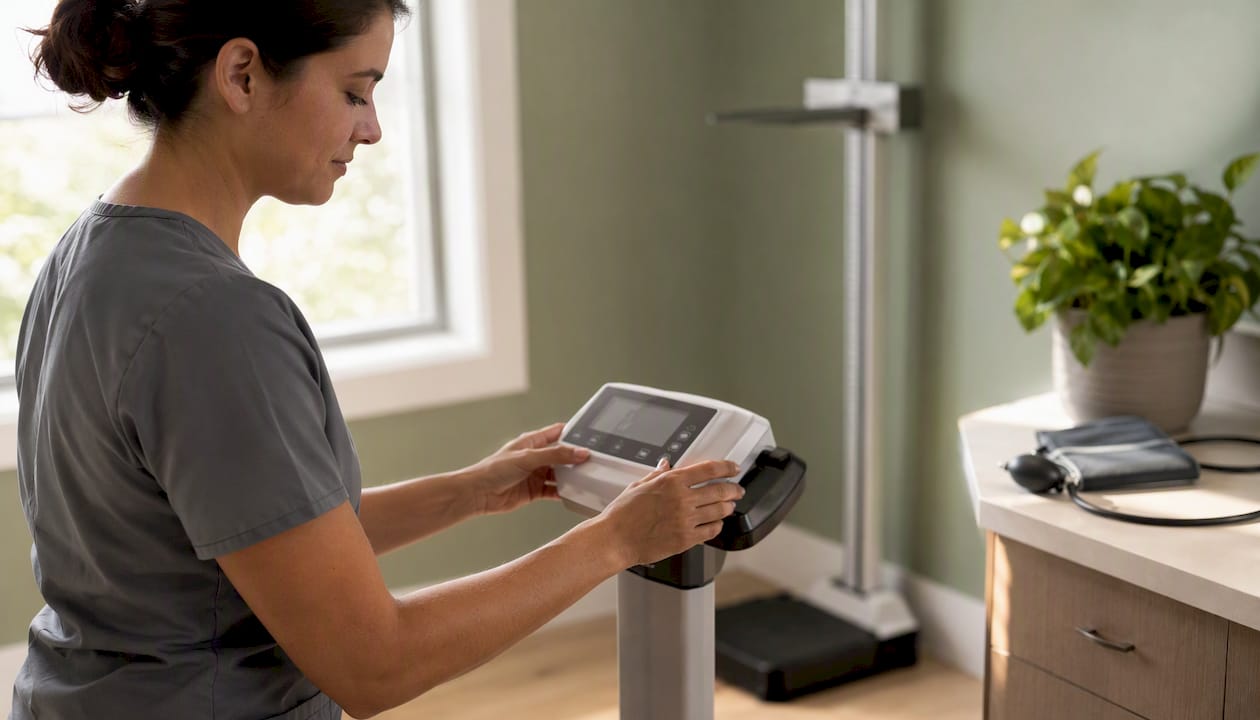
To qualify for Wegovy (semaglutide) in the United States, you need a BMI of 30 kg/m² or higher, or a BMI of 27–29.9 kg/m² plus at least one diagnosed weight-related condition. Those are the labeled thresholds the FDA approved, and they are what clinicians and insurers use as their starting point. Meeting the number is necessary, but not sufficient. A licensed provider must evaluate you, confirm your medical history, and clear you of contraindications before writing a prescription.
Before your first appointment, have these ready:
- Your current clinically measured height and weight (used to calculate BMI)
- A list of diagnosed conditions, especially hypertension, type 2 diabetes, dyslipidemia, or sleep apnea
- Your current medication list, including any other GLP-1 products
- Recent lab results if available (A1c, lipid panel, blood pressure readings)
Pro Tip: Payers and providers strongly prefer a clinically measured weight over a self-reported one. A weight taken at a recent office visit and documented in your chart carries far more weight in a prior-authorization review than a number you entered on an intake form.
Key Takeaways
Wegovy’s labeled BMI thresholds are the foundation for both clinical eligibility and insurer coverage decisions, and documented comorbidities are what unlock access for patients in the 27–29.9 range.
| Point | Details |
|---|---|
| Core BMI thresholds | BMI ≥30 qualifies outright; BMI 27–29.9 requires at least one documented weight-related comorbidity. |
| Comorbidity documentation | Hypertension, type 2 diabetes, dyslipidemia, and sleep apnea are the most commonly accepted qualifying conditions. |
| Measured weight matters | Clinically measured weight in your chart is required for prior authorization; self-reported figures are not accepted by payers. |
| Insurer requirements vary | Commercial, Medicare Advantage, and Medicaid plans each apply different prior-authorization criteria beyond the FDA label. |
| Legacymeds option | Legacymeds offers a free telehealth evaluation and GLP-1 prescription program with no insurance or membership fees required. |
Table of Contents
- What do the Wegovy BMI requirements actually say?
- How to calculate your BMI and which category you fall into
- Which weight-related conditions count toward the comorbidity requirement?
- How insurers actually apply Wegovy eligibility in practice
- Safety checks and contraindications your provider will screen for
- Why BMI is a screening tool, not the whole picture
- How to get a Wegovy prescription: what to do next
- What patients consistently get wrong about Wegovy eligibility
- Legacymeds makes the evaluation process straightforward
- Sources
- FAQ
What do the Wegovy BMI requirements actually say?
The FDA prescribing information for Wegovy is specific. The labeled indication covers adults with an initial BMI of 30 kg/m² or greater (classified as obesity), or adults with an initial BMI of 27–29.9 kg/m² (overweight) who have at least one weight-related comorbidity. The medication is approved as an adjunct to a reduced-calorie diet and increased physical activity, not as a standalone treatment.
The label also covers adolescents aged 12 and older with obesity (BMI at or above the 95th percentile for age and sex), though that indication is separate from the adult criteria most readers are asking about.
One firm limitation: Wegovy cannot be used alongside other semaglutide-containing products, including Ozempic or Rybelsus. If you are already on one of those, your provider will need to address that before initiating Wegovy.
| Indication | BMI Threshold | Additional Requirement |
|---|---|---|
| Obesity | ≥30 kg/m² | None |
| Overweight with comorbidity | 27–29.9 kg/m² | ≥1 weight-related condition |
| Pediatric obesity (12+) | ≥95th percentile for age/sex | Obesity classification |
Key label points:
- Approved for chronic weight management, not short-term use
- Must be combined with diet and exercise
- Not for use with other semaglutide products
- Clinical assessment required regardless of BMI
How to calculate your BMI and which category you fall into
BMI is weight in kilograms divided by height in meters squared. If you use pounds and inches, the NHLBI calculator handles the conversion, or you can use this formula: multiply your weight in pounds by 703, then divide by your height in inches squared.

A quick example: a person who is 5’6" (66 inches) and weighs 190 pounds has a BMI above 30, putting them in the obesity range and above the threshold for Wegovy without needing a comorbidity.
A second example: someone who is 5’8" and weighs 175 pounds has a BMI below 27, which means Wegovy is not labeled for that person regardless of health conditions.
Standard BMI categories used in clinical practice:
Pro Tip: For documentation purposes, use a weight measured at a clinic visit within the past 6–12 months. A home scale reading is fine for your own planning, but a provider-measured weight in your electronic health record is what survives a payer audit.
Which weight-related conditions count toward the comorbidity requirement?
If your BMI sits between 27 and 29.9, you need at least one qualifying condition documented in your medical record. The Wegovy dosing card from Novo Nordisk explicitly lists examples that satisfy this requirement:
- Hypertension (high blood pressure, documented with readings or active medication)
- Type 2 diabetes mellitus (confirmed diagnosis, A1c on file)
- Dyslipidemia (elevated LDL, low HDL, or high triglycerides on a lipid panel)
- Obstructive sleep apnea (diagnosed via sleep study, ideally with CPAP documentation)
- Cardiovascular disease (established coronary artery disease, history of heart attack or stroke)
Conditions like prediabetes, fatty liver disease, or osteoarthritis linked to excess weight may also be considered, but their acceptance varies by provider and payer. The key is objective documentation. A diagnosis code on your problem list, a recent lab value, or a prescription for a condition-related medication all strengthen your case considerably more than a self-reported symptom.
Your provider’s role here is not just to check a box. They confirm the diagnosis is active and clinically relevant, which is what payers look for when they review a prior-authorization request.
Pro Tip: Before your appointment, pull together recent clinic notes, your most recent labs (A1c, lipid panel), and any CPAP prescription or sleep study results. A single consolidated visit note that lists active diagnoses with supporting values can cut prior-authorization back-and-forth significantly.
How insurers actually apply Wegovy eligibility in practice
Knowing the FDA label is step one. Getting your insurer to pay for it is a different process entirely. A Tufts CEVR analysis of U.S. commercial health plans found that while many plans adopt the labeled BMI thresholds as their baseline, they layer on additional requirements that the label itself does not mandate.
Common insurer requirements:
- Documented BMI from a recent clinical visit (not self-reported)
- Evidence of comorbidity for BMI 27–29.9, with supporting ICD-10 codes and labs
- Prior weight-loss attempts documented in the chart (often 3–6 months of a structured program)
- Prior-authorization form completed by the prescribing provider
- Specialist notes in some cases, particularly for complex metabolic histories
Coverage also varies by plan type. Commercial plans differ from Medicare Advantage plans, and Medicaid coverage for Wegovy varies by state. Some Medicare Advantage plans now cover Wegovy for cardiovascular risk reduction following a separate FDA approval for that indication, which has its own documentation requirements.
Coverage insight: Because Wegovy’s label directly defines the indication, payers use it as the template for their own coverage criteria. That means the labeled BMI thresholds are not just a clinical standard; they are the foundation most prior-authorization policies are built on.
For out-of-pocket cost context, see Wegovy cost guidance before assuming insurance will cover the full expense.
Pro Tip: If a prior authorization is denied, request the specific denial reason in writing. Most denials cite a missing document rather than a hard exclusion, and a targeted appeal with the right lab value or clinic note often reverses the decision within 30 days.
Safety checks and contraindications your provider will screen for
Meeting the BMI threshold gets you to the evaluation. Passing the safety screen is what gets you the prescription. Providers work through a standard checklist before initiating Wegovy.
Key contraindications:
- Personal or family history of medullary thyroid carcinoma (MTC) or Multiple Endocrine Neoplasia syndrome type 2 (MEN2): Wegovy carries a boxed warning for thyroid C-cell tumors and is contraindicated in these cases
- Pregnancy: Wegovy is not recommended during pregnancy; women of childbearing potential are typically offered a pregnancy test before starting
- History of pancreatitis: prior episodes raise concern, and providers assess the risk-benefit carefully
- Severe gastrointestinal disease: conditions like gastroparesis may worsen with GLP-1 therapy
- Concurrent use of other semaglutide products: the label prohibits combining Wegovy with Ozempic or Rybelsus
Critical safety note: If you are pregnant or planning to become pregnant, Wegovy is not appropriate. Discontinue use at least two months before a planned pregnancy and discuss contraception with your provider while on treatment.
Patients with type 2 diabetes who are also taking insulin or sulfonylureas face an elevated hypoglycemia risk when adding Wegovy. Clinical trial safety data document this interaction, and glucose monitoring adjustments are typically required. Your provider will review your full medication list and may adjust diabetes drug doses before or shortly after starting Wegovy.
For a full overview of GLP-1 safety considerations, Legacymeds’s medication safety resource covers the key signals in plain language.
Pro Tip: Write down your complete family history of thyroid or endocrine cancers before your visit. Providers ask about first-degree relatives specifically, and having that information ready prevents delays.
Why BMI is a screening tool, not the whole picture
BMI is a population-level index. It divides weight by height squared and produces a number that correlates with cardiometabolic risk across large groups. That is exactly why it became the standard threshold in obesity treatment guidelines, including the clinical guidance on pharmacologic treatment of obesity published on NCBI Bookshelf, which mirrors the FDA’s labeled cutoffs.
The limitation is well understood in clinical practice. BMI does not distinguish between muscle and fat, does not account for fat distribution, and can misclassify older adults or people with athletic builds. A 200-pound person with high muscle mass and a BMI of 29 may carry less metabolic risk than a sedentary person at the same BMI.
Where BMI falls short, clinicians fill in with:
- Waist circumference (a proxy for visceral fat)
- Metabolic labs: fasting glucose, A1c, lipid panel
- Blood pressure readings over time
- Functional status and patient history
The practical implication: if your BMI is near the 27 cutoff and you feel it does not reflect your actual health status, say so directly to your provider. Bring objective data, specifically labs and blood pressure readings, not just a subjective sense that you are healthier than the number suggests. Providers can and do factor in clinical judgment, but they need documented evidence to support it.
Pro Tip: Ask your provider to document waist circumference alongside BMI in your visit note. Some payers and guidelines treat abdominal obesity as an independent metabolic risk factor, and having it on record strengthens the clinical picture.
How to get a Wegovy prescription: what to do next
Getting evaluated is straightforward once you know what to bring. Whether you go through a primary care provider, an obesity medicine specialist, or a telehealth service, the core process is the same.
Step-by-step preparation:
- Calculate your BMI using your most recent measured height and weight
- Pull your current medication list, including supplements and OTC drugs
- Gather your problem list or a recent clinic note listing active diagnoses
- Collect recent lab results: A1c, fasting glucose, lipid panel, blood pressure readings
- Document any prior weight-loss attempts (program names, duration, outcomes)
- Note any family history of thyroid or endocrine cancers
What to expect at the visit:
- Telehealth: intake form, provider review of uploaded documents, video or async consultation, and e-prescription if eligible
- Primary care: in-office vitals, chart review, discussion of goals and history, and referral to a specialist if needed
- Obesity medicine specialist: full metabolic assessment, body composition discussion, and a more detailed prior-authorization package
If you plan to use insurance, your provider will submit a prior-authorization request. Turnaround is typically 5–15 business days for commercial plans, though appeals can extend that. If you are paying out of pocket, the process is faster. Legacymeds offers a telehealth weight loss program with free provider visits and no insurance required, which removes the prior-authorization step entirely for patients who prefer that route.
Common documentation your insurer will want:
- Measured BMI from a clinical visit
- Active comorbidity diagnoses with ICD-10 codes
- Evidence of prior lifestyle interventions
- Provider attestation of medical necessity
What patients consistently get wrong about Wegovy eligibility
The most common mistake is treating BMI as a self-reported number. Patients calculate their BMI at home, decide they qualify, and then show up to a telehealth visit without a recent clinical weight on file. Payers do not accept home scale readings for prior authorization, and a provider cannot document what they have not measured.
The second mistake is assuming that any GLP-1 medication works the same way for coverage purposes. Ozempic and Wegovy both contain semaglutide, but they carry different FDA indications. Ozempic is labeled for type 2 diabetes management; Wegovy is labeled for chronic weight management. Insurers treat them differently, and switching between them is not a workaround for coverage.
Under-documenting comorbidities is the third pitfall. A patient with hypertension who has been on lisinopril for five years may not think to mention it because it feels managed. But that active diagnosis and medication is exactly the kind of documented comorbidity that satisfies the 27–29.9 BMI threshold requirement. Bring everything.
Legacymeds makes the evaluation process straightforward
If you have confirmed your BMI and want to move forward without navigating insurance paperwork, Legacymeds offers a direct path. The program includes a free telehealth provider evaluation, a personalized GLP-1 treatment plan, free shipping, and unlimited coaching support, all without membership fees or insurance requirements.
Patients who qualify receive a prescription for semaglutide or another GLP-1 medication matched to their profile, with ongoing provider access built in. There are no hidden fees between visits, and the program averages an 18% reduction in body weight for patients who complete it. For patients who have already tried lifestyle changes without lasting results, this is a medically supervised alternative that does not require you to decode your insurer’s prior-authorization criteria first.
Start your evaluation at Legacymeds to see if you qualify, or review the weight loss FAQ for answers on pricing and what to expect.
Sources
- WEGOVY highlights - DailyMed
- Pharmacologic Treatment of Overweight and Obesity in Adults - Endotext - NCBI Bookshelf
- How US commercial health plans are covering semaglutide (Wegovy) for obesity management
- Cdc
- Nhlbi
- Now approved dosing card (Wegovy) - Novo Nordisk / Novo Nordisk materials
This article is general information, not a substitute for advice from a qualified doctor. Consult a qualified healthcare professional about your own circumstances before acting on anything here.
FAQ
Can I get Wegovy if my BMI is below 27?
No. The FDA label requires a BMI of at least 27 kg/m², and even at that threshold you need at least one documented weight-related comorbidity. A BMI below 27 does not meet the labeled indication regardless of other health factors.
What disqualifies you from getting Wegovy?
A personal or family history of medullary thyroid carcinoma or MEN2 syndrome is a hard contraindication. Pregnancy, current use of another semaglutide product, and a history of pancreatitis are also common reasons a provider will not prescribe Wegovy.
Can I get a GLP-1 medication if my BMI is under 27?
Wegovy is not labeled for BMI below 27. Other GLP-1 medications carry different indications, so eligibility depends on the specific drug and your diagnosed conditions. A provider evaluation is the only way to determine which options apply to your situation.
Does having type 2 diabetes automatically qualify me for Wegovy?
Type 2 diabetes is one of the qualifying comorbidities for the BMI 27–29.9 threshold, so yes, it satisfies the comorbidity requirement. You still need a BMI of at least 27 and a provider assessment to receive a Wegovy prescription.