

Coverage for Zepbound varies by plan, and there’s no single yes or no answer that applies to every patient. Many commercial insurance plans cover it when you meet prior authorization criteria, while traditional Medicare Part D has historically excluded weight-loss drugs, except for a narrow new exception starting in 2026. If you’re trying to figure out whether insurance covers Zepbound for your specific situation, the fastest path is checking your plan’s formulary directly, not guessing based on what worked for a friend or coworker.
Here’s what to do right now in order:
- Pull up your insurance card and find your Rx BIN and PCN numbers, then log into your pharmacy benefit manager (PBM) portal to search the formulary for “tirzepatide” and “Zepbound.”
- Call your pharmacy and ask them to run a test claim so you get a real, current price instead of an estimate.
- Ask your prescriber’s office whether a prior authorization is already on file or needs to be submitted.
- Check the Zepbound manufacturer’s coverage tool and its savings card program, since Eli Lilly’s own checker can confirm plan-specific status faster than most member services lines.
- If you’re on Medicare, look specifically for Bridge program eligibility rather than assuming standard Part D rules apply.
Your plan’s actual formulary PDF, not a call center script, is the binding document. Everything else is a starting point.
Key Takeaways
Zepbound coverage depends on your specific plan’s formulary and utilization rules, and confirming it directly beats guessing based on your insurer’s name alone.
| Point | Details |
|---|---|
| Coverage varies by plan | Commercial insurers like Kaiser, BCBS, UnitedHealthcare, Aetna, and Cigna cover Zepbound inconsistently, even within the same company. |
| Check the formulary first | Your plan’s official formulary PDF is the binding source, not a phone call to member services. |
| Medicare has a narrow new option | The GLP-1 Bridge program starting July 1, 2026 offers a $50 copay for KwikPen users who meet BMI and comorbidity criteria. |
| Appeals follow a set process | Written denial, PA resubmission, internal appeal, then external review, backed by clinical documentation. |
| No coverage isn’t a dead end | Legacymeds offers telehealth GLP-1 prescriptions and coaching without requiring insurance approval. |
Official Resources Worth Bookmarking
- CMS Medicare GLP-1 Bridge program for eligibility and copay rules.
- Medicare for product-form limits and clinical criteria.
- NAIC’s PBM guidance for understanding formulary structure and how to verify your specific plan.
- XactInsure’s Medicare education resources for a deeper walkthrough of Part D mechanics.
This article is general information, not a substitute for advice from a qualified doctor. Consult a qualified healthcare professional about your own circumstances before acting on anything here.
Table of Contents
- Which Insurance Companies Cover Zepbound?
- What Does the Medicare GLP-1 Bridge Program Cover in 2026?
- What Insurance Requirements Determine Zepbound Coverage?
- How Do I Check If My Plan Covers Zepbound?
- How Much Does Zepbound Cost With and Without Insurance?
- What Should I Do If Zepbound Coverage Gets Denied?
- When Insurance Won’t Cover Zepbound, There’s Still a Path Forward
- Sources
- FAQ
Which Insurance Companies Cover Zepbound?
Coverage falls into four broad categories, and none of them guarantee an automatic yes. Employer-sponsored commercial plans, ACA marketplace plans, Medicare Part D, and state Medicaid programs each handle GLP-1 medications differently, and even two people on the “same” insurer can have different outcomes depending on their specific employer group or plan tier.
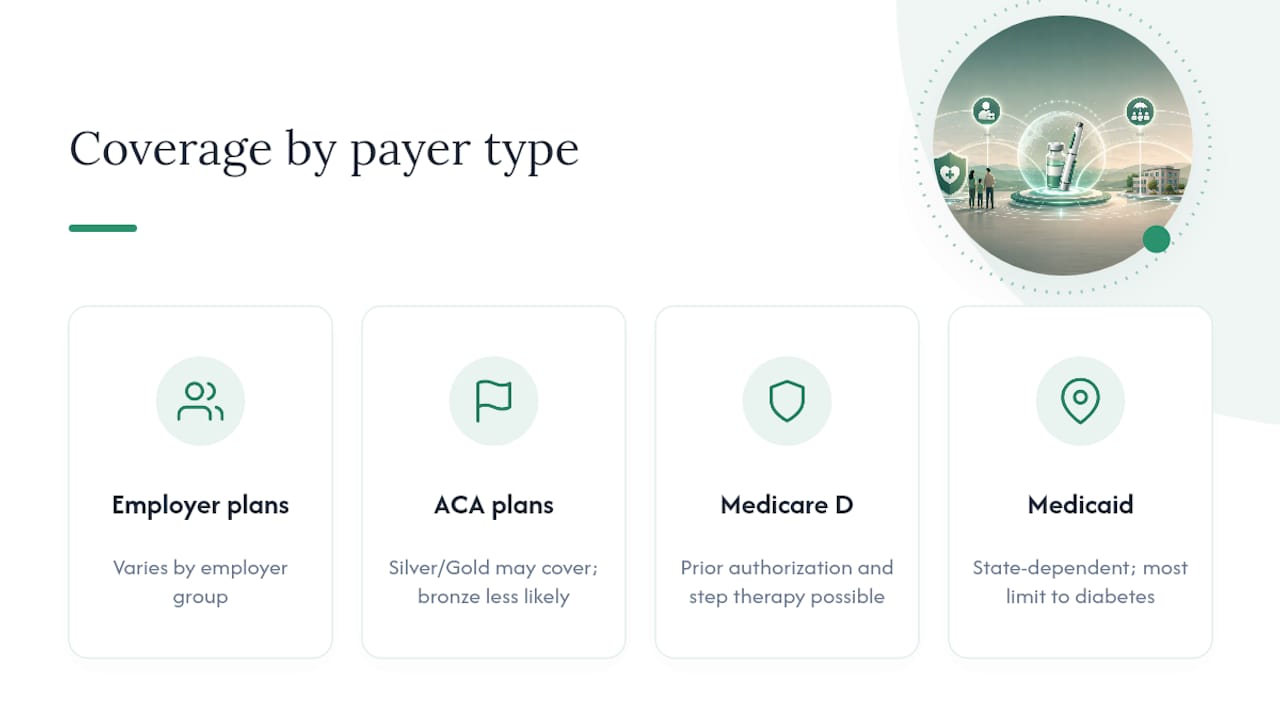
Large commercial carriers like Kaiser, Blue Cross Blue Shield, UnitedHealthcare, Aetna, and Cigna administer thousands of distinct plan designs. A Kaiser HMO in one state might cover Zepbound with a documented BMI over 30 (or 27 with a qualifying condition like hypertension or sleep apnea), while a Blue Cross Blue Shield plan through a different employer might exclude weight-loss drugs entirely as a category, regardless of medical necessity. UnitedHealthcare and Aetna commercial plans frequently require prior authorization plus proof that the patient tried lifestyle intervention or another medication first. Cigna plans often add step therapy, meaning you may need to show you tried a less expensive GLP-1 before Zepbound gets approved.
SingleCare’s research on Zepbound coverage confirms this pattern: commercial and employer-based plans sometimes cover the drug, but coverage varies so widely that prior authorization and step therapy have become the norm rather than the exception.
ACA marketplace plans vary by state and by the specific plan you selected during open enrollment. Some silver and gold tier plans include GLP-1 coverage with strict PA requirements; bronze plans are less likely to cover it at all.
Medicaid coverage depends entirely on your state. A handful of states cover GLP-1 drugs for weight management; most restrict coverage to type 2 diabetes treatment only.
Pro Tip: Don’t rely on your insurance card’s logo to guess coverage. Ask for your plan’s group number and search the formulary specific to that group, since the same insurer can run dramatically different formularies for different employers.
Common flags to watch for across all these payer types: formulary tier placement (higher tiers mean higher copays), prior authorization requirements, step therapy mandates, and quantity limits that cap how many pens you get per month.
What Does the Medicare GLP-1 Bridge Program Cover in 2026?
Traditional Medicare Part D has excluded weight-loss medications for years, but that changes in a limited way this year. Starting July 1, 2026, the Medicare GLP-1 Bridge program lets eligible Part D beneficiaries pay a flat monthly copayment for certain GLP-1 drugs, a dramatic drop from typical list prices.
This monthly copayment does not count toward your Part D deductible or your annual out-of-pocket limit, and Extra Help subsidies cannot be applied on top of it. That means the savings are real, but they don’t accelerate your progress toward catastrophic coverage the way a normal covered drug purchase would.
A few other details matter just as much as the price:
- The program covers the KwikPen device specifically. Single-dose vials and pens outside that format are excluded, so ask your pharmacy which product form your prescription uses before assuming Bridge pricing applies.
- Eligibility runs through documented clinical criteria, including BMI thresholds and qualifying comorbidities such as type 2 diabetes, hypertension, or obstructive sleep apnea, per Medicare.
- Prior authorization for the Bridge program routes through a central CMS contractor rather than your individual Part D plan, which can mean a different (and sometimes slower) approval process than a standard commercial PA.
If you’re on Medicare and your prescriber has recommended Zepbound for weight management rather than diabetes, this program is likely your only realistic coverage path in 2026. Outside the Bridge program, Part D plans still generally treat weight-loss indications as excluded.
What Insurance Requirements Determine Zepbound Coverage?
Four policy levers decide whether your claim gets paid, and understanding them explains why two people with “the same” insurance can get completely different answers.
Formulary tier placement determines your copay before anything else. A drug on tier 2 might cost $40 a month; the same drug on tier 4 (common for newer, expensive brand-name medications like Zepbound) can run several hundred dollars even with insurance.
Prior authorization means your prescriber has to submit clinical documentation before the plan will pay. Step therapy goes further, requiring proof you tried and failed a cheaper alternative first, often another GLP-1 or an older weight-loss drug. Quantity limits cap how many pens or how many months of supply you can fill at once, sometimes forcing repeated reauthorization every 90 days.
Employer plans add another wrinkle. A company can purchase a plan that explicitly excludes weight-loss medications as a category, even if the PBM’s standard formulary would otherwise cover Zepbound. This is a benefits design decision made at the employer level, separate from what the PBM itself typically offers.
Pro Tip: If your claim gets denied and you suspect an employer exclusion, ask HR or your benefits administrator for written confirmation of the exclusion. A denial letter alone doesn’t always specify whether it’s a clinical criteria issue or a blanket plan exclusion, and that distinction changes your appeal strategy entirely.
How Do I Check If My Plan Covers Zepbound?
Confirming coverage takes about 20 minutes if you follow these steps in order, rather than starting with a phone call and hoping for the best.
- Find your Rx BIN, PCN, and group number on the back of your insurance card. These identify which PBM administers your pharmacy benefits, which matters because, as HealthPartners explains, the PBM, not your medical insurer, usually controls the drug formulary and utilization rules.
- Search the PBM’s online formulary for “tirzepatide” (the generic name) and “Zepbound” specifically. Searching only the brand name can miss listings filed under the generic, so check both.
- Pull your insurer’s official formulary PDF. According to guidance from the National Association of Insurance Commissioners, this document is the binding source of truth, more reliable than anything a member services representative tells you verbally.
- Call your pharmacy for a real-time price check. Ask them to run the claim and tell you the exact copay, not an estimate.
- Run the manufacturer’s coverage checker. Eli Lilly’s Zepbound Access & Coverage tool can confirm plan-specific status and flag whether the savings card applies to your situation.
Two scripts worth having ready: to member services, say “Can you confirm whether Zepbound, generic name tirzepatide, is on my formulary, and if it requires prior authorization or step therapy?” To your pharmacy, say “Can you run this as a test claim and give me the exact out-of-pocket cost, plus anything in writing I can use for an appeal if needed?”
Pro Tip: Search by NDC number or “KwikPen” if the brand-name search comes up empty. Some formularies list the drug under its device name rather than its brand name, which trips up a lot of patients doing their own research.
How Much Does Zepbound Cost With and Without Insurance?
Your actual cost depends on which of three scenarios you land in, and the gap between them is wide enough to change how you plan your budget.
Scenario one: covered with standard cost-sharing. Your plan places Zepbound on a covered tier, and you pay a copay or coinsurance percentage, often anywhere from $25 to $150 a month depending on tier placement and whether you’ve met your deductible.

Scenario two: covered but with heavy utilization controls. Your plan technically covers the drug, but only after prior authorization clears and you’re paying a high-tier copay, sometimes north of $200 a month even with insurance in the mix.
Scenario three: not covered. You’re paying cash price or using a manufacturer savings card. Full breakdowns of what patients actually pay in each scenario, including current cash pricing trends, are worth reviewing on Legacy Meds’ Zepbound cost guide.
The manufacturer’s savings card can meaningfully reduce the uncovered price for commercially insured patients, but it comes with a catch: government insurance programs like Medicare and Medicaid are typically excluded from savings card eligibility, so this option mainly helps people with commercial coverage who face high copays or no coverage at all.
Before committing to a payment path, ask your pharmacy to price the prescription three separate ways: through insurance, with the manufacturer card applied, and at straight cash price. Compare that against discount tools like SingleCare, which sometimes beats both insurance copays and cash price depending on your location and pharmacy.
Pro Tip: Get the three-way price comparison in writing or by email. It’s useful both for your own budgeting and as documentation if you end up filing an appeal later.
What Should I Do If Zepbound Coverage Gets Denied?
A denial isn’t the end of the road, and most successful appeals follow a predictable sequence.
- Request the written denial letter, which should state the exact reason (clinical criteria not met, plan exclusion, or missing documentation).
- Ask your plan for the specific prior authorization criteria you need to satisfy.
- Have your prescriber submit a formal PA request with supporting clinical documentation.
- If denied again, file an internal appeal through your insurer.
- If that fails, request an external review, which brings in an independent party to evaluate the decision.
Your prescriber’s documentation matters more than anything else in this process. Build an appeal file that includes:
- Clinical notes documenting BMI and relevant comorbidities
- Records of prior weight-management attempts, including any medications already tried
- Lab results like A1C or sleep study findings if applicable
- A letter of medical necessity written by your prescriber
Pro Tip: If your health is being significantly affected, ask specifically for an expedited review. Standard appeals can take weeks; expedited reviews are legally required to move faster, and most plans have to tell you the exact timeline when you ask.
A Realistic Look at What Patients Actually Go Through
Most patients trying to get a GLP-1 drug covered run into a similar sequence: formulary confusion, being bounced between the insurer and the PBM, and at least one prior authorization denial before approval, if approval happens at all. Quantity limits often mean going through reauthorization again a few months later, even after initial approval.
Coverage also isn’t static. Plan years reset, employers change benefit designs, and a drug covered in January can lose formulary status by the following plan year. Persistence, combined with solid clinical documentation from your prescriber, tends to move the needle more than any single phone call. When in doubt, the manufacturer’s own coverage tools and Medicare’s official Bridge program page remain more reliable than secondhand advice from forums or friends with different plans entirely.
When Insurance Won’t Cover Zepbound, There’s Still a Path Forward
If you’ve worked through the formulary search, the prior authorization request, and the appeal, and your plan still won’t budge, you don’t have to put treatment on hold. Legacymeds offers a telehealth path built specifically for patients in this exact spot: a provider assessment, a personalized GLP-1 prescription plan, free shipping, and unlimited coaching support, all without needing insurance approval or a membership fee.
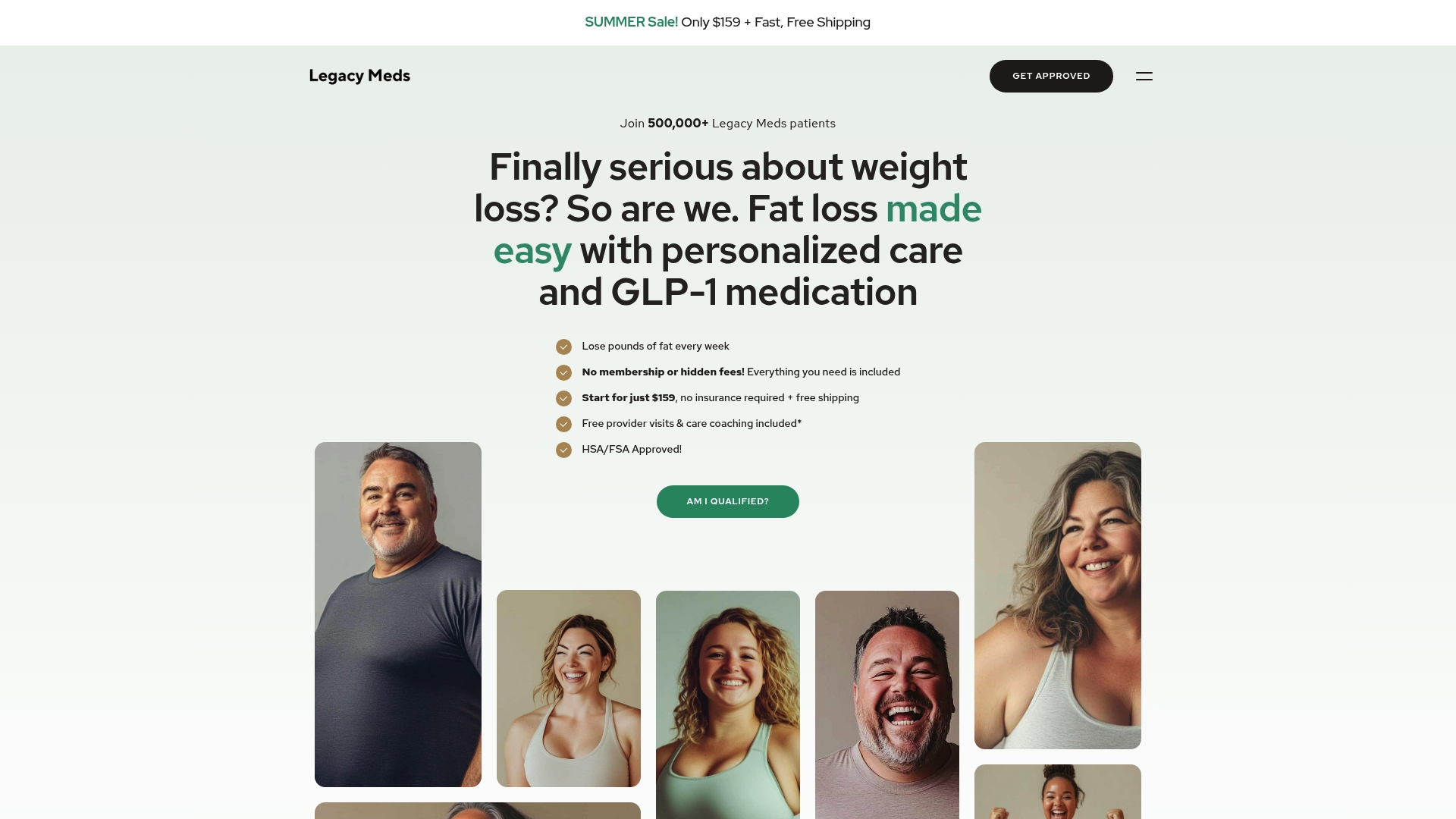
This is a paid, out-of-pocket service, not an insurance workaround, and it’s worth exhausting your coverage-check steps first since insurance, when it works, is almost always the lower-cost route. But for patients who’ve hit a wall with denials, exclusions, or a Medicare plan that doesn’t qualify for the Bridge program, Legacymeds removes the waiting and the appeal cycles entirely. You get a provider visit, a prescription, and ongoing support without needing prior authorization approval from anyone. If you want to see what treatment would actually cost through this route, start with Legacy Meds’ weight loss program to get a personalized assessment and pricing.
Sources
- Medicare GLP-1 Bridge (CMS)
- Medicare
- Pharmacy benefit managers (NAIC content)
- Is Zepbound covered by insurance? (SingleCare)
- What are PBMs? (HealthPartners)
FAQ
Does insurance cover Zepbound for weight loss?
It depends on your specific plan. Many commercial plans cover it with prior authorization and documented clinical criteria, while traditional Medicare Part D generally excludes it except through the 2026 GLP-1 Bridge program.
Can tirzepatide be used to help with weight loss?
Yes, tirzepatide is the active ingredient in Zepbound and is FDA-approved for chronic weight management in adults with obesity or overweight plus a qualifying condition.
Does insurance pay for Ozempic?
Ozempic is FDA-approved for type 2 diabetes, so insurance coverage is generally stronger when prescribed for that indication than when prescribed off-label for weight loss, though coverage still varies by plan and formulary.
How do I get insurance to pay for a GLP-1 drug like Zepbound?
Start by checking your PBM’s formulary for prior authorization requirements, have your prescriber submit clinical documentation showing medical necessity, and appeal promptly with supporting records if you’re denied.
What if my insurance denies Zepbound and I don’t want to wait for an appeal?
You can pursue the appeal process while exploring out-of-pocket options like manufacturer savings cards, discount pharmacy tools, or a telehealth program such as Legacymeds, which prescribes GLP-1 medication without requiring insurance approval.