

TL;DR:
- Uninsured buyers can significantly reduce their GLP-1 medication costs through self-pay programs, telehealth bundles, and patient assistance programs. These alternatives rarely require paying retail prices, with cash costs often ranging from $149 to $499 monthly, depending on the channel and dose. Verifying pharmacy safety and eligibility is essential before purchasing, ensuring safety and compliance.
Without insurance, most people pay a range of monthly amounts for GLP-1 medications today — and that range is far more manageable than the high retail list prices you may see quoted at a standard pharmacy counter. The gap exists because manufacturer self-pay programs and telehealth bundles have become the primary access paths for uninsured patients, often undercutting retail by hundreds of dollars.
Here’s the short version of how to cut your cost fast:
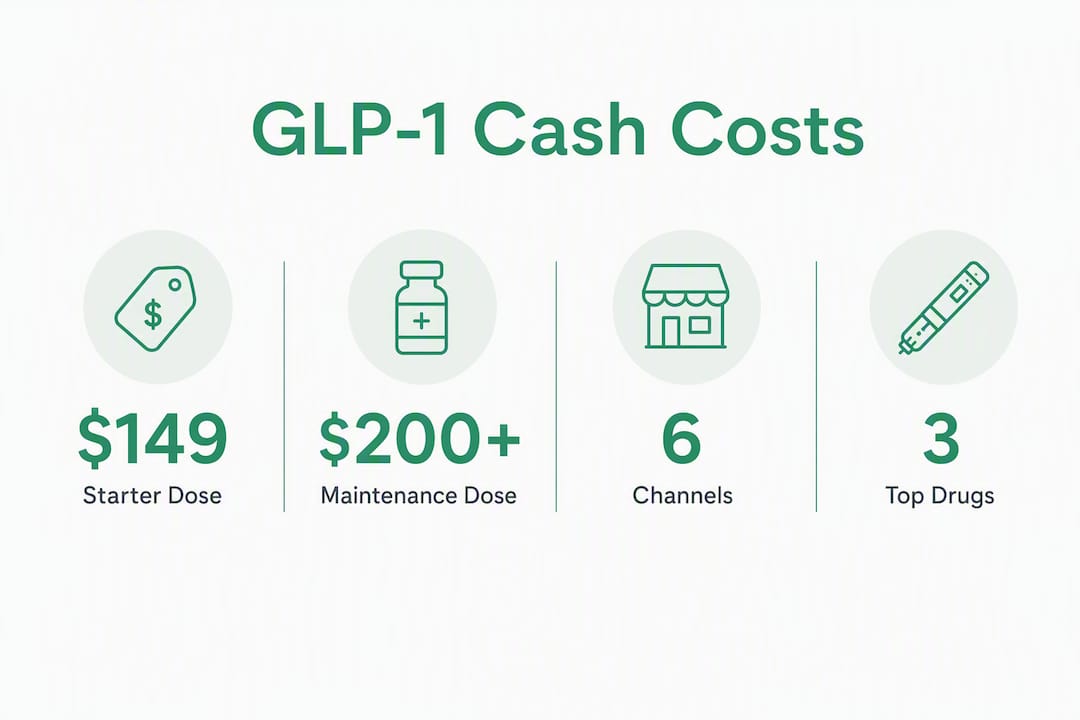
- Compounded telehealth platforms offer the quickest start (often 1–3 days) at the lowest all-in cash prices, with some starter offers beginning around $149/month for the lowest dose and ongoing maintenance rising to $199–$299 or more as dose increases.
- Manufacturer self-pay portals (NovoCare for semaglutide, LillyDirect for tirzepatide) publish transparent pricing for brand-name drugs, with introductory pricing sometimes as low as $149–$199 for starter doses and ongoing prices for maintenance doses typically $299–$499 depending on dose and drug.
- Patient Assistance Programs (PAPs) can supply brand-name GLP-1 medication at no cost for qualifying low-income uninsured patients — the paperwork takes time, but the savings are total.
- GoodRx and similar coupon platforms show real cash prices at retail pharmacies, including Walmart and Costco, though some savings cards require active commercial insurance to activate.
Your next 72 hours: check your income against PAP eligibility thresholds, compare self-pay portals for your specific drug and dose, and get a telehealth consult if you want to start this week.
Table of Contents
- How much does each GLP-1 drug cost without insurance?
- Where can you actually buy GLP-1s without insurance?
- How to lower your GLP-1 out-of-pocket cost: what to try first
- Safety checklist: what to verify before you buy
- How to estimate your actual monthly GLP-1 cost
- What Medicare, Medicaid, and employer plans cover (and what they don’t)
- Key Takeaways
- What cash-pay GLP-1 patients actually encounter
- Legacymeds makes GLP-1 access straightforward for uninsured patients
- Useful sources
- FAQ
How much does each GLP-1 drug cost without insurance?
Retail list prices are almost fictional for most uninsured patients. Few people actually pay them once you factor in manufacturer programs, telehealth bundles, and compounded alternatives. The table below shows realistic cash-pay ranges by drug.
| Drug | Typical monthly cash cost | Formulation | Dosing frequency | Best use case |
|---|---|---|---|---|
| Ozempic (semaglutide) | $800–$1,000 retail; $299–$499 via self-pay programs | Injectable pen | Once weekly | Type 2 diabetes (primary FDA indication) |
| Wegovy (semaglutide) | $700–$1,100 retail; $299–$499 via NovoCare self-pay | Injectable pen | Once weekly | Chronic weight management |
| Mounjaro (tirzepatide) | $700–$1,100 retail; $299–$449 via LillyDirect | Injectable pen | Once weekly | Type 2 diabetes (primary FDA indication) |
| Zepbound (tirzepatide) | $700–$1,100 retail; $299–$449 via LillyDirect vials | Injectable vial or pen | Once weekly | Chronic weight management |
| Rybelsus (semaglutide) | $800–$1,000 retail; varies by pharmacy | Oral tablet | Once daily | Type 2 diabetes; oral alternative to injectable |
| Compounded semaglutide/tirzepatide | $149/month and up (starter telehealth bundled), $199–$299/month (maintenance) | Injectable vial (reconstituted) | Once weekly | Weight management; lowest-cost entry point |
A few things worth noting about this table. Ozempic and Mounjaro carry FDA approval for type 2 diabetes, not obesity, so prescribing them for weight loss is off-label. Wegovy and Zepbound are the weight-management-approved versions of the same active ingredients. That distinction matters for insurance coverage and sometimes for PAP eligibility, though it doesn’t change the cash price much.
Compounded semaglutide and tirzepatide sit at the bottom of the price range because they’re produced by licensed 503A or 503B compounding pharmacies rather than the original manufacturers. They are not FDA-approved finished drug products, which carries real quality implications covered in the safety section below.
On the Wegovy cost breakdown side, NovoCare’s self-pay program has published introductory pricing that can run significantly below the retail sticker. LillyDirect does the same for Zepbound vials, with published per-dose pricing that gives you a predictable monthly benchmark.
Pro Tip: Starter doses are cheaper than maintenance doses. A $149 introductory offer is typically for the lowest titration dose (0.25 mg semaglutide, for example). Once you escalate to a therapeutic maintenance dose, the price often jumps to $299–$499 or more. Always ask what the ongoing price is at your target dose before committing to a program.
Where can you actually buy GLP-1s without insurance?
The channel you choose affects price, speed, privacy, and regulatory risk. Here’s how each one works in practice.
Manufacturer self-pay portals
NovoCare (Novo Nordisk) and LillyDirect (Eli Lilly) both publish cash-pay pricing for their branded drugs. You get an FDA-approved product at a predictable price, often fulfilled through retail pharmacy partners including large chains. Costco and Walmart pharmacies are commonly listed as pick-up locations for these programs. The tradeoff: you still need a valid prescription, and the price is higher than compounded alternatives.

Telehealth bundled clinics
These platforms combine the provider visit, prescription, and medication shipment into a single all-in price. Compounded telehealth programs typically deliver within 1–3 days and list transparent cash prices. Speed-to-start is the biggest advantage here. The medication is compounded, not branded, so quality depends entirely on the pharmacy’s licensure and testing practices.
Retail pharmacies (Walmart, Costco, and others)
Walmart and Costco pharmacies fill standard prescriptions and can process manufacturer self-pay program fills. Costco is specifically noted in some self-pay program rollouts. You can use GoodRx to look up cash prices at any major chain before you walk in. Prices vary by location and by which programs the pharmacy participates in, so calling ahead saves time.
GoodRx and coupon platforms
GoodRx shows real cash prices at participating pharmacies and sometimes surfaces prices lower than what you’d pay without a coupon. One important caveat: some savings cards require active commercial insurance to activate, so read the eligibility terms before assuming you qualify. GoodRx’s cash-pay lookup works for uninsured patients; the branded savings cards often don’t.
Compounding pharmacies (503A and 503B)
503A pharmacies compound for individual patients with a prescription; 503B outsourcing facilities produce larger batches. Both can legally compound semaglutide and tirzepatide when the branded drug is on the FDA shortage list, though the FDA’s shortage status for these drugs has shifted. Prices are lowest here, but so is regulatory oversight compared to branded finished products.
Patient Assistance Programs (PAPs)
PAPs are run by the manufacturers themselves and can provide brand-name medication at no cost to qualifying low-income uninsured patients. Novo Nordisk and Eli Lilly both operate PAPs. Income limits apply (typically at or below 400% of the federal poverty level, though thresholds vary), and the application process involves paperwork and a provider signature. Processing takes weeks, not days.
| Channel | Typical monthly cost | Time to start | Regulatory status | Privacy note |
|---|---|---|---|---|
| Manufacturer self-pay portal | $299–$499 | 1–3 days | FDA-approved branded drug | Cash pay; no insurance claim filed |
| Telehealth compounded bundle | $99–$299 | 1–3 days | Compounded; not FDA-approved | Cash pay; no insurance claim filed |
| Retail pharmacy (cash price) | $800–$1,100 | Same day (with Rx) | FDA-approved branded drug | May appear in pharmacy benefit records |
| GoodRx at retail | Varies; often $700–$1,100 | Same day (with Rx) | FDA-approved branded drug | GoodRx has its own data practices |
| PAP (manufacturer assistance) | $0 for qualifying patients | 2–6 weeks | FDA-approved branded drug | No insurance claim; income verification required |
| Compounding pharmacy (direct) | $99–$299 | 1–3 days | Compounded; not FDA-approved | Cash pay; no insurance claim filed |
How to lower your GLP-1 out-of-pocket cost: what to try first
Think of this as an order of operations, not a menu. Work through it top to bottom and stop when you find the path that fits your situation.
- Check PAP eligibility first. If your household income falls within the manufacturer’s threshold, you could pay nothing. Visit NovoCare.com or LillyDirect.com, look for the patient assistance section, and run the eligibility screener before spending a dollar anywhere else.
- Compare manufacturer self-pay portals. If you don’t qualify for a PAP, NovoCare and LillyDirect publish their cash prices. These are FDA-approved branded drugs at predictable prices, often $299–$499 for maintenance doses.
- Get a telehealth compounded bundle quote. If speed matters or the brand price is still too high, a licensed telehealth platform can get you started within days at $99–$299/month. Confirm the pharmacy’s 503A or 503B licensure before ordering.
- Use GoodRx to compare retail pharmacy prices. Even if you end up using a manufacturer program, checking GoodRx first gives you a baseline. It takes two minutes and occasionally surfaces prices lower than you’d expect at a specific chain.
- Apply HSA/FSA funds if eligible. GLP-1 medications prescribed for a qualifying medical condition can be HSA/FSA-eligible. Confirm with your plan administrator and verify the telehealth platform accepts pre-tax funds before assuming it does. Failing to check can cost you an estimated 20%–37% in potential tax savings.
- Use an introductory fill while waiting for PAP approval. PAP processing takes weeks. A compounded telehealth starter fill at $149 can bridge that gap so you don’t delay treatment.
What to have ready for each path:
- Prescription from a licensed provider (required for all channels)
- BMI documentation or diagnosis records (needed for weight-management indications)
- Photo ID and proof of income (required for PAPs)
- HSA/FSA card or account details (if applying pre-tax funds)
Pro Tip: Paying cash through a manufacturer self-pay portal or telehealth program keeps your prescription out of employer self-insured claims data. If privacy from your employer matters to you, cash-pay channels are the cleaner route.
Safety checklist: what to verify before you buy
The lowest price is not always the safest price. Here’s what to check before you hand over payment.

FDA-approved branded drugs (Ozempic, Wegovy, Mounjaro, Zepbound, Rybelsus) go through rigorous manufacturing standards and carry consistent dosing. When you buy through a manufacturer self-pay portal or a licensed retail pharmacy, you’re getting the finished product as tested and approved.
Compounded preparations are a different category. They’re legal when produced by a licensed 503A or 503B pharmacy, but they are not FDA-approved finished drug products. That means no FDA review of the specific batch’s safety, potency, or sterility. Quality depends entirely on the compounding pharmacy’s own practices.
Verify before you buy: Ask any compounding pharmacy for their state pharmacy board license number, the lot number of your specific batch, and a certificate of analysis (CoA) from a third-party lab. A legitimate 503B outsourcing facility will provide all three without hesitation. If a seller refuses or can’t produce these, walk away.
Red flags that signal counterfeit or unsafe supply:
- No prescription required
- Price significantly below the $99 compounded floor with no explanation
- Seller declines to name the compounding pharmacy or provide license details
- Product ships from outside the United States
- Website has no licensed provider contact information
The FDA’s guidance on compounded GLP-1 drugs and its shortage-list updates are the authoritative source for what’s currently legal to compound. Check the FDA site directly rather than relying on a seller’s claims about shortage status. For additional safety standards and quality checks, Legacymeds publishes its own GLP-1 medication safety information that walks through what a responsible telehealth program should verify on your behalf.
How to estimate your actual monthly GLP-1 cost
Three scenarios, real numbers, and the assumptions behind them.
Scenario A: Compounded telehealth (lowest floor)
- Telehealth bundled price: $149/month (includes provider visit, medication, shipping)
- Syringe cost: typically included or $10–$15/month separately
- Reconstitution supplies (bacteriostatic water, alcohol swabs): $5–$10 one-time
- Total estimated first month: $149–$175
- Ongoing maintenance (higher dose): $199–$299/month
Scenario B: Manufacturer self-pay brand (ongoing)
- LillyDirect Zepbound vial (maintenance dose): $299–$449/month
- Provider visit (if not bundled): $50–$150 one-time or quarterly
- Pen needles or vial supplies: $10–$20/month
- Total estimated ongoing: $310–$470/month
Scenario C: Retail pharmacy with GoodRx
- GoodRx cash price at a major chain: $700–$1,100/month (varies by drug and location)
- Provider visit: $100–$200 if not already established
- Total estimated: $800–$1,300/month
| Scenario | First-month estimate | Ongoing monthly estimate | Regulatory status |
|---|---|---|---|
| A: Compounded telehealth | $149–$175 | $199–$299 | Compounded; not FDA-approved |
| B: Manufacturer self-pay brand | $310–$470 | $310–$470 | FDA-approved branded drug |
| C: Retail pharmacy (GoodRx) | $800–$1,300 | $800–$1,300 | FDA-approved branded drug |
Hidden costs to include in your math:
- Shipping fees (some telehealth platforms charge $10–$30/month; others include it)
- Quarterly monitoring labs if your provider requires them ($50–$150 out of pocket)
- Telehealth membership fees on some platforms (not all charge these; confirm upfront)
- Dose escalation: your cost will increase as your dose increases, often by $50–$150/month per step
Prices shift. Manufacturer programs update their pricing, compounded floors move with supply costs, and GoodRx prices vary by pharmacy and week. Verify current pricing directly with the program before committing.
What Medicare, Medicaid, and employer plans cover (and what they don’t)
Commercial insurance plans typically cover GLP-1 drugs for type 2 diabetes (Ozempic, Mounjaro) more readily than for obesity (Wegovy, Zepbound). Prior authorization is almost universal, and many employer plans explicitly exclude weight-loss drugs even when a patient has obesity as a diagnosed condition. If your plan denies coverage, you’re in the same cash-pay position as an uninsured patient.
Medicare has historically excluded weight-loss drugs from Part D coverage. CMS has been developing a Medicare GLP-1 bridge program that could expand access, but coverage rules are evolving. Medicare beneficiaries should check CMS directly for current demonstration program eligibility.
Medicaid coverage varies by state. Some states cover GLP-1s for obesity; others cover only the diabetes indications. Check your state Medicaid formulary directly.
For uninsured readers: cash-pay channels exist regardless of your insurance status, and the manufacturer self-pay programs don’t require you to have or have had insurance. The GLP-1 pricing and insurance FAQ at Legacymeds covers common questions about what uninsured patients should expect when starting treatment.
- If you’re on Medicare: check CMS’s bridge program page for current eligibility.
- If you’re on Medicaid: look up your state’s formulary for obesity-indication coverage.
- If you’re uninsured: manufacturer self-pay portals and telehealth bundles are your primary routes; PAPs are worth checking first if your income qualifies.
Key Takeaways
Uninsured patients who use manufacturer self-pay programs or licensed telehealth bundles rarely need to pay retail list price, with realistic monthly costs varying depending on the drug, dose, and channel.
| Point | Details |
|---|---|
| Realistic monthly range | Most uninsured patients pay $149–$199/month for starter doses and $299–$499/month for ongoing maintenance through self-pay or telehealth channels, not the $700–$1,100 retail list price. |
| Fastest low-cost start | Compounded telehealth bundles start around $149/month for the lowest dose and deliver in 1–3 days, though ongoing maintenance doses typically range higher. |
| Cheapest possible route | Patient Assistance Programs can provide brand-name GLP-1 medication at no cost for qualifying low-income uninsured patients. |
| Safety first | Always verify a compounding pharmacy’s state license, lot number, and certificate of analysis before purchasing compounded medication. |
| Legacymeds option | Legacymeds offers an online GLP-1 program with telemedical assessment, free provider visits, and no membership or insurance required. |
What cash-pay GLP-1 patients actually encounter
The biggest surprise most people report isn’t the price itself. It’s how fast the process moves once you stop waiting for insurance approval. Telehealth platforms can have a prescription in your hands within days, and for patients who’ve spent months fighting prior authorization denials, that speed alone changes the calculation.
The second surprise is PAP eligibility. A meaningful number of people who assume they earn too much to qualify actually fall within the threshold when they run the screener. Novo Nordisk and Eli Lilly both set their income limits higher than most people expect, and the application is worth 20 minutes of paperwork if there’s any chance you qualify.
The privacy angle is less discussed but genuinely matters to some patients. When you pay cash through a manufacturer portal or telehealth program, the prescription doesn’t flow through your employer’s self-insured claims data. For people on employer-sponsored plans who are considering switching to cash-pay, that’s a real consideration worth factoring in alongside the price.
The one thing that catches people off guard: dose escalation costs. A $149 starter offer is real, but it’s for the lowest titration dose. By the time you reach a therapeutic maintenance dose three to six months in, the monthly cost is often two to three times higher. Plan for that trajectory from the beginning rather than anchoring to the introductory price.
Legacymeds makes GLP-1 access straightforward for uninsured patients
Paying out of pocket for a GLP-1 medication shouldn’t mean navigating a maze of portals, paperwork, and pharmacy calls. Legacymeds built its program specifically for patients who want to skip the insurance process entirely and get started with a clear, transparent path.
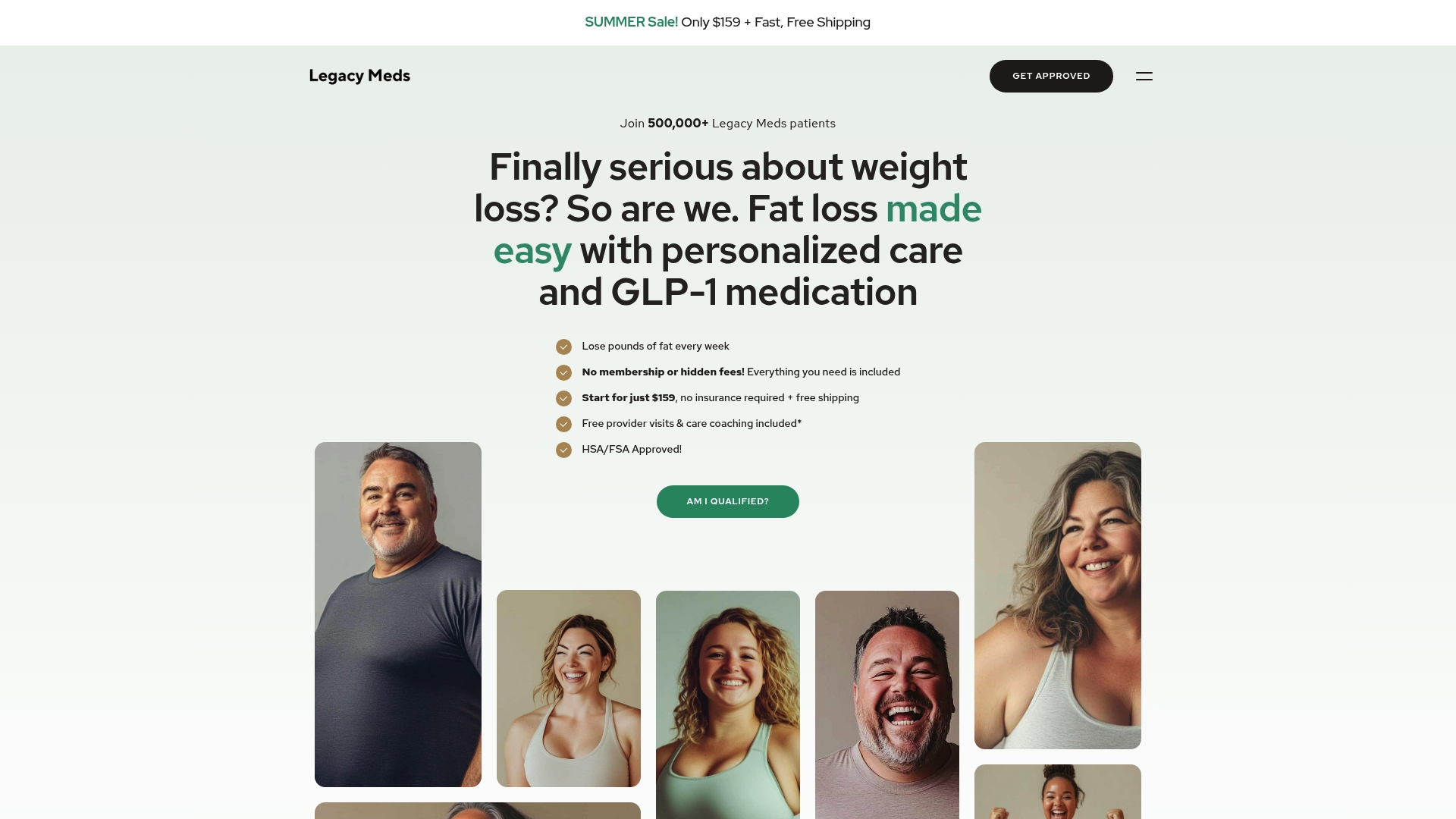
Here’s what the program includes: a telemedical provider assessment, a prescription for GLP-1 medication (semaglutide or tirzepatide), free provider visits, free shipping, and unlimited ongoing coaching. No membership fees. No insurance required. The pricing is transparent upfront, and the support doesn’t stop after your first fill.
For uninsured patients who’ve read through the channel options above, Legacymeds sits at the intersection of speed, safety, and support. The telehealth model gets you started fast; the included provider visits mean you’re not paying separately for monitoring; and the coaching keeps you on track through dose escalation, which is where a lot of self-managed programs fall apart.
Ready to see if you qualify? Start your GLP-1 program online and get a provider assessment without leaving home.
Useful sources
Prices and program rules change. Verify any figure directly with the source before acting on it.
- NovoCare Patient Assistance Program — Novo Nordisk’s official portal for Ozempic and Wegovy self-pay and assistance program eligibility.
- LillyDirect — Eli Lilly’s direct self-pay portal for Mounjaro and Zepbound vial pricing; publicly posted per-dose pricing.
- CMS Medicare GLP-1 Bridge Program — Current CMS guidance on Medicare coverage developments for GLP-1 medications.
- FDA Press Announcements on GLP-1 Approvals — FDA approval history and regulatory status for branded GLP-1 drugs.
Prices listed in this article reflect data available as of 2026. Confirm current pricing and program availability directly with each source before making a purchase decision.
FAQ
Who has the cheapest GLP-1 option without insurance?
Qualifying low-income uninsured patients can receive brand-name GLP-1 medication at no cost through manufacturer Patient Assistance Programs from Novo Nordisk or Eli Lilly. For those who don’t qualify, compounded telehealth bundles starting around $149/month are typically the lowest cash-pay option.
How are people getting GLP-1 medications without insurance?
The most common routes are manufacturer self-pay portals (NovoCare, LillyDirect), licensed telehealth platforms that bundle the visit and compounded medication, and retail pharmacies using GoodRx cash pricing. PAPs are also widely used by patients who meet income eligibility requirements.
How much is a GLP-1 at Costco without insurance?
Costco pharmacies participate in some manufacturer self-pay program fulfillments, and cash prices vary by drug and location. Using GoodRx at Costco’s pharmacy can surface current cash prices; call the pharmacy directly with your specific drug and dose for an accurate quote, as prices shift frequently.
How much is Ozempic at Walmart without insurance?
Walmart pharmacies fill Ozempic at retail cash prices that typically run $800–$1,000/month without a discount program. Checking GoodRx before filling at Walmart can lower that figure, though the savings vary. NovoCare’s self-pay program, fulfilled through retail partners, often offers a better price than the standard Walmart cash price.
Does Legacymeds accept patients without insurance?
Yes. Legacymeds’s online GLP-1 program is designed for patients paying out of pocket, with no insurance or membership fees required. The program includes a telemedical provider assessment, prescription, free shipping, and unlimited coaching at a transparent cash price.
This article provides general information about GLP-1 medication costs and purchasing options. It is not medical or financial advice. Confirm current program rules, pricing, and your eligibility with the relevant manufacturer, pharmacy, or a licensed healthcare provider before making any treatment decision.