

Yes, GLP-1s can cause real fatigue, but it’s usually indirect, not a direct drug effect on your energy. It tends to peak in the week or two after a dose increase, driven by a caloric deficit, dehydration, or GI losses, and typically fades within two to four weeks at a stable dose. Symptoms like sweating, trembling, confusion, or chest pain are not typical fatigue. They signal hypoglycemia or another urgent problem and need immediate evaluation, especially if you also take insulin or a sulfonylurea.
TL;DR:
- Most GLP-1 related fatigue peaks within one to two weeks after a dose increase and usually resolves within three to four weeks at a stable dose.
- The primary cause of fatigue is a caloric deficit from appetite suppression, often intensified by dehydration, gastrointestinal losses, or medication interactions.
- Slower titration schedules can lessen the intensity of fatigue without compromising long-term drug effectiveness, especially when dose increases are spaced out.
- Persistent fatigue beyond eight weeks or severe symptoms like hypoglycemia, dehydration, or fainting require immediate medical assessment.
- Proper management includes adequate protein intake, hydration, light resistance exercise, and consulting a healthcare provider about adjusting titration speed or investigating other causes.
Table of Contents
- How Long Does GLP-1 Fatigue Usually Last?
- Why Do GLP-1 Drugs Make You Tired?
- How Do You Manage Fatigue While Taking a GLP-1?
- When Should Fatigue on a GLP-1 Prompt a Call to Your Doctor?
- What Does a Doctor Check for Persistent GLP-1 Fatigue?
- How Supervised Programs Catch Fatigue Causes Early
- Can GLP-1 Medications Affect Your Mood and Contribute to Fatigue?
- Is Your Fatigue From the GLP-1 or Something Else Entirely?
- Does GLP-1 Fatigue Improve Long-Term, or Should You Expect It Forever?
- Do GLP-1 Medications Disrupt Sleep, and Does That Explain the Tiredness?
- What Titration Timelines Get Wrong About Fatigue
- A Supported Path Through GLP-1 Fatigue
- FAQ
How Long Does GLP-1 Fatigue Usually Last?
GLP-1 fatigue follows a predictable rhythm tied to dose escalation, not a random flare that hits whenever it wants. Most people notice tiredness creeping in within a few days of stepping up to a new dose, with symptoms peaking around the one to two week mark. From there, energy usually climbs back toward baseline by weeks three or four, once the body adjusts to the new dose.
This pattern repeats at every titration step. Each time your prescriber raises the dose, whether you’re on semaglutide, tirzepatide, or another GLP-1, expect a similar dip followed by recovery. The good news: slower titration schedules tend to blunt the intensity of that dip without changing the drug’s long-term effectiveness.
Here’s what a typical titration cycle looks like:
- Days 1 to 3 after a dose increase: mild to moderate tiredness begins, often alongside nausea or reduced appetite.
- Days 7 to 14: fatigue tends to peak, sometimes accompanied by GI symptoms like bloating or loose stools.
- Weeks 3 to 4: most people report energy returning close to normal at the new dose.
- Beyond week 4 to 8 at a stable dose: fatigue that hasn’t meaningfully improved by this point is uncommon and worth a conversation with your prescriber.
If you’re bracing for another dose increase and dreading a repeat of the last one, mention that timeline to your provider. Adjusting the pace of escalation is often a simple fix.
Why Do GLP-1 Drugs Make You Tired?
The biggest driver of GLP-1 fatigue isn’t some mysterious drug side effect. It’s math. These medications suppress appetite so effectively that many people end up in a steeper caloric deficit than they realize, and a body running on fewer calories simply has less fuel to burn. That gap between what you’re eating and what your body needs is the dominant, evidence-backed mechanism behind most of the tiredness people report.
Clinical trial data backs this up directly. In the STEP-1 trial, about 11% of people on semaglutide 2.4 mg (Wegovy) reported fatigue, compared to 5% on placebo, and that gap tends to widen right around dose increases, when appetite suppression is at its strongest and food intake drops fastest.
Pro Tip: If your appetite disappears entirely after a dose increase, don’t wait for hunger to bring you back to eating. Set a timer to eat something small every four to five hours regardless, even if it’s just a protein shake or a handful of nuts.
Three other mechanisms show up consistently:
- GI losses and delayed gastric emptying. Nausea, vomiting, and diarrhea pull fluids and electrolytes out of your system, and gastroparesis (a slowdown in how fast your stomach empties) can compound the problem by making you feel full and depleted at the same time. A systematic review of GLP-1RA-linked gastroparesis found this complication in a minority of patients, and it’s usually reversible once the medication is stopped.
- Hypoglycemia risk with certain other medications. If you take insulin or a sulfonylurea alongside a GLP-1, low blood sugar becomes a distinct and urgent cause of fatigue, one that needs a glucose check, not a nap.
- Lean-mass loss and micronutrient gaps. Rapid weight loss can chip away at muscle mass alongside fat, and low iron, B12, or vitamin D can quietly sap energy over weeks.
None of these are reasons to panic, but they are reasons to look closer at what’s actually driving your tiredness before assuming it’s just “the drug.”
How Do You Manage Fatigue While Taking a GLP-1?
Fixing GLP-1 fatigue usually comes down to closing the gaps the medication opens up: not enough fuel, not enough fluid, and sometimes not enough muscle stimulus to keep your metabolism steady. Here’s a practical order of operations.
- Prioritize protein at every meal. Aim for roughly 25 to 35 grams of protein per meal, spread across three to four meals or snacks a day. This is the single most effective nutritional lever for both energy and preserving muscle during rapid weight loss.
- Eat small, frequent, nutrient-dense snacks. If appetite suppression makes three big meals impossible, break intake into five or six smaller touchpoints. Greek yogurt, cottage cheese, and protein-fortified smoothies work well when solid food feels like too much.
- Watch your total calorie intake, not just what feels comfortable. A caloric deficit that’s too aggressive is the most common reason people plateau on energy. If you’re consistently eating under 1,000 to 1,200 calories a day without medical guidance to do so, that’s worth flagging to your provider.
- Schedule fluids like you schedule meals. Don’t wait for thirst, since appetite suppression often blunts thirst signals too. Add electrolyte packets or an oral rehydration solution on days when nausea, vomiting, or diarrhea hit. Pale yellow urine and steady energy on standing are good signs you’re hydrated; dark urine or dizziness when you stand up are not.
- Keep light resistance training in the mix. You don’t need an intense program. Two or three short sessions a week using bands, bodyweight, or light dumbbells helps protect muscle mass, which in turn helps protect your energy over the following months.
- Talk to your prescriber about slowing titration rather than stopping cold. If fatigue after a dose increase feels unmanageable, a temporary hold at your current dose is usually a better first move than discontinuing treatment altogether, according to clinical guidance on titration schedules.
- Protect your sleep by managing nighttime GI symptoms. Reflux, bloating, and nausea that flare after dinner can fragment sleep, and fragmented sleep compounds daytime fatigue. Eating your last meal earlier and lighter often helps.
- Get simple labs if fatigue persists beyond a few weeks. A CBC with ferritin, a comprehensive metabolic panel, thyroid-stimulating hormone, and a B12 check can rule out the deficiencies that mimic or worsen medication-related tiredness.
Real-world reports suggest fatigue gets mentioned even more often outside of clinical trials than inside them, which is a good argument for taking your own symptoms seriously even if a chart says the rate should be low.
When Should Fatigue on a GLP-1 Prompt a Call to Your Doctor?
Most GLP-1 fatigue is annoying, not dangerous. But a few patterns cross the line from “expected side effect” into “get evaluated now,” and knowing the difference matters more than any nutrition tip.
- Sweating, trembling, or confusion, particularly if you take insulin or a sulfonylurea. Check your glucose immediately. This combination points to hypoglycemia, which needs fast correction.
- Vomiting or inability to keep fluids down for more than 24 hours, or urine that’s turned noticeably dark. These are signs of significant dehydration that may need IV fluids.
- Fainting or feeling like you might pass out when standing. This can indicate dangerously low blood pressure or volume depletion.
- Severe abdominal pain, chest pain, or shortness of breath. Any of these warrants emergency evaluation, not a wait-and-see approach.
- Rapid, severe weight loss paired with marked weakness. This combination should trigger a clinician review, even without other red flags.
None of these overlap with the “tired for a few days after a dose bump” pattern. If what you’re feeling matches this list, skip the home remedies and get seen.
What Does a Doctor Check for Persistent GLP-1 Fatigue?
When fatigue doesn’t resolve on its own, a clinician’s workup usually follows a specific sequence rather than a scattershot of tests. It starts with a medication review, especially checking whether you’re on insulin or a sulfonylurea that might need dose adjustment now that a GLP-1 is suppressing your appetite and altering your glucose patterns.
From there, basic labs typically include a CBC with ferritin to check for anemia or iron deficiency, a comprehensive metabolic panel to assess electrolytes and kidney function, thyroid-stimulating hormone to rule out hypothyroidism, and vitamin B12 or vitamin D levels if diet has been especially restricted.
If you’ve had persistent nausea, early fullness, or bloating alongside fatigue, your provider may assess for gastroparesis. This usually starts with a clinical exam and history, but can extend to a gastric-emptying study if symptoms are significant, per findings on GLP-1RA and delayed gastric emptying.
Depending on what turns up, management options range from slowing titration, to a temporary hold at your current dose, to switching to a different GLP-1 agent, to targeted supplementation for whatever deficiency the labs reveal. None of these require abandoning treatment. They’re adjustments, not exits.
How Supervised Programs Catch Fatigue Causes Early
The reason personalized, provider-monitored GLP-1 programs tend to produce better tolerability isn’t magic — it’s how medical weight loss programs with personalized care catch fatigue causes early and adjust treatment accordingly. It’s timing. When a clinician has visibility into your titration schedule and can order labs when something feels off, hypoglycemia, dehydration, and micronutrient gaps get caught before they turn into weeks of unexplained exhaustion. Legacy Meds structures its program around this kind of ongoing access, pairing personalized dose adjustments with coaching so patients aren’t guessing alone. If you’re evaluating your own energy patterns, ask a provider directly what labs they’d order, how often they reassess your titration pace, and what timeframe they’d expect improvement within.
Can GLP-1 Medications Affect Your Mood and Contribute to Fatigue?
Physical exhaustion isn’t the only thing dragging on your energy during GLP-1 treatment. Mood shifts play a real, if underdiscussed, role too. Rapid changes in eating patterns, appetite, and body composition can trigger anxiety or low mood in some people, and mental fatigue often masquerades as physical tiredness.

Sustained caloric restriction has a well-documented relationship with irritability and flattened mood, independent of any medication. When you’re eating significantly less than before, your brain is running on less glucose and fewer micronutrients, which can affect motivation and concentration well before it affects your muscles.
There’s also a psychological weight to major lifestyle change itself. Adjusting to a new relationship with food, adapting to smaller portions, and managing the social dynamics around eating differently than before can be mentally taxing in ways that show up as generalized fatigue rather than sadness or worry.
If you notice your tiredness comes with flattened motivation, disrupted concentration, or a mood that feels different from your usual baseline, mention it to your provider alongside your physical symptoms. Mood-related fatigue responds to different interventions than dehydration or calorie gaps, and treating it as a purely physical problem can mean missing the real fix. A provider who knows your full picture, not just your weight trend, is better positioned to sort out which lever to pull.
Is Your Fatigue From the GLP-1 or Something Else Entirely?
Not every tired day on a GLP-1 is the GLP-1’s fault. Plenty of conditions and medications cause fatigue that has nothing to do with semaglutide or tirzepatide, and lumping everything together makes it harder to fix the actual problem.
Start with timing. Fatigue that tracks tightly with dose increases and fades within a few weeks fits the titration pattern described earlier. Fatigue that’s constant, unrelated to your dosing schedule, or that started before you began treatment points elsewhere.
Common overlapping culprits include:
- Hypothyroidism, which causes fatigue, weight changes, and cold intolerance that can easily get blamed on a weight-loss medication instead.
- Iron-deficiency anemia, especially in people with heavy menstrual cycles or a history of low iron, which can compound medication-related tiredness rather than cause it outright.
- Sleep apnea, which frequently coexists with higher body weight and can persist or even worsen temporarily during rapid weight change.
- Other medications, including blood pressure drugs, antihistamines, and certain antidepressants, that carry fatigue as a known side effect independent of GLP-1 use.
The clearest way to sort this out is the lab workup described above. If your CBC, thyroid panel, and metabolic panel all come back normal and your fatigue still tracks with dosing changes, the GLP-1 pattern is the more likely explanation. If labs turn up something else, you’ve found the actual target.
Does GLP-1 Fatigue Improve Long-Term, or Should You Expect It Forever?
The trajectory for most people is reassuring: fatigue tied to titration is a phase, not a permanent state. Once you reach a maintenance dose and your body has adjusted to your new eating pattern, energy levels for most patients stabilize at or near where they started, sometimes better, once weight loss brings other benefits like improved sleep apnea symptoms or reduced joint pain.
That said, long-term energy management on a GLP-1 isn’t a “set it and forget it” situation. As you continue losing weight, your calorie needs keep shifting, which means the protein targets and hydration habits that worked at month two may need adjustment by month eight. Periodic check-ins on labs, particularly iron and B12 status, remain worthwhile well into maintenance, not just during the early titration months.
Resistance training becomes more important over time, not less. Early on, it protects muscle during rapid loss. Later, it’s what keeps your metabolism from settling too low as your body weight drops and your calorie needs adjust downward with it.
The practical takeaway: don’t treat the first few months as the whole story. If fatigue resurfaces after a long stable stretch, that’s a signal to revisit labs and habits again, not evidence that the medication has permanently changed your energy for the worse.
Do GLP-1 Medications Disrupt Sleep, and Does That Explain the Tiredness?
Sleep quality and GLP-1 fatigue are more tangled together than most people expect. Nighttime GI symptoms, reflux, bloating, and delayed gastric emptying can all fragment sleep, and fragmented sleep is one of the most reliable ways to feel exhausted the next day regardless of what’s happening metabolically.
Some patients also report vivid dreams or lighter, more easily interrupted sleep during titration, though this varies widely and isn’t as consistently documented as GI side effects. What’s clearer is the indirect route: eat a heavy or spicy meal too close to bedtime while on a GLP-1, and delayed gastric emptying can turn a normal dinner into hours of discomfort that keeps you tossing and turning.
On the flip side, weight loss itself often improves sleep over time, particularly for people with obstructive sleep apnea. Reduced neck circumference and less abdominal pressure can mean fewer nighttime awakenings and better oxygenation, which eventually offsets any early sleep disruption.
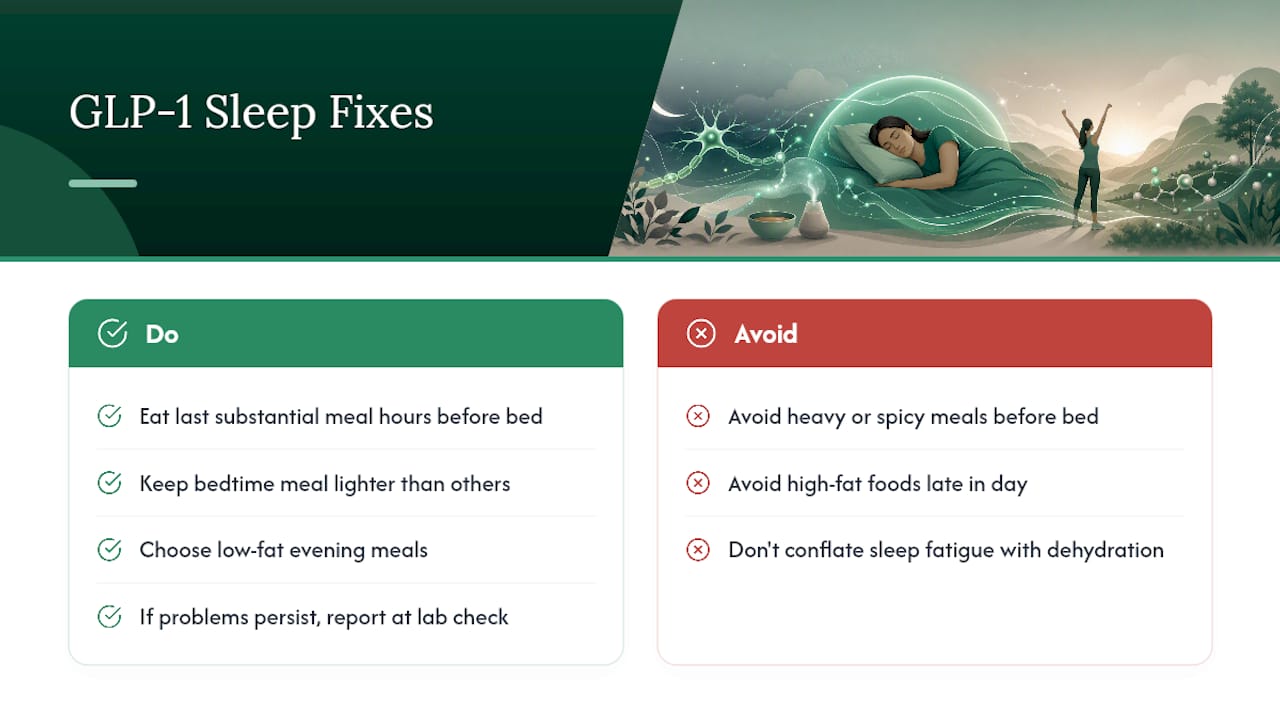
The practical fix mirrors the nutrition advice already covered: eat your last substantial meal several hours before bed, keep it lighter than your other meals, and avoid high-fat foods late in the day since they slow gastric emptying further. If sleep problems persist despite these adjustments, mention it during a lab check. Fatigue from poor sleep responds to different fixes than fatigue from dehydration, and conflating the two just delays getting the right one.
What Titration Timelines Get Wrong About Fatigue
Most explainers on GLP-1 fatigue treat it as a single side effect with a single fix: eat more protein, drink more water, done. That advice isn’t wrong, but it undersells how much the timing of dose changes matters more than any snack choice. The real lever is titration pace, not willpower or discipline.
The overlooked nuance: fatigue that shows up like clockwork after every dose increase isn’t a sign something has gone wrong. It’s the expected cost of a medication working as designed, and the schedule you follow, not just what you eat, determines how steep that cost feels.
What I’d prioritize first, if I were coaching a patient through this: talk to your prescriber about the pace of your titration before you assume you need to tough it out or quit. A slower ramp, paired with the protein and hydration basics, resolves more cases of persistent fatigue than either fix alone. The clinicians who get this right aren’t the ones with the most exotic labs. They’re the ones willing to slow down instead of following a rigid schedule regardless of how a patient is responding.
— Bryan
A Supported Path Through GLP-1 Fatigue
Legacy Meds gives you what a titration schedule alone doesn’t: a provider who’s actually watching for the early signs of dehydration, low blood sugar, and nutrient gaps before they turn into weeks of exhaustion. Every plan starts with an online provider assessment, then moves into a personalized titration pace, nutrition and hydration guidance built around your actual habits, and lab orders when something needs a closer look.

Unlimited coaching means you’re never troubleshooting fatigue alone between appointments, and dose adjustments happen based on how you’re actually responding, not a fixed calendar. There’s no insurance requirement and no membership fee standing between you and that kind of ongoing access. If persistent tiredness has you wondering whether your current approach is working, start with Legacy Meds’ weight loss program or review the medication safety details to see exactly what monitoring looks like before you enroll.
This article is general information, not a substitute for advice from a qualified doctor. Consult a qualified healthcare professional about your own circumstances before acting on anything here.
FAQ
Why is GLP-1 making me so tired?
Most GLP-1 fatigue comes from an indirect source: eating less than your body needs, mild dehydration, or GI symptoms rather than a direct effect of the drug itself. It typically peaks within one to two weeks of a dose increase and improves as your body adjusts.
How long does semaglutide fatigue last?
Fatigue after a semaglutide dose increase usually peaks around one to two weeks and improves by weeks three to four at that same dose. The pattern tends to repeat with each subsequent dose escalation.
How do you overcome fatigue on a GLP-1?
Prioritize 25 to 35 grams of protein per meal, schedule fluids instead of waiting for thirst, add light resistance training, and talk to your prescriber about slowing your titration pace if symptoms feel unmanageable.
How long does GLP-1 fatigue typically last overall?
For most people, fatigue tied to dose changes resolves within two to four weeks at a stable dose. Tiredness that persists beyond four to eight weeks without improvement is uncommon and worth a clinical evaluation.