
GLP-1 therapy is linked to real, measurable lean-mass loss, but the number that matters most to you isn’t the one on the DXA scan. It’s whether you can still carry groceries, climb stairs, and get off the floor without using your hands. A 2026 systematic review and meta-analysis of seven randomized controlled trials covering 821 patients found an absolute mean lean-mass reduction of 1.74 kg, with the semaglutide subgroup losing considerably more, an average of 5.44 kg. That’s not a rounding error. It’s muscle, tendon, and organ tissue disappearing alongside the fat, and it happens because you’re eating less, not because the drug attacks muscle directly.
Here’s what to do about it starting today, not after you’ve already lost 20 pounds. First, hit a protein target within the range generally recommended for preserving muscle during weight loss, spread across three or four meals. Second, start resistance training now, two to four sessions a week, even if you’ve never touched a weight rack. Third, get a baseline body-composition or functional assessment so you have something to compare against in three to six months.
Lean-mass loss and muscle-function loss are not the same thing. Some of what shows up as “lean mass” on a scan includes organ weight and water, and contemporary research suggests the muscle changes on these drugs often look adaptive rather than purely damaging. Strength and mobility don’t always fall in lockstep with the number on the scan. That’s a genuine reason for calibrated concern, not panic. And it’s exactly why the next sections walk through the real numbers, who’s most at risk, and precisely what to do with a fork, a barbell, and a follow-up appointment.
Key Takeaways
GLP-1 therapy causes measurable lean-mass loss, averaging around 1.74 kg overall and considerably more in some drug subgroups, but protein intake, resistance training, and monitoring largely determine whether that translates into real functional decline.
| Point | Details |
|---|---|
| Lean-mass loss is real but variable | A 2026 meta-analysis found a 1.74 kg average reduction, with semaglutide subgroups losing 5.44 kg on average. |
| Protein target matters most | Aim for 1.2 to 1.6 grams of protein per kilogram of body weight daily, spread across three to four meals. |
| Resistance training changes outcomes | Training regularly, starting at treatment onset, preserves lean mass better than starting later. |
| Function matters more than the scan number | Lean-mass loss on DXA doesn’t always match strength or mobility decline, so track functional tests too. |
| Coordinated care supports prevention | Legacymeds pairs GLP-1 prescriptions with provider assessments and ongoing coaching to help address nutrition and training questions as they arise. |
This article is general information, not a substitute for advice from a qualified doctor. Consult a qualified healthcare professional about your own circumstances before acting on anything here.
Table of Contents
- How Much Muscle or Lean Mass Do You Actually Lose on GLP-1 Drugs?
- Why Does GLP-1 Therapy Cause Lean Mass to Decline?
- Who Is Most at Risk for Losing Muscle on GLP-1 Medications?
- What Should You Eat to Preserve Muscle While Taking GLP-1 Medications?
- What Kind of Exercise Prevents Muscle Loss on GLP-1?
- How Do You Know if You’re Losing Muscle on GLP-1?
- Can You Rebuild Muscle Lost While Taking GLP-1?
- What New Treatments Are Being Studied for Muscle Loss During GLP-1 Therapy?
- How Coordinated Medical Care Helps Protect Muscle During Treatment
- What Clinicians Get Wrong About Muscle Loss on These Drugs
- Get Medical Support That Accounts for Muscle Preservation, Not Just the Scale
- Sources
- FAQ
How Much Muscle or Lean Mass Do You Actually Lose on GLP-1 Drugs?
The honest answer is: it depends heavily on which drug, which trial, and how fast you’re losing weight. But the numbers we do have are specific enough to plan around.
The 2026 meta-analysis pooling seven RCTs found an overall absolute mean lean-mass reduction of 1.74 kg (95% CI: −3.04 to −0.45) across GLP-1 receptor agonist users. That’s the headline figure, but averages hide the spread. That gap tells you something important: drug choice, dose, and rate of weight loss all move this number independently.
DXA subgroup data from the landmark STEP-1 semaglutide trial paints an even more granular picture. Patients in that analysis lost close to 6.9 kg of total lean mass, and in some breakdowns, lean tissue accounted for roughly a substantial part of total weight lost. Compare that to older bariatric surgery literature, where lean mass typically makes up somewhere around a quarter of total weight loss, and you start to see why clinicians have gotten more vocal about muscle preservation with these newer drugs.
That said, not every study agrees on the exact fraction. Other analyses put lean-mass loss anywhere from 25% to a substantial part of total weight lost depending on the population studied, the imaging method used, and how long patients had been on therapy. A few things drive that variability:
- Measurement method matters. DXA scans bundle muscle, organ tissue, and some fluid into one “lean mass” number, which can overstate actual skeletal-muscle loss.
- Duration and dose matter. Longer trials and higher maintenance doses generally show larger absolute lean-mass reductions.
- Baseline body composition matters. Patients starting with lower muscle reserves or higher body fat percentages show different lean-to-fat loss ratios.
- MRI-based studies, though fewer in number, tend to isolate skeletal muscle more precisely than whole-body DXA, and those studies often report smaller relative losses than DXA-based trial arms.
None of this means the drugs are quietly wasting your body away. It means the raw percentage you’ll see quoted in one place versus another depends on how researchers measured it, and you shouldn’t panic over a single headline figure without knowing the methodology behind it. What’s consistent across nearly every analysis, though, is the direction: some lean mass goes, and the fraction is large enough that ignoring it is a mistake.
Why Does GLP-1 Therapy Cause Lean Mass to Decline?
Muscle loss on GLP-1 drugs isn’t a direct pharmacological attack on muscle tissue. It’s mostly a side effect of eating dramatically less, for a long time, without adjusting for it.
Semaglutide, tirzepatide, and liraglutide all work by slowing gastric emptying and suppressing appetite through GLP-1 receptor pathways in the brain and gut. That appetite suppression is the entire point of the therapy, but it comes with a catch: most people simply eat less food across the board, including less protein, unless they deliberately correct for it. Your muscles need consistent amino acid delivery to maintain themselves, and when that supply chain gets thin, the body starts breaking down muscle protein to cover metabolic needs elsewhere.
A few distinct mechanisms are at work here, and they don’t all move in the same direction:
- Caloric and protein deficit. This is the single biggest modifiable driver, and it’s the one you have the most control over.
- Adaptive hormonal shifts. Rapid weight loss changes insulin sensitivity, cortisol patterns, and anabolic hormone signaling in ways that can blunt muscle protein synthesis, independent of diet.
- Reduced mechanical loading. If you’re losing weight without resistance training, your muscles get less of the stimulus that tells your body “keep this tissue, we need it.”
- Rate of weight loss. Faster losers tend to lose proportionally more lean mass than people who lose the same total weight more gradually, a dose-response pattern seen consistently across trial data.
One clarification worth sitting with: “lean mass” as measured by DXA is not identical to skeletal muscle. It includes organs, connective tissue, and body water. Some researchers, including Dr. André Scheen in a 2026 perspective piece, have cautioned that conflating the two overstates how much true muscle sarcopenia is actually happening. That’s a real nuance, not an excuse to ignore the trend, but it’s worth remembering the next time you see an alarming lean-mass percentage without context.
Who Is Most at Risk for Losing Muscle on GLP-1 Medications?
Not everyone on semaglutide, tirzepatide, or liraglutide loses muscle at the same rate. A handful of factors reliably predict who ends up in the higher-risk group, and recognizing yourself in this list is the first step toward doing something about it.
- Older adults. Age-related muscle loss (sarcopenia) is already underway for most people past 50, and pharmacologic weight loss can accelerate an existing deficit rather than starting from zero.
- Rapid responders or “super-responders.” Patients who lose weight unusually fast, sometimes 15% or more of body weight within a few months, tend to show disproportionately larger lean-mass losses relative to slower losers.
- People with a history of restrictive dieting. If you’ve cycled through low-calorie or low-protein diets before starting GLP-1 therapy, you likely began treatment with depleted protein and micronutrient reserves, leaving less of a buffer before muscle loss becomes clinically significant.
- Anyone with baseline sarcopenia or limited mobility. Chronic disease, joint pain, or a sedentary lifestyle before starting treatment compounds the risk, since there’s less muscle reserve to draw from.
- People on multiple medications affecting appetite, nutrient absorption, or muscle metabolism. Corticosteroids, certain diuretics, and some psychiatric medications can independently worsen muscle wasting when combined with a hypocaloric state.
Pro Tip: If you fall into two or more of these categories, don’t wait for a follow-up appointment to bring up muscle preservation. Ask your prescribing clinician for a baseline body-composition check before you start the medication, not three months in. It’s far easier to track a decline against a real number than to guess retroactively.
What Should You Eat to Preserve Muscle While Taking GLP-1 Medications?
Food is the first lever, and it’s the one most people get wrong simply by eating less of everything instead of eating differently.
1. Set a protein target between 1.2 and 1.6 grams per kilogram of body weight daily. For a 180-pound (about 82 kg) adult, that lands somewhere between 98 and 131 grams of protein a day, noticeably higher than the general population’s typical intake. If you weigh less or more, scale accordingly, and lean toward the higher end of that range if you’re also doing resistance training or you started treatment already low on muscle reserve.

2. Spread protein across three to four meals instead of loading it into one. Appetite suppression from GLP-1 drugs often means you can only comfortably eat small portions at a time, so distributing 25 to 35 grams of protein per sitting gets you closer to your daily target without forcing large meals your stomach can’t tolerate.
3. Prioritize leucine-rich sources. Eggs, Greek yogurt, cottage cheese, chicken, fish, and whey protein all deliver the amino acid leucine efficiently, which is the specific trigger for muscle protein synthesis. If red meat or chicken breast feels unappealing on the medication, a scoop of whey or a protein shake can fill the gap without needing a full meal.
4. Use oral nutrition supplements strategically, not as a crutch. A protein shake between meals is reasonable when appetite is severely blunted, but don’t let liquid calories replace whole foods entirely, since you’ll also want fiber, micronutrients, and satiety from real meals.
5. Ask your clinician to check vitamin D, B12, iron, and calcium periodically. Reduced food volume can quietly create micronutrient shortfalls that compound muscle vulnerability, especially in patients who started treatment with pre-existing nutritional deficits from prior dieting.
Pro Tip: Keep a running mental tally of protein at breakfast specifically. Most people default to carb-heavy breakfasts (toast, cereal, coffee) and then try to cram all their protein into dinner, which is exactly backward when your appetite is smallest earlier in the day. Front-load protein at breakfast while you can still eat a reasonable portion.
What Kind of Exercise Prevents Muscle Loss on GLP-1?
Resistance training is the single most effective tool you have for protecting muscle during GLP-1 therapy, and the evidence on this point is about as consistent as clinical research gets. Presenters at Mass General Brigham’s Endocrinology program have concluded that combining resistance training with higher protein intake produces the strongest protection for both muscle and bone during GLP-1-assisted weight loss, better than either intervention alone.
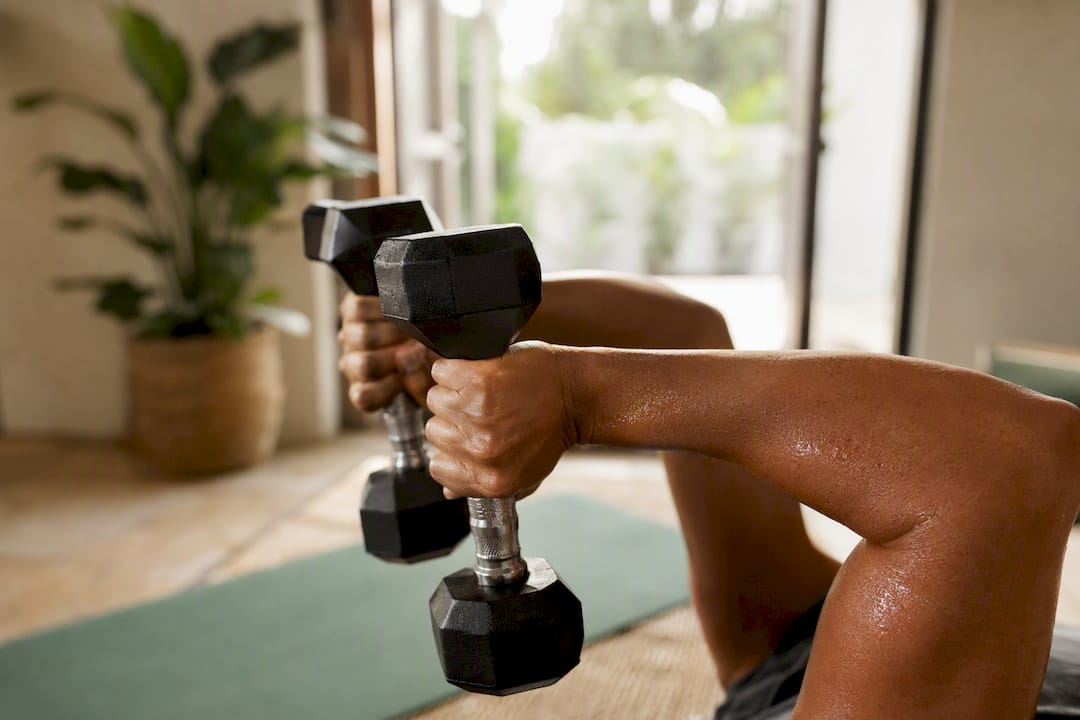
Here’s a workable structure if you’re starting from scratch:
1. Train two to four times per week, non-consecutive days. Two sessions is a reasonable floor for maintenance; three to four gets you closer to actual muscle growth, not just preservation.
2. Focus on compound movements first. Squats, hip hinges (deadlifts or their variations), rows, and presses recruit the most muscle mass per session and give you the best return on limited energy, which matters when you’re eating in a deficit.
3. Work in the 8 to 15 rep range for most sets, at a weight that feels genuinely challenging by the last two or three reps. This range balances strength and hypertrophy stimulus without demanding maximal loads that carry higher injury risk for beginners.
4. Progress gradually, roughly 5% more weight or one to two more reps every one to two weeks, once the current load feels manageable. Older adults or people with joint limitations should progress more conservatively and lean on machines or resistance bands before free weights.
5. Add two to three sessions of moderate aerobic activity weekly, but don’t let cardio crowd out lifting. Walking, cycling, or swimming supports cardiometabolic health and complements resistance work, but aerobic exercise alone does very little to prevent lean-mass loss compared to strength training.
One detail from the research is worth calling out specifically: starting resistance training at the same time you start GLP-1 therapy, rather than adding it in months later after muscle loss has already occurred, produces meaningfully better preservation of lean mass and physical function.
Pro Tip: If a gym feels intimidating or your joints aren’t ready for barbells, resistance bands and bodyweight squats, push ups, and rows done consistently at home outperform an ambitious gym program you abandon after two weeks. Consistency beats intensity here by a wide margin.
How Do You Know if You’re Losing Muscle on GLP-1?
You can’t manage what you don’t measure, and relying on the bathroom scale alone will tell you nothing about whether the weight coming off is fat, muscle, or some worrying mix of both.
DXA scans remain the most accessible clinical standard for tracking lean mass over time, and most endocrinology and weight-management clinics can order one. MRI offers more precise skeletal-muscle isolation, separating muscle from organ and fluid weight, but it’s expensive and not routinely used outside research settings. Bioelectrical impedance analysis (BIA), the kind found in smart scales and some clinic devices, is convenient and cheap but notoriously sensitive to hydration status, meaning day-to-day swings can mislead you if you’re not consistent about testing conditions.
Beyond imaging, simple functional tests tell you what actually matters day to day:
- Handgrip strength, measured with a cheap dynamometer, correlates well with overall muscle function and frailty risk.
- Sit-to-stand tests (how many times you can stand from a chair in 30 seconds without using your arms) flag lower-body strength decline early.
- Timed up-and-go tests catch mobility and balance changes before they become obvious in daily life.
A reasonable monitoring cadence: get a baseline assessment before or at the start of treatment, recheck at three to six months, then annually or sooner if you notice new weakness, unexplained fatigue, or difficulty with tasks that used to feel easy. Any sharp, unexplained strength drop between visits is a signal to call your clinician, not wait for the next scheduled appointment.
Can You Rebuild Muscle Lost While Taking GLP-1?
Yes, and the approach isn’t fundamentally different from rebuilding muscle after any period of under-fueling. It just requires being deliberate about it instead of hoping it happens passively.
1. Get an updated assessment first. Before changing anything, find out where you actually stand with a body-composition scan or functional testing, so you’re working from real numbers instead of guesswork about how much you’ve lost.
2. Shift toward a modest caloric surplus, or at minimum, caloric maintenance, if your weight-loss goals allow it. Trying to build muscle while still in a steep deficit is possible but slow and inefficient; even a small surplus of 200 to 300 calories, weighted heavily toward protein, speeds recovery considerably.
3. Shift your training toward hypertrophy-focused resistance work. Higher training volume, moderate rep ranges (8 to 12), and progressive overload over 12 to 16 week blocks tend to produce the most consistent size and strength gains during a rebuilding phase.
4. Expect gradual, not dramatic, progress. Regaining lost muscle typically takes months, not weeks, and the rate slows as you approach your prior baseline. Function often returns faster than the scan numbers do.
5. Loop in a physical therapist or registered dietitian if you’re dealing with joint pain, a mobility limitation, or a plateau that isn’t responding to more food and more lifting. A referral at that point is a normal part of a well-run recovery plan, not a sign something’s gone wrong.
Pro Tip: Track strength numbers (how much weight you’re lifting, for how many reps) alongside body weight. Strength climbing while weight holds steady is one of the clearest early signs that you’re rebuilding lean tissue rather than just gaining fat back.
What New Treatments Are Being Studied for Muscle Loss During GLP-1 Therapy?
Research into protecting muscle during pharmacologic weight loss is moving fast, though almost none of it has reached standard clinical practice yet.
- Preclinical drug candidates. A 2026 Stanford Medicine report described a candidate compound that improved muscle repair in mice undergoing GLP-1 treatment, an early but promising signal for future combination therapies.
- Ongoing human trials. Clinicaltrials is currently tracking tirzepatide’s effects on skeletal muscle structure, strength, and metabolism over 24 weeks, using MRI and biopsy data to get a much clearer picture than DXA alone can offer.
- Dual and triple-agonist research. As tirzepatide and newer combination therapies mature, more trials are specifically building in muscle-function endpoints from the start, rather than treating muscle loss as an afterthought discovered in secondary analysis.
None of this is available or approved for routine use today. If a clinician or program mentions a “muscle-protecting adjunct” outside of a clinical trial, treat that claim with real skepticism until it’s backed by published, peer-reviewed data.
How Coordinated Medical Care Helps Protect Muscle During Treatment
Preventing muscle loss on GLP-1 therapy works best when nutrition, training, and medical oversight move together instead of happening in isolation. Legacymeds structures its program around exactly that combination: a provider assessment to personalize the medication plan, plus ongoing coaching that can reinforce protein targets and activity guidance throughout treatment. Patients working through Legacymeds’ program have averaged an 18% reduction in body weight, and unlimited provider access means questions about strength, fatigue, or diet can get addressed as they come up rather than waiting for a quarterly check-in. That kind of continuous touchpoint is what turns the prevention steps above from good advice into something someone actually sticks with.
What Clinicians Get Wrong About Muscle Loss on These Drugs
Most of the public conversation about GLP-1 and muscle loss swings between two extremes: either total dismissal (“it’s just water weight, don’t worry about it”) or outright alarm (“you’re going to waste away”). Both miss the more useful, more boring truth sitting in the middle.
The number that gets quoted constantly, that lean mass can account for a large share of total weight lost, is real, but it’s frequently presented without the context that not all of that lean mass is contractile muscle, and that functional decline doesn’t always track the scan number. At the same time, treating the finding as noise to be ignored is its own kind of malpractice. If you’ve got a family history of frailty, if you’re over 60, or if you started this medication already under-muscled from years of yo-yo dieting, this is not a number to shrug off.
What actually moves the needle isn’t complicated. It’s protein at every meal, a barbell or a resistance band two to four times a week, and a body-composition check before you start rather than a worried phone call six months in. Plan for muscle preservation the same day you fill the first prescription, and this becomes a manageable variable instead of a regret.
Get Medical Support That Accounts for Muscle Preservation, Not Just the Scale
Most GLP-1 prescriptions today come with a medication and little else, leaving you to figure out protein targets, training, and monitoring on your own or through forum posts. That gap is where muscle preservation quietly falls through the cracks.
Legacymeds pairs your prescription (semaglutide, tirzepatide, Wegovy, or Zepbound) with a real provider assessment and unlimited ongoing coaching, at no membership fee and without needing insurance, so questions about protein intake, training, or unexpected weakness get answered by someone who knows your case instead of a general FAQ page. That structure matters most for the readers this article is written for: people who want the medication’s results without treating muscle loss as an acceptable trade-off. The program is built for adults who are serious about losing weight without losing function, whether you’re just starting to research options or you’re already mid-treatment and noticing strength changes you want addressed.
If you’re weighing whether your current plan accounts for lean-mass risk, start with a look at the GLP-1 weight loss program to see how the assessment and coaching process works, or check the medication safety information if you have specific concerns about musculoskeletal side effects before your first visit.
Sources
- PubMed record for 2026 systematic review/meta-analysis
- Muscle loss and GLP-1R agonists use – PMC
- Preserving Lean Body Mass in Patients Taking GLP-1 for Weight Loss - Mass General Advances in Motion
- Drug enhances muscle repair during GLP-1 weight-loss treatment in mice — Stanford Medicine News
- Clinicaltrials
FAQ
Does GLP-1 cause muscle loss?
Yes, GLP-1 therapy is associated with measurable lean-mass reduction, averaging around 1.74 kg in a recent meta-analysis, though the amount varies significantly by drug and individual response.
How do I stop losing muscle on Ozempic or similar GLP-1 drugs?
Prioritize protein intake at 1.2 to 1.6 grams per kilogram of body weight daily and start resistance training two to four times weekly, ideally from the same point you begin the medication rather than after muscle loss has already occurred.
How do you rebuild muscle that was lost on a GLP-1 medication?
Get a baseline assessment, shift toward caloric maintenance or a modest surplus with high protein, and follow a hypertrophy-focused resistance program for 12 to 16 weeks, expecting gradual rather than immediate gains.
How can I gain muscle while on GLP-1 medication?
Combine adequate protein intake, progressive resistance training, and consistent recovery; some patients successfully build muscle on GLP-1 therapy, though it requires more deliberate nutrition planning than losing weight alone. A program that includes ongoing coaching, like the one offered through Legacymeds, can help you adjust targets as your weight and activity level change.
Is lean-mass loss on GLP-1 the same as losing muscle strength?
Not necessarily. Lean mass measured by DXA includes organs and fluid alongside muscle, and research suggests strength and mobility don’t always decline in the same proportion as the lean-mass number, which is why functional testing matters alongside body-composition scans.