
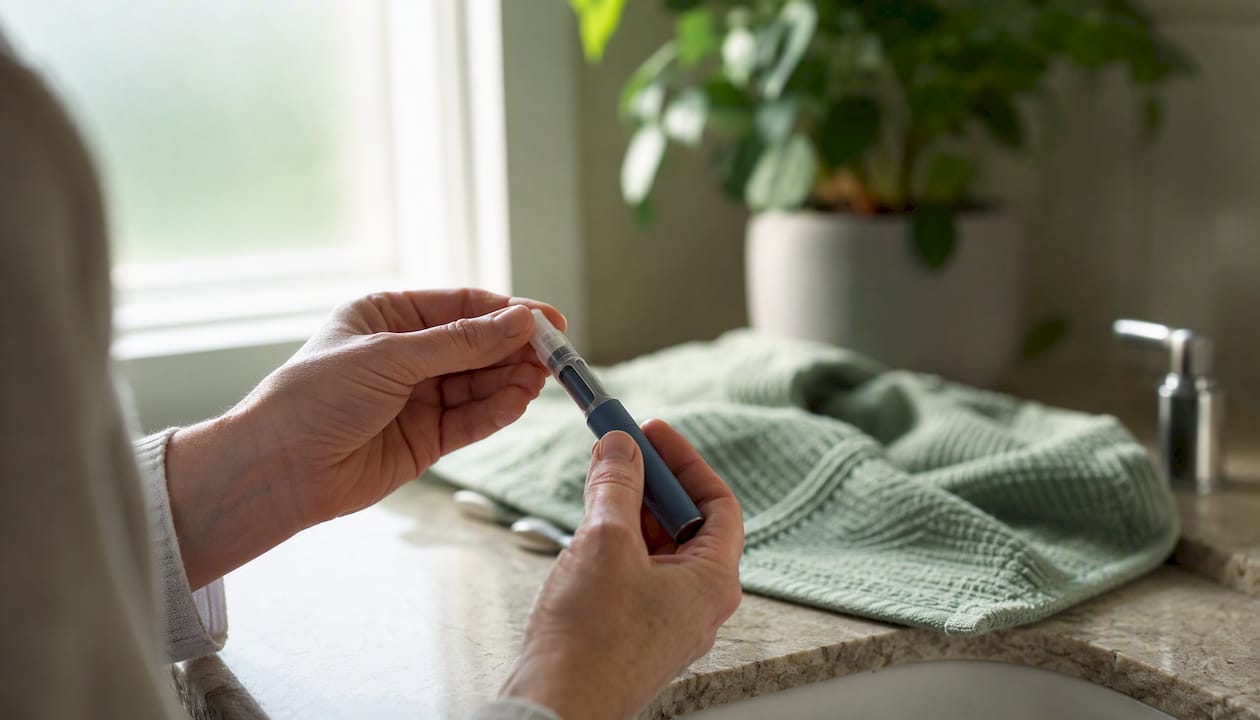
GLP-1 receptor agonists are not recommended during pregnancy or while you’re actively trying to conceive, and if you find out you’re pregnant while taking one, the right move is to contact your clinician right away, not to panic or quit cold turkey on your own without guidance. That’s the bottom line every major product label and counseling resource lands on. The standard advice is a two-month washout window before you start trying to conceive, based on how long semaglutide and similar drugs linger in the body after your last dose.
If you’re reading this because a test just came back positive, or because you’re planning ahead, here’s what to do right now:
- Call your prescriber today. Don’t wait for your next scheduled visit. Tell them the date of your last dose and how far along you think you are.
- Don’t make medication changes solo. Some guidance says stop immediately upon confirmed pregnancy, but the timing and any bridge plan (especially for diabetes management) should come from your care team, not a Google search.
- Book an early prenatal appointment. Early dating ultrasounds and a documented exposure timeline matter for your care and for the broader evidence base.
- Ask about a specialist referral. Maternal-fetal medicine or endocrinology involvement is common when a GLP-1 was on board at conception.
- If you’re not pregnant yet but trying, confirm your washout timeline and switch to a backup contraception method you trust in the meantime.
Key Takeaways
GLP-1 receptor agonists carry a clear clinical consensus: avoid them in pregnancy and while trying to conceive, plan a two-month washout, and contact your clinician immediately if pregnancy occurs during treatment.
| Point | Details |
|---|---|
| Not recommended in pregnancy | Major guidance and product labels advise against GLP-1 use during pregnancy and while trying to conceive. |
| Two-month washout | Stop semaglutide or tirzepatide roughly 2 months before a planned conception attempt, per product labeling. |
| Fertility can return fast | Weight loss and improved insulin sensitivity can restore ovulation, especially with PCOS, increasing pregnancy risk without reliable contraception. |
| Evidence is reassuring but incomplete | A 2026 meta-analysis of 40,000+ pregnancies found no significant malformation increase (OR 1.39, CI 0.73–2.65), but the range is wide. |
| Legacymeds screens for this upfront | Legacymeds includes provider-led reproductive intent and contraception screening before prescribing, with washout planning available if pregnancy is a near-term goal. |
This article is general information, not a substitute for advice from a qualified doctor. Consult a qualified healthcare professional about your own circumstances before acting on anything here.
Table of Contents
- What Does GLP-1 Pregnancy Guidance Actually Cover?
- Why Are More People Getting Pregnant on GLP-1s?
- What Do Human and Animal Studies Show About GLP-1 Safety in Pregnancy?
- What Do Clinical Guidelines Say About Stopping GLP-1s Before Pregnancy?
- How Should Clinicians Counsel Patients on GLP-1s and Fertility?
- What Should You Do If You Get Pregnant While on a GLP-1?
- Is It Safe to Use a GLP-1 While Breastfeeding?
- How Long Should You Wait After Stopping a GLP-1 Before Trying to Conceive?
- A Quick Checklist for Patients and Clinicians
- What Does the Evidence Actually Mean for Your Decision?
- A Clinician’s View on Counseling Reproductive-Aged Patients
- What If You’re Not Planning Pregnancy Anytime Soon?
- Sources
- FAQ
What Does GLP-1 Pregnancy Guidance Actually Cover?
GLP-1 receptor agonists work by mimicking a gut hormone that slows stomach emptying, suppresses appetite, and improves how your body responds to insulin. That’s the mechanism behind both the weight loss and the blood sugar control people see on these drugs. It’s also, indirectly, part of why fertility questions have become such a big deal in this drug class.
You’ll see these agents under a handful of brand names, and it helps to know which is which when you’re reading a label or talking to a provider:
- Semaglutide — sold as Ozempic and Rybelsus for type 2 diabetes, and as Wegovy for weight management.
- Liraglutide — sold as Victoza (diabetes) and Saxenda (weight management).
- Tirzepatide — sold as Mounjaro (diabetes) and Zepbound (weight management).
None of these are approved as fertility treatments. That distinction gets lost in a lot of online chatter, but it matters clinically: any pregnancy that happens while someone is more fertile on a GLP-1 is a side effect of metabolic improvement, not the drug doing what it’s licensed to do.
Why Are More People Getting Pregnant on GLP-1s?
The phenomenon some call the “Ozempic baby boom” has a fairly boring biological explanation once you look past the headlines: weight loss and improved insulin sensitivity restore ovulation in people who weren’t ovulating regularly before, particularly those with PCOS. Systematic review data shows GLP-1 receptor agonists significantly improve spontaneous pregnancy rates in women with PCOS, and the effect tracks with weight reduction and metabolic change rather than any direct fertility action of the drug itself.
There’s a behavioral layer too. People who’ve struggled with infertility for years sometimes stop being as vigilant about contraception once they’ve been told getting pregnant “probably won’t happen anyway.” Add in a possible reduction in oral contraceptive effectiveness. GI side effects like nausea, vomiting, and diarrhea can theoretically reduce how well a pill gets absorbed, and that concern shows up specifically in discussions of GLP-1 and oral contraceptive interactions.
Picture a patient with longstanding PCOS and irregular cycles who starts a GLP-1 for weight management, assumes pregnancy is unlikely given her history, and skips refilling her birth control pills. Three months later, after losing 15% of her body weight, her cycles normalize and she conceives without realizing she was ovulating again. This is exactly the pattern clinicians are seeing more often, and it’s why reproductive planning needs to happen at the first prescription, not after the fact.

Pro Tip: If you don’t want to get pregnant and you’re starting a GLP-1, ask about a long-acting reversible contraceptive (IUD or implant) instead of relying on the pill. It removes the guesswork if your cycle changes faster than expected.
What Do Human and Animal Studies Show About GLP-1 Safety in Pregnancy?
Here’s the honest state of the evidence: it’s reassuring in places, but nowhere near conclusive. A 2026 meta-analysis pooling more than 40,000 exposed pregnancies found no statistically significant increase in major congenital malformations tied to first-trimester GLP-1 exposure, with a pooled odds ratio of 1.39 and a 95% confidence interval spanning 0.73 to 2.65. That confidence interval is wide enough to include both “no added risk” and “a meaningfully elevated risk,” which is exactly why researchers stop short of calling this settled.
What the data shows so far: A pooled analysis of over 40,000 GLP-1-exposed pregnancies found no statistically significant increase in major malformations (OR 1.39, 95% CI 0.73–2.65), but the confidence interval is too wide to rule out real risk.
A separate systematic review and meta-analysis published in JACC: Advances reports some heterogeneous but interesting signals: certain pooled analyses show lower odds of preterm birth and better maternal outcomes among GLP-1-exposed pregnancies compared to other antidiabetic regimens. That sounds encouraging until you remember these are observational studies. People prescribed GLP-1s tend to be healthier, more engaged with their care, or managed differently than people who aren’t, and that confounding by indication can manufacture a benefit signal that has nothing to do with the drug itself.
Animal data tell a more cautionary story. Teratology studies summarized in CMAJ found skeletal abnormalities and reduced fetal growth in animals given high doses, doses that also caused toxicity in the pregnant animals themselves. That’s an important caveat: these effects showed up alongside maternal harm, not as an isolated fetal effect at normal exposure levels. Still, it’s the kind of signal that keeps regulators cautious even when human data look relatively clean.
| Evidence Type | Key Finding | Main Limitation |
|---|---|---|
| 2026 meta-analysis, 40,000+ pregnancies | No significant increase in major malformations (OR 1.39, CI 0.73–2.65) | Wide confidence interval, observational design |
| JACC systematic review | Possible lower preterm birth risk in some pooled data | Confounding by indication, heterogeneous studies |
| Animal teratology studies | Skeletal abnormalities, reduced fetal growth at high doses | High-dose exposure with concurrent maternal toxicity |
The recurring limitations across this evidence base: small numbers for rare outcomes, inconsistent timing of exposure (some pregnancies were exposed for days, others for months before discovery), reliance on live-birth registries that can miss early pregnancy loss, and short follow-up windows that don’t capture anything about a child’s development past infancy.
What Do Clinical Guidelines Say About Stopping GLP-1s Before Pregnancy?
The consensus across obstetric, endocrine, and regulatory bodies is remarkably consistent: don’t use GLP-1s in pregnancy, use effective contraception while on them, and plan to stop before you start trying to conceive, as outlined in guidance on chiropractic safe pregnancy care. The U.K.'s medicines regulator has been blunt about it, explicitly warning that people on these medications should use effective contraception and should stop treatment if they’re pregnant, planning pregnancy, or breastfeeding.
Product labeling and MotherToBaby’s semaglutide fact sheet both point to the same recommended window: about two months before a planned conception attempt. That interval isn’t arbitrary. It’s tied to how long it takes the drug to clear the body meaningfully, not to some fixed idea about fetal development timelines.
| Guidance Source | Recommendation |
|---|---|
| Product labels (semaglutide, tirzepatide) | Discontinue roughly 2 months before planned conception |
| MotherToBaby | Human pregnancy data limited; recommends washout before conception attempts |
| MHRA (UK regulator) | Use effective contraception; stop if pregnant, trying to conceive, or breastfeeding |
| CMAJ clinical guidance | Avoid use in pregnancy and lactation; supports 1 to 2 month pre-conception stop |
Breastfeeding guidance is more conservative than the underlying pharmacology might suggest. GLP-1 drugs are large peptide molecules, and in theory, that size should limit how much transfers into breast milk. But because actual human lactation data are sparse, most clinical guidance still recommends avoiding these medications while breastfeeding rather than assuming the theoretical low-transfer profile holds up in practice.
- Confirm reproductive plans before starting or continuing a GLP-1.
- Use a contraception method you trust, not just “hoping timing works out.”
- Build in the two-month stop window as a non-negotiable part of any conception plan.
How Should Clinicians Counsel Patients on GLP-1s and Fertility?
Good counseling here isn’t a single conversation. It’s a running check-in that adjusts as a patient’s plans and body change.
A practical counseling sequence looks like this:
- Screen for reproductive intent at every visit where a GLP-1 is prescribed or refilled, not just at the initial consult.
- Review contraception status and confirm the method is still appropriate, especially after significant weight loss or dose escalation.
- Set a washout timeline together if pregnancy is desired within the next year, working backward from the two-month stop window.
- Discuss alternative metabolic strategies for the washout period and pregnancy itself, since diabetes management in particular can’t just pause.
- Identify referral points, including maternal-fetal medicine, reproductive endocrinology, or a teratology information service if questions come up mid-treatment.
Patients should feel comfortable asking their provider pointed questions: How long before I should stop if I want to conceive next spring? What contraception works best while I’m on this medication? What happens to my blood sugar control during the washout? Those aren’t awkward questions, they’re the whole point of the visit.
- Consider a non-oral long-acting method (IUD, implant) when GI side effects are prominent, since absorption concerns with oral contraceptives are strongest during dose escalation.
- Re-confirm contraception any time a dose changes, since side effect patterns shift.
- Document the conversation. It protects both the patient’s plan and the clinical record if an unplanned pregnancy occurs.
What Should You Do If You Get Pregnant While on a GLP-1?
Finding out you’re pregnant while on Ozempic, Wegovy, Mounjaro, or a similar drug is not a crisis to manage alone, but it does call for prompt, specific action.
- Contact your provider immediately rather than waiting for a routine appointment. Bring the date of your last dose.
- Don’t self-adjust dosing before talking to your clinician, even though many guidelines do recommend stopping as soon as pregnancy is confirmed.
- Get into prenatal care early, ideally within the first couple weeks of a positive test, so dating and baseline labs happen on schedule.
- Ask about specialist involvement. Maternal-fetal medicine and, if you have diabetes, endocrinology, are the two most common referrals.
- Discuss alternative glucose control right away if you were using a GLP-1 for diabetes rather than weight management, since untreated hyperglycemia carries its own well-documented fetal risks.
- Expect a targeted ultrasound timed to assess fetal growth and anatomy given the exposure window.
- Ask whether your case can be reported to a pregnancy exposure registry. This is how the field builds better data for the next patient in your position.
Is It Safe to Use a GLP-1 While Breastfeeding?
The short answer clinical guidance gives is: probably lower risk than pregnancy exposure, but still not recommended, mostly because nobody’s proven it’s fine. Semaglutide and its relatives are large peptide molecules, and the theoretical expectation is that very little would transfer into milk. Theoretical isn’t the same as studied, though, and the CMAJ guidance on lactation reflects that gap by recommending avoidance during breastfeeding despite the reassuring pharmacology.
Timing resumption postpartum is its own balancing act. Stopping a GLP-1 often triggers rebound weight regain and, for people with diabetes, rebound hyperglycemia, so a return to prepregnancy metabolic problems can happen fast if there’s no bridge plan. Some patients manage this with dietary strategies and closer glucose monitoring during breastfeeding, then resume GLP-1 therapy once breastfeeding ends or milk supply is well established and stable.
- Diet and activity adjustments can help manage weight and glucose during the breastfeeding window.
- Schedule a postpartum follow-up specifically to discuss when (not just whether) to restart therapy.
- If diabetes is involved, coordinate the restart timing with your endocrinology team, since the risk of untreated hyperglycemia has to be weighed against lactation goals.
How Long Should You Wait After Stopping a GLP-1 Before Trying to Conceive?
The two-month figure that shows up across product labels and counseling resources isn’t a round number picked for convenience. It reflects how long it takes semaglutide’s active drug levels to drop substantially in your system, generally around six weeks on average, with the extra buffer built in for individual variation.
Washout by the numbers: Product labeling recommends stopping semaglutide and tirzepatide roughly 2 months (about 8 weeks) before a planned conception attempt, based on how long these drugs remain active in the body after the last dose.
Here’s how that plays out for someone planning ahead: if you take your last dose of Wegovy on March 1, the recommended guidance points to waiting until roughly the start of May before actively trying to conceive. Tirzepatide follows similar logic, and the practical advice is the same regardless of which specific agent you’re on, plan the stop date backward from your target conception window, don’t try to time it around a missed period.
- Continue effective contraception through the entire washout period, not just up to when you stop the medication.
- If you’ll need contraception long past the washout window, a LARC device removes the day-to-day management burden.
- Rebound weight gain is common after stopping, so talk with your provider about managing that during the wait rather than being surprised by it.
A Quick Checklist for Patients and Clinicians
Save this, screenshot it, or bring it to your next visit. It covers the essentials in one pass:
- Pregnancy intent: Are you trying to conceive now, within the year, or actively avoiding pregnancy?
- Contraception status: What method are you using, and does it still make sense given your GLP-1 dose and side effects?
- Medication and last dose: Name of the drug and the exact date of your most recent dose.
- Planned stop date: Worked backward from a two-month washout if conception is a near-term goal.
- Alternative plan: What replaces the GLP-1 for diabetes or weight management during the washout and pregnancy itself?
- Referral contacts: Do you have a maternal-fetal medicine or endocrinology contact lined up if needed?
If you’re calling your clinician about a suspected or confirmed pregnancy, a simple script helps: “I’m on [medication name], my last dose was [date], and I just found out I’m pregnant. What should I do next?” That one sentence gets you to the right next steps faster than a long explanation.
Documentation matters beyond your own chart. Exposure timing recorded accurately and reported to a pregnancy registry when possible feeds directly into the next round of research, the kind that eventually narrows those wide confidence intervals mentioned earlier.
What Does the Evidence Actually Mean for Your Decision?
The honest summary of where things stand: no consistent signal for major malformations has emerged from observational data through 2026, but “no consistent signal” is not the same as “proven safe.” Confounding by indication, live-birth bias in registries, and short follow-up windows all limit how much weight any single study should carry.
“Absence of a clear harm signal in small observational cohorts is not equivalent to proof of safety.” That distinction should anchor every conversation between a patient and a provider about accidental exposure, because it keeps the discussion honest about what’s known versus what’s assumed.
For counseling purposes, this means talking in terms of absolute risk rather than relative risk whenever possible. An odds ratio of 1.39 sounds alarming in isolation, but translated into absolute numbers against a low baseline rate of malformation, the practical difference is often small. Shared decision-making, not a blanket verdict, is the right frame for a patient who’s already pregnant and can’t undo the exposure.
- Prospective pregnancy registries with standardized exposure timing are the top research priority right now.
- Long-term pediatric follow-up studies (beyond infancy) are essentially absent and badly needed.
- Randomized trial data will likely never exist for obvious ethical reasons, so registry quality is what will move this field forward.
A Clinician’s View on Counseling Reproductive-Aged Patients
If I were sitting across from a reproductive-aged patient starting a GLP-1, the fertility conversation wouldn’t wait for a follow-up visit, it would happen at the first prescription, before the first dose. Weight loss and improved insulin sensitivity change ovulation faster than most patients expect, sometimes within a few months, and a contraception plan that made sense before treatment can quietly stop being adequate. The patients who get surprised aren’t careless, they’re just working from outdated assumptions about their own fertility. Pairing every GLP-1 start with a real contraception conversation, not a rushed mention, is the single highest-leverage thing a clinician can do here. The rest, washout timing, alternative glucose control, breastfeeding decisions, all flow more smoothly when that first conversation actually happened.
What If You’re Not Planning Pregnancy Anytime Soon?
If pregnancy isn’t part of your near-term plans, a supervised GLP-1 program is still one of the more effective medically-informed paths for weight loss and metabolic health, and Legacymeds runs that supervised model directly, with a telehealth provider assessment, personalized medication planning, and unlimited ongoing coaching built in rather than sold as an add-on.
Every patient starts with a real provider visit, not a questionnaire that auto-approves a prescription. That visit is exactly where reproductive-intent screening and contraception counseling belong, and Legacymeds includes it before any medication is prescribed, alongside informed consent covering telehealth screening and medical history review. If pregnancy is part of your plan for the coming year, that’s worth raising at intake so a washout timeline gets built into your treatment plan from day one instead of becoming a scramble later. Legacymeds patients get access to detailed medication safety information covering exactly these scenarios, without the membership fees or insurance hurdles that slow other programs down. If you’re ready to start a supervised, medically-guided weight loss plan, you can begin your provider assessment today and get your questions about eligibility and timing answered directly by a clinician.
Sources
- Semaglutide - MotherToBaby | Fact Sheets - NCBI Bookshelf
- PubMed entry for 2026 meta-analysis
- GLP-1 Receptor Agonist Exposure During Pregnancy: A Systematic Review and Meta-Analysis of Adverse Pregnancy Outcomes | JACC: Advances
- Anti-obesity pharmacological agents for polycystic ovary syndrome: systematic review and meta-analysis (PMC)
- Study on interactions between GLP-1 side effects and oral contraceptive effectiveness (PubMed)
FAQ
What happens if you get pregnant while on a GLP-1?
Contact your provider immediately, don’t adjust your medication on your own, and get into early prenatal care so your exposure timing gets documented and any needed specialist referrals happen quickly.
How long should you be off a GLP-1 before trying to conceive?
Standard guidance recommends stopping semaglutide or tirzepatide about two months (roughly 8 weeks) before attempting conception, based on how long the drug remains active in the body.
What if I accidentally get pregnant while on Ozempic?
Call your prescriber right away with the date of your last dose. Many guidelines recommend stopping as soon as pregnancy is confirmed, but the decision and any transition plan should come from your clinician.
What is the “Ozempic baby boom”?
It refers to a rise in unplanned pregnancies among people on GLP-1 medications, driven mainly by restored ovulation from weight loss and improved insulin sensitivity rather than any direct fertility effect of the drug.
Can Legacymeds help if I’m planning pregnancy soon?
Legacymeds screens for reproductive intent and contraception status during the initial provider visit, so patients planning pregnancy can build a proper washout timeline into their treatment plan from the start.