
TL;DR:
- Most people pay between $997 and $1,349 monthly for semaglutide, but insurance, savings programs, and bundles significantly lower costs. Eligible patients can pay as little as $25 with manufacturer discounts, while telehealth and self-pay options range from about $129 to $399 per month. The upcoming Medicare GLP-1 Bridge program will cap copays at $50 monthly from 2026 to 2027 for eligible beneficiaries.
Most people paying cash for brand-name semaglutide face a retail price of roughly between $997 and $1,349 per month. With commercial insurance and a manufacturer savings card, monthly copays can be as low as $25 for eligible patients. Medicare beneficiaries who qualify for the new GLP-1 Bridge program pay a flat $50 per month starting July 1, 2026 through December 31, 2027. The single fastest way to cut cost: check whether your insurer covers semaglutide and enroll in the manufacturer savings card on the same day you fill your prescription.
Three routes that lower monthly cost the fastest:
- Insurance plus a manufacturer savings card — eligible commercially insured patients can pay as little as $25/month for Wegovy with Novo Nordisk’s savings offer
- Manufacturer self-pay programs (NovoCare and similar) — cash-pay tiers for Wegovy have run from about $149 to $399 per month depending on dose and promotions
- Telehealth bundled compounded semaglutide — all-in programs typically run in the range of $129 to $249 per month and include the provider visit and shipping
Pro Tip: Call your pharmacy benefit manager (the number on the back of your insurance card) before your first appointment and ask two questions: Is semaglutide on my formulary? What tier? That five-minute call tells you whether you need a prior authorization and whether a manufacturer card can stack on top.
Table of Contents
- How much does semaglutide cost without insurance?
- What does semaglutide cost with insurance?
- Which insurance plans are most likely to cover semaglutide?
- How Wegovy, Ozempic, and Rybelsus differ in price and coverage
- Practical ways to lower your monthly semaglutide cost
- Is compounded semaglutide cheaper, and is it safe?
- The 2026 Medicare GLP-1 Bridge program: who qualifies and what it costs
- Key takeaways for different reader groups
- Key Takeaways
- Predictable monthly pricing through Legacymeds
- FAQ
How much does semaglutide cost without insurance?
The retail sticker price and the price a cash-pay patient actually pays are two very different numbers, and knowing both is the starting point for any real cost comparison.
Manufacturer list prices vs. real-world cash prices
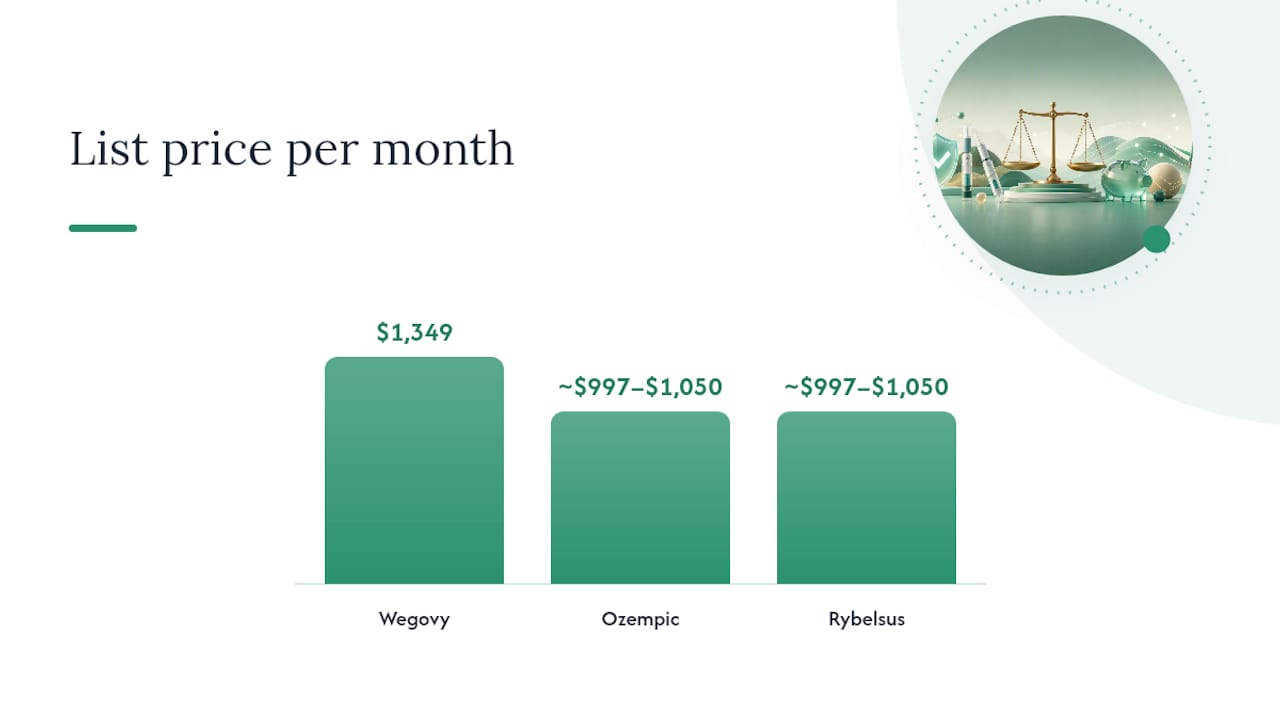
Branded GLP-1 list prices in 2026 generally fall between about $997 and $1,349 per month. Wegovy (semaglutide 2.4 mg, FDA-approved for weight management) has a retail list price near the top end of this range. Ozempic (semaglutide 0.5–2 mg, FDA-approved for type 2 diabetes) lists near the lower end. Rybelsus (oral semaglutide 7–14 mg, for type 2 diabetes) is similar.
Those numbers are what the pharmacy charges before any discount. Almost no cash-pay patient pays them.
Real-world cash prices tell a different story. GoodRx and pharmacy discount cards can produce meaningful reductions on retail prices, though availability and pharmacy participation vary by location and dose. Manufacturer self-pay programs narrow the gap further. Wegovy’s NovoCare self-pay tiers have offered pricing ranging roughly from $149 to $399 per month depending on dose and current promotions. Telehealth all-in bundles, which include the provider assessment and shipping, commonly run between about $149 and $399 per month for branded options and roughly $129 to $249 per month for compounded semaglutide.
One important note on dose and box pricing: branded semaglutide pens are sold by the box, not by the milligram, so the retail price often stays the same whether you’re on a starter dose or a maintenance dose. That means your monthly cash cost doesn’t necessarily climb as your dose increases, which is different from how many patients expect it to work.
| Product | Retail list price/month | Typical cash price after discount | Telehealth all-in bundle |
|---|---|---|---|
| Wegovy (injectable, weekly) | ~$1,349 | $149–$399 (self-pay program) | $149–$399 |
| Ozempic (injectable, weekly) | ~$997–$1,050 | Varies; GoodRx discounts available | Not typically bundled |
| Rybelsus (oral, daily) | ~$997–$1,050 | Varies; GoodRx discounts available | Not typically bundled |
| Compounded semaglutide | N/A (not branded) | $129–$249 | $129–$249 (most common model) |
Key factors that affect your actual cash price:
- Which pharmacy you use (independent vs. chain vs. mail-order)
- Whether you use a GoodRx coupon, manufacturer card, or self-pay program
- Your dose and which pen configuration your prescription calls for
- Whether you’re buying through a telehealth platform that bundles the medication
What does semaglutide cost with insurance?
For commercially insured patients, the monthly out-of-pocket number depends heavily on three things: your plan’s formulary tier, where you are in your deductible, and whether a manufacturer savings card is allowed on top of your coverage.
Estimating your actual monthly copay
Once you’ve cleared your deductible, a Tier 3 specialty drug copay for semaglutide typically ranges from $50 to $150 per month on most commercial plans. Some employer plans with strong GLP-1 benefits bring that down to as low as $25 per month, especially when paired with a manufacturer savings card. Wegovy’s commercial savings offer can lower eligible insured patients’ copay to as little as $25/month, subject to eligibility rules and income thresholds.
Medicare Part D is a different story. The new GLP-1 Bridge program sets a flat $50/month copay for eligible beneficiaries starting July 1, 2026, through December 31, 2027.
Steps to estimate your monthly out-of-pocket:
- Call your insurer or log into your plan portal and search for your drug by name (Wegovy, Ozempic, or Rybelsus) to find its formulary tier.
- Check your current deductible balance. If you haven’t met it yet, you’ll pay the full negotiated rate until you do.
- Ask whether prior authorization is required (it almost always is for weight-management indications).
- Confirm whether your plan allows manufacturer copay cards to stack on top of your coverage. Some plans prohibit this.
- Enroll in the manufacturer savings card the same day you fill your first prescription.
Approval timelines vary. A prior authorization decision typically takes 3–14 business days from submission. Copay card enrollment is usually instant online.
Pro Tip: If your plan denies the manufacturer savings card, ask your pharmacist to run the prescription through GoodRx as a separate cash transaction. In some cases, the GoodRx cash price beats the insured copay, and you can choose whichever is lower at the counter.
Which insurance plans are most likely to cover semaglutide?
Coverage for semaglutide varies more by plan design than by insurer name. The same company might cover Wegovy on one employer plan and exclude it entirely on another.
Plans with the strongest track record for GLP-1 coverage:
- Medicare Part D plans — participating in the temporary GLP-1 Bridge program (July 2026–December 2027)
- Medicaid — in a small number of states that have added GLP-1 coverage for obesity; most state Medicaid programs still exclude weight-management drugs
Utilization-management hurdles you’ll almost certainly face
Prior authorization is nearly universal for semaglutide prescribed for weight management. Insurers commonly require 3–6 months of documented lifestyle intervention before approving a GLP-1, which means your chart needs to show that you’ve tried diet and exercise under clinical supervision. Step therapy requirements may also apply, meaning your plan might require you to try and fail a cheaper drug first.
Common documentation your insurer will want:
- BMI at or above the plan’s threshold (typically 30, or 27 with a qualifying comorbidity)
- Diagnosis codes for obesity (E66.x) or a weight-related comorbidity (type 2 diabetes, hypertension, sleep apnea)
- Records of prior conservative therapy (nutrition counseling, structured exercise program, behavioral health visits)
- A letter of medical necessity from your prescribing clinician
Red flags that predict a denial: missing prior-therapy documentation, a diagnosis code that doesn’t match the drug’s approved indication, or a formulary exclusion your plan placed on the specific brand you were prescribed. If Wegovy is excluded but Ozempic is covered (because you have a diabetes diagnosis), your prescriber may need to adjust the prescription accordingly.
Pro Tip: Ask your prescriber’s office to check your plan’s prior-authorization requirements before the appointment, not after. Many practices have a dedicated prior-auth coordinator who can pull the payer’s criteria in advance and build your chart note around them. That one step cuts the average approval timeline significantly. You can also review common insurance and prior-auth questions before your visit.
How Wegovy, Ozempic, and Rybelsus differ in price and coverage
The three branded semaglutide products share the same active molecule but carry different FDA indications, formulations, and list prices. Those differences drive how insurers treat them, which directly affects your monthly cost.
Wegovy is FDA-approved specifically for chronic weight management in adults with obesity or overweight with a weight-related condition. That weight-management indication is what triggers the most restrictive prior-authorization requirements, because many plans still categorize weight-loss drugs as lifestyle drugs rather than medical treatments. The retail list price runs approximately $1,349/month. Manufacturer savings offers can bring insured patients to $25/month.
Ozempic carries an FDA approval for type 2 diabetes management. Patients who have a diabetes diagnosis often find it easier to get Ozempic covered because diabetes drugs face fewer formulary exclusions than weight-management drugs. The list price sits near $997–$1,050/month. FDA dosing labels document the approved dose range (0.5 mg, 1 mg, and 2 mg weekly injections), and the dose you’re prescribed affects which pen configuration you receive, though not always the monthly price.
Rybelsus is the oral daily formulation of semaglutide, also approved for type 2 diabetes. It’s the only semaglutide product you swallow rather than inject, which some patients strongly prefer. The list price is comparable to Ozempic. The daily dosing schedule (one tablet every morning, 30 minutes before food or drink) is a real adherence consideration that affects long-term cost because missed doses reduce efficacy.
Clinical evidence supports semaglutide’s weight-loss effects across formulations, which is increasingly being used in coverage justification letters and appeals.
| Product | FDA indication | Formulation | List price/month | Typical insured copay | Manufacturer savings |
|---|---|---|---|---|---|
| Wegovy | Weight management | Weekly injectable | ~$1,349 | $25 (commercial, with savings card) | Yes, as low as $25 |
| Ozempic | Type 2 diabetes | Weekly injectable | ~$997–$1,050 | Varies by plan | Limited savings offers |
| Rybelsus | Type 2 diabetes | Daily oral tablet | ~$997–$1,050 | Varies by plan | Limited savings offers |
Practical ways to lower your monthly semaglutide cost
Ranked by how much they typically reduce monthly spending, with eligibility notes for each:
-
Use insurance plus a manufacturer savings card. If your plan covers semaglutide and allows copay assistance, this combination usually produces the lowest monthly cost. Wegovy’s savings card has brought eligible commercially insured patients to $25/month. Check Wegovy’s savings page for current eligibility rules; Medicare and Medicaid patients are typically excluded from manufacturer cards.
-
Enroll in a manufacturer self-pay program. NovoCare’s self-pay options for Wegovy have offered tiered pricing from $149 to $399/month depending on dose and current promotions. This is often the best option for uninsured patients who don’t qualify for patient assistance.
-
Use a telehealth bundled compounded program. All-in telehealth subscriptions that include the provider assessment, compounded semaglutide, and shipping commonly run $129–$249/month. The tradeoff is that compounded semaglutide is not FDA-approved as a finished drug product (more on that below). For Medicare patients comparing GLP-1 costs, the Bridge program may be a better fit.
-
Check GoodRx and pharmacy discount services. GoodRx can reduce retail cash prices at participating pharmacies, though savings vary by location, dose, and pharmacy. It’s worth checking before every fill because prices shift. GoodRx cannot be combined with insurance at the same transaction.
-
Apply for patient assistance programs. Novo Nordisk’s NovoCare Patient Assistance Program provides free or deeply discounted medication to patients who meet income eligibility thresholds (typically at or below 400% of the federal poverty level) and have no insurance coverage. Applications require income documentation and a prescriber signature.
Eligibility summary by situation:
- Commercially insured: Start with insurance plus manufacturer savings card ($25/month for eligible Wegovy patients)
- Uninsured, middle income: Manufacturer self-pay program or telehealth bundle
- Uninsured, low income: Patient assistance program (NovoCare or similar)
- Medicare Part D: GLP-1 Bridge program ($50/month, July 2026–December 2027)
- Medicaid: Check your state’s formulary; most states exclude weight-management drugs
Pro Tip: Before using any coupon or discount card, read the program’s terms. Some manufacturer savings cards prohibit use alongside certain employer plans, and using a coupon when you have insurance can sometimes trigger a clawback. When in doubt, call the savings card’s customer service line before you fill.
Is compounded semaglutide cheaper, and is it safe?
Compounded semaglutide typically runs $129–$249/month, compared to $997–$1,349/month for branded products at retail. The price gap is real. So is the regulatory complexity.

Why compounded semaglutide costs less
Compounding pharmacies prepare medications from raw ingredients rather than purchasing finished drug products from the manufacturer. They don’t carry the same development, clinical trial, or marketing costs. That’s the source of the price difference, not a difference in the active molecule itself.
The FDA has issued clarifications about compounding policies as the national GLP-1 supply stabilizes. The agency’s position is that compounded semaglutide products are not FDA-approved finished drug products and are not subject to the same manufacturing standards as Wegovy or Ozempic. The FDA has also warned about unapproved or adulterated GLP-1 products marketed for weight loss.
Cost-versus-risk considerations:
- Compounded products from state-licensed 503A or 503B pharmacies with third-party testing offer more oversight than unregulated online sources
- Compounded semaglutide may not use the same salt form as the branded product, which can affect absorption
- No compounded GLP-1 product has undergone the clinical trials required for FDA approval
- Adverse events from compounded products may be harder to report and track
If you’re considering a compounded option, verify these before ordering:
- The pharmacy holds a current state pharmacy license and is registered with the FDA (503B outsourcing facilities have additional federal oversight)
- The product undergoes third-party potency and sterility testing, with certificates of analysis available on request
- A licensed clinician reviews your intake, prescribes the medication, and monitors your progress
- The platform has a clear process for reporting side effects and adjusting your dose
For GLP-1 medication safety information specific to semaglutide, review the clinical oversight standards before choosing any provider.
The 2026 Medicare GLP-1 Bridge program: who qualifies and what it costs
The single biggest policy change affecting semaglutide cost in 2026 is the Medicare GLP-1 Bridge program. Starting July 1, 2026, CMS is providing eligible Medicare Part D beneficiaries access to certain GLP-1 medications for a flat $50 monthly copayment, running through December 31, 2027.
For Medicare patients who previously had no coverage for weight-management drugs, this is a meaningful shift. A drug that cost $1,349/month at retail is now accessible at $50/month for those who qualify.
What Medicare says about the Bridge program: The $50 copayment is a fixed amount set by CMS for the duration of the temporary program. Covered GLP-1 medications include those approved for weight management in eligible Part D beneficiaries. The program runs from July 1, 2026 through December 31, 2027, after which standard Part D coverage rules apply.
Important caveats from CMS and Medicare guidance
Medicare’s coverage guidance makes clear that the $50 copayment does not count toward your Part D deductible or your annual out-of-pocket maximum. It is also not eligible for the Low Income Subsidy (Extra Help), meaning patients who receive Extra Help will not have this copay further reduced through that program. The $50 payment will not appear on your Part D Explanation of Benefits or your Medicare Summary Notice, which is different from how standard Part D drug costs are tracked.
Action steps for Medicare beneficiaries:
- Confirm your Part D plan is participating in the Bridge program (not all plans are required to participate)
- Ask your prescriber to submit a prior authorization specifically referencing the Bridge program criteria
- Verify the drug prescribed is on the covered drug list for the program
- Budget for the $50 copay as a separate, fixed monthly expense that does not reduce your other cost-sharing obligations
Key takeaways for different reader groups
Brand-name semaglutide carries a retail list price generally between $997 and $1,349 per month, but insurance, manufacturer programs, and telehealth bundles bring most patients’ actual monthly cost well below that figure.
- Medicare Part D beneficiaries: — The GLP-1 Bridge program offers a $50/month copay from July 2026 through December 2027. Confirm your plan participates and that your drug is covered.
Key Takeaways
Brand-name semaglutide carries a retail list price of $997–$1,349/month, but insurance, manufacturer programs, and telehealth bundles bring most patients’ actual monthly cost well below that figure.
| Point | Details |
|---|---|
| Cash price vs. list price | Retail list prices run $997–$1,349/month; self-pay programs and telehealth bundles typically cost $129–$399/month. |
| Insurance impact | Commercially insured patients with a manufacturer savings card pay $25/month for Wegovy if eligible. |
| Medicare Bridge program | Eligible Part D beneficiaries pay a flat $50/month from July 1, 2026 through December 31, 2027. |
| Prior authorization is standard | Most plans require 3–6 months of documented lifestyle intervention before approving GLP-1s for weight management. |
| Legacymeds option | Legacymeds offers a bundled telehealth GLP-1 program with no insurance or membership fees, free provider visits, and predictable monthly pricing. |
A note on cost pathways from the Legacymeds team
The cost picture for semaglutide is genuinely complicated, and most people underestimate how much the insurance layer changes things. The conventional advice is to “check your insurance,” but that framing misses the real problem: most commercially insured patients face a prior-authorization process that takes weeks, requires documentation their chart may not already contain, and can still end in denial. The patients who navigate it fastest are the ones who treat the PA like a project, not a phone call.
What gets overlooked in most cost articles is that the gap between branded and compounded semaglutide has narrowed considerably in 2026. Manufacturer self-pay programs have become genuinely competitive with compounded telehealth bundles on price, which changes the calculus for cash-pay patients who previously assumed compounded was the only affordable route. The regulatory risk of compounded products is real, and for patients who can access a manufacturer self-pay program at $149–$399/month, that’s a meaningful alternative worth comparing directly.
The $50 Medicare Bridge copay is the most underreported development of the year. It’s temporary, it has real caveats (it doesn’t count toward your deductible or out-of-pocket maximum), and not every Part D plan is participating. Medicare beneficiaries who assume they’re automatically enrolled are going to be surprised at the pharmacy counter. The action step is specific: call your Part D plan, confirm participation, and make sure your prescriber submits the PA with the Bridge program criteria in mind.
This article is general information, not medical or financial advice. Confirm current program terms with CMS, your insurer, or a qualified clinician before making coverage decisions.
Predictable monthly pricing through Legacymeds
If the insurance maze isn’t the path you want to take, there’s a direct alternative. Legacymeds offers a telehealth GLP-1 program with no insurance required and no membership fees. The model is straightforward: a free online provider assessment, a personalized medication plan (semaglutide, tirzepatide, or other GLP-1 options), free shipping, and unlimited coaching support, all bundled into a predictable monthly cost.
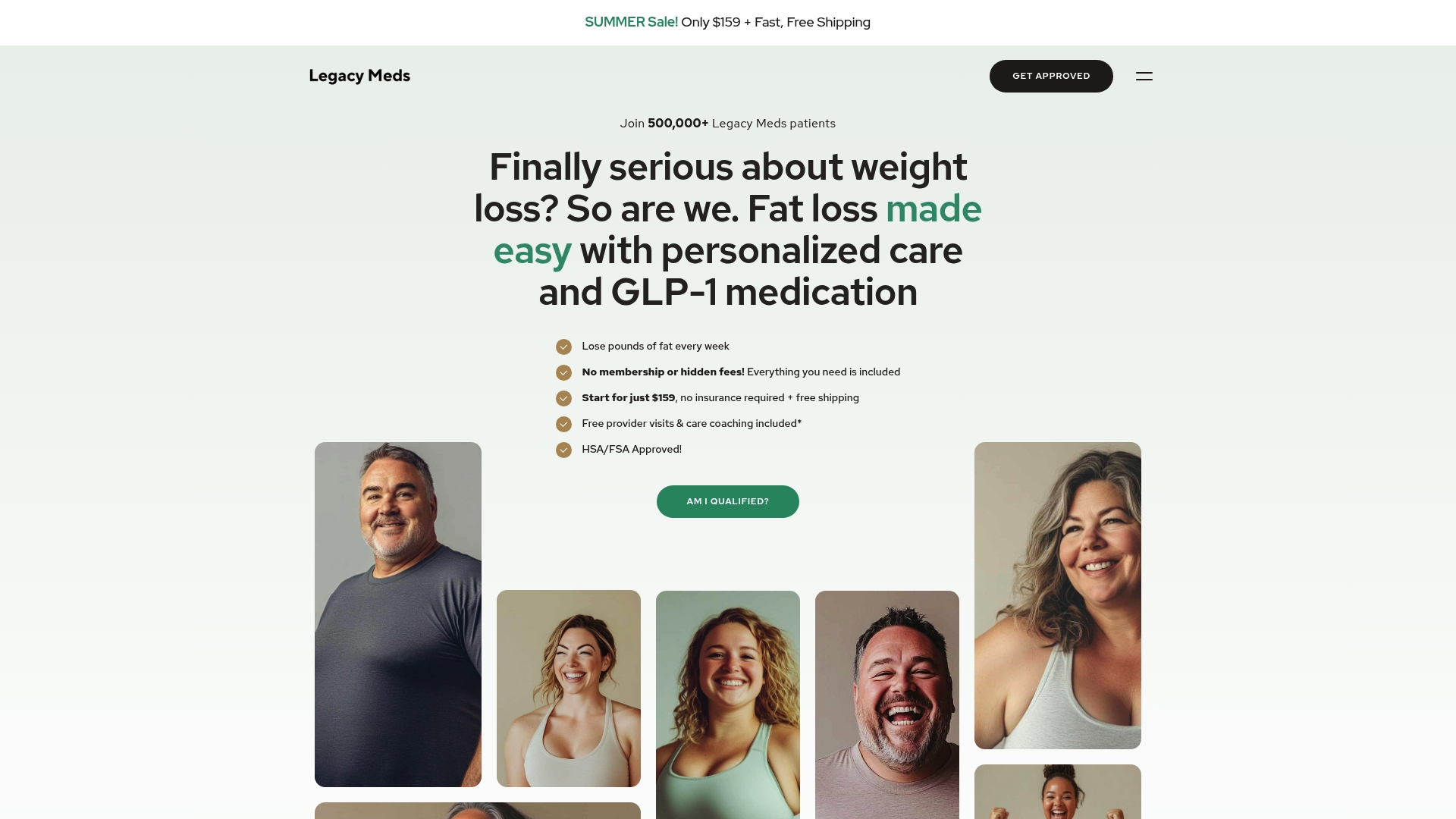
The program is built for patients who want to skip the prior-authorization process and get started without waiting weeks for an insurer’s decision. With over 500,000 patients served, Legacymeds has refined the intake process to be fast and clinically sound. The average patient achieves an 18% reduction in body weight, and ongoing provider support means your plan adjusts as your needs change.
For patients who’ve already spent time navigating insurance denials or who simply want a known monthly number from day one, the Legacymeds model removes the uncertainty. Start your online assessment to see your medication options and pricing, or review the full program details to understand what’s included before you commit.
Useful sources for verifying prices and program terms
Before relying on any single figure in this article, check these primary sources directly, since prices and program terms change:
- Coming soon: CMS to provide $50 monthly access to GLP-1 medications for Medicare beneficiaries
- Coverage of weight-loss drugs | Medicare
- FDA clarifies policies for compounders as national GLP-1 supply begins to stabilize | FDA
- Peer-reviewed clinical evidence on semaglutide’s weight-loss effects | PMC
- FDA drug label (2026) — product label documentation
FAQ
Are semaglutide pills cheaper than the injectable version?
Rybelsus (oral semaglutide) carries a list price comparable to Ozempic, roughly $997–$1,050/month, so it is not meaningfully cheaper than the weekly injectable at retail. The bigger cost driver is your insurance coverage and which indication your prescription carries, not the formulation.
How can you afford semaglutide for weight loss?
The most effective routes are: commercial insurance plus a manufacturer savings card ($25/month for eligible Wegovy patients), manufacturer self-pay programs ($149–$399/month), telehealth compounded bundles ($129–$249/month), or the Medicare GLP-1 Bridge program ($50/month for eligible Part D beneficiaries through December 2027). Patient assistance programs are available for low-income uninsured patients through NovoCare.
How much semaglutide is in one Ozempic pen?
Each Ozempic pen delivers either 0.5 mg, 1 mg, or 2 mg per weekly dose depending on the configuration prescribed. A single pen typically contains enough medication for four weekly injections (one month of treatment). Your prescriber selects the dose based on your starting point and how you respond to the medication.
What happens if you stop taking semaglutide?
Most patients regain a significant portion of lost weight after stopping semaglutide, because the drug’s appetite-regulating effects are not permanent. Clinical trials show weight regain typically begins within weeks of discontinuation. This is why continuity of treatment, and finding a sustainable monthly cost, matters as much as the drug’s efficacy.
Does GoodRx work for semaglutide?
GoodRx can reduce the retail cash price of semaglutide at participating pharmacies, but savings vary by location, dose, and which pharmacy you use. GoodRx cannot be combined with insurance at the same transaction. For many patients, a manufacturer self-pay program or telehealth bundle produces a lower monthly cost than GoodRx alone.