
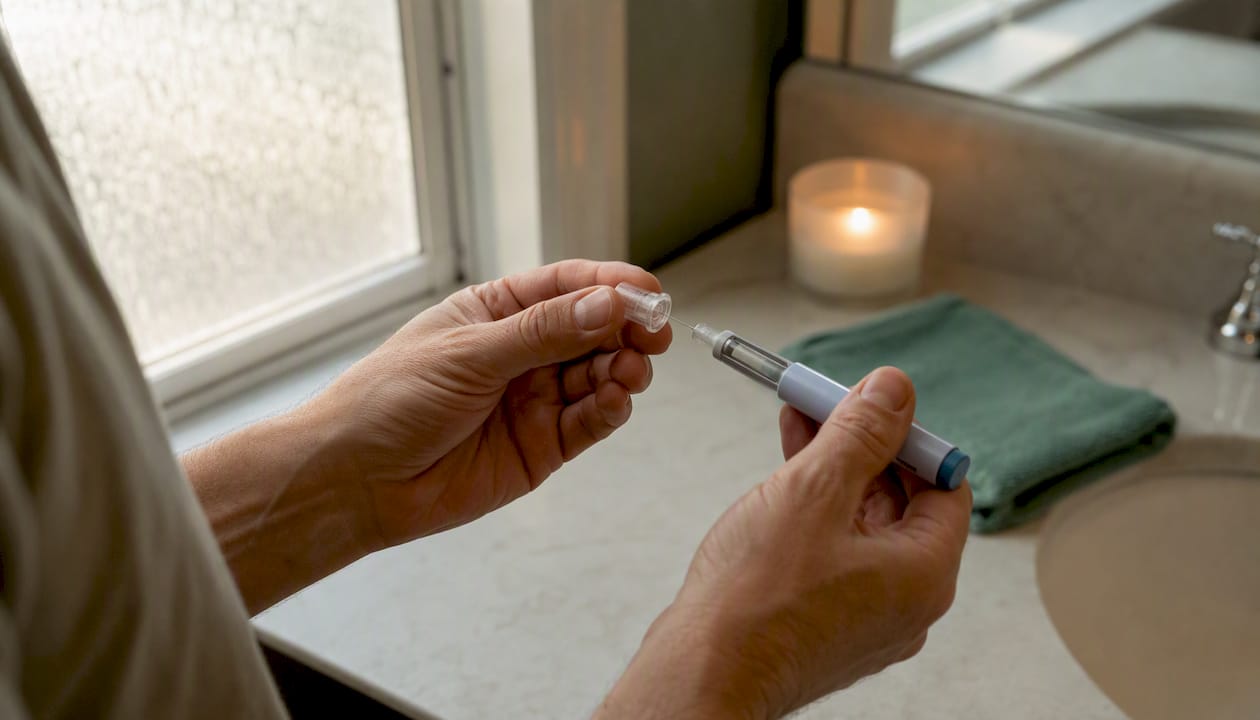
The standard U.S. semaglutide dose escalation follows a stepwise schedule tied to tolerability, not a rigid calendar. For Wegovy (injectable semaglutide for weight management), the FDA-labelled schedule starts at 0.25 mg once weekly for 4 weeks, then advances to 0.5 mg, 1 mg, and 1.7 mg at 4-week intervals, with a maintenance dose of 2.4 mg weekly. For Ozempic (injectable semaglutide for type 2 diabetes, also used off-label for weight), the starting dose is 0.25 mg weekly for 4 weeks, escalating to 0.5 mg, then 1 mg, with a maximum labelled dose of 2 mg. For Rybelsus (oral semaglutide), the starting dose is 3 mg daily for 30 days, then increase to 7 mg daily. If additional glycemic control is required and 7 mg is well tolerated, an option to advance to 14 mg daily is available as maintenance. The core safety rule across all three is: pause escalation at Grade 2 nausea or any vomiting, and only re-escalate once symptoms return to Grade 1 or better. A PMC clinical review confirms that GI symptoms cluster during initiation and titration and typically decline with continued treatment.
- Wegovy starting dose: a low initial weekly dose with gradual escalation to an effective maintenance level
- Ozempic starting dose: 0.25 mg weekly, maintenance 0.5–1 mg, max 2 mg
- Rybelsus starting dose: 3 mg daily; after 30 days, advance to 7 mg daily, with the option to increase to 14 mg daily if additional glycemic control is needed and 7 mg is well tolerated
- Pause rule: hold escalation at Grade 2 nausea or any vomiting; re-escalate only after recovery
Key Takeaways
Flexible, tolerability-first semaglutide dose escalation reduces discontinuation rates from 19% to 2% compared with forced standard titration, without compromising weight loss outcomes.
| Point | Details |
|---|---|
| Follow the label, but individualize | Wegovy starts at 0.25 mg weekly and targets 2.4 mg; delay any step if you experience Grade 2 nausea or vomiting. |
| Pause at Grade 2+ symptoms | Hold escalation until symptoms return to Grade 1 or better before attempting the next dose increase. |
| Slower titration cuts dropout sharply | Flexible titration reduced discontinuation from 19% to 2% in randomized trial data, with nausea dropping from 64.2% to 45.1%. |
| Monitor glucose if on insulin | Semaglutide increases hypoglycemia risk in patients on insulin or sulfonylureas; adjust those doses proactively during escalation. |
| Legacymeds personalizes your plan | Legacymeds provides clinician-guided, individualized titration with unlimited coaching and no insurance required. |
Table of Contents
- What does the semaglutide dose escalation schedule look like?
- When should you slow, pause, or reduce your dose?
- How do you manage GI side effects during escalation?
- Who needs a modified escalation plan?
- What should you do if you miss a dose or need to switch formulations?
- What should you monitor during dose escalation?
- How do you choose the right maintenance dose?
- Practical daily tips for smoother escalation
- What Legacymeds offers patients navigating semaglutide titration
- What the evidence says about tolerability-first titration
- Sources
- FAQ
What does the semaglutide dose escalation schedule look like?
The table below compares U.S.-labelled escalation schedules for all three semaglutide formulations. Every figure comes directly from FDA prescribing information and the PMC clinical review.
| Parameter | Wegovy (injectable) | Ozempic (injectable) | Rybelsus (oral) |
|---|---|---|---|
| Starting dose | 0.25 mg weekly | 0.25 mg weekly | 3 mg daily |
| Escalation interval | Every 4 weeks | Every 4 weeks | Every 30 days |
| Step doses | 0.25 → 0.5 → 1 → 1.7 mg | 0.25 → 0.5 → 1 mg | 3 → 7 → 14 mg |
| Maintenance dose | 2.4 mg weekly | 0.5–1 mg weekly | 7–14 mg daily |
| Maximum labelled dose | 2.4 mg weekly | 2 mg weekly | 14 mg daily |
| Primary indication | Chronic weight management | Type 2 diabetes | Type 2 diabetes |
| Tolerability note | Delay escalation if intolerant | Delay escalation if intolerant | GI AEs mostly mild/moderate |
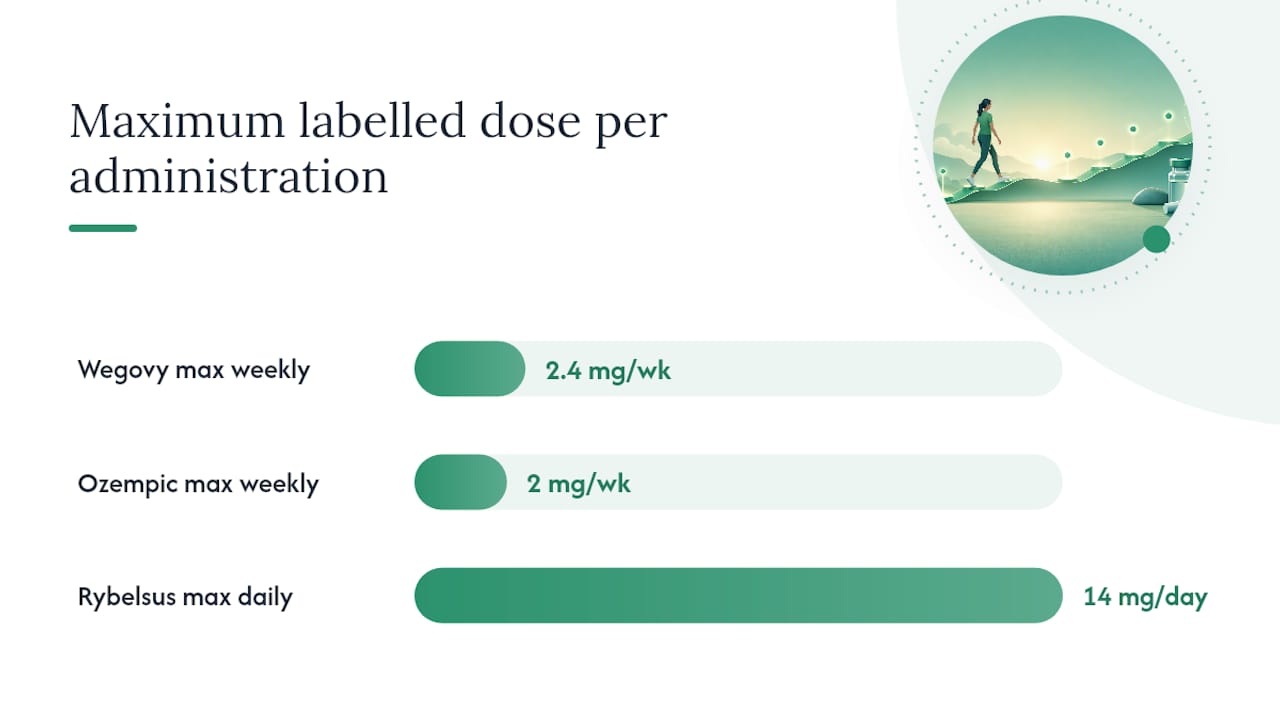
Label caveat: The Wegovy and Ozempic labels both state explicitly that if a patient cannot tolerate a dose increase, the escalation step should be delayed rather than forced. For Rybelsus, a real-world study of escalation from 7 to 14 mg found a mean HbA1c reduction of 0.5% and weight change of 2.0 kg at 24 weeks, with GI disorders being the most common adverse events but predominantly mild to moderate in severity. The 14 mg dose is optional and should only be used when additional glycemic control is needed and the patient is tolerating 7 mg well.
Switching between formulations requires re-titration. Moving from oral to injectable semaglutide (or vice versa) is not a simple dose conversion. Your prescriber will determine the appropriate starting point based on your current dose, tolerability history, and clinical goals.
When should you slow, pause, or reduce your dose?
The clearest framework for managing tolerability during titration comes from a grading system adapted from the Common Terminology Criteria for Adverse Events (CTCAE). A PMC review on managing GLP-1 nausea maps each grade to a concrete clinical action.
Grade 1 nausea: Mild loss of appetite, no change in eating habits. Action: Continue escalation as scheduled.
Grade 2 nausea: Reduced oral intake without significant weight loss, dehydration, or malnutrition. Action: Pause escalation. Stay at the current dose until symptoms return to Grade 1 or resolve.
Grade 3 nausea or any vomiting: Insufficient caloric or fluid intake, possible hospitalization. Action: Reduce to the last well-tolerated dose. Contact your clinician. Do not attempt re-escalation until fully recovered.
The evidence behind slowing titration is compelling. A randomized flexible-titration trial found that patients on a slower escalation schedule had a nausea rate of 45.1% versus 64.2% in the standard-titration arm, and discontinuation rates dropped from 19% to just 2%. That gap is not trivial when you consider that early dropout is the single biggest barrier to reaching a therapeutic dose.
Clinical opinion and pooled analyses suggest that roughly 60–70% of patients can titrate to the full therapeutic dose with minimal difficulty, while 30–40% experience meaningful intolerance during escalation. That 30–40% is not a failure group. They are candidates for individualized titration.
Pro Tip: If you are tolerating your current dose well but feel uncertain about moving up, staying an extra 4–8 weeks at that dose before increasing is clinically supported and often reduces the risk of GI symptoms at the next step.
How do you manage GI side effects during escalation?
Nausea, vomiting, constipation, and early satiety are the most common complaints during semaglutide titration. They are largely driven by delayed gastric emptying and activation of central satiety pathways. The good news: most are manageable without stopping treatment.
Nonpharmacologic strategies
- Eat smaller, more frequent meals rather than two or three large ones
- Choose low-fat, bland foods (crackers, toast, rice, bananas) during symptomatic periods
- Avoid lying down within 2 hours of eating
- Ginger tea, ginger chews, or peppermint can reduce nausea for many patients
- Acupressure wristbands (P6 point) are a low-risk option some patients find helpful
- For oral Rybelsus specifically, take it on an empty stomach and wait at least 30 minutes before eating or taking other medications
Pharmacologic support
Short-term antiemetics (such as promethazine or metoclopramide) may be considered under clinician guidance for Grade 2 symptoms. Routine use of ondansetron is generally not recommended without clinical direction, as it can worsen constipation, which is already a common semaglutide side effect. For constipation, increased fluid intake, dietary fiber, and osmotic laxatives (such as polyethylene glycol) are first-line options.
The U.S. Pharmacist review recommends the “Three E’s” framework: Education (set expectations before starting), Escalation (individualize the titration pace), and Effective management (address symptoms early before they cause dropout). Pharmacists play a direct role in all three, and checking in with yours at each dose step is time well spent.
Red flags that require prompt clinician contact
- Persistent vomiting lasting more than 24 hours
- Signs of dehydration: dark urine, dizziness, rapid heart rate, dry mouth
- Severe or persistent mid-abdominal pain radiating to the back (possible pancreatitis)
- Yellowing of skin or eyes, or dark urine with pale stools (possible gallbladder or liver issue)
- Inability to keep fluids down for more than 12 hours
Report any serious suspected adverse event through FDA MedWatch in addition to contacting your prescriber.
Insulin and secretagogue interaction note: Semaglutide slows gastric emptying and reduces postprandial glucose, which can increase hypoglycemia risk in patients on insulin or sulfonylureas. Your prescriber may reduce your insulin or sulfonylurea dose when starting or escalating semaglutide. Monitor blood glucose more frequently during titration, especially in the first 4–8 weeks.
Pro Tip: Track your nausea severity on a simple 0–3 scale each day during the first week after every dose increase. A written log gives your clinician far more useful information than “I felt sick sometimes.”
Who needs a modified escalation plan?
Not everyone follows the standard 4-week step schedule. Several patient groups need a slower, lower, or modified approach.
Absolute contraindications that affect escalation
- Personal or family history of medullary thyroid carcinoma (MTC): Semaglutide carries a black-box warning. Do not initiate or escalate.
- Multiple Endocrine Neoplasia type 2 (MEN2): Same black-box contraindication.
- Pregnancy: Semaglutide should be discontinued at least 2 months before a planned pregnancy. Do not escalate in a pregnant patient.
- Severe gastroparesis: Semaglutide further slows gastric emptying and is generally contraindicated in this population.
Populations who typically need slower escalation
- Older adults (65+): More sensitive to GI effects and dehydration; a 6–8 week hold at each step is often appropriate.
- Patients with low BMI or prior GI disease: Lower starting tolerance; consider extending each step by 2–4 weeks.
- Patients on insulin or sulfonylureas: Need glucose monitoring and likely dose reduction before escalating semaglutide.
- Patients with a history of pancreatitis: Use with caution; monitor for recurrence and do not escalate during an acute episode.
- Patients with renal or hepatic impairment: No dose adjustment is required per current labeling, but these patients may tolerate GI effects less well and benefit from slower titration.
A Diabetes Care phase 2 trial testing doses up to 16 mg confirmed that higher doses produce greater weight loss but also higher adverse event rates and more discontinuations, reinforcing that the maximum labelled dose is not always the right target for every patient.
What should you do if you miss a dose or need to switch formulations?
Missed weekly injection (Wegovy or Ozempic)
- If you missed a dose and your next scheduled dose is more than 2 days away, take the missed dose as soon as you remember.
- If your next scheduled dose is within 2 days, skip the missed dose and resume your regular schedule.
- Never take two doses in the same week to make up for a missed one.
- If you miss 2 or more consecutive doses, contact your prescriber. Restarting at a lower dose is often recommended to avoid GI symptoms from re-exposure at a higher dose.
Missed daily oral dose (Rybelsus)
- If you miss a dose, skip it entirely and take the next dose the following morning on an empty stomach.
- Do not double up.
- If you miss more than a few consecutive days, discuss re-titration with your prescriber.
Switching between oral and injectable semaglutide
Switching is not a simple swap. The bioavailability and pharmacokinetics differ between oral and subcutaneous routes, so a direct dose equivalence does not exist. The general approach:
-
Oral to injectable: Discontinue oral semaglutide and begin injectable at the starting dose (0.25 mg weekly), re-titrating per label unless your prescriber determines a higher starting point is appropriate based on your tolerability history.
-
Injectable to oral: Discontinue the injection and begin Rybelsus at 3 mg daily, re-titrating per label.
Pro Tip: When switching formulations, note the date of your last dose of the prior formulation. Your prescriber needs this to time the first dose of the new formulation correctly and plan re-escalation.
Switching checklist for your clinician visit:
- Current dose and formulation
- Date of last dose
- Tolerability history at each step
- Reason for switching (side effects, access, preference)
- Plan for re-escalation pace based on prior tolerability
What should you monitor during dose escalation?
Consistent monitoring during titration catches problems before they become reasons to stop treatment. The table below outlines what to track, when, and who is responsible.
| Monitoring item | Frequency | Responsible party |
|---|---|---|
| GI symptom severity (nausea, vomiting, constipation) | Daily during first week after each dose increase | Patient |
| Body weight | Every 4 weeks | Patient and clinician |
| Blood glucose (if on insulin or secretagogue) | More frequently during titration; at minimum weekly | Patient |
| Hydration status (urine color, dizziness) | Daily during symptomatic periods | Patient |
| Amylase/lipase (if pancreatitis suspected) | As clinically indicated | Clinician |
| Thyroid history review | At initiation | Clinician |
| Follow-up visit or telehealth check-in | 2–4 weeks after initiation, then every 4 weeks during escalation | Clinician |
Follow-up schedule: Your first check-in should happen 2–4 weeks after starting semaglutide, even if you feel fine. After that, a check every 4 weeks during active escalation is standard. If symptoms appear between scheduled visits, contact your prescriber or pharmacist rather than waiting.
- Review GI symptom logs at every visit
- Confirm weight trend is consistent with expected response
- Adjust insulin or secretagogue doses proactively, not reactively
- Ask about medication safety information if you have questions between visits
How do you choose the right maintenance dose?
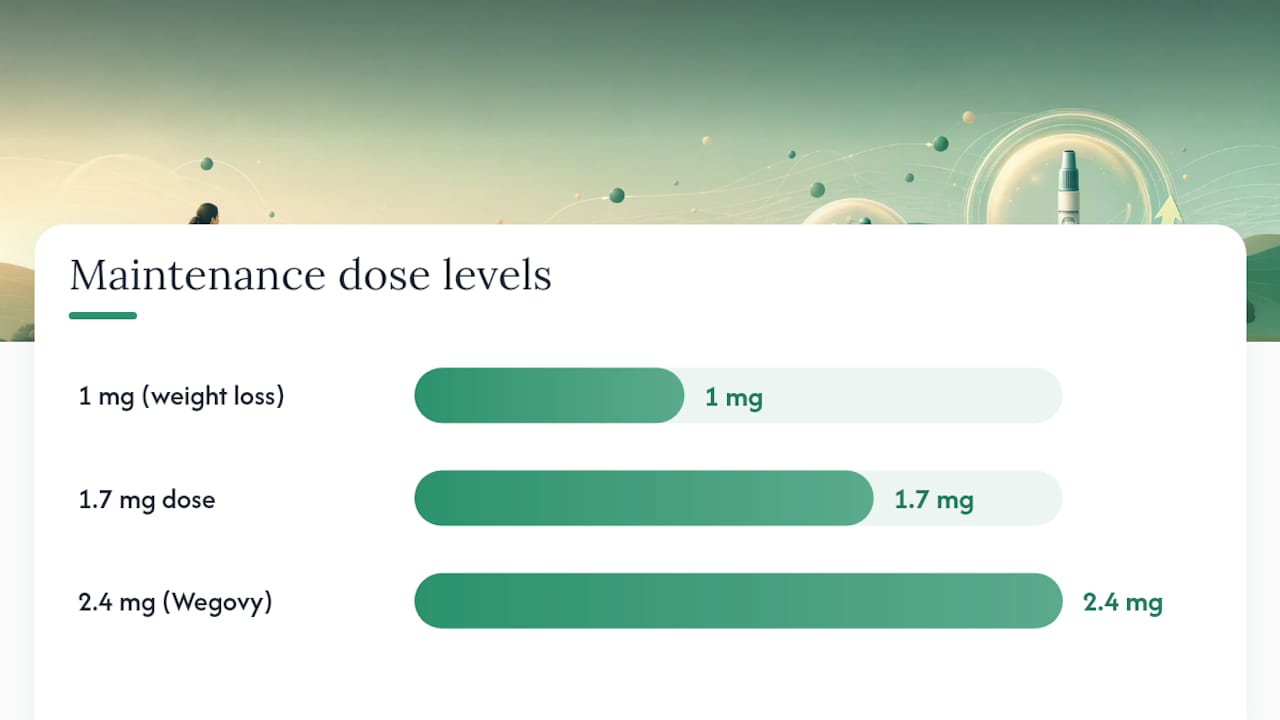
The maximum labelled dose is not the goal for every patient. The goal is the highest dose you can tolerate that delivers meaningful benefit.
A practical shared-decision framework:
- Define your goals. Is the primary target weight loss, glycemic control, or both? The dose needed to achieve meaningful weight loss (typically 1 mg or higher for injectable semaglutide) may differ from the minimum effective dose for glycemic control.
- Assess tolerability at your current dose. Are GI symptoms Grade 0–1 and manageable? If yes, escalation is appropriate. If Grade 2 or higher, hold.
- Trial extra time at a well-tolerated dose. Staying 6–8 weeks at a dose before increasing is clinically supported and often resolves residual symptoms.
- Evaluate benefit at the current dose. If you are seeing meaningful weight loss or glycemic improvement and tolerating the dose well, there may be no clinical reason to escalate further.
- Accept the maximum tolerated dose as valid. If escalation to 2.4 mg (Wegovy) causes unacceptable side effects at every attempt, 1.7 mg or even 1 mg may be your maintenance dose. That is a legitimate clinical outcome, not a failure.
Markers that justify continuing escalation:
- Weight loss has plateaued at the current dose
- Glycemic control is not at target
- Side effects are Grade 0–1 and stable
Markers that justify stopping escalation:
- Persistent Grade 2+ symptoms despite extended holds
- Meaningful benefit already achieved at the current dose
- Patient preference after informed discussion
Shared-decision checklist for your telehealth visit:
- What is my current weight trend, and is it consistent with my goals?
- Am I tolerating my current dose well enough to increase?
- Have I given this dose enough time (at least 4–6 weeks) to assess its effect?
- What are the realistic benefits and risks of moving to the next dose?
- Do I understand that a lower maintenance dose is a valid long-term option?
Practical daily tips for smoother escalation
Injection technique and storage
- Rotate injection sites with each dose: abdomen, outer thigh, and upper arm are all approved sites. Rotating within a site (not just between sites) reduces local reactions.
- Inject on the same day each week to maintain consistent drug levels.
- Store Wegovy and Ozempic pens in the refrigerator (36°F–46°F). Once in use, Ozempic pens can be kept at room temperature (below 86°F) for up to 56 days; check the Wegovy label for its specific in-use storage window.
- Never freeze the pen or expose it to direct sunlight.
- Let the pen reach room temperature for a few minutes before injecting to reduce injection-site discomfort.
Oral dosing rules for Rybelsus
The absorption of oral semaglutide depends heavily on fasting conditions. Per the label and confirmed by a Diabetes Therapy review, Rybelsus must be taken on an empty stomach with no more than 4 oz of plain water, and you must wait at least 30 minutes before eating, drinking anything other than water, or taking other oral medications. Taking it with food or other liquids can reduce absorption by more than 50%.
Pro Tip: Set a phone alarm for 30 minutes after taking Rybelsus. It is easy to forget the wait time, especially in the morning rush, and a missed absorption window effectively means a missed dose.
What to tell your care team
Report the following at every check-in or sooner if they occur:
- Nausea severity (use a 0–3 scale) and how many days it lasted after your last dose increase
- Any vomiting episodes: number per day and duration
- Dizziness or lightheadedness, especially after standing
- Signs of possible dehydration: dark urine, dry mouth, rapid heart rate
- Any hypoglycemia episodes if you are on insulin or a sulfonylurea
- Changes in bowel habits, particularly severe constipation or diarrhea
You can review common GLP-1 side effects and what to watch for on the Legacymeds medication safety page.
What Legacymeds offers patients navigating semaglutide titration
Knowing the schedule is one thing. Having a clinical team that adjusts it with you is another.
Legacymeds provides an online GLP-1 weight loss program built around exactly the kind of individualized titration this article describes. Every patient starts with a clinician assessment, receives a personalized escalation plan, and has access to unlimited coaching throughout the process. No insurance is required, no membership fees, and medication ships directly to your door. If side effects hit at week 4 and you need to hold your dose, your care team is there to adjust the plan, not just the prescription.
Patients on the Legacymeds program average an 18% reduction in body weight, supported by ongoing provider guidance and free follow-up visits. The program covers semaglutide, tirzepatide, Wegovy, and Zepbound, so your clinician can match the medication to your specific metabolic needs.
Ready to start with a plan built around your tolerability? Get your personalized GLP-1 plan through Legacymeds today.
What the evidence says about tolerability-first titration
The standard 4-week escalation schedule works well for most patients, but the evidence consistently shows that the patients who struggle most are those whose clinicians feel pressure to advance the dose on schedule regardless of symptoms. That pressure is understandable. Patients want results, and higher doses do produce greater weight loss. But the data from flexible-titration trials makes the case plainly: slower escalation does not cost you efficacy. It costs you nothing except a few extra weeks at a lower dose, and it buys you a dramatically lower chance of quitting.
The other thing worth saying clearly is that the maximum labelled dose is not a finish line. A patient who reaches 1.7 mg and is losing weight steadily with no significant side effects has no clinical obligation to push to 2.4 mg. The goal is the best outcome at the best-tolerated dose, and those two things often converge well below the label ceiling.
Sources
The sources below are the primary documents used in this article. Reading the FDA prescribing information and the PMC clinical review first will give you the most complete picture.
- WEGOVY prescribing information — DailyMed (FDA)
- Once-Weekly Semaglutide for Weight Management: A Clinical Review — PMC
- High-Dose Semaglutide (Up to 16 mg) in People With Type 2 Diabetes and Overweight or Obesity — Diabetes Care
- GI adverse effects of GLP‑1 receptor agonists — U.S. Pharmacist
- Suitability and usefulness of flexible dosing timing of oral semaglutide — Diabetes Therapy
- MedWatch — FDA safety information and adverse-event reporting
FAQ
What is the starting dose for semaglutide?
The starting dose for injectable semaglutide (Wegovy or Ozempic) is 0.25 mg once weekly for the first 4 weeks. For oral semaglutide (Rybelsus), the starting dose is 3 mg daily for the first 30 days.
How long does each semaglutide dose escalation step take?
Each step in the injectable semaglutide schedule lasts a minimum of 4 weeks, per the FDA label. If you experience Grade 2 nausea or vomiting, that step should be extended until symptoms resolve to Grade 1 or better before advancing.
What is the maintenance dose for Wegovy?
The labelled maintenance dose for Wegovy is 2.4 mg once weekly. If you cannot tolerate 2.4 mg, 1.7 mg is a clinically acceptable maintenance dose, and your prescriber may determine that a lower dose is appropriate based on your tolerability and response.
Can you slow down semaglutide titration if side effects are bad?
Yes, and clinical evidence strongly supports it. A randomized trial found that flexible, slower titration reduced nausea from 64.2% to 45.1% and cut discontinuation rates from 19% to 2% compared with standard titration, with no meaningful loss of efficacy.
What should you do if you miss a weekly semaglutide injection?
If your next scheduled dose is more than 2 days away, take the missed dose as soon as you remember. If it is within 2 days of your next scheduled dose, skip the missed dose and resume your regular schedule. Never take two doses in the same week.