

TL;DR:
- Tirzepatide produces greater weight loss and HbA1c reduction than semaglutide due to its dual GIP and GLP-1 receptor activation. Semaglutide remains a well-studied, effective option with an oral form and broader insurance coverage, suitable for many patients. The best choice depends on individual goals, tolerability, and access, requiring personalized medical guidance.
Tirzepatide typically produces greater weight loss than semaglutide across both clinical trials and real-world data. In the SURMOUNT-5 head-to-head trial, tirzepatide users lost an average of 21.6% of body weight compared to 15.4% with semaglutide (source). For blood sugar control in type 2 diabetes, tirzepatide also edges ahead on HbA1c reduction. That said, semaglutide is not a consolation prize. It remains a clinically meaningful, well-studied option that works well for many patients, and the right choice between the two depends on your treatment goals, tolerance, prior medication history, and what your insurance will actually cover.
The three biggest evidence-based differences:
- Mechanism: Semaglutide activates only the GLP-1 receptor. Tirzepatide activates both GIP and GLP-1 receptors, a dual-incretin approach that appears to amplify appetite suppression, improve insulin sensitivity, and drive larger metabolic effects.
- Average weight loss: Tirzepatide consistently outperforms in trials and real-world cohorts. A Mayo Clinic Proceedings multicentered study found 16.6% vs. 13.4% total body weight loss at 12 months.
- Side-effect tradeoff: Both drugs share a GI side-effect profile (nausea, vomiting, diarrhea), but the same Mayo study found GI side effects in 28.5% of tirzepatide patients versus 50.7% of semaglutide patients, suggesting tirzepatide’s GIP agonism may buffer some GI discomfort.
Clinical bottom line: Neither drug is appropriate without a provider assessment. Contraindications, dosing schedules, and titration plans must be individualized. Do not start, switch, or combine these medications without a licensed clinician’s guidance.
Table of Contents
- How do semaglutide and tirzepatide compare at a glance?
- How do these two drugs actually work?
- What does the evidence say about weight loss?
- How well does each drug control blood sugar in type 2 diabetes?
- How are these drugs given, and what does titration look like?
- What are the side effects, and what should you watch for?
- What does semaglutide vs tirzepatide cost in the U.S.?
- Which drug is right for you? A clinical decision guide
- How long does it take to see results?
- What happens if one medication doesn’t work or causes intolerable side effects?
- How Legacymeds approaches GLP-1 therapy
- Key Takeaways
- The case for individualized choice over headline numbers
- Legacymeds makes GLP-1 access straightforward
- Useful sources
- FAQ
How do semaglutide and tirzepatide compare at a glance?
| Dimension | Semaglutide | Tirzepatide |
|---|---|---|
| Brand names | Ozempic (T2D), Wegovy (obesity), Rybelsus (oral, T2D) | Mounjaro (T2D), Zepbound (obesity) |
| Mechanism | Selective GLP-1 receptor agonist | Dual GIP + GLP-1 receptor agonist |
| Average weight loss (trials) | ~15.4% mean body weight loss in SURMOUNT-5 | ~21.6% mean body weight loss in SURMOUNT-5 |
| Average weight loss (real-world) | 13.4% total body weight loss at 12 months (Mayo real-world cohort) | 16.6% total body weight loss at 12 months (Mayo real-world cohort) |
| HbA1c reduction | Up to ~1.5–1.8% | Up to ~2.0–2.3% |
| Dosing | Weekly injection (Ozempic/Wegovy); daily oral (Rybelsus) | Weekly injection only |
| Common side effects | Nausea, vomiting, diarrhea, constipation | Same, but lower reported GI rates in real-world data |
| FDA approvals | T2D (Ozempic, Rybelsus), obesity (Wegovy) | T2D (Mounjaro), obesity (Zepbound) |
| Typical U.S. list price (monthly) | $900–$1,400 (brand) | — |
| Oral option | Yes (Rybelsus) | No |
| Best general fit | Established efficacy, oral option, broader insurance history | Greater weight loss potential, possibly better GI tolerance |
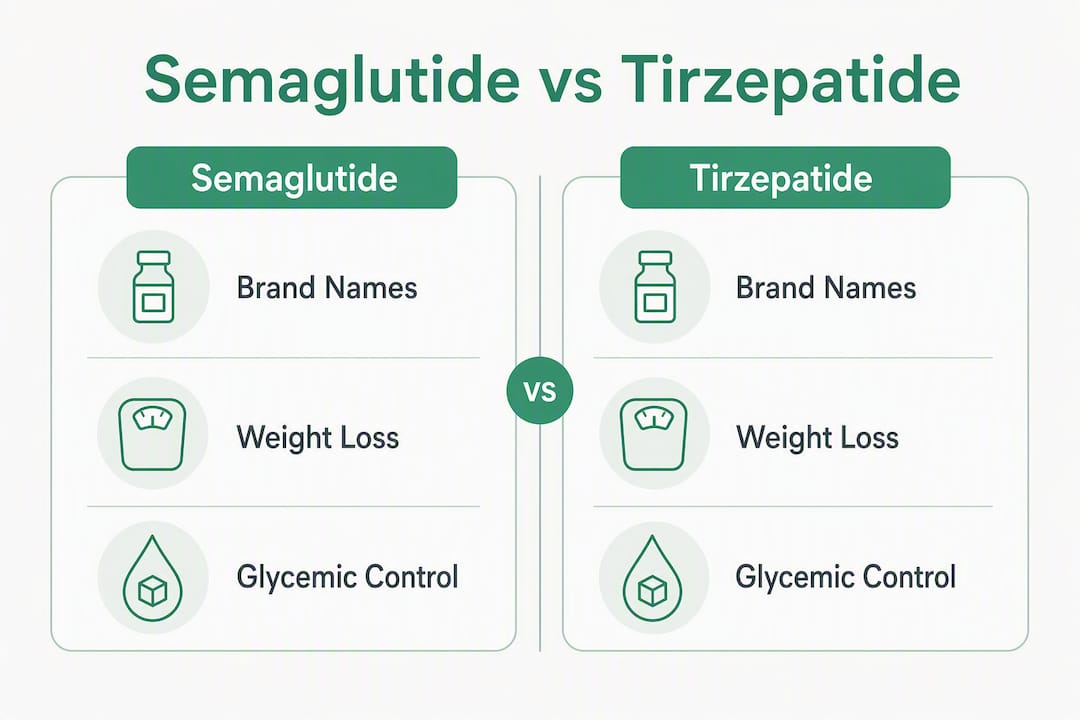
For most patients whose primary goal is maximum weight reduction, tirzepatide has the stronger evidence base. Semaglutide remains the better-studied option for cardiovascular outcomes and has an oral formulation that tirzepatide currently lacks.
How do these two drugs actually work?
Semaglutide is a selective GLP-1 receptor agonist. It mimics glucagon-like peptide-1, a gut hormone released after eating that signals the brain to reduce appetite, slows gastric emptying, and stimulates glucose-dependent insulin release. The result: you feel full faster, eat less, and your pancreas responds more appropriately to blood sugar spikes.
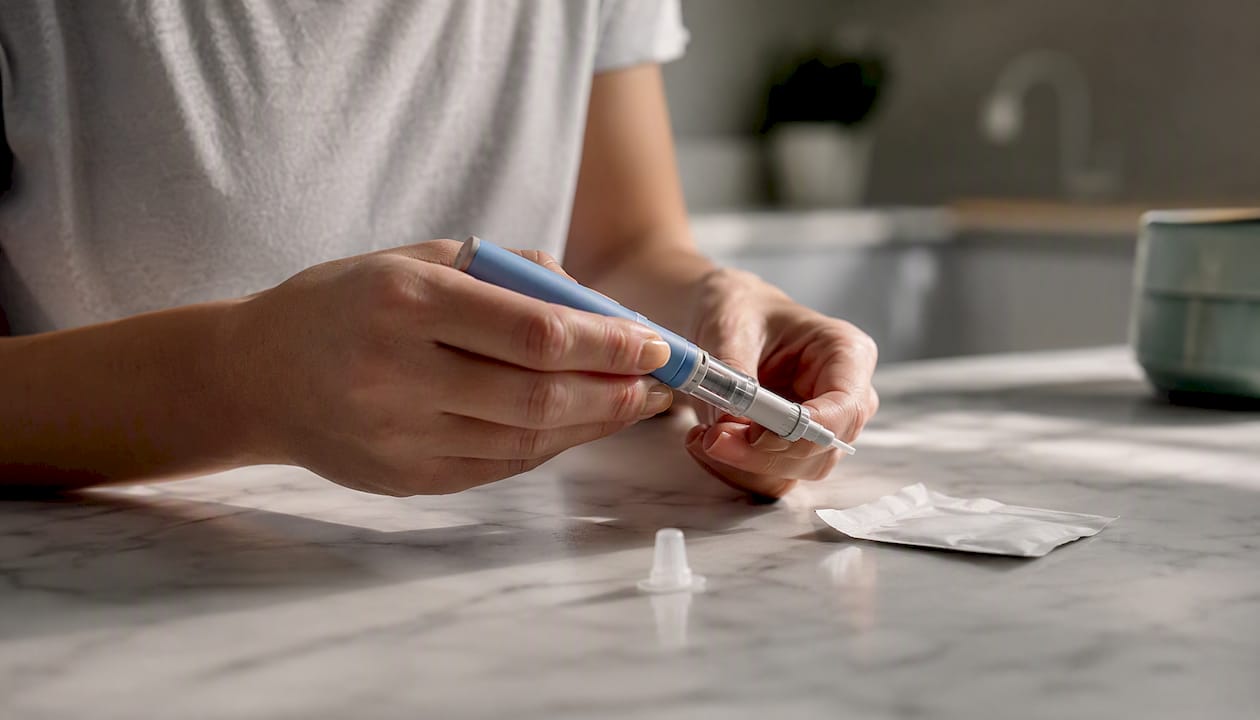
Tirzepatide does all of that, and adds a second receptor target: GIP (glucose-dependent insulinotropic polypeptide). GIP is another incretin hormone, and its receptor activation appears to improve insulin sensitivity in fat and muscle tissue, enhance beta-cell function, and potentially reduce the aversive GI signals that GLP-1 alone can trigger in the hindbrain. That last point matters clinically. Some practitioners believe GIP receptor agonism partially blunts the nausea response that makes GLP-1 therapy hard to tolerate at higher doses, which may explain why tirzepatide achieves greater weight loss without proportionally worse GI side effects.
What each mechanism does in practice:
- Appetite suppression: Both drugs reduce hunger signals via the hypothalamus and brainstem. Tirzepatide’s dual action appears to produce a stronger and more sustained effect.
- Insulin secretion: Both stimulate insulin release in a glucose-dependent manner, meaning they don’t cause hypoglycemia in isolation.
- Insulin sensitivity: Tirzepatide’s GIP component improves peripheral insulin sensitivity in adipose and muscle tissue, a mechanism semaglutide does not share to the same degree.
- Gastric emptying: Both slow it, contributing to satiety and post-meal glucose control.
- Energy balance: Tirzepatide’s dual-incretin signaling appears to shift energy expenditure and fat oxidation more favorably than GLP-1 agonism alone.
The practical upshot: tirzepatide is not just “more semaglutide.” It works through a different and broader metabolic pathway, which is why the weight-loss numbers diverge as meaningfully as they do in trials.
What does the evidence say about weight loss?
The trial data here is unusually clear. Tirzepatide outperforms semaglutide on average weight loss across every major comparison, though individual responses vary.
Pivotal trial and real-world weight-loss data
| Study | Drug | Mean % body weight lost | ≥15% responders | ≥20% responders |
|---|---|---|---|---|
| Study | Drug | Mean % body weight lost | ≥15% responders | ≥20% responders |
| — | — | — | — | — |
| SURMOUNT-5 (head-to-head RCT) | Tirzepatide | ~21.6% | higher proportion | higher proportion |
| SURMOUNT-5 (head-to-head RCT) | Semaglutide | ~15.4% | lower proportion | lower proportion |
| Mayo real-world cohort (12 months) | Tirzepatide | 16.6% | — | — |
| Mayo real-world cohort (12 months) | Semaglutide | 13.4% | — | — |
| Propensity-matched cohort (2 years) | Tirzepatide | 14.7% | higher ≥15% responder rate | — |
| Propensity-matched cohort (2 years) | Semaglutide | 10.8% | lower ≥15% responder rate | — |
Key figure: In the SURMOUNT-5 head-to-head trial, tirzepatide produced roughly 6 percentage points more body weight loss than semaglutide on average. In a large propensity-matched real-world cohort, the gap was about 4 percentage points over two years (14.7% vs. 10.8%).
What does a 6-percentage-point difference mean for a real person? At 220 pounds, that’s roughly 13 additional pounds lost on tirzepatide versus semaglutide at the same treatment duration. That’s clinically meaningful, not just statistically significant.
Still, the STEP trials for semaglutide (Wegovy at 2.4 mg weekly) showed average weight loss of approximately 15% over 68 weeks, with a meaningful proportion of patients losing 20% or more. Semaglutide is not a weak drug. The comparison is between two effective medications, one of which tends to produce larger effects.
One important caveat: Prior exposure to obesity medications18391-8/abstract) predicts a smaller absolute response to either drug. If you’ve already tried a GLP-1 agent, your response to the next one may be attenuated, regardless of which you switch to.
How well does each drug control blood sugar in type 2 diabetes?
For patients managing type 2 diabetes, both drugs deliver clinically meaningful HbA1c reductions, but tirzepatide’s dual mechanism gives it an edge in the data.
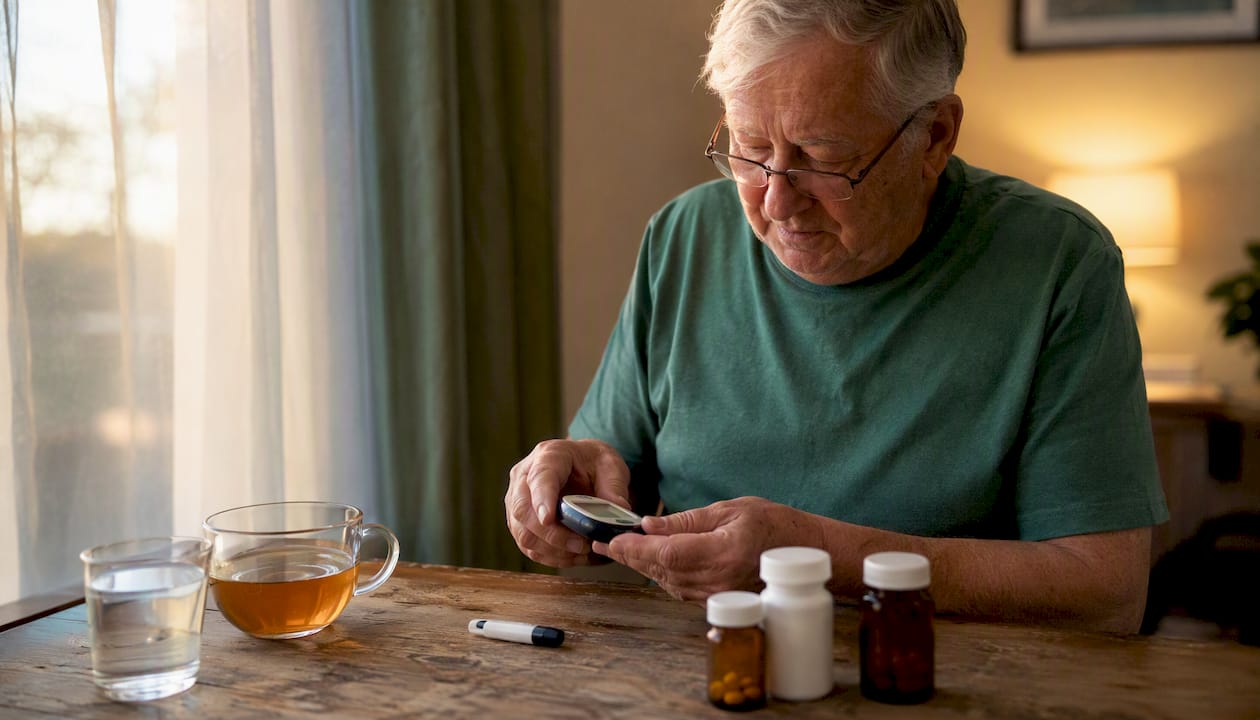
Across the SURPASS program, tirzepatide produced HbA1c reductions of approximately 2.0–2.3% from baseline, compared to roughly 1.5–1.8% with semaglutide in head-to-head comparisons. More patients on tirzepatide reached HbA1c targets below 7.0%, and some analyses showed normoglycemic levels in a meaningful proportion of participants.
What the SURPASS data shows beyond HbA1c:
- Tirzepatide improved the disposition index, a composite measure of beta-cell function relative to insulin resistance, more than semaglutide comparators.
- GIP receptor activation improved insulin sensitivity in peripheral tissues, an effect that goes beyond what GLP-1 agonism alone achieves.
- Fasting glucose reductions were larger with tirzepatide across multiple SURPASS trials.
- Both drugs reduced body weight in T2D patients, but tirzepatide’s weight-loss advantage held even in this population.
Statistic to know: Tirzepatide achieved greater HbA1c reductions in SURPASS trials compared to semaglutide. For a patient starting at 8.5%, tirzepatide could bring them to roughly 6.2%, while semaglutide might land them around 6.7–7.0%.
For patients whose primary concern is glycemic control rather than weight, both drugs are appropriate. Tirzepatide has the stronger efficacy signal, but semaglutide has longer-term cardiovascular outcome data (SUSTAIN-6 and LEADER trials for liraglutide, SUSTAIN-6 for semaglutide specifically), which some cardiologists weigh heavily when choosing between agents.
How are these drugs given, and what does titration look like?
Both semaglutide (as Ozempic or Wegovy) and tirzepatide (as Mounjaro or Zepbound) are administered as weekly subcutaneous injections. Semaglutide also comes as Rybelsus, a daily oral tablet for type 2 diabetes, though the oral formulation requires specific administration conditions and delivers somewhat lower bioavailability than the injectable.
Typical titration schedules
Semaglutide (Ozempic/Wegovy):
- Start at 0.25 mg weekly for 4 weeks (tolerability phase)
- Increase to 0.5 mg for 4 weeks, then 1.0 mg
- Wegovy continues up to 2.4 mg over approximately 16–20 weeks total
Tirzepatide (Mounjaro/Zepbound):
- Start at 2.5 mg weekly for 4 weeks
- Increase by 2.5 mg every 4 weeks as tolerated
- Target maintenance doses: 5, 10, or 15 mg weekly
Slow titration is not optional. Starting at a low dose and escalating gradually is the primary strategy for reducing nausea and preventing early discontinuation. Patients who rush titration or skip steps are significantly more likely to stop therapy before reaching a therapeutic dose, which is one of the most common reasons for perceived treatment failure.
Rybelsus (oral semaglutide): Start at 3 mg daily for 30 days, then 7 mg, then 14 mg. It must be taken on an empty stomach with no more than 4 ounces of water, at least 30 minutes before any food, drink, or other medications. Missing that window meaningfully reduces absorption.
Pro Tip: If nausea hits hard during titration, don’t skip your next dose or stop the medication. Talk to your provider first. Slowing the titration schedule or staying at a lower dose for an extra 4 weeks is a legitimate clinical strategy, not a failure.
For GLP-1 medication safety information including storage, injection technique, and missed-dose guidance, review your provider’s specific instructions. In general, missed doses within 5 days of the scheduled injection can be taken; beyond that, skip and resume on the next scheduled day.
What are the side effects, and what should you watch for?
The most common side effects of both drugs are gastrointestinal: nausea, vomiting, diarrhea, and constipation. These are dose-dependent and typically most pronounced during titration. They tend to improve as the body adjusts.
Common adverse effects (both drugs):
- Nausea (most frequent, especially early in treatment)
- Vomiting
- Diarrhea or constipation
- Decreased appetite (expected, not always a side effect)
- Fatigue, particularly during the first few weeks
- Injection-site reactions (mild, localized)
Serious but rare risks to know:
- Pancreatitis: Both drugs carry a warning. Severe, persistent abdominal pain warrants stopping the medication and seeking immediate care.
- Medullary thyroid carcinoma: Both are contraindicated in patients with a personal or family history of medullary thyroid cancer or Multiple Endocrine Neoplasia syndrome type 2 (MEN2). This is a black-box warning.
- Gallbladder disease: Rapid weight loss with either drug can increase gallstone risk.
- Hypoglycemia: Low on its own, but risk increases when combined with insulin or sulfonylureas.
- Kidney injury: Severe vomiting or diarrhea can cause dehydration and acute kidney injury; hydration matters.
Do not combine GLP-1 agents. Semaglutide must not be used together with other GLP-1 receptor agonists or with tirzepatide. Concomitant use is contraindicated. This applies to all branded formulations: Ozempic, Wegovy, Rybelsus, Mounjaro, and Zepbound cannot be used simultaneously.
The real-world GI comparison is worth noting again: the Mayo Clinic Proceedings cohort found GI side effects in 28.5% of tirzepatide patients versus 50.7% of semaglutide patients. That’s a substantial difference, and it aligns with the mechanistic hypothesis that GIP receptor agonism buffers some of the aversive GI signaling from GLP-1 activation.
If you experience severe or persistent vomiting, signs of pancreatitis (radiating abdominal pain), vision changes, or symptoms of thyroid tumors (neck lump, hoarseness, difficulty swallowing), stop the medication and contact a clinician immediately.
What does semaglutide vs tirzepatide cost in the U.S.?
Cost is where the comparison gets complicated fast, and where many patients are surprised.
Brand-name list prices for both drugs run roughly $900–$1,400 per month without insurance. Neither is cheap. The practical out-of-pocket cost depends almost entirely on your insurance situation and the indication on your prescription.
The coverage gap that catches patients off guard: Insurance plans, including many commercial plans and Medicare Part D, are far more likely to cover these drugs when prescribed for type 2 diabetes than for obesity alone. Ozempic (semaglutide for T2D) and Mounjaro (tirzepatide for T2D) have broader formulary coverage than Wegovy or Zepbound, which are labeled for obesity. This means two patients on the same drug can pay radically different amounts depending on their diagnosis code.
Practical steps to reduce cost:
- Verify your indication with your insurer. Ask specifically whether your plan covers the drug for your diagnosis (T2D vs. obesity). Prior authorization is common for both.
- Check manufacturer savings programs. Eli Lilly (tirzepatide) and Novo Nordisk (semaglutide) both offer savings cards for eligible commercially insured patients, which can reduce monthly costs significantly.
- Ask about patient assistance programs. Both manufacturers have programs for uninsured or underinsured patients who meet income criteria.
- Compare telehealth program pricing. Some telehealth programs offer GLP-1 medications at lower out-of-pocket costs than retail pharmacy pricing, bundled with provider visits and ongoing support. For a detailed breakdown of what tirzepatide costs through different access routes, the Zepbound cost breakdown at Legacymeds covers current pricing options.
- Ask your provider about compounded semaglutide or tirzepatide. During shortage periods, FDA-authorized compounding pharmacies have provided lower-cost alternatives, though availability and regulatory status change. Confirm current rules with your provider.
For questions about pricing and insurance coverage specific to Legacymeds’ program, the GLP-1 pricing and insurance FAQ covers what to expect.
Which drug is right for you? A clinical decision guide
The honest answer: tirzepatide has stronger average efficacy, but semaglutide is the right choice for some patients. Here’s how to think through it.
Tirzepatide may be the better starting point if:
- Your primary goal is maximum weight loss and you want the strongest available evidence behind your choice
- You have type 2 diabetes and want the largest HbA1c reduction
- You’ve tolerated a GLP-1 agent before and want to step up
- Cost and insurance coverage are not the deciding factor
Semaglutide may be the better fit if:
- You prefer or need an oral option (Rybelsus for T2D)
- Your insurer covers semaglutide but not tirzepatide for your indication
- You’re GLP-1-naive and your provider wants to start with the more established agent
- Cardiovascular outcome data is a priority for your cardiologist
Patient factors to bring to your provider:
- Diabetes status and current HbA1c
- Prior GLP-1 or obesity medication exposure (attenuates response)
- Comorbid conditions: history of pancreatitis, thyroid cancer, gallbladder disease, kidney disease
- Pregnancy plans (both are contraindicated in pregnancy)
- Insurance coverage and out-of-pocket budget
- Preference for weekly injection versus daily oral option
Questions to ask your clinician:
- Based on my HbA1c and weight-loss goal, which drug do you recommend starting with?
- What titration schedule will we follow, and how long before we evaluate response?
- What counts as an adequate response at 3 months, and what would trigger a dose change?
- If I’ve used a GLP-1 before, does that change your recommendation?
- What monitoring do I need (labs, follow-up visits) while on this medication?
- What’s the realistic cost for my situation, and are there assistance programs I qualify for?
How long does it take to see results?
Most patients notice reduced appetite within the first 1–2 weeks of starting either drug, even at the lowest titration dose. Meaningful weight loss, however, takes longer.
Realistic benchmarks by timeframe:
- 3 months: Expect 5–8% body weight loss on average at or near a mid-range dose. Some patients see more; some see less. This is not yet a therapeutic dose for most titration schedules.
- 6 months: 10–15% body weight loss is a reasonable target at or near maintenance dosing. Patients on tirzepatide tend to be at the higher end of that range.
- 12 months: Trial data and real-world cohorts show 13–22% total body weight loss depending on the drug, dose, and individual response. The Mayo cohort found 16.6% for tirzepatide and 13.4% for semaglutide at this mark.
For the common question “How long to lose 20 lbs?”: At a starting weight of 200 pounds, 20 lbs represents a 10% reduction. Most patients reach that milestone within 4–6 months on either drug at therapeutic doses. On tirzepatide, some reach it faster. On semaglutide, it may take slightly longer. Individual variation is wide.
What counts as nonresponse: If you’ve been at a therapeutic dose (not still titrating) for 12–16 weeks and have lost less than 5% of body weight, that’s a signal worth discussing with your provider. It doesn’t automatically mean the drug has failed; it may mean the dose needs adjustment or the titration schedule needs to continue.
Pro Tip: The most common reason patients feel a drug “isn’t working” is that they’re still in the titration phase and haven’t reached a therapeutic dose yet. Full titration to the target maintenance dose can take 4–5 months. Evaluate response at the maintenance dose, not during the ramp-up.
What happens if one medication doesn’t work or causes intolerable side effects?
These two drugs cannot be used at the same time. That’s not a preference; it’s a contraindication. Switching from one to the other requires stopping the first drug completely before starting the second.
Before concluding a drug has failed, assess:
- Was the patient at a therapeutic maintenance dose, or still titrating?
- How long were they at that dose? Less than 12 weeks at maintenance is generally insufficient to judge response.
- Were side effects managed with titration adjustments, or did the patient stop prematurely?
- Is the apparent nonresponse driven by dietary or behavioral factors rather than drug efficacy?
Steps for a safe switch (discuss with your provider):
- Stop the current GLP-1 agent completely. There is no required washout period from a pharmacokinetic standpoint, but your provider may recommend a brief pause to let GI symptoms settle before starting the new drug.
- Begin the new drug at its lowest starting dose and titrate from scratch. Do not start at the dose you were on with the previous drug.
- Monitor for GI side effects during the new titration, as the new drug’s receptor profile may produce different symptoms.
- Set a new response evaluation timeline: at least 12–16 weeks at the maintenance dose before judging efficacy.
Monitoring steps during transition:
- Blood glucose checks if you have T2D (both drugs affect glycemia)
- Kidney function if you had significant GI side effects (dehydration risk)
- Weight and HbA1c at 3-month intervals
- Report any new symptoms, particularly abdominal pain, to your provider promptly
Prior obesity medication exposure18391-8/abstract) predicts a smaller absolute response to the next agent. If you’ve already been on semaglutide and are switching to tirzepatide, your response may still be meaningful, but it’s likely to be smaller than what a treatment-naive patient would experience.
How Legacymeds approaches GLP-1 therapy
Legacymeds offers an online GLP-1 weight loss program built around telehealth provider assessment, personalized dosing, and ongoing support, without requiring insurance or membership fees. The program covers both semaglutide and tirzepatide options, including Wegovy and Zepbound.
What patients can expect from the Legacymeds program:
- Online intake and provider assessment to determine eligibility and appropriate medication
- Personalized dosing plan based on individual health history and treatment goals
- Medication delivered with free shipping
- Titration support and dose adjustment guidance throughout treatment
- Unlimited coaching and provider access for questions, side-effect management, and progress check-ins
- Safety monitoring aligned with GLP-1 prescribing standards
The program is designed for adults who want medically supervised GLP-1 therapy without navigating insurance approvals or paying for separate membership tiers. All treatment decisions are made by a licensed provider after individual assessment. This is not a one-size-fits-all protocol.
This article provides general health information and is not a substitute for professional medical advice. Treatment decisions should be made with a licensed clinician based on your individual medical history.
Key Takeaways
Tirzepatide produces greater average weight loss than semaglutide across head-to-head trials and real-world data, but the right choice depends on individual health factors, tolerability, and cost.
| Point | Details |
|---|---|
| Tirzepatide leads on weight loss | SURMOUNT-5 showed ~21.6% mean body weight loss for tirzepatide vs. ~15.4% for semaglutide; real-world data shows 16.6% for tirzepatide vs. 13.4% for semaglutide at 12 months. |
| Dual mechanism explains the gap | Tirzepatide activates both GIP and GLP-1 receptors, improving insulin sensitivity and appetite control beyond GLP-1 alone. |
| GI side effects favor tirzepatide | Real-world data found GI side effects in 28.5% of tirzepatide patients vs. 50.7% on semaglutide. |
| Coverage drives real cost | Insurance covers T2D indications more reliably than obesity; out-of-pocket costs can be substantial without assistance. |
| Legacymeds offers both options | Legacymeds provides telehealth-based access to semaglutide and tirzepatide with personalized dosing and no insurance required. |
The case for individualized choice over headline numbers
The trial data is clear, and tirzepatide wins on average. But averages hide a lot. Some patients on semaglutide lose 25% of their body weight. Some on tirzepatide lose 8%. The headline number from SURMOUNT-5 tells you where the population center of gravity is; it doesn’t tell you where you’ll land.
What I find underappreciated in most comparisons of these two drugs is the role of titration patience. A significant number of patients who are labeled nonresponders on either drug were never actually at a therapeutic dose long enough to generate a real response. The titration schedules for both drugs take months, and the temptation to judge efficacy at week 8 on a 0.5 mg dose of semaglutide, or at 2.5 mg of tirzepatide, is a clinical mistake. The drug hasn’t had a chance to work yet.
The other thing worth saying plainly: cost and access matter as much as efficacy for most people. A drug that produces 21% weight loss on average is not better for you if you can’t afford to stay on it for 12 months. Semaglutide’s broader insurance history and the existence of Rybelsus as an oral option give it real advantages for patients whose coverage or preferences point that direction.
The best choice is the one you can access, tolerate, and stay on long enough to reach a therapeutic dose. That’s a conversation worth having with a provider who knows your full picture.
Legacymeds makes GLP-1 access straightforward
If you’ve done the research and you’re ready to have that conversation with a clinician, Legacymeds removes the biggest friction points: no insurance required, no membership fees, and no separate charge for provider visits. You get a licensed provider assessment, a personalized medication plan covering both semaglutide and tirzepatide options, free medication delivery, and unlimited support throughout your treatment.

The average patient on Legacymeds’ program loses 18% of body weight. That figure sits between the semaglutide and tirzepatide trial averages, which reflects the reality that outcomes depend on the individual, the dose, and the support structure around the medication. Legacymeds’ model is built around that support: titration guidance, ongoing coaching, and a provider you can actually reach when something comes up.
Start your provider assessment to see which medication fits your goals and health history. If you have questions about pricing or what to expect, the GLP-1 program FAQ covers the most common ones.
This is general health information, not emergency medical advice. All prescribing decisions are made by a licensed clinician after individual assessment.
Useful sources
The following primary studies and references were used in building this comparison.
SURMOUNT-5 head-to-head RCT (NEJM, 2025): Direct randomized comparison of tirzepatide vs. semaglutide for obesity; primary endpoint was mean percent body weight change. Showed ~21.6% vs. ~15.4% mean weight loss.
-
Insights into the Mechanism of Action of Tirzepatide: A Narrative Review (PMC) — Covers dual GIP+GLP-1 mechanism, SURMOUNT/SURPASS trial data, HbA1c reductions, and tolerability signals including GIP’s role in buffering GI side effects.
-
Tirzepatide, StatPearls (NCBI Bookshelf) — FDA approval history, branded indications (Mounjaro, Zepbound), mechanism overview, and contraindications.
-
Semaglutide, StatPearls (NCBI Bookshelf) — Semaglutide mechanism, branded indications (Ozempic, Wegovy, Rybelsus), contraindications including the prohibition on combining GLP-1 agents.
-
Real-World Comparative Effectiveness of Tirzepatide and Semaglutide for Obesity: A Multicentered Study (Mayo Clinic Proceedings)18391-8/abstract) — 12-month real-world cohort; 16.6% vs. 13.4% TBWL; GI side-effect rates 28.5% vs. 50.7%; prior obesity medication exposure as a predictor of attenuated response.
-
Weight-Loss Dynamics with Tirzepatide versus Semaglutide (PubMed) — Propensity-matched cohort over 2 years; 14.7% vs. 10.8% mean weight reduction; demographic and prior-treatment variables affecting outcomes.
-
How Does Ozempic Work? Understanding GLP-1s (Harvard Health) — Accessible overview of GLP-1 mechanism, clinical use in T2D and obesity, and the distinction between semaglutide and tirzepatide.
-
Efficacy of Tirzepatide vs. Semaglutide (PMC) — Head-to-head efficacy analysis across tirzepatide doses (5, 10, 15 mg) versus semaglutide 2 mg in T2D; HbA1c and weight endpoints.
FAQ
Which drug produces more weight loss, semaglutide or tirzepatide?
Tirzepatide consistently produces greater average weight loss. The SURMOUNT-5 head-to-head trial showed approximately 21.6% mean body weight loss with tirzepatide versus 15.4% with semaglutide, and real-world data from a Mayo Clinic multicentered study found 16.6% versus 13.4% at 12 months.
How long does it take to lose 20 lbs on tirzepatide?
At a starting weight of 200 pounds, losing 20 lbs (10% body weight) typically takes 4–6 months on tirzepatide at or near a therapeutic dose. Individual results vary based on starting weight, dose reached, and adherence to titration.
Do you lose more muscle on semaglutide or tirzepatide?
Both drugs cause some loss of lean mass alongside fat loss, which is common with any significant weight reduction. Current trial data does not clearly establish that one drug preserves muscle better than the other; resistance exercise and adequate protein intake are the primary strategies for minimizing muscle loss on either medication.
What should you not mix with semaglutide?
Semaglutide must not be combined with other GLP-1 receptor agonists or with tirzepatide. Combining it with insulin or sulfonylureas increases hypoglycemia risk and requires dose adjustments. Always review your full medication list with your prescribing provider before starting.
Why might semaglutide work better for some patients than tirzepatide?
Individual metabolic response varies. Some patients tolerate semaglutide better, have insurance coverage only for semaglutide, or achieve sufficient weight loss without needing tirzepatide’s additional potency. Semaglutide also offers an oral formulation (Rybelsus) that tirzepatide does not, which matters for patients who prefer not to inject.