
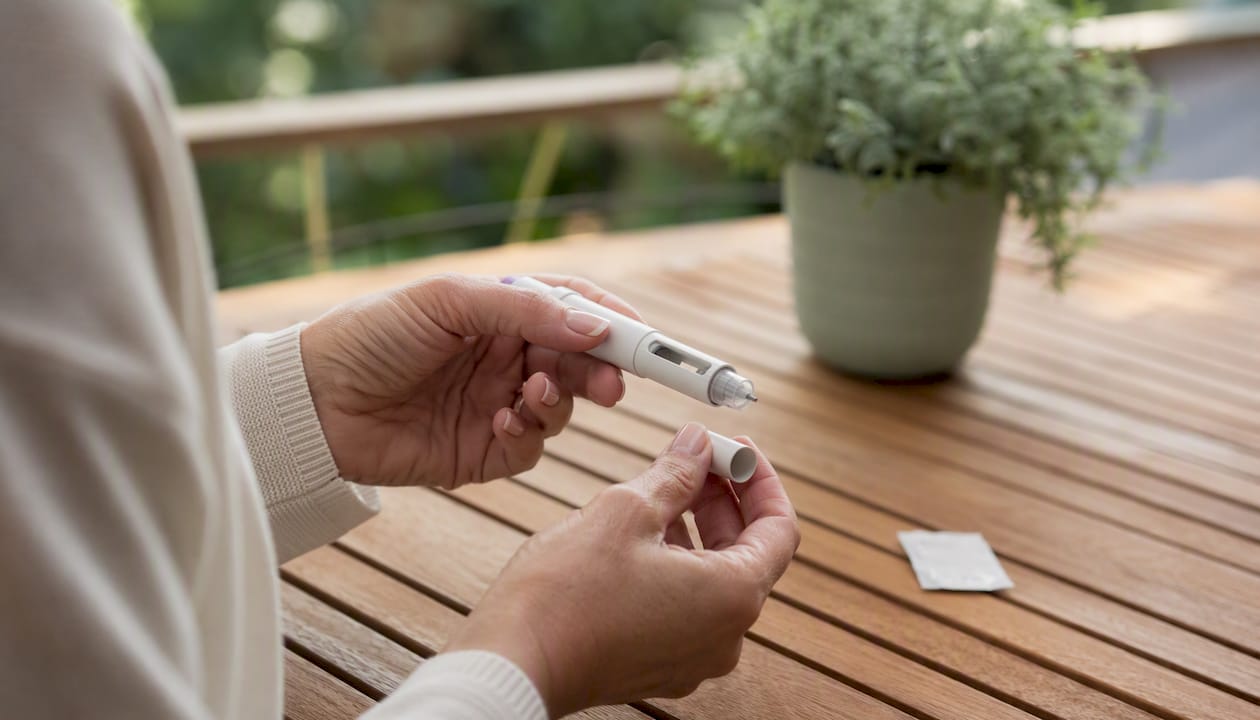
WEGOVY (semaglutide) injection is approved for subcutaneous use in three locations: the lower abdomen (at least 2 inches from the belly button), the front of the upper thighs, or the outer upper arms. According to the FDA-approved prescribing information, you must never inject into a muscle or a vein. Clinical trials reported injection-site reactions in roughly 1.4% of Wegovy-treated adults, a rate low enough that most people complete their weekly injection without any skin trouble at all.
A few rules apply regardless of which site you choose:
- Rotate to a different spot within your chosen area every week; never use the exact same spot twice in a row.
- Inspect the solution before each injection: it should be clear and colorless. Do not use a cloudy or discolored pen.
- Use a new needle for every injection and never share pens or needles with anyone else.
- If you miss a dose and your next scheduled dose is more than 48 hours away, take the missed dose as soon as you remember. If it is fewer than 48 hours away, skip it and resume your regular schedule.
- For a suspected overdose (severe nausea, vomiting, or low blood sugar), call Poison Help at 1-800-222-1222 or seek emergency care immediately.
Key Takeaways
Rotating among the three FDA-approved Wegovy injection sites, following the two-click hold sequence, and storing pens correctly at 36°F–46°F are the three habits that determine whether your weekly injection is safe, complete, and effective.
| Point | Details |
|---|---|
| Three approved sites | Abdomen (2+ inches from navel), front of upper thighs, and outer upper arms — subcutaneous only. |
| Rotate every week | Never inject the exact same spot twice in a row; track with a calendar or body diagram. |
| Two-click hold sequence | Press until first click, hold until yellow bar stops and second click sounds, then wait 5–10 seconds before withdrawing. |
| Storage rule | Keep pens refrigerated at 36°F–46°F; room-temperature window varies by pen type per manufacturer IFU. |
| Legacymeds support | Legacymeds provides telemedical provider assessment, injection training, and unlimited coaching with no membership fees. |
Table of Contents
- Wegovy injection sites: exactly where to inject on each body area
- How to pick the right site for your weekly routine
- Step-by-step preparation and injection with Wegovy pens
- How to rotate injection sites and care for your skin
- Wegovy pen storage, needle handling, and safe disposal
- Provider training, missed doses, overdose, and pen troubleshooting
- Getting a Wegovy prescription and injection training through Legacymeds
- Sources
- FAQ
Wegovy injection sites: exactly where to inject on each body area
The DailyMed prescribing label names three approved subcutaneous sites. Each has specific landmarks worth knowing before you uncap the pen.
Abdomen
The correct zone is the lower stomach, roughly from the bottom of your ribcage down to the top of your hip bones, and from one side to the other. The single firm rule: stay at least 2 inches away from your belly button in every direction. That 2-inch clearance exists because the tissue directly around the navel is denser and less predictable for subcutaneous absorption.
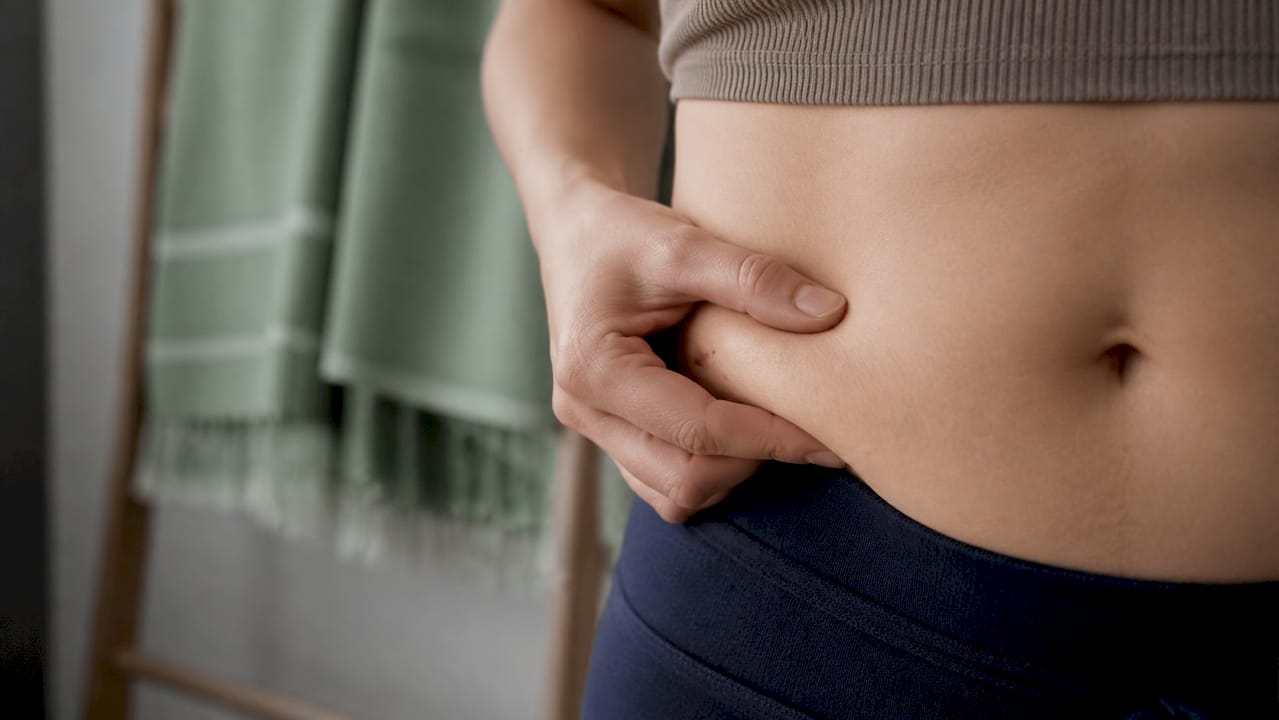
You can inject standing, sitting, or lying down. Standing with a slight lean forward often makes the lower abdomen easier to see and reach. Avoid the waistband line if clothing or a belt creates pressure there, since pressure right after injection can irritate the site.
Front of upper thighs
Use the middle-to-upper front of the thigh, not the inner thigh or the back. Sitting down naturally firms the muscle underneath, which actually makes it easier to pinch a fold of skin and keep the pen stable. This site tends to work well for people who find the abdomen harder to reach or see.

Stay away from the knee and avoid the inner thigh entirely. The inner thigh has thinner skin and more nerve endings, which makes injections there noticeably more uncomfortable.
Outer upper arm
The target area is the outer back portion of the upper arm, roughly midway between the shoulder and elbow. This site is most practical when a caregiver or family member is giving the injection, since it is genuinely difficult to see the pen window and press at a consistent angle on your own arm.
If you are self-injecting into the arm, use a mirror or ask someone to confirm the pen is seated flat against the skin before you press.
What to avoid at every site
- Skin that is red, bruised, tender, or warm to the touch
- Scars, stretch marks, or areas with hard lumps under the skin
- Any spot that was used for the previous week’s injection
- Skin folds that are unstable or shift when you press the pen
Pro Tip: Run two fingers across your chosen spot before injecting. If you feel a hard lump or the skin feels tight and unyielding, move an inch in any direction and check again.
How to pick the right site for your weekly routine
Consistency matters more than which site you pick. A site you can reach comfortably, see clearly, and access every week without help will always outperform a theoretically “better” site that you struggle to use correctly.
Here is how the three sites compare in practical terms:
- Abdomen: The easiest site for most people doing self-injection. You can see the pen window, confirm the yellow bar, and apply steady pressure without contorting your arm. The skin fold is usually easy to lift.
- Front of thigh: Comfortable when sitting, especially for people with limited shoulder mobility. The thigh also tends to have a firmer surface, which keeps the pen from shifting mid-injection.
- Upper arm: Best suited for caregiver-assisted injections. If a partner or family member gives your weekly dose, the arm is a clean, accessible site with good visibility for the person holding the pen.
Decision rules worth following
- Choose the site you can see and reach without straining.
- Stick to one body area per week if that makes rotation tracking easier, but vary the exact spot within that area.
- Switch site types if you notice persistent redness, a hard lump, or if the pen window is consistently hard to see.
- If dexterity is a concern (arthritis, limited grip strength), the thigh sitting down or the abdomen with a slight forward lean are usually the most forgiving options.
One practical approach: assign each body area to a different week in a three-week cycle. Week one, abdomen. Week two, right thigh. Week three, left thigh. Then repeat. Simple enough to remember without a chart.
Step-by-step preparation and injection with Wegovy pens
The Novo Nordisk quick-start guide covers both the single-dose pen and the FlexTouch pen. The core sequence is the same for both, though the FlexTouch is designed for single-patient multi-use across a titration schedule rather than as a one-and-done device.
Before you inject
Take the pen out of the refrigerator and let it sit at room temperature for about 30 minutes before use. A cold pen is not dangerous, but it can make the injection sting more than necessary. Keep the pen in its original carton until you are ready, since light can degrade the solution.
Check the solution through the pen window: it should be clear and colorless. If it looks cloudy, has particles floating in it, or has changed color, do not use that pen. Gather your supplies: an alcohol swab, a piece of clean gauze or a cotton ball, and a sharps container within arm’s reach.
The injection sequence
- Wash your hands thoroughly with soap and water.
- Clean the injection site with an alcohol swab and let it air dry completely. Injecting into wet skin can sting.
- Remove the pen cap. Do not recap the pen after this point.
- If you need to pinch the skin (thinner skin areas or lower body fat), lift a fold gently with two fingers. For most abdominal injections, pinching is optional.
- Place the pen flat against the skin at a 90-degree angle. Press firmly and steadily until you hear the first click — that click signals the injection has started.
- Keep pressing and holding. Watch the yellow indicator bar in the pen window. Hold until the bar stops moving and you hear the second click, which signals the dose is complete. The manufacturer guidance recommends holding for approximately 5–10 seconds after the second click before withdrawing.
- Lift the pen straight off the skin. Do not rub the injection site.
- Place the used pen directly into your sharps container. Never recap a used needle or leave it on the pen between uses.
Pro Tip: Count slowly to ten after the second click before pulling the pen away. Rushing this step is the most common reason for an incomplete dose.
Troubleshooting during injection
If you press the pen firmly and do not hear the first click, recheck that the pen is flat against the skin and apply more direct downward pressure. The pen needs firm, consistent contact to activate. If the yellow bar stops partway and does not complete its travel, continue holding pressure rather than pulling away. Releasing too early is the most common cause of a partial dose.
A small blood drop after withdrawal is normal. Press lightly with clean gauze for a few seconds. Do not massage the area.
How to rotate injection sites and care for your skin
Rotating your injection sites is not optional. Using the same spot repeatedly causes lipohypertrophy, a buildup of fatty tissue under the skin that changes how the medication absorbs. You can stay in the same general body area week to week, but the exact spot must shift.
Simple rotation methods
- Calendar tracking: Mark the date and site on a small calendar kept near your sharps container. One glance tells you where you injected last week.
- Body diagram: Some patients draw a simple outline of the abdomen or thigh and mark each injection spot with a date. After a few weeks, the pattern makes rotation obvious.
- Three-area cycle: Abdomen one week, right thigh the next, left thigh the week after. Repeat. This naturally spaces injections far enough apart.
Skin care before and after
Clean the site with an alcohol swab and let it dry fully before injecting. After withdrawal, press lightly with gauze if there is any bleeding. Do not rub, massage, or apply heat to the site immediately after injection.
Mild redness, slight itching, or brief soreness at the injection site are the most common local reactions. The FDA prescribing information puts the incidence of injection-site reactions at approximately 1.4% in clinical trials, meaning the large majority of patients experience none at all.
Contact your provider if you notice:
- Spreading redness or warmth that worsens over 24–48 hours
- A hard lump under the skin that does not resolve within a week or two
- Persistent pain, swelling, or signs of infection (pus, fever, increasing tenderness)
- Severe itching or a rash spreading beyond the injection site
Wegovy pen storage, needle handling, and safe disposal
Storage temperatures and time limits
Wegovy pens and syringes must be refrigerated at 36°F–46°F (2°C–8°C) until you are ready to use them. Keep them in the original carton to protect from light. Do not freeze them; a frozen pen must be discarded.
The medication guide specifies room-temperature storage windows that vary by pen presentation. Always verify the exact day limit on your specific pen’s packaging or IFU insert, since the permitted duration differs between the single-dose pen, single-dose syringe, and FlexTouch pen.
Always confirm the exact limit on your pen’s label or IFU insert. The figures above reflect manufacturer guidance; your specific lot or dose strength may carry a different window.
Needle handling rules
- Remove the needle from the pen immediately after each injection.
- Never store a pen with a needle attached. Doing so risks air bubbles entering the cartridge and leakage.
- Always use a fresh needle for every injection, even if the pen itself is reused across doses.
Safe disposal checklist
- Place used needles and pens directly into an FDA-approved sharps container immediately after use.
- Never throw loose needles or used pens into household trash or recycling.
- When the sharps container is about three-quarters full, seal it and dispose of it according to your local rules. Your pharmacy or provider can tell you the nearest drop-off location.
- If you do not have a sharps container, a heavy-duty plastic bottle with a screw-top lid (like a laundry detergent bottle) is an acceptable temporary substitute in many states — check your state’s guidelines.
Pre-injection storage checklist
- Pen has been out of the refrigerator for at least 30 minutes
- Solution is clear and colorless
- Expiration date has not passed
- Pen has been stored in its original carton away from light and heat
- No visible damage to the pen body or window
Provider training, missed doses, overdose, and pen troubleshooting
Training before self-injection
Manufacturer guidance requires that a healthcare provider train you on injection technique and verify that you can perform it correctly before you self-administer at home. This is not a formality. The verification step catches the two most common errors before they become habits: pressing too lightly (no first click) and withdrawing too quickly (incomplete dose).
The FlexTouch pen specifically is not recommended for self-injection by visually impaired patients, since confirming the yellow bar’s position requires clear vision of the pen window.
Pro Tip: Ask your provider to watch you perform a practice run with a training pen or a capped pen before your first real injection. Demonstrating the technique yourself, rather than just watching, is what the verification step is actually designed to confirm.
Missed dose rules
Overdose and severe reactions
If you suspect an overdose (severe nausea, severe vomiting, or signs of very low blood sugar), call Poison Help at 1-800-222-1222 or go to the nearest emergency room. For full guidance on drug interactions, monitoring, and when to seek emergency care, the Legacy Meds safety information page covers overdose signs, insulin interaction risks, and urgent-care thresholds in plain language.
Seek immediate medical attention for:
- Severe, persistent abdominal pain radiating to the back (possible pancreatitis)
- Signs of a serious allergic reaction: swelling of the face, lips, tongue, or throat; difficulty breathing; rapid heartbeat
- Severe hypoglycemia if you are also taking insulin or a sulfonylurea: shakiness, confusion, sweating, or loss of consciousness
Pen troubleshooting
| Problem | Likely cause | What to do |
|---|---|---|
| No first click when pressing | Pen not flat against skin; insufficient pressure | Reposition pen flat, press harder and steadily |
| Yellow bar stops partway | Pressure released too early | Keep pressing; do not withdraw until bar stops |
| Liquid leaks from needle end | Needle not attached correctly | Discard pen; use a new one |
| Pen window is cloudy or has particles | Degraded solution | Discard pen; do not inject |
If a pen malfunction prevents dose delivery, do not attempt to re-inject from the same pen. Contact your pharmacy for a replacement and your provider if you are unsure whether any medication was delivered.
What clinicians look for when verifying your injection technique
The verification step your provider performs before clearing you for home self-injection covers four things: site selection, injection angle, hold time, and disposal. Most beginners pass the first two without trouble. Hold time is where errors cluster.
Pressing the pen firmly enough to trigger the first click feels intuitive after one or two tries. Holding through the second click and then counting several more seconds before withdrawing does not. The instinct is to pull away the moment you hear the click, which cuts the dose short. A clinician watching you inject will catch this immediately; doing it alone at home for weeks before anyone notices is how partial dosing becomes a habit.
The other common beginner error is choosing an injection spot that shifts when the pen presses against it. Loose skin on the inner thigh or a poorly supported fold on the abdomen can cause the pen to angle away from 90 degrees mid-injection. Mild local reactions like brief redness or soreness are predictable and manageable; a persistent hard lump or spreading redness is the signal to call your provider rather than wait it out.
Getting a Wegovy prescription and injection training through Legacymeds
Starting Wegovy at home is straightforward when you have the right support from the beginning. Legacymeds connects you with a telemedical provider who assesses your eligibility, writes your prescription, and walks you through injection technique before your first dose arrives. There are no membership fees and no insurance requirements.
The program includes free provider visits, personalized dosing plans, and unlimited ongoing coaching so you are never left guessing about a missed dose, a pen problem, or a site reaction. Shipping is included, and your provider stays accessible throughout your treatment.
If you have already been prescribed Wegovy and need a refresher on technique, or if you are evaluating GLP-1 options for the first time, the Legacymeds weight loss program is a practical starting point. For answers to common questions about pricing, eligibility, and what the program covers, the Legacymeds FAQ page has the details. Ready to get started? Begin your intake today and have a provider review your case within 24 hours.
Sources
For complete prescribing details, storage specifications, and dosing tables, consult these primary sources directly:
- DailyMed - WEGOVY- semaglutide injection, solution
- Wegovy quick-start guide for patients (Novo Nordisk PDF)
This article is general information, not a substitute for advice from a qualified doctor. Consult a qualified healthcare professional about your own circumstances before acting on anything here.
FAQ
Is it better to inject Wegovy in the thigh or stomach?
Neither site is clinically superior — all three approved sites deliver equivalent absorption. The abdomen is generally easiest for self-injection because you can see the pen window clearly; the thigh works well sitting down and suits people with limited shoulder mobility.
Where should I inject Wegovy for best results?
Choose the site you can reach consistently and use correctly every week. The abdomen (at least 2 inches from the belly button), front of the upper thighs, and outer upper arms are all FDA-approved and equally effective for semaglutide delivery.
Should I pinch my skin when injecting Wegovy?
Pinching is optional for most abdominal injections and unnecessary when there is adequate subcutaneous tissue. For thinner skin areas or leaner body habitus, lifting a gentle fold with two fingers helps keep the pen at 90 degrees and reduces the chance of hitting muscle.
Why do some people stop taking Wegovy?
The most common reasons are gastrointestinal side effects (nausea, vomiting, diarrhea) during dose escalation, cost or insurance coverage gaps, and difficulty maintaining the weekly injection routine. Injection-site reactions are rarely the reason, given the ~1.4% incidence rate reported in clinical trials. Programs like Legacymeds that include ongoing provider coaching can help patients work through early side effects rather than stopping prematurely.