

Zepbound starts at 2.5 mg injected once weekly for 4 weeks, a dose meant strictly to initiate treatment, not to sustain it. From there, the dose rises by 2.5 mg roughly every 4 weeks, moving through 5 mg, 7.5 mg, 10 mg, and 12.5 mg on the way to a maintenance dose. Most people land on 5 mg, 10 mg, or 15 mg long term, with 15 mg once weekly marking the ceiling.
TL;DR:
- Most patients escalate their dose in 2.5 mg steps every four weeks, taking at least 4 weeks at each level before increasing.
- Tolerance and individual response determine whether a patient stays at 5 mg, 10 mg, or proceeds to the maximum 15 mg dose.
- The medication comes in multiple packaging formats and strengths, requiring careful verification to avoid dosing errors.
- Missing a dose by four days or fewer allows for a quick dose, but more than four days calls for skipping and rescheduling, not doubling doses.
- Gastrointestinal side effects are most common after dose increases and can be managed by gradual escalation, proper diet, hydration, and consultation with providers.
Table of Contents
- What Is the Standard Zepbound Dosage Schedule?
- What Dosage Forms and Strengths Does Zepbound Come In?
- How Do You Administer a Zepbound Injection Correctly?
- What Happens If You Miss a Zepbound Dose?
- Why Do Side Effects Happen During Titration, and How Do You Manage Them?
- How Do You Choose the Right Maintenance Dose?
- How Legacymeds Supports Safe Zepbound Titration
- A Practical Take on Titration
- Ready to Start Your Zepbound Program With Provider Support?
- Sources
- FAQ
What Is the Standard Zepbound Dosage Schedule?
Tirzepatide, the active ingredient in Zepbound, works by activating GLP-1 and GIP receptors, which slows digestion and blunts appetite. That mechanism is exactly why the dose can’t jump straight to an effective level. Ramp it too fast and the gut rebels with nausea, bloating, and worse. Ramp it on schedule, and most people tolerate it fine.
The FDA-approved prescribing information on DailyMed lays out a six-step titration path. Here’s how it runs in practice:
- Weeks 1 to 4: 2.5 mg once weekly. This dose exists purely to get your body used to the medication. It’s not strong enough to drive meaningful weight loss on its own, and it isn’t approved as a maintenance dose. Nobody stays here long term.
- Weeks 5 to 8: 5 mg once weekly. This is the first true maintenance-eligible dose. Some patients, especially those sensitive to GI side effects or managing modest weight goals, stay here rather than climbing further.
- Weeks 9 to 12: 7.5 mg once weekly. A transitional step. It’s not a maintenance dose on the label, but it gives your system another month to adjust before the next increase.
- Weeks 13 to 16: 10 mg once weekly. A second common landing spot for maintenance. Many people see substantial appetite suppression and steady weight loss here without pushing to the top of the range.
- Weeks 17 to 20: 12.5 mg once weekly. Another transitional dose, used almost exclusively as a stepping stone toward the maximum.
- Week 21 onward: 15 mg once weekly. The maximum recommended dose, reserved for patients who need the strongest effect and have tolerated the climb without significant issues.
Each increase requires at least 4 weeks at the current dose before moving up, according to Lilly’s official dosing and escalation schedule. That “at least” matters. If your body needs 6 or 8 weeks at 5 mg before it’s ready for 7.5 mg, your prescriber can hold there. Nothing about this schedule is rigid on the calendar. It’s rigid on the sequence and the minimum spacing, not the maximum.
Whether you end up on 5 mg, 10 mg, or 15 mg for the long haul comes down to two things: how your body responds and how well you tolerate the climb. For general weight reduction, the label lists 5 mg, 10 mg, and 15 mg once weekly as the recognized maintenance range. Higher doses tend to produce greater average weight loss in clinical populations, but “tends to” is doing real work in that sentence. Individual response varies enough that a 10 mg dose can outperform 15 mg for one patient and underperform it for another.
The weekly cadence itself is flexible. You pick a day that fits your routine and stick with it, give or take a couple of days. Injecting on Sunday evening every week is just as valid as injecting Wednesday morning, as long as you’re consistent enough to maintain steady drug levels. The schedule cares about the interval between doses and the interval between escalations. It doesn’t care whether that happens at 7 AM or 9 PM.
One rule that trips people up: escalation only ever moves in 2.5 mg increments, and only after the minimum 4 weeks. There’s no approved protocol for skipping a step, whether you’re feeling great and want faster results or feeling rough and want to jump past a dose you’re struggling with. If a dose isn’t working tolerability-wise, the answer is to hold or step back, not to leapfrog forward.
What Dosage Forms and Strengths Does Zepbound Come In?
Zepbound ships in more packaging formats than most patients expect, and mixing them up is one of the easier ways to make a dosing mistake. According to the DailyMed prescribing information, the drug is available as single-dose pens, single-dose vials, multi-dose vials, and single-patient KwikPen devices, across six strengths: 2.5 mg, 5 mg, 7.5 mg, 10 mg, 12.5 mg, and 15 mg.
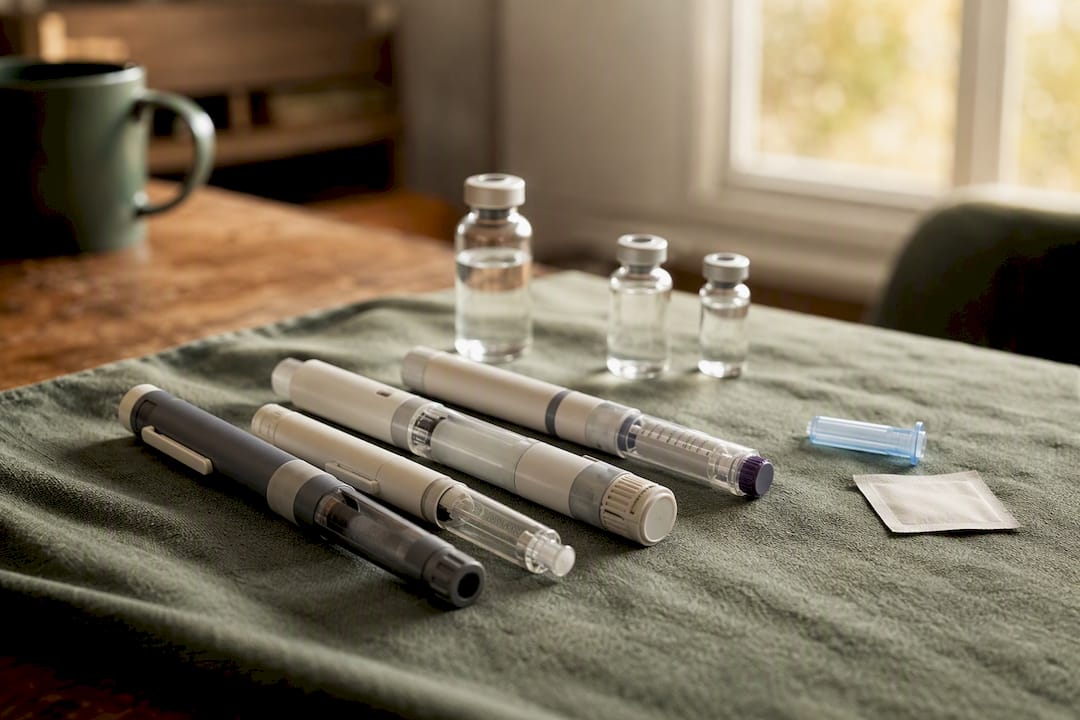
Every single-dose pen and single-dose vial delivers one dose per 0.5 mL of solution, regardless of strength. That means a 2.5 mg pen and a 15 mg pen look nearly identical in volume. The concentration of tirzepatide in the liquid is what changes, not the amount of liquid you inject. This is exactly why checking the strength printed on the pen or vial label matters more than eyeballing the syringe.
Multi-dose vials and KwikPen devices work differently. Each one contains four once-weekly doses rather than one. A 10 mg multi-dose vial holds 2.4 mL total, which breaks down to four 2.5 mL… more precisely, four 0.6 mL draws at 10 mg apiece, formulated so the concentration yields the correct 10 mg dose from each measured pull. The practical takeaway: with a multi-dose format, you are responsible for measuring the correct volume every single week, not just uncapping a pre-loaded pen.
A few checks before every injection:
- Confirm the strength printed on the label matches what your prescriber ordered for this stage of your titration.
- If you’re using a multi-dose vial, verify you’re drawing the correct volume for your current dose, not last month’s dose.
- Check the expiration date and look for particles or discoloration in the solution.
- Never assume two pens “feel the same” strength just because they’re the same brand and similar packaging. Read the number.
- If your pharmacy switches you between single-dose pens and a multi-dose vial mid-titration, ask your provider or pharmacist to walk through the volume math before you inject.
Mixing up a single-dose pen for the wrong week’s strength, or misreading a multi-dose vial’s markings, is a completely avoidable error that still happens often enough that pharmacists flag it as a top patient-education priority. When in doubt, call your pharmacy before you inject, not after.
How Do You Administer a Zepbound Injection Correctly?
Zepbound is a once-weekly subcutaneous injection, meaning it goes into the fatty tissue just under the skin rather than into muscle or a vein. According to Lilly’s patient instructions for use, it can be taken at any time of day, with or without food, which gives you real flexibility to build it into your routine.
Here’s the basic administration sequence:
- Remove your dose from the refrigerator about 30 minutes before injecting so it can reach room temperature. Injecting cold medication is more likely to sting.
- Inspect the solution. It should look clear and colorless to slightly yellow. If it’s cloudy, discolored, or has visible particles, don’t use it.
- Choose an injection site: the abdomen, front of the thigh, or back of the upper arm are all approved locations.
- Rotate sites every week. Using the same spot repeatedly can cause irritation or affect how the medication absorbs.
- Clean the site with an alcohol swab and let it air dry.
- Inject at a 90-degree angle for most pen devices, following the specific instructions that come with your pen or vial and syringe.
- Hold the pen in place for the count specified in your device’s instructions to ensure the full dose delivers.
- Dispose of the needle immediately in an approved sharps container.
Single-dose pens are largely self-contained: load, inject, discard. Multi-dose vials require a separate syringe, careful measurement of the correct volume for your current dose, and more attention to sterile technique since the vial gets reused across four weeks. KwikPen devices sit somewhere in between, prefilled but built for multiple doses from a single unit, so read the specific instructions that ship with your device rather than assuming all “pens” work the same way.
Store unopened Zepbound in the refrigerator between 36°F and 46°F, and never let it freeze. If a pen or vial does freeze, discard it. It cannot be used, even after thawing. Some formats allow limited room-temperature storage once in use. Check your specific product’s insert for exact windows rather than guessing.
Pro Tip: Keep a simple injection log, even a note on your phone, tracking the date, site, and dose. It takes ten seconds and prevents the two most common mistakes: forgetting which body area you used last and losing track of whether you’ve actually escalated on schedule.
Sharps disposal deserves its own attention. Never toss used needles or pens directly into household trash. The FDA’s safe sharps disposal guidance recommends using an FDA-cleared sharps container or a community drop-off program, many pharmacies and health departments offer free take-back options. If you notice unusual swelling, persistent redness, or signs of infection at an injection site, contact your provider rather than waiting for your next scheduled dose.
What Happens If You Miss a Zepbound Dose?
Missing a weekly dose is common enough that Lilly built a specific, simple rule into the label rather than leaving patients to guess. According to Lilly’s dosage and missed-dose guidance, the rule comes down to a single number: four days.
- If it’s been 4 days or fewer since your missed dose, administer it as soon as you remember, then resume your normal weekly schedule from that new injection date.
- If more than 4 days have passed, skip the missed dose entirely and wait for your next regularly scheduled day. Don’t try to “catch up.”
- Never inject two doses close together to make up for a missed one. Doubling up doesn’t restore lost progress, and it meaningfully raises your risk of nausea, vomiting, and other GI side effects.
- If you’re unsure how many days have passed or you’ve missed more than one dose in a row, call your provider before injecting anything. A short conversation beats a guessing game with a prescription medication.
This rule applies the same way whether you’re still in the titration phase or settled into a maintenance dose. Missing a dose during escalation doesn’t reset your titration clock back to 2.5 mg. It just shifts your next injection day. If missed doses become a recurring pattern, that’s worth flagging to your provider too, since consistent weekly dosing is part of what makes the titration schedule work as intended.
Why Do Side Effects Happen During Titration, and How Do You Manage Them?
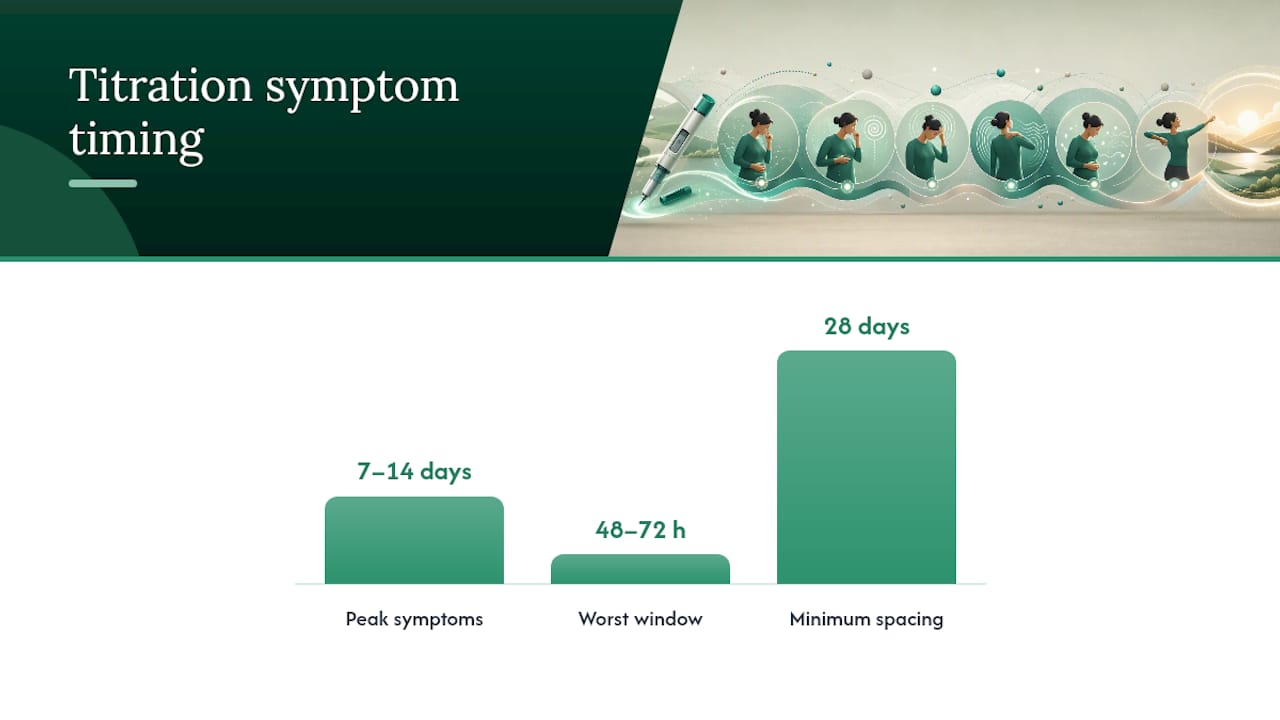
Gastrointestinal side effects are the single biggest reason people abandon GLP-1 medications before reaching an effective dose, and they cluster predictably around each dose increase. Nausea, mild constipation or diarrhea, occasional vomiting, and reduced appetite (the intended effect, just more intense than expected) tend to peak in the first week or two after an escalation, then taper as your body adjusts.
That pattern is exactly why the label spaces increases at least 4 weeks apart. The manufacturer’s titration guidance is explicit that slower, stepwise escalation reduces the risk of GI adverse reactions compared to jumping to a higher dose too fast. The 4-week minimum isn’t a formality. It’s the buffer that lets your digestive system catch up before you ask more of it.
A few practical tactics make the climb noticeably easier:
- Eat smaller, more frequent meals instead of three large ones. A full stomach on top of appetite-suppressing medication is a common recipe for nausea.
- Avoid heavy, fatty, or greasy foods, especially in the first few days after a dose increase. They digest slowly and tend to amplify GI discomfort.
- Stay ahead of hydration. Nausea and reduced food intake can quietly lead to dehydration, which makes you feel worse in a feedback loop.
- Eat slowly and stop before you feel full. Your fullness signal arrives faster and stronger on tirzepatide than your habits expect.
- Ask your provider about short-term antiemetic options if nausea is significant during the first days after an increase, rather than white-knuckling through it.
Pro Tip: If nausea consistently hits hardest around day two or three after an increase, plan lighter meals and lower-key days specifically around that window rather than your entire titration month. Most people only need to brace for 48 to 72 hours per step, not four straight weeks of caution.
Side effects that warrant holding at your current dose, rather than pushing forward on schedule, include persistent vomiting that prevents you from keeping food or fluids down, or GI symptoms that are worsening rather than improving after the first week. Genuine red flags requiring urgent medical attention include signs of severe abdominal pain (which can signal pancreatitis), symptoms of gallbladder disease, or signs of a serious allergic reaction like swelling of the face or difficulty breathing. None of that is meant to be managed by waiting it out. Call your provider or seek emergency care. For a broader rundown of what to watch for across GLP-1 medications generally, Legacymeds’ weight loss medication safety information covers the wider safety picture beyond just titration-phase symptoms.
How Do You Choose the Right Maintenance Dose?
Once you’ve climbed through the titration schedule, the real decision is which maintenance dose to settle into, and that choice is more personal than the schedule itself lets on. The label recognizes 5 mg, 10 mg, and 15 mg once weekly as maintenance-appropriate, but “approved” and “right for you” aren’t the same question.
5 mg tends to suit people who’ve hit meaningful appetite control and steady weight loss already, or who experience GI side effects that make climbing higher feel like a poor trade-off. It’s also a reasonable landing spot for patients with more modest weight-loss goals to begin with.
10 mg is where a lot of patients end up long term. It typically delivers stronger appetite suppression than 5 mg while remaining more tolerable, for most people, than the maximum dose. If you’re seeing solid progress at 10 mg with side effects you can manage, there’s rarely a clinical reason to force a further increase just because 15 mg exists.
15 mg, the maximum, is generally reserved for patients who need the strongest available effect and have tolerated the escalation well. Higher doses correlate with greater average weight loss across clinical populations, but averages don’t guarantee individual results, and they don’t account for individual tolerability.
Deciding which of these fits you comes down to tracking real outcomes, not gut feeling:
- Weight trend over 4 to 8 weeks at a given dose, not just the first week’s number.
- Side effect burden, honestly assessed. Manageable nausea for two days after a dose is very different from a week of not eating.
- Relevant lab markers, if your provider is tracking things like blood sugar or lipid panels alongside weight.
- Overall quality of life, energy levels, sleep, mood, since these matter as much as the number on the scale.
If a higher maintenance dose isn’t working out, stepping back down is a legitimate option, not a failure. The general approach is to drop back to the last dose you tolerated well and hold there, rather than stopping the medication altogether. This is a conversation for your prescriber, not a decision to make alone, since the right step-down pace depends on how long you were at the higher dose and why you’re adjusting.
How Legacymeds Supports Safe Zepbound Titration
Following a titration schedule on paper is one thing. Having a provider actually watching your progress, adjusting your pace, and answering questions when side effects show up in week three is another. That gap is where a lot of self-managed GLP-1 treatment goes wrong.
Legacymeds runs its GLP-1 program around exactly that gap. New patients start with a clinical intake and provider assessment conducted online, which determines whether tirzepatide is an appropriate starting point and what titration pace makes sense given your health history. From there, dose increases follow provider-directed titration rather than a generic calendar, meaning your prescriber can hold a dose longer if you’re struggling with side effects or move at the standard pace if you’re tolerating it well.
What that looks like in practice:
- Personalized titration plans built around your metabolic profile and response, not a one-size-fits-all schedule.
- Free provider visits throughout your treatment, so adjusting your dose doesn’t come with a separate consultation fee every time.
- Unlimited ongoing coaching and support, available if nausea hits harder than expected or you have questions about a missed dose.
- No membership fees or insurance requirement, so you’re not navigating prior authorization delays while you’re also managing GI side effects mid-titration.
That scale matters less as a number and more as a signal: the team has seen essentially every version of a titration schedule, from the ones that go smoothly to the ones that need a mid-course adjustment.
A Practical Take on Titration
Most people fixate on reaching 15 mg as fast as possible, as if the maximum dose is the goal. It isn’t. The goal is the lowest effective dose you can tolerate well enough to stay on consistently, because a medication you quit at week ten does less for you than one you tolerate at 10 mg for a year.
A pattern I see reflected again and again in how these schedules actually play out: someone climbs cleanly through 2.5 mg and 5 mg, hits noticeable nausea at 7.5 mg, and their provider simply extends that step by two extra weeks instead of pushing forward on the calendar’s default timeline. That’s not a failure of the protocol. That’s the protocol working as designed, because “at least 4 weeks” was never meant to be a rigid deadline.
Talk to your provider before every increase, not just at the start. Your tolerance at week 4 tells you more than any generic schedule can.
— Bryan
Ready to Start Your Zepbound Program With Provider Support?
Reading the schedule is the easy part. Actually navigating dose increases while your body adjusts, deciding whether to hold at 7.5 mg or push forward, figuring out if your nausea warrants a call to your provider, is where most people want someone in their corner. Legacymeds builds that support directly into the program: a provider assessment to confirm Zepbound is right for you, a personalized titration plan instead of a generic calendar, and free provider visits every time your dose needs adjusting.

There’s no membership fee and no insurance requirement standing between you and starting treatment. If you’re ready to see whether you qualify, the GLP-1 weight loss program at Legacymeds walks you through the online intake in a few minutes, and a licensed provider reviews your history before any medication ships. Eligibility depends on your health profile and provider evaluation, and program terms are outlined during intake.
This article is general information, not a substitute for advice from a qualified doctor. Consult a qualified healthcare professional about your own circumstances before acting on anything here.
Sources
- DailyMed — ZEPBOUND (tirzepatide) injection, solution
- Dosage Options, Schedules & Missed Doses | Zepbound (Lilly)
- FDA — Safe sharps disposal
FAQ
What Is the Starting Dose for Zepbound?
The starting dose is 2.5 mg injected subcutaneously once weekly for 4 weeks. This dose is for treatment initiation only and isn’t intended as a long-term maintenance dose.
How Long Does It Take to Reach the Maximum Zepbound Dose?
Following the standard schedule of one increase every 4 weeks, reaching the maximum 15 mg dose takes at least 20 weeks from your first injection, longer if your provider extends any step for tolerability.
Can I Skip a Dose Level to Reach Maintenance Faster?
No. The approved titration schedule requires moving through each 2.5 mg increment in sequence, with at least 4 weeks at each dose before increasing further.
What Should I Do if I Miss a Weekly Zepbound Dose?
Take it as soon as possible if it’s been 4 days or fewer since the missed dose. If more than 4 days have passed, skip it and resume your regular weekly schedule on the next scheduled day.
Is 15 Mg the Best Dose for Weight Loss?
Not necessarily. While 15 mg is the maximum approved dose and correlates with greater average weight loss in clinical populations, many patients achieve strong results and better tolerability at 5 mg or 10 mg. The right maintenance dose depends on your individual response and side effects, which a provider through a program like Legacymeds can help you evaluate.