

Yes, you can get a legitimate weight loss prescription in the United States if you meet clinical criteria, and the safest paths are an in-person visit with your primary care doctor or an obesity specialist, or a vetted telehealth program that includes a real medical evaluation and follow-up. Skip anything that ships pills without a clinician talking to you first. Before you book, gather your height, weight, current medications, and any past weight-loss attempts, then schedule an evaluation this week.
TL;DR:
- Prescriptions for weight loss drugs require a thorough medical assessment, preferably with a qualified clinician who reviews your health history and labs.
- FDA-approved medications like semaglutide and tirzepatide carry significant risks, including thyroid tumor warnings and gastrointestinal side effects, requiring careful screening.
- Legitimate telehealth programs offer ongoing follow-up and transparent pricing, while Beware of services that ship pills without proper medical evaluation or clear policies.
- Insurance coverage for weight loss medications varies widely, with some programs like Medicare offering reduced copays, but out-of-pocket costs can still be high without coverage.
- Verify the prescribing clinician’s credentials, ask detailed questions about costs and follow-up, and avoid services that lack transparency or rely on deceptive marketing practices.
Table of Contents
- How to Get a Weight Loss Prescription Online or In Person
- Who Qualifies for Weight Loss Medication?
- Choosing a Safe Clinician or Telehealth Program
- Which Weight Loss Drugs Are FDA-Approved, and What Are the Risks?
- What Does a Weight Loss Prescription Actually Cost?
- Legacymeds’ Approach to Clinician-Managed Weight Loss Care
- A Straight Take on Getting a Weight Loss Prescription
- Ready to Start? What a Legacymeds Visit Looks Like
- Where to Verify These Facts Yourself
- Sources
- FAQ
How to Get a Weight Loss Prescription Online or In Person
Getting a prescription for GLP-1 medication or another FDA-approved weight loss drug follows a fairly predictable sequence, whether you walk into a clinic or open an app. The paperwork and the exam differ a little, but the clinical logic doesn’t change.
1. Gather your basic health information first. Write down your current weight and height, a list of medications and supplements you take, and a short history of diets or weight-loss programs you’ve already tried. If you have recent labs, especially anything related to blood sugar, cholesterol, or thyroid function, bring those too.
2. Decide between an in-person visit and telehealth. A primary care doctor, endocrinologist, or obesity medicine specialist can prescribe weight loss medication during a standard office visit. The American Medical Association recommends working with a clinician who has obesity-specific training, whether that’s an endocrinologist, a gastroenterologist, or a board-certified obesity specialist, and sticking with them for ongoing monitoring rather than a one-off consult.
3. If you choose telehealth, expect this workflow: an online intake form asking about your medical history and goals, a video visit with a licensed clinician, lab work if your history calls for it, then a prescription with a titration schedule that starts low and increases gradually. Reputable programs also set a follow-up cadence, usually every four weeks during dose escalation, to catch side effects early.
4. Know what happens during the actual visit. The clinician will ask about your weight history, screen for contraindications like a personal or family history of certain thyroid cancers, and walk you through medication options. This should feel like a conversation, not a sales pitch. Expect questions about pregnancy plans, digestive conditions, and prior reactions to medications.
5. Fill the prescription through a licensed pharmacy. Legitimate programs send your prescription to a licensed pharmacy or a verified mail-order shipper. If a service offers to sell you the drug directly without routing through a pharmacy, that’s a signal to walk away.
A few practical notes make the difference between a smooth process and a frustrating one:
- Telehealth visits typically move faster than booking a new specialist, sometimes within days rather than weeks.
- In-person visits work better if you have complicated medical history that benefits from a physical exam or ongoing coordination with other specialists.
- Either route should end with a written plan: starting dose, escalation schedule, and next check-in date.
Pro Tip: Take a photo of your medication bottles and any recent lab reports before your visit. Clinicians move faster with accurate information in front of them, and you avoid the classic problem of forgetting a drug name mid-appointment. If you’re prepping for a video visit specifically, organizing your vitals ahead of time helps the clinician make a faster, more accurate call.
Who Qualifies for Weight Loss Medication?
Clinicians generally use body mass index as a starting point, not the whole picture. The NIDDK’s clinical guidance lists the standard thresholds most prescribers follow: a BMI of 30 or higher, or a BMI of 27 or higher paired with at least one weight-related condition such as type 2 diabetes, high blood pressure, or obstructive sleep apnea.
Meeting the number isn’t automatic approval. A clinician will look at your full health picture, including conditions that make certain medications risky. Common exclusions and precautions include:
- Pregnancy, breastfeeding, or actively trying to conceive.
- A personal or family history of medullary thyroid carcinoma or multiple endocrine neoplasia syndrome type 2.
- Certain gastrointestinal conditions, particularly gastroparesis, which can worsen with GLP-1 drugs.
- A history of severe pancreatitis.
This is why a clinician might order baseline labs, checking liver and kidney function, and a pregnancy test when relevant, before writing anything. It’s not bureaucratic friction. Medications like semaglutide and tirzepatide slow digestion and shift insulin signaling, and a clinician needs to know your organs can handle that shift safely. Weight loss medication also works as an adjunct to diet and physical activity rather than a replacement for them, according to NIDDK’s guidance on safe programs, so expect your clinician to ask about your eating patterns and activity level, not just your BMI.
Choosing a Safe Clinician or Telehealth Program
Not every service that says “weight loss prescriptions” is worth your money or your trust. Start with credentials: look for board certification in obesity medicine, endocrinology, or a related field, and confirm the clinician holds an active license in your state. A legitimate program will tell you clearly who prescribes your medication and who handles your follow-up visits, not leave you guessing.
Before you pay anything, ask these questions directly:
- Does the quoted price include the medication, or is that billed separately?
- How are labs handled, and are they required before the first prescription?
- How often will I have follow-up visits during dose titration?
- What’s the cancellation and refund policy, in writing?
- Who do I contact if I have a bad reaction to the medication?
Pay close attention to how a company handles pricing and consent. The FTC took action against a telehealth firm for misleading pricing, fake reviews, and deceptive weight-loss marketing tied to GLP-1 programs. The final order in that case required clear cost disclosures, informed consent before any charge hits your card, and an actual working way to cancel. Any service that skips those basics is worth avoiding.
Pro Tip: If a program won’t put its cancellation and refund terms in writing before you enter payment information, treat that as a hard stop, not a minor inconvenience.
Telehealth works well for straightforward cases. If you have complex comorbidities, a history of severe medication reactions, or a condition that needs a physical exam, an in-person specialist is the better call. Complicated cases benefit from someone who can lay hands on you and coordinate with your other doctors directly.
Which Weight Loss Drugs Are FDA-Approved, and What Are the Risks?
The FDA has approved several medications for chronic weight management, and the NIDDK maintains a current list of what’s cleared and how each one works. The names you’ll hear most often:
- Semaglutide — sold as Wegovy for weight management and Ozempic for type 2 diabetes, given as a weekly injection.
- Tirzepatide — sold as Zepbound for weight management and under related formulations for diabetes, also a weekly injection.
- Liraglutide — sold as Saxenda, a daily injectable GLP-1 drug.
- Phentermine-topiramate — an oral combination pill used for appetite suppression.
- Naltrexone-bupropion — an oral combination that works on appetite and reward pathways.
- Orlistat — an oral medication that blocks some dietary fat absorption.
Semaglutide and tirzepatide belong to a drug class that mimics gut hormones called GLP-1, and tirzepatide also acts on a second hormone receptor called GIP. Together these slow stomach emptying, reduce appetite signals in the brain, and improve how your body manages insulin, which is why they tend to produce more weight loss than older oral options.
These drugs carry real risks, not just side effects you shrug off. Wegovy’s FDA label carries a boxed warning about thyroid C-cell tumors observed in animal studies, which is why a personal or family history of medullary thyroid carcinoma rules the drug out. Beyond that warning, expect possible nausea, vomiting, and diarrhea, especially during dose increases, along with a risk of dehydration if GI symptoms go unmanaged. Anyone who suspects pregnancy needs to stop the medication and contact their clinician immediately.
One more warning worth taking seriously: the FDA has issued warning letters over compounded semaglutide and tirzepatide products sold outside the standard pharmacy supply chain. Compounded versions aren’t automatically dangerous, but unverified sellers skip quality controls that catch contamination or incorrect dosing. If a deal looks too cheap for a name-brand GLP-1 drug, ask exactly where the medication is coming from before you buy.

What Does a Weight Loss Prescription Actually Cost?
Brand-name GLP-1 drugs are expensive without coverage, often running several hundred dollars a month at full retail price, though manufacturer coupons can lower the cost for eligible patients during an initial period. Insurance coverage is inconsistent. Many plans require prior authorization, and some employer plans exclude weight-loss drugs from coverage entirely even when they’d cover the same drug for diabetes. The AMA has documented how private insurance coverage of anti-obesity medications remains restricted by step-therapy rules and prior authorization requirements, meaning your actual out-of-pocket cost can look very different from the sticker price.
Medicaid coverage varies by state, and employer plans vary just as much depending on how the plan sponsor structured pharmacy benefits. If you have insurance, call your plan directly and ask specifically whether GLP-1 medications for weight management, not diabetes, are covered and what prior authorization requires.
Here’s a coverage detail worth knowing if you’re on Medicare: CMS launched the Medicare GLP-1 Bridge demonstration, which gives eligible Medicare Part D beneficiaries access to certain GLP-1 drugs at a $50 copay during the demonstration period starting July 1, 2026. Check Medicare.gov/glp1bridge directly to see if you qualify and which drugs are included, since eligibility and covered medications are specific to the program.
A few practical moves before you commit to any program:
- Ask your pharmacist whether a generic alternative exists for your specific medication and dose.
- Compare manufacturer savings cards directly on the drugmaker’s site rather than trusting a third-party discount claim.
- Get the total monthly cost in writing, including the medical visit fee, before you enter payment details anywhere.
Legacymeds’ Approach to Clinician-Managed Weight Loss Care
A company in this field might offer personalized GLP-1 treatment plans designed around each patient’s metabolic profile rather than a fixed-dose approach. According to the company, patients report a significant average reduction in body weight, and the program has served a substantial number of patients. Those figures come from Legacymeds and are worth verifying against your own results and expectations rather than treating as a guarantee.
The model includes a few features that line up with the safety practices covered above:
- A provider assessment before any prescription is written, often included as part of a program.
- Guidance and coaching included in the program rather than billed separately.
- No membership fees or insurance requirement, with medication and care possibly bundled into one cost.
- A titration approach that may adjust dosing based on the patient’s response rather than following a fixed schedule.
That structure maps reasonably well to what clinical guidance recommends: an actual clinician evaluation, a dose-escalation plan, and ongoing follow-up rather than a single transaction. Whether it’s the right fit for you still depends on your own health history and what you’re comparing it against. Treat every claim above, including the 18% and 500,000 figures, as the publisher’s own reported numbers rather than an independently audited result.
A Straight Take on Getting a Weight Loss Prescription
Most advice on this topic focuses on eligibility checklists and drug comparisons, and that’s useful, but it buries the part that actually protects you: the FTC’s enforcement history against telehealth weight-loss firms isn’t a footnote, it’s the clearest signal of where this industry cuts corners. Hidden medication costs stacked onto a “free consultation,” fake reviews, and memberships designed to be hard to cancel are documented patterns, not hypothetical risks.
The conventional wisdom treats BMI as the whole eligibility story. It’s the entry point, not the decision. A clinician weighing your thyroid history, your GI health, and your medication list matters more than whether you clear a number on a chart.
If you take one thing from this article, make it this: prioritize transparent pricing and a real follow-up plan over speed. A same-day prescription from a service that won’t put its cancellation policy in writing isn’t a shortcut. It’s a risk with your money and your health attached to it.
— Bryan
Ready to Start? What a Legacymeds Visit Looks Like
Certain programs aim to remove common barriers in obtaining a weight loss prescription, such as membership fees and insurance requirements. Some services include an initial provider assessment to check eligibility, and if qualified, may arrange medication shipping directly to the patient instead of requiring an additional pharmacy visit.
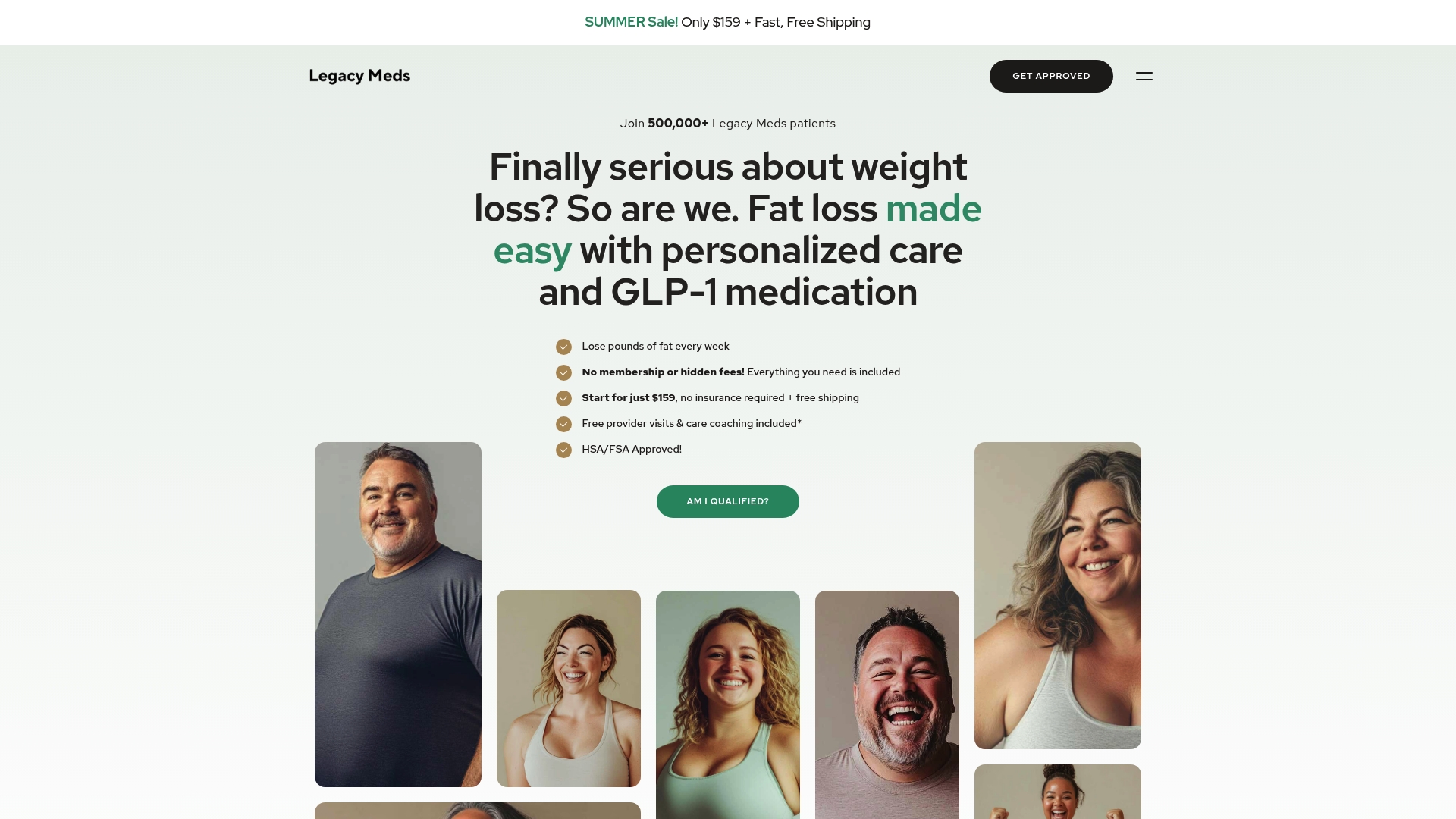
Before you commit to any weight loss program, compare what’s included against what you’re paying for, the cost of the medication itself, how follow-up visits are handled, and what happens if you need to pause treatment. Legacymeds offers a GLP-1 injection plan starting at $159 as a one-time cost, along with a semaglutide program starting at $159 per month, with unlimited coaching built into the price rather than billed as an add-on. If you want the specifics on eligibility and how pricing breaks down before you commit, the Weight Loss Prescription Online page walks through the intake process, and you can start an eligibility check whenever you’re ready to move forward.
Where to Verify These Facts Yourself
You don’t have to take any article’s word for it, including this one. These are the primary sources behind the clinical and regulatory claims above:
- AMA guidance on which specialists should manage prescribing and follow-up.
Use CMS for coverage questions, the FDA label for safety and dosing, NIDDK for eligibility, the AMA for finding the right kind of clinician, and the FTC for spotting a deceptive program before you pay for it.
This article is general information, not a substitute for advice from a qualified doctor. Consult a qualified healthcare professional about your own circumstances before acting on anything here.
FAQ
How Do I Get 3 Months of Ozempic for $25?
That price point usually comes from a manufacturer savings card for patients who have commercial insurance that already covers Ozempic for type 2 diabetes, not a cash price available to everyone. Check the manufacturer’s official savings program directly and confirm your insurance and diagnosis qualify before assuming that price applies to you.
What Is the Strongest Weight Loss Prescription Available in the U.S.?
Tirzepatide, sold as Zepbound, has shown the largest average weight loss among the FDA-approved options NIDDK lists for chronic weight management, followed closely by semaglutide (Wegovy). “Strongest” still depends on your individual response and tolerance, so a clinician needs to weigh that against your specific health history.
Can I Get an Online Prescription for Weight Loss Medication?
Yes, a legitimate telehealth program can prescribe weight loss medication after a licensed clinician evaluates your history through an intake form and a video visit. Legacymeds offers this through a free provider assessment before any prescription or medication cost is charged.
What’s the Cheapest GLP-1 Drug I Can Buy Without Insurance?
Prices vary by pharmacy and current manufacturer promotions, so there’s no single fixed answer, and cash prices for brand-name GLP-1 drugs run high without a coupon. Ask your pharmacist about generic alternatives and manufacturer savings programs directly, and compare the total monthly cost, medication plus visit fees, across programs like Legacymeds’ semaglutide program before choosing one.