

Whether insurance covers Wegovy depends entirely on your specific plan, not on Wegovy itself. Many commercial and employer plans will cover it, but almost always with prior authorization and BMI documentation attached. Medicare beneficiaries have a new option too: the Medicare GLP-1 Bridge program offers a $50 monthly copay for eligible Part D enrollees from July 1, 2026 through December 31, 2027. Your move right now: log into your insurer’s member portal or call the number on your card, check the formulary for semaglutide, and ask your provider’s office to start gathering prior authorization paperwork today.
TL;DR:
- Insurance coverage for Wegovy heavily depends on plan type, formulary placement, and whether prior authorization with documented medical necessity is secured.
- The typical list price exceeds one thousand dollars per month, but manufacturer savings and plan specifics can reduce out-of-pocket costs significantly, especially for commercial plans.
- The Medicare GLP-1 Bridge program offers a $50 copay for qualifying beneficiaries between July 2026 and December 2027, based on BMI and comorbidities, but does not include all Medicare recipients.
- Specialty pharmacy requirements and plan deductibles can increase costs or cause delays, making early benefits and price checks essential.
- When coverage is denied, options include challenging formulary exclusions, submitting complete documentation, or pursuing external reviews, with direct telehealth pathways as an alternative to insurance-based access.
Table of Contents
- How Wegovy Insurance Coverage Actually Works
- What Wegovy Actually Costs, With and Without Insurance
- The Medicare GLP-1 Bridge Program, Explained
- Checking Your Coverage and Getting Prior Authorization Approved
- What to Do When Wegovy Coverage Gets Denied
- Ways to Lower Your Wegovy Costs Right Now
- Our Take on Access and Affordability
- If Insurance Won’t Cover Wegovy, Legacy Meds Is a Faster Path
- Sources
- FAQ
How Wegovy Insurance Coverage Actually Works
Every insurance policy runs on a formulary, which is simply the list of drugs a plan agrees to pay for and at what cost tier. Wegovy often sits on a higher tier than generic medications, which means a bigger copay even when it’s covered, and many formularies require prior authorization before the pharmacy can process the claim at all. That authorization step exists because Wegovy is expensive and insurers want documented proof the patient meets specific medical criteria before they approve it.
The type of plan you have changes almost everything about how this plays out.
- Employer-sponsored and commercial plans vary the most. Some large employers cover GLP-1 medications for weight management outright; others exclude the entire drug class from their formulary, regardless of medical necessity.
- Medicare Part D historically excluded weight-loss drugs by federal statute, though the new Bridge program temporarily changes that picture for qualifying beneficiaries.
- Medicaid coverage differs by state, and several states have added semaglutide products for obesity treatment while others still limit coverage to diabetes diagnoses only.
Pharmacy network matters just as much as plan type. Some insurers route GLP-1 prescriptions through a specialty pharmacy rather than your regular retail pharmacy, because these medications require refrigeration, careful handling, and closer monitoring of refills. If your plan requires specialty pharmacy dispensing and you try to fill at a standard retail counter, the claim will likely reject even if the drug itself is technically covered. Calling ahead to confirm which pharmacy network applies saves a wasted trip and an awkward conversation at the counter.
What Wegovy Actually Costs, With and Without Insurance
The list price for a 30-day supply of Wegovy is estimated at over one thousand dollars before any insurance or discount applies, according to pharmacy pricing data compiled by GoodRx. That number shocks most people the first time they see it, and it’s exactly why the gap between “covered” and “affordable” matters so much.
By the numbers: Reported cash and copay outcomes for Wegovy vary widely, with some commercially insured patients paying very low amounts using manufacturer savings, up to higher costs when coinsurance applies, per GoodRx.
A few factors decide where you land in that range:
- Your deductible status. If you haven’t met your annual deductible yet, your first few fills often cost close to the full negotiated rate, even with “coverage.” Costs typically drop once the deductible resets.
- Your dose. Wegovy is dosed in escalating strengths, and some plans price each strength differently on the formulary.
- Whether you qualify for manufacturer savings. NovoCare’s savings card can bring commercially insured patients’ copays down substantially, but people with Medicare, Medicaid, or Tricare are excluded from that program by federal rules governing drug manufacturer discounts.
- Coinsurance versus flat copay plans. A flat $50 copay plan is predictable. A plan requiring 20% to 30% coinsurance on a $1,350 drug is not, and that’s often where people get blindsided.
This is exactly why the first phone call to your insurer should ask two specific questions: is this a copay or coinsurance drug on my plan, and has my deductible been met this year? Those two answers predict your real cost far better than the sticker price ever will. For a deeper breakdown of how pricing tiers stack up, our cost guide walks through common scenarios by plan type.
The Medicare GLP-1 Bridge Program, Explained
Medicare has historically been barred by federal law from covering drugs prescribed purely for weight management, which left millions of older adults locked out of GLP-1 access even as commercial plans slowly opened up. The Medicare GLP-1 Bridge program changes that, temporarily, for a defined group of beneficiaries.
The core rule: From July 1, 2026 through December 31, 2027, eligible Medicare Part D beneficiaries can access Wegovy, in both injection and tablet form, for a flat $50 copay per 30-day supply, according to CMS.
Here’s what determines whether you qualify and what the fine print actually says:
- Eligibility runs on BMI and comorbidities. According to the Medicare GLP-1 Bridge PDF, thresholds generally sit at a BMI of 35 or higher, or 30 or higher when paired with a qualifying condition like hypertension or high cholesterol, though exact cutoffs can shift based on individual case documentation.
- You must be enrolled in a Medicare Part D plan. Original Medicare without a Part D drug plan, and Medicare Advantage plans that don’t include Part D drug coverage, don’t qualify a beneficiary for the Bridge pricing.
- The $50 does not count toward your deductible or out-of-pocket maximum. This is the detail almost everyone misses. Medicare’s own materials are explicit that this flat payment sits outside your annual Part D accounting entirely, and it isn’t compatible with Extra Help or similar low-income subsidy programs.
- The program is temporary by design. It runs as a defined demonstration period, not a permanent Medicare benefit, which means beneficiaries who qualify now should lock in enrollment and refills rather than assuming the terms will extend automatically past December 2027.
One misconception worth clearing up directly: this isn’t Medicare suddenly deciding weight-loss drugs are covered forever. It’s a bounded pilot program built to test expanded access under specific conditions, and the eligibility screening reflects that. If you think you qualify, the practical next step is asking your Part D plan administrator to confirm your enrollment status and BMI documentation on file, then having your prescriber submit the required diagnosis codes before your next refill is due.
Checking Your Coverage and Getting Prior Authorization Approved
Most denials happen not because a patient is ineligible, but because the paperwork submitted didn’t match what the insurer’s review team needed to see. Getting ahead of that starts with a straightforward benefits check.
- Call the number on your insurance card or log into the member portal, and ask specifically whether semaglutide (Wegovy) is on your formulary, what tier it’s on, and whether prior authorization is required.
- Use the manufacturer’s coverage tool. NovoCare’s online lookup can estimate your coverage status and connect you with savings programs if you’re commercially insured.
- Ask your pharmacy to run a test claim. A specialty or retail pharmacist can often see a rejection reason in real time, which tells you exactly what’s missing before you even talk to your doctor.
- Have your provider submit documentation covering BMI, prior weight-management attempts, and relevant comorbidity codes. Clinical guidance compiled by the National Council on Aging notes that authorization requests including a documented treatment plan tying medication to lifestyle changes tend to move through faster than bare prescriptions.
- Follow up within 3 to 5 business days. Most plans have a standard turnaround window for prior authorization decisions, and a polite follow-up call often surfaces a missing form before it becomes a formal denial.
Pro Tip: Ask your provider’s office if they work with a specialty pharmacy hub for GLP-1 medications. Those hubs handle insurance paperwork daily and can often flag a missing diagnosis code before the claim ever reaches your insurer, cutting weeks off the process.
What to Do When Wegovy Coverage Gets Denied
A denial isn’t the end of the road. Insurers reject GLP-1 claims for a handful of predictable reasons, and each one has a specific counter-move.
- Formulary exclusion. Some plans simply don’t carry Wegovy at all. Ask HR or your benefits manager whether a formulary exception request is possible, especially if your employer plan has flexibility to add drugs mid-year for documented medical necessity.
- “Not medically necessary.” This usually means the clinical documentation didn’t clearly connect your BMI, comorbidities, and prior treatment attempts. A resubmission with more complete records often succeeds where the first attempt failed.
- Step therapy requirements. Some plans require you to try and fail on a cheaper medication first. Your provider can request a step therapy exception if there’s a documented medical reason to skip that step.
If the standard appeal fails, ask your provider’s office about a peer-to-peer review, where your prescriber talks directly with the insurer’s medical reviewer. Federal and state rules also guarantee an external review right after internal appeals are exhausted, meaning an independent third party evaluates the denial. A licensed insurance broker familiar with plan design, like the team at Sobal Nationwide Health, can also help you understand whether your specific plan type allows a formulary exception request and how long that process typically runs. Formularies also aren’t fixed forever. Plans revise them regularly, so a drug excluded this plan year isn’t necessarily excluded next year, especially if enough members request it.
Ways to Lower Your Wegovy Costs Right Now
Cost reduction tactics depend heavily on what kind of insurance you have, but a few options apply broadly.
- Manufacturer copay cards can bring costs down significantly for commercially insured patients, but federal law excludes anyone on Medicare, Medicaid, or Tricare from using them.
- Compare pharmacy cash prices. Discount tools like GoodRx can sometimes beat your insurance copay, especially before your deductible resets.
- Check HSA or FSA eligibility. GLP-1 medications prescribed for a diagnosed condition typically qualify as an eligible expense, though the rules get specific. Our HSA guide covers the documentation you’ll want on file for an audit.
- Ask about payment plans through your pharmacy or provider if you’re paying cash while an appeal is pending.
Pro Tip: Don’t wait on a denial letter to start exploring alternatives. Running a benefits check and pricing out cash options in parallel, right from week one, means you’re never stuck without medication while paperwork moves.
Our Take on Access and Affordability
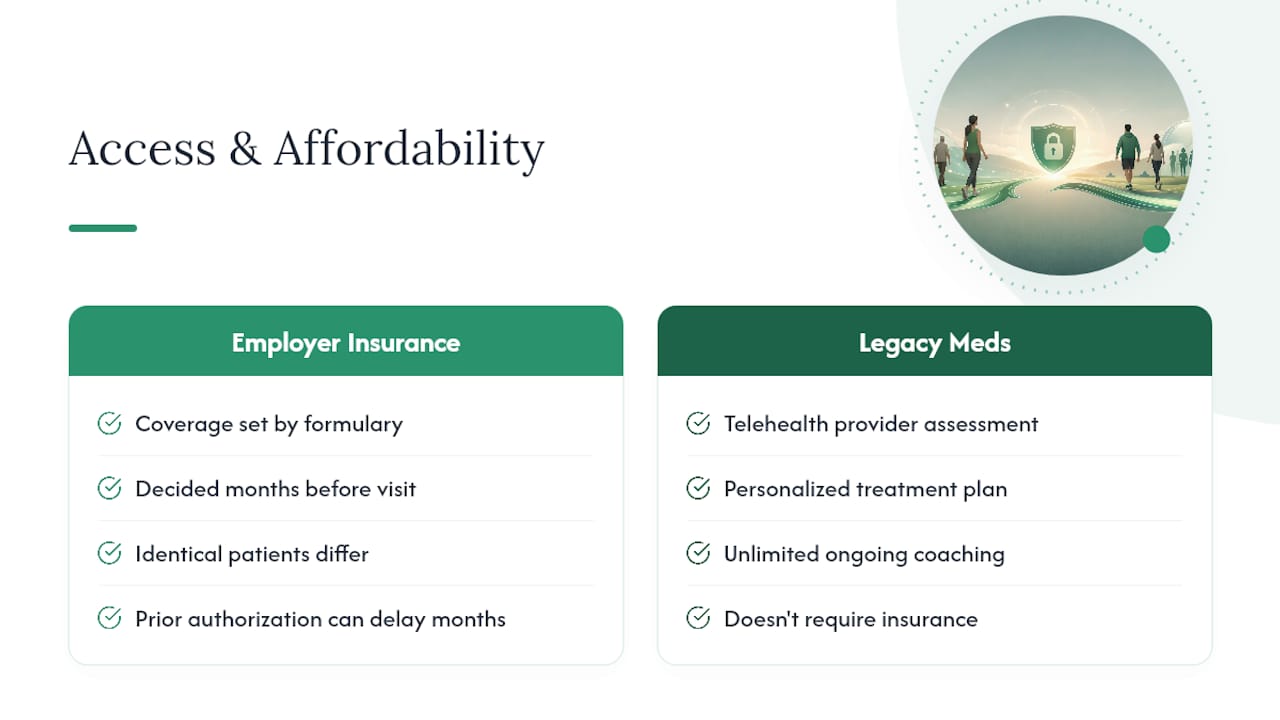
The insurance system for GLP-1 drugs is built around a strange contradiction: obesity is a documented medical condition, yet coverage still hinges on whether a patient’s employer chose to include the drug class in this year’s formulary. That’s not a clinical decision. It’s a benefits-design decision made months before you ever walked into a doctor’s office, and it explains why two people with identical BMI and health histories can have completely different outcomes at the pharmacy counter.
We built Legacy Meds around that gap. Our model includes a telehealth provider assessment, a personalized treatment plan, and unlimited ongoing coaching, all without requiring insurance or a membership fee to get started. When a prior authorization is stuck in review, or a formulary exclusion means a six-month wait for an employer’s open enrollment, that timeline has a real cost measured in months of delayed treatment. A parallel path that doesn’t depend on that approval clock is often the more practical choice, not a lesser one.
— Bryan
If Insurance Won’t Cover Wegovy, Legacy Meds Is a Faster Path
You can get started with a telehealth provider assessment and online intake that reviews your health history and goals, and if appropriate, medication ships directly to you, potentially without the weeks of back and forth that insurance-based access often requires.
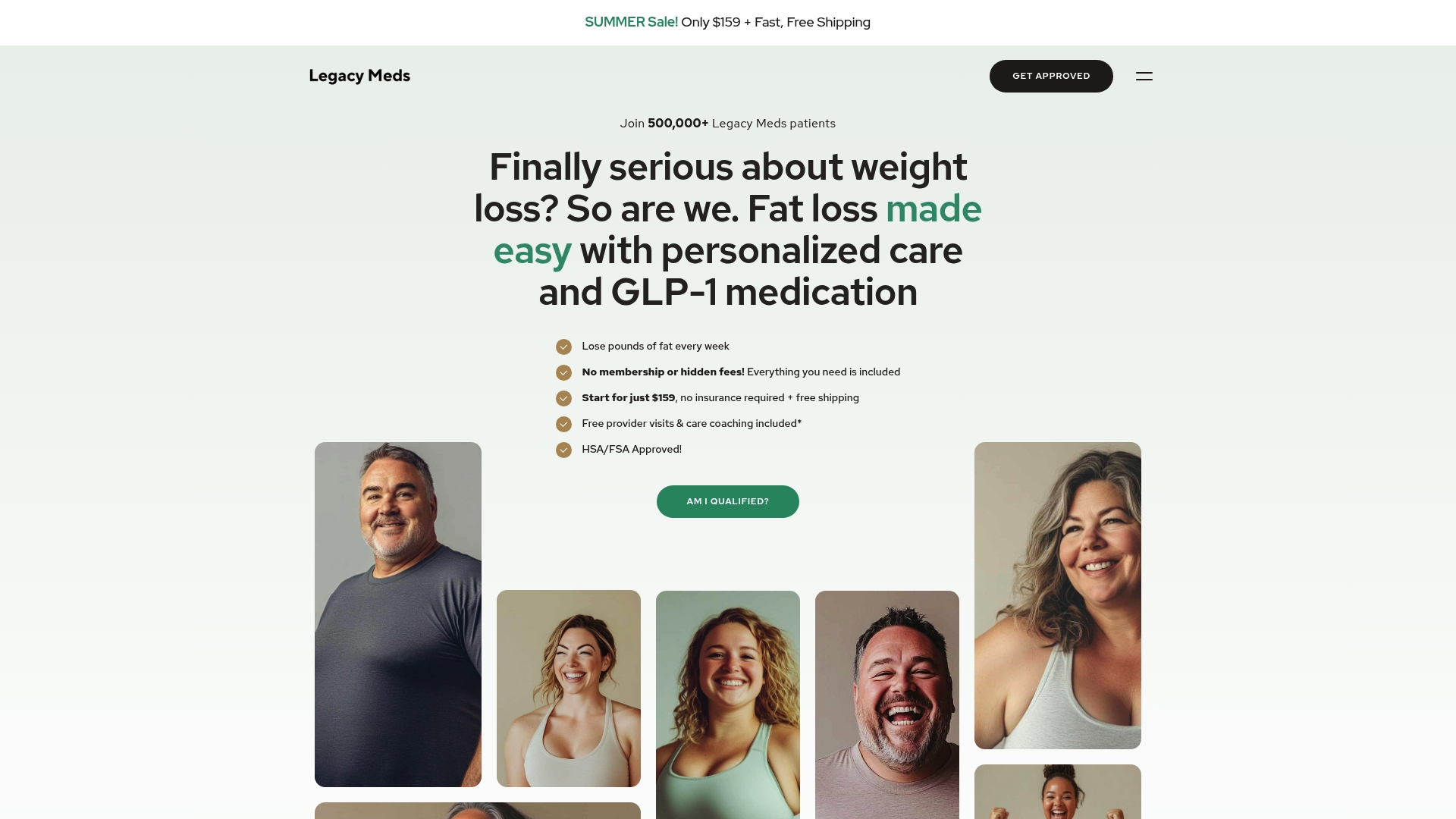
If you haven’t checked your insurance yet, do that first. It’s worth knowing whether your plan covers Wegovy before you commit to paying out-of-pocket. But if coverage is denied, delayed, or simply doesn’t exist for your plan, there are direct routes that include provider visits and coaching support without requiring insurance or membership fees. Start your online intake today to see what a personalized plan looks like for you, or browse our weight loss prescription program to understand exactly what’s included before you commit.
This article is general information, not a substitute for advice from a qualified doctor. Consult a qualified healthcare professional about your own circumstances before acting on anything here.
Sources
- CMS — Medicare GLP-1 Bridge
- Medicare — Medicare GLP-1 Bridge PDF
- Wegovy — What to pay for Wegovy
- GoodRx — How much does Wegovy cost?
FAQ
How do I get Wegovy fully covered by insurance?
Full coverage isn’t guaranteed under any plan, but your best odds come from confirming your plan includes Wegovy on its formulary, then having your provider submit complete prior authorization documentation covering BMI, comorbidities, and prior treatment history.
How are some people getting Wegovy for $25 a month?
Those low copays typically come from commercially insured patients combining plan coverage with manufacturer savings offers, a combination that isn’t available to people on Medicare, Medicaid, or Tricare.
How much does Wegovy cost with Blue Cross Blue Shield?
Cost varies by specific Blue Cross Blue Shield plan and state, since each plan sets its own formulary tier and copay or coinsurance structure for GLP-1 drugs; calling your specific plan’s member line is the only reliable way to get your exact figure.
Why does insurance keep denying Wegovy?
The most common reasons are formulary exclusion, insufficient documentation of medical necessity, or a step therapy requirement demanding you try a different medication first, all of which can typically be challenged through an appeal or peer-to-peer review.
Does the Medicare GLP-1 Bridge program cover everyone on Medicare?
No. It’s limited to Part D beneficiaries who meet specific BMI and health condition criteria, and it runs only from July 1, 2026 through December 31, 2027, according to CMS.