

Pancreatitis on GLP-1 drugs is rare, and the evidence linking the two is genuinely mixed, often muddied by the same conditions that already raise a patient’s baseline risk. If you develop severe, persistent abdominal pain, stop the medication and get evaluated immediately. If you have a history of pancreatitis or major risk factors like very high triglycerides, talk with your prescriber before starting or continuing therapy.
TL;DR:
- Large cardiovascular trials and meta-analyses show no consistent, statistically significant increase in pancreatitis risk caused by GLP-1 drugs.
- Absolute pancreatitis risk among GLP-1 users is very low, with roughly 3 extra cases per 1,000 patients compared to other diabetes medications.
- Factors like gallstones, very high triglycerides, prior pancreatitis, alcohol use, and rapid weight loss are more significant risk indicators than the medication itself.
- Biological evidence suggests GLP-1 receptors on pancreatic cells could influence enzyme secretion, but current human data do not confirm this causes pancreatitis.
- Patients with a history of pancreatitis should assess underlying causes and modifiable risk factors before starting therapy, with personalized monitoring during treatment.
Table of Contents
- What Does the Research Say About GLP-1 Pancreatitis Risk?
- How Could GLP-1 Drugs Affect the Pancreas Biologically?
- Who Actually Faces Higher Pancreatitis Risk on These Drugs?
- What Should Happen if a Patient Has a History of Pancreatitis?
- What Are the Warning Signs, and What Should You Do About Them?
- How Can You Lower Your Pancreatitis Risk on GLP-1 Therapy?
- How Do Supervised GLP-1 Programs Handle Pancreatitis Safety?
- A Reasonable Read on the Evidence, Not a Reassuring One or a Scary One
- Consider a Supervised GLP-1 Program With Built-In Screening
- Sources
- FAQ
What Does the Research Say About GLP-1 Pancreatitis Risk?
Large cardiovascular outcome trials, the gold standard for drug safety data, have not found a consistent, statistically significant jump in pancreatitis among people taking GLP-1 receptor agonists like semaglutide or tirzepatide. That is the single most important fact in this entire conversation, and it gets buried constantly by headlines built around individual case reports.
A tertiary clinical review published in the Cleveland Clinic Journal of Medicine looked across the accumulated meta-analyses and concluded that pancreatitis incidence doesn’t rise in any statistically reliable way with GLP-1 use. The authors framed early safety scares, the ones that drove blanket exclusion of patients with prior pancreatitis from GLP-1 candidacy, as largely walked back by more recent, better-designed data. They called it something closer to a reconcilable divorce between old fears and new evidence than an open, unresolved danger.
Observational studies tell a messier but still reassuring story. A 2025 propensity-score matched analysis followed close to 89,000 matched pairs of patients, comparing GLP-1 receptor agonist users against people taking DPP-4 inhibitors, a different diabetes drug class. Acute pancreatitis showed up in 0.31% of GLP-1 users versus 0.24% of DPP-4 inhibitor users, a real but tiny absolute gap. Framed as relative risk, that difference can sound alarming in a headline. Framed as absolute numbers, it means roughly 3 extra cases per 1,000 patients over the study period, against a backdrop where both drug classes are prescribed to people who already carry elevated pancreatitis risk from diabetes, obesity, and metabolic disease.
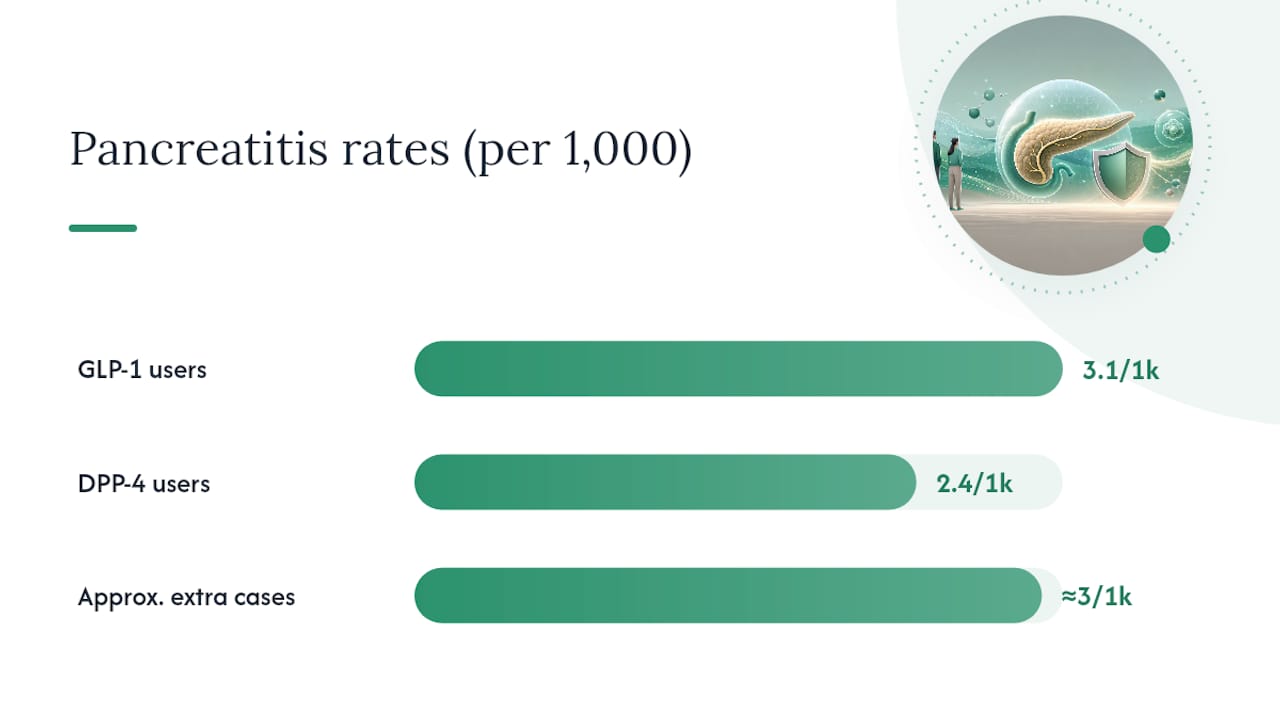
Pro Tip: When you read a pancreatitis statistic tied to any GLP-1 drug, ask whether it’s reporting relative risk (a percentage increase) or absolute risk (how many actual people out of how many total). The gap between those two numbers is where most of the internet’s fear comes from.
A more recent 2026 analysis complicates the picture further, in a direction that actually supports the drugs. It found that GLP-1 receptor agonists may modestly increase suspected drug-induced pancreatitis while simultaneously reducing pancreatitis linked to hypertriglyceridemia and heavy alcohol use. Because GLP-1 drugs lower triglycerides and often reduce alcohol cravings as a side effect, they may be preventing one category of pancreatitis while very slightly raising another. Net population-level counts could wash out close to neutral, which is roughly what the big trials show.
Why does the evidence swing around so much between studies? A few structural reasons:
- Confounding by indication: people prescribed GLP-1 drugs for diabetes or obesity already have higher baseline pancreatitis risk than the general population, independent of the drug.
- Adverse-event reporting bias: spontaneous reporting systems (like the FDA’s FAERS database) capture suspected cases without a comparison group, so a spike in reports doesn’t prove causation.
- Short follow-up windows: many trials run 1 to 3 years, too short to capture rare, delayed events reliably.
- Variable diagnostic criteria: some studies count any elevated lipase as pancreatitis, while others require imaging confirmation, which changes reported rates dramatically.
None of this means the risk is zero. It means the signal is weak enough, and confounded enough, that “GLP-1 drugs cause pancreatitis” is an oversimplification the data doesn’t fully support.
How Could GLP-1 Drugs Affect the Pancreas Biologically?
The pancreas has two very different jobs, and GLP-1 drugs only target one of them on purpose. The endocrine pancreas makes insulin and glucagon, the hormones GLP-1 receptor agonists are designed to influence. The exocrine pancreas makes digestive enzymes, and that’s the tissue involved when pancreatitis occurs. The biological question is whether a drug built for one system can unintentionally disturb the other.
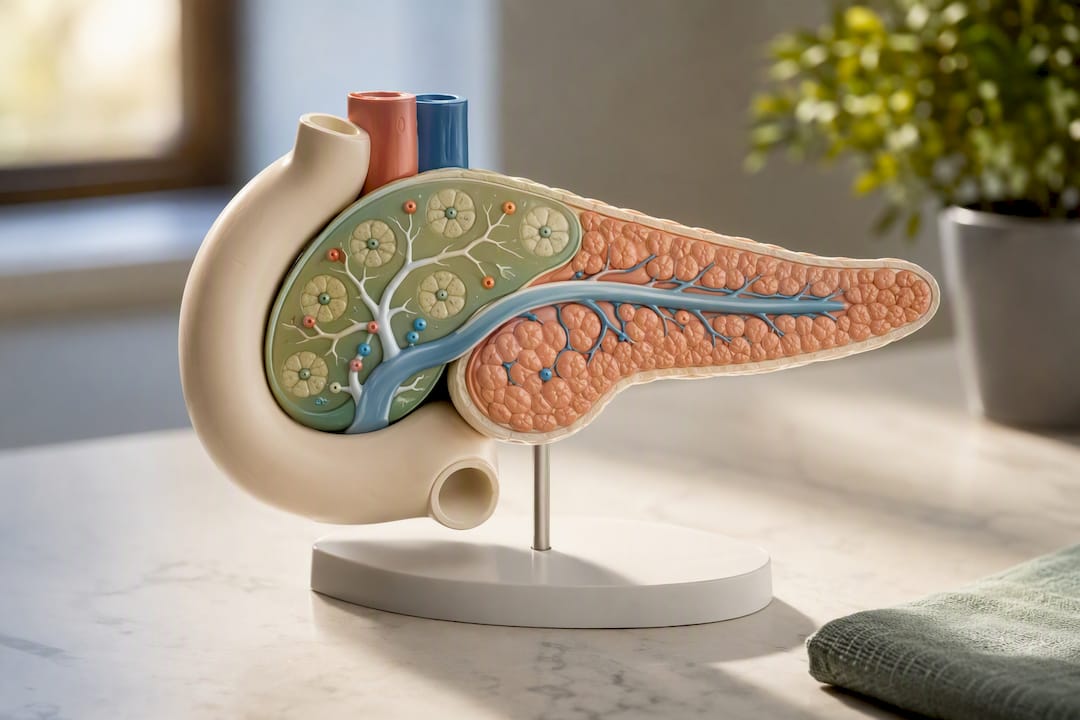
Here’s where it gets interesting: research has found GLP-1 receptors present on pancreatic acinar cells, the exocrine cells responsible for producing digestive enzymes like amylase and lipase. When GLP-1 receptors on these cells get activated, it can raise intracellular cAMP, a signaling molecule, and increase enzyme secretion. In some animal models, sustained receptor activation was also linked to increased pancreatic mass.
That sounds like a smoking gun until you dig into what it actually means. Increased enzyme secretion is not the same thing as pancreatitis. Your pancreas ramps enzyme output up and down constantly in response to meals, hormones, and metabolic signals; that’s normal physiology, not disease. The animal studies showing pancreatic mass changes were often conducted at doses and durations that don’t map cleanly onto human treatment protocols, and rodent pancreatic biology doesn’t always translate directly to humans.
This distinction matters clinically. If a patient on a GLP-1 drug gets routine bloodwork and shows a mildly elevated lipase or amylase with no abdominal pain, no nausea, no fever, that’s very likely an incidental finding, not a diagnosis. Pancreatitis is a clinical diagnosis built on symptoms plus lab findings plus, often, imaging. An isolated enzyme blip, especially one that resolves, more plausibly reflects the kind of adaptive secretory activity described in the acinar cell research than an unfolding inflammatory event.
The honest summary: there’s a biologically plausible pathway by which GLP-1 drugs could theoretically irritate the exocrine pancreas, but the leap from “receptors exist on acinar cells” to “this drug class meaningfully causes pancreatitis in humans” hasn’t been validated by the large-scale human trial data. Mechanism and outcome are two different questions, and right now they’re pointing in slightly different directions.
Who Actually Faces Higher Pancreatitis Risk on These Drugs?
The person’s own health history usually matters more than which GLP-1 drug they’re taking. Retrospective case-control research on GLP-1 initiation for obesity has identified a consistent cluster of predictors, and none of them are the drug class itself:
- Gallstone disease (gallstones are the leading cause of acute pancreatitis in the general population).
- Very high triglycerides, specifically levels above 1,000 mg/dL, which independently trigger pancreatitis regardless of medication.
- Prior history of acute pancreatitis, from any cause.
- Heavy alcohol use, a well-established independent cause.
- Current tobacco use, which the same case-control data flagged as a predictor alongside cardiovascular disease.
- Very rapid weight loss, which can mobilize gallstone formation and stress biliary function.
Here’s the counterintuitive part. That same research found that patients in higher BMI strata sometimes showed lower relative pancreatitis risk after starting GLP-1 therapy compared to leaner patients on the same drugs. That doesn’t mean obesity protects the pancreas. It more likely reflects how these drugs are prescribed and monitored: patients with higher BMI starting therapy for weight management are often screened more carefully upfront, and their pancreatitis risk from other causes may already be captured and managed before the prescription is written. Correlation in observational data like this rarely means what it appears to mean on the surface.
Pro Tip: Bring your triglyceride numbers, gallbladder history, and alcohol intake to the conversation before you start a GLP-1 drug, not after. Clinicians commonly use a short pre-start checklist covering exactly these four items, plus a review of any prior unexplained abdominal pain episodes, because catching a modifiable risk factor before day one is far easier than managing a flare after it starts.
What Should Happen if a Patient Has a History of Pancreatitis?
Blanket exclusion is losing ground as the default clinical stance. For years, many prescribers automatically ruled out GLP-1 therapy for anyone with a pancreatitis history, treating the prior episode as an absolute contraindication. That approach is shifting toward individualized risk assessment.
The FDA’s drug safety communications and current labeling state plainly that acute pancreatitis has been observed in patients on incretin-based therapies, and instruct clinicians to discontinue the drug promptly if pancreatitis is suspected. That’s the regulatory floor: a clear stop-and-evaluate instruction, not a blanket ban on prescribing to anyone with a history.
Clinical practice built on top of that label increasingly focuses on the cause of the prior episode rather than the episode itself. A patient whose earlier pancreatitis was caused by a gallstone that’s since been removed carries a very different risk profile than someone whose pancreatitis was from unexplained, recurrent triglyceride spikes. Cohort research on patients with prior pancreatitis who later went on GLP-1 therapy found some recurrence, but frequently tied to causes other than the medication itself, reinforcing that individualized evaluation beats a one-size-fits-all exclusion rule.
If you have a pancreatitis history, points worth raising with your prescriber include:
- What caused the prior episode, and was it ever fully identified?
- Have your triglycerides been rechecked recently, and what’s the trend?
- Were gallstones confirmed or ruled out with imaging at the time?
- Would enhanced monitoring, more frequent check-ins or lab draws early in treatment, make sense for your specific case?
Cleveland Clinic authors have specifically pushed back on reflexive exclusion, noting that baseline pancreatitis risk from obesity, diabetes, and metabolic disease often outweighs any risk attributable to the drug itself. Managing those underlying conditions, rather than simply avoiding an effective medication, is frequently the bigger lever.
What Are the Warning Signs, and What Should You Do About Them?
Certain symptoms mean stop the drug and get seen urgently, no waiting to see if it passes. The cardinal presentation of acute pancreatitis is severe, persistent pain in the upper abdomen that often radiates straight through to the back. It’s not the kind of cramping that comes and goes with a meal. It tends to build and stay, frequently paired with nausea, vomiting, fever, or a rapid heartbeat.
Clinicians confirm the diagnosis using a combination of blood tests and imaging, not either alone. Elevated lipase or amylase enzymes support the diagnosis, but as covered earlier, an isolated enzyme elevation without symptoms is not pancreatitis on its own. Standard evaluation, as MedlinePlus outlines, typically combines those lab values with abdominal imaging, often an ultrasound or CT scan, to visualize pancreatic inflammation directly and rule out gallstones as the trigger.
If you suspect pancreatitis while on a GLP-1 medication, take these steps in order:
- Stop the medication immediately; don’t wait for your next scheduled dose or appointment to decide.
- Seek urgent medical evaluation the same day, either through urgent care or an emergency department if pain is severe.
- Describe your symptoms precisely: onset timing, pain location and radiation, associated nausea or fever, and how long it’s lasted.
- Tell the clinician exactly which GLP-1 drug you’re on, the dose, and how long you’ve been taking it, since timing relative to dose changes matters for diagnosis.
- Mention your personal risk factors: alcohol use, gallstone history, recent triglyceride levels, and any prior pancreatitis episodes.
Some data suggests suspected drug-related pancreatitis events cluster in the earlier months of treatment, which is one reason close follow-up during dose escalation is practical, not excessive caution.
How Can You Lower Your Pancreatitis Risk on GLP-1 Therapy?
Most of the risk reduction happens before the first injection, not after. A thorough pre-treatment workup catches the modifiable risk factors that matter far more than the drug class itself. That means checking triglyceride levels, reviewing gallstone history (including any prior ultrasound findings), and asking honestly about alcohol intake and tobacco use.
Triglyceride management deserves particular attention. If a patient’s triglycerides are already elevated, especially climbing toward the 500 mg/dL range or beyond, that’s worth treating directly before or alongside starting a GLP-1 drug. Severely elevated triglycerides, above 1,000 mg/dL, are an independent, well-documented cause of pancreatitis regardless of what other medications are involved. In some cases, prescribers may sequence treatment: address the triglyceride problem first with dietary changes or lipid-lowering medication, then introduce or continue the GLP-1 drug once levels are more stable.
Weight-loss pacing is the other major lever. Very rapid weight loss, especially from aggressive caloric restriction stacked on top of a GLP-1 drug’s appetite-suppressing effect, can promote gallstone formation, which independently raises pancreatitis risk. Dose escalation schedules exist partly to avoid this: starting low and increasing gradually gives the body time to adjust metabolically rather than losing weight at a pace that stresses the biliary system.
- Get a baseline triglyceride panel and gallbladder history before starting therapy.
- Follow the prescribed dose escalation schedule rather than pushing to a higher dose faster than recommended.
- Pair the medication with steady, moderate dietary changes instead of severe caloric restriction.
- Maintain adequate protein intake during weight loss to protect lean mass, a concern that overlaps with broader GLP-1 nutrition guidance around fasting and protein targets.
- Flag any new abdominal pain to your provider promptly rather than waiting for a scheduled visit.
Pro Tip: If you’re combining a GLP-1 drug with intermittent fasting or another aggressive eating pattern, loop your prescriber in specifically about pacing. The goal is steady fat loss, not a race, and slowing down is one of the little pancreatitis risk factors you have direct control over.
How Do Supervised GLP-1 Programs Handle Pancreatitis Safety?
Screening before the first prescription, not just monitoring after, is the actual safeguard here. A supervised telehealth GLP-1 program should build pancreatitis risk assessment into the intake process itself: a provider reviewing personal and family medical history, asking about prior pancreatitis, gallbladder disease, and alcohol use, before any medication gets prescribed.
A supervised telehealth GLP-1 program should build pancreatitis risk assessment into the intake process itself: a provider reviewing personal and family medical history, asking about prior pancreatitis, gallbladder disease, and alcohol use, before any medication gets prescribed. Ongoing support continues after that first visit, since risk factors like triglycerides and dose tolerance can shift over the course of treatment, not just at the starting line.
Patient-reported outcomes across GLP-1 programs show meaningful average weight loss alongside reported improvements in mood, energy, and confidence, the kind of results that make ongoing clinical oversight worth having in place. None of that changes the basic safety math covered throughout this article: pancreatitis risk on GLP-1 drugs is low, but it isn’t zero, and the value of supervised care is having a provider available to react quickly if something like persistent abdominal pain shows up mid-treatment. For more detail on how monitoring is structured, Legacymeds outlines its approach on its medication safety information page.
If you’re evaluating any GLP-1 program, supervised or otherwise, ask directly what their intake screening covers and how quickly you can reach a provider if new symptoms come up. That answer tells you more about real-world safety than any marketing claim will.
A Reasonable Read on the Evidence, Not a Reassuring One or a Scary One
The instinct to treat pancreatitis as a dealbreaker for GLP-1 therapy comes from an understandable place, nobody wants to trade one health problem for another, but it misreads what the last several years of data actually show. The signal is weak, inconsistent across study designs, and heavily entangled with conditions, obesity, diabetes, gallstone disease, that raise pancreatitis risk on their own. Treating the drug as the primary suspect, rather than one variable among several, distorts the picture.
What I find more useful than debating relative risk percentages is focusing on what’s actually controllable. Triglycerides can be measured and treated. Gallstone history can be reviewed with imaging. Weight-loss pace can be adjusted through dose escalation. Alcohol intake can be discussed honestly with a provider. None of that requires abandoning an effective medication out of a fear that the data doesn’t strongly support.
The one place I’d push back hardest against old clinical habits is blanket exclusion for anyone with a pancreatitis history. That approach was built on thinner data than we have today, and it can deny an effective treatment to someone whose prior episode had nothing to do with GLP-1 biology. Shared decision-making, weighing your specific history against your specific benefit, beats a reflexive no every time.
— Bryan
Consider a Supervised GLP-1 Program With Built-In Screening
Choosing where to get a GLP-1 prescription matters as much as choosing the drug itself, especially when pancreatitis risk factors like triglycerides and gallstone history need review before you start. Some supervised GLP-1 weight loss programs operate entirely online, pairing provider visits with ongoing coaching, so the same team that screens your history before prescribing stays reachable if anything changes during treatment. There may be no membership fee or insurance requirement standing between patients and clinical oversight.
Patients using Legacymeds’s program report an average 18% reduction in body weight, alongside improvements in energy and mood that patients describe as noticeable within the first few months. That kind of result works best alongside the safety habits covered in this article: honest triglyceride and alcohol history, sensible dose pacing, and quick communication if new abdominal symptoms show up. If you want to see how the intake and prescription process actually works, start with Legacymeds’s program details before booking your first provider visit.
This article is general information, not a substitute for advice from a qualified doctor. Consult a qualified healthcare professional about your own circumstances before acting on anything here.
Sources
- PubMed: (propensity-score matched analysis) — 2025
- PubMed: 2026 analysis on mixed pancreatitis risk signals
- Glucagon-like peptide-1 receptor agonists and pancreatitis (CCJM) — 2025
- Pancreatitis risk associated with GLP‑1 receptor agonists — PMC article
FAQ
How Can You Avoid Pancreatitis While on a GLP-1 Drug?
Get your triglycerides and gallbladder history checked before starting therapy, follow the prescribed dose escalation schedule instead of rushing weight loss, and limit alcohol intake, since these modifiable factors influence pancreatitis risk more than the medication itself.
What Are the Odds of Getting Pancreatitis on a GLP-1 Drug Like Ozempic?
Absolute risk is low: one large matched study found acute pancreatitis in 0.31% of GLP-1 users versus 0.24% of comparison-group patients, a small difference, and broader meta-analyses have not found a statistically significant overall increase.
How Quickly Can Zepbound or Other GLP-1 Drugs Cause Pancreatitis?
Suspected drug-related pancreatitis cases tend to cluster earlier in treatment, which is one reason close monitoring during the first few months and during dose increases is a practical safety habit.
What Are the Early Warning Signs of Pancreatitis?
Severe, persistent upper abdominal pain that often radiates to the back, frequently paired with nausea, vomiting, or fever, are the cardinal warning signs that warrant stopping the medication and seeking urgent evaluation.
Should You Stop a GLP-1 Drug Immediately if You Suspect Pancreatitis?
Yes. FDA labeling for incretin-based therapies instructs patients and clinicians to discontinue the medication and seek prompt medical evaluation if pancreatitis is suspected, rather than waiting to see if symptoms resolve on their own.