
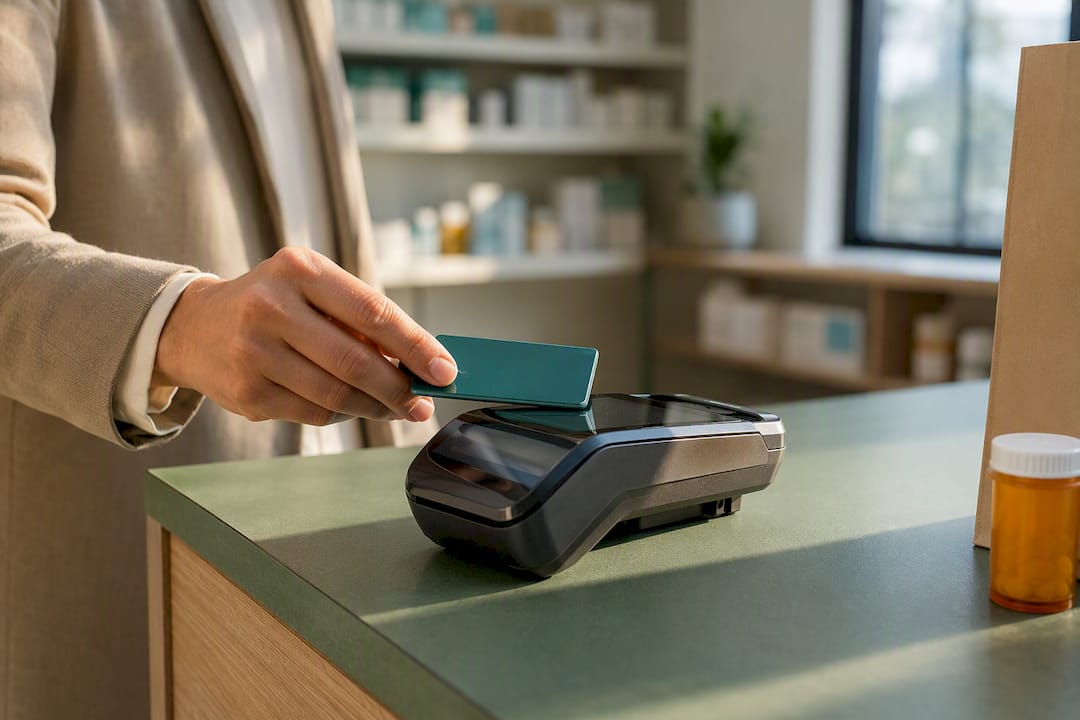
Yes, you can use HSA funds for Wegovy when a clinician prescribes it to treat a diagnosed medical condition, such as obesity, a weight-related comorbidity, or cardiovascular risk. The IRS treats prescription drugs for a diagnosed disease as qualified medical expenses, regardless of whether your insurance covers the drug; see our guide on Whitening HSA Eligible: What U.S. Account Holders Need to Know for more background on HSA rules. What matters is the diagnosis behind the prescription, not the label on the box, so keep your prescription, chart note, and pharmacy receipts on hand to back up the withdrawal.
TL;DR:
- HSA funds can cover Wegovy when prescribed for a diagnosed condition such as obesity, cardiovascular risk, or related health issues, with proper documentation.
- Maintaining the prescription, diagnosis code, receipts, and a Letter of Medical Necessity is essential for audit protection and proof of qualified expense.
- Many vendors, including retail pharmacies and manufacturer programs, accept HSA cards directly, but some telehealth services require reimbursement after out-of-pocket payment.
- Wegovy’s cash prices can consume a large share of annual HSA contribution limits, making combined payment methods or savings programs more practical.
- Accurate recordkeeping and understanding the separate rules for insurance coverage versus HSA eligibility prevent costly penalties and tax issues.
Table of Contents
- HSA for Wegovy: When the IRS Says Yes
- What Paperwork Actually Protects You in an Audit
- Paying for Wegovy: Card Swipe or Reimburse Yourself?
- HSA Contribution Limits vs. the Real Cost of Wegovy
- Pediatric Prescriptions, Medicare, and Copay-Only Situations
- Your Step-by-Step Checklist After a Wegovy Prescription
- How Legacymeds Supports HSA-Eligible Wegovy Care
- The Gap Between “Eligible” and “Easy” Nobody Talks About
- Sources
- FAQ
HSA for Wegovy: When the IRS Says Yes
The tax code doesn’t care about brand names. IRC Section 213(d) defines a qualified medical expense as anything paid to diagnose, treat, mitigate, or prevent disease, and prescription drugs fall squarely inside that definition. Wegovy qualifies as an HSA-eligible expense the moment it’s prescribed to treat something specific, not to chase a cosmetic goal.
IRS Publication 502 spells this out further with its long-standing guidance on weight-loss programs: they count as medical expenses only when the weight loss itself is treating a diagnosed disease, such as obesity, hypertension, or heart disease. That key distinction between disease treatment and general wellness is the test your HSA administrator (and, in theory, an IRS auditor) will apply.
Wegovy’s FDA indications line up well with that test:
- Chronic weight management in adults with obesity or overweight plus a weight-related condition
- Reduction of major cardiovascular events in adults with established heart disease and obesity or overweight
- Chronic weight management in adolescents ages 12 and up with obesity
Here’s the part people often get backward: insurance denial has nothing to do with HSA eligibility. Your insurer might decline to cover Wegovy for cost or formulary reasons while the IRS still treats it as a qualified expense, because insurance coverage and tax eligibility run on completely separate rules. If your diagnosis fits an FDA-approved indication and a provider prescribed it, your BMI and clinical qualification matter far more to the IRS than whether your insurance card gets swiped at the pharmacy counter.
What Paperwork Actually Protects You in an Audit
Four documents make an HSA withdrawal for Wegovy defensible if anyone ever asks questions:
- The prescription itself. It proves a licensed provider authorized the medication for you.
- The clinician’s chart note with an ICD-10 code. This ties the prescription to a specific diagnosis, obesity, overweight with comorbidity, or a cardiovascular indication, which is exactly what Publication 502 requires.
- The pharmacy receipt or Explanation of Benefits (EOB). This shows what you actually paid out of pocket, separate from anything insurance covered.
- A Letter of Medical Necessity (LMN), when needed. Some HSA administrators request one for off-label use or when the diagnosis code doesn’t obviously match the treatment. A solid LMN states the diagnosis, explains why Wegovy specifically was chosen, and comes signed by the prescribing provider.
HSA recordkeeping guidance from benefits administrators consistently recommends holding onto these records well beyond the year of purchase, since the IRS can audit HSA distributions years after the fact.
Pro Tip: Scan every document the day you get it and drop it into a single dated folder labeled by tax year. Retain everything for at least 7 years, matching the general IRS audit window for underreported income.

Paying for Wegovy: Card Swipe or Reimburse Yourself?
Not every checkout screen treats an HSA card the same way, and that’s where most people get tripped up. Being HSA-eligible and being accepted at checkout are two different things.
- Retail pharmacies almost always accept HSA and FSA cards directly, since they’re set up for standard prescription billing.
- NovoCare, Novo Nordisk’s manufacturer savings program, often accepts HSA/FSA cards for its cash-pay pricing tiers, which can meaningfully lower your monthly cost compared to list price.
- Some telehealth platforms don’t accept HSA cards at checkout at all, even though the underlying medication is still HSA-eligible.
If a vendor won’t take your card, pay with a personal card and reimburse yourself from the HSA afterward. Keep an itemized receipt listing the medication name, date of service, and prescribing clinician, then transfer the equivalent amount from your HSA to your bank account. Forbes Health notes that this pay-then-reimburse pattern is standard practice for GLP-1 medications purchased through channels that lack built-in HSA processing.
One number worth knowing: NovoCare’s self-pay pricing for Wegovy can run into the thousands annually, and HSA Trackr’s analysis points out that a single year of the medication can eat up a large share, or all, of an individual’s annual HSA contribution limit. That’s a budgeting problem worth solving before your first fill, not after.
HSA Contribution Limits vs. the Real Cost of Wegovy
The math here matters more than most people expect. For 2026, HSA contribution limits are set annually by the IRS, and family coverage limits run meaningfully higher than self-only limits. Wegovy’s cash price, even when discounted through manufacturer programs, can consume a large portion of a self-only HSA’s annual contribution room within a year, leading many patients to combine HSA funds with insurance coverage or manufacturer savings cards rather than relying solely on the HSA.
Withdrawing HSA money for something that isn’t actually a qualified expense carries real teeth. An ineligible distribution gets added to your taxable income and, if you’re under 65, hit with an additional 20% penalty on top. After 65, the penalty disappears, though the withdrawal is still taxed as ordinary income unless it genuinely was a qualified medical expense.
A few habits keep your account audit-proof:
- Document every prescription with its ICD-10 code before you spend a dollar.
- Never reimburse yourself twice, once from insurance and again from the HSA, for the same expense.
- Save the EOB showing your exact out-of-pocket share whenever insurance covers part of the cost.
Pediatric Prescriptions, Medicare, and Copay-Only Situations
A parent’s HSA can cover a dependent’s Wegovy prescription when the chart note documents the adolescent’s BMI percentile alongside the pediatric obesity ICD-10 code. Dependency status and the clinical documentation both have to check out for the reimbursement to hold up.
Government coverage adds another layer of complexity:
- Medicare historically excluded weight-loss drugs, though the Medicare GLP-1 Bridge demonstration program is testing coverage pathways for beneficiaries with qualifying cardiovascular or diabetes diagnoses. Coverage under that demo doesn’t change HSA eligibility rules directly, but it does affect how much you’re paying out of pocket, and therefore how much HSA money you actually need to spend.
- Medicaid and VA coverage varies by state and facility, so check your specific plan’s formulary before assuming HSA funds will be your primary payment source.
- Copay-only scenarios are the simplest case: use your HSA for the copay itself, and keep the EOB showing insurance covered the rest.
Your Step-by-Step Checklist After a Wegovy Prescription
- Confirm your chart note includes a clear ICD-10 diagnosis code tied to your Wegovy prescription.
- Ask your provider for a Letter of Medical Necessity if your HSA administrator flags off-label use or an ambiguous diagnosis code.
- Decide where you’re filling, retail pharmacy, NovoCare, or telehealth, and confirm HSA/FSA card acceptance before checkout.
- Pay, then either swipe your HSA card directly or pay out of pocket and reimburse yourself using the itemized receipt.
- File everything, prescription, chart note, receipt, EOB, in one dated digital folder and keep it for at least 7 years.
Pro Tip: Set a calendar reminder every January to back up last year’s HSA folder to a second location. Lost documentation is the single biggest reason legitimate claims get denied on audit.
How Legacymeds Supports HSA-Eligible Wegovy Care
Legacymeds’ telehealth providers evaluate patients against Wegovy’s FDA indications and issue prescriptions with the clinical documentation you’ll want on file. Across more than 500,000 patients served, with an average 18% body weight reduction, Legacymeds pairs free provider visits and unlimited ongoing support with the paperwork trail your HSA administrator may ask for. Ask your provider directly for ICD-10 documentation and an LMN if your situation calls for one, and explore the Legacymeds GLP-1 program to see how the intake and prescription process works from the first visit onward.
The Gap Between “Eligible” and “Easy” Nobody Talks About
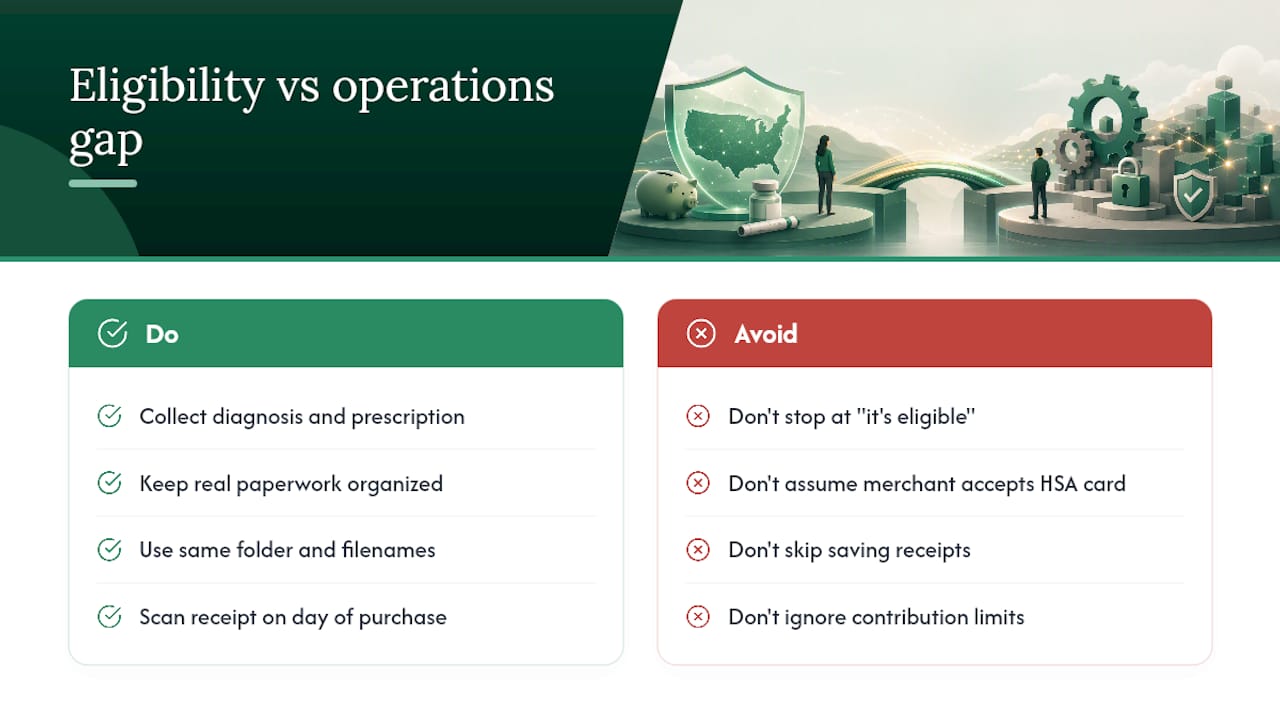
Most articles on this topic stop at “yes, it’s eligible” and leave you to figure out the rest. That’s the wrong place to stop, because eligibility was never the hard part. The IRS test is actually pretty forgiving: get a real diagnosis, get a real prescription, keep real paperwork.
The friction lives entirely in operations, not tax law. Merchants that won’t take your HSA card. Administrators who want an LMN you didn’t know you needed. A contribution cap that quietly runs out halfway through the year because nobody warned you Wegovy’s cash price could eat it whole. I’d argue the real skill here isn’t understanding IRC 213(d), it’s building a boring, repeatable paper habit: same folder, same file names, same day-of-purchase scan, every single time. The people who get burned aren’t the ones who misunderstood the rule. They’re the ones who understood it fine and just didn’t keep the receipt.
— Bryan
This article is general information, not a substitute for advice from a qualified doctor. Consult a qualified healthcare professional about your own circumstances before acting on anything here.
Sources
- Frequently asked questions about medical expenses related to nutrition, wellness and general health | Internal Revenue Service
- Is Wegovy HSA-eligible? 2026 guide | HSA Trackr
- Are GLP-1s FSA/HSA eligible? A guide to maximizing savings | Forbes Health
- Can I Use HSA/FSA for Wegovy? Yes — 2026 Guide
FAQ
Will my HSA pay for Wegovy?
Yes, as long as a licensed provider prescribed it to treat a diagnosed condition like obesity or a cardiovascular risk factor, your HSA can cover it under IRS rules on qualified medical expenses.
How are people getting Wegovy for $25?
That price point typically comes from manufacturer savings cards or specific insurance formulary tiers with low copays, not from HSA funds alone; check NovoCare’s current savings offers and your own insurance formulary for eligibility.
Which weight-loss products are HSA-eligible?
Prescription GLP-1 medications like Wegovy qualify when prescribed for a diagnosed disease, along with other prescription weight-loss drugs and medically supervised programs treating a specific condition; over-the-counter diet pills and general wellness programs generally do not qualify.
Will the price of Wegovy go down in 2026?
Pricing depends on manufacturer discount programs, insurance negotiations, and market competition, none of which are fixed by law, so costs can shift throughout the year rather than dropping on a set schedule.
Can I use my HSA card directly at checkout for Wegovy?
Retail pharmacies and NovoCare’s self-pay pricing generally accept HSA cards directly, but some telehealth vendors don’t, in which case you pay out of pocket and reimburse yourself from the HSA using an itemized receipt.