

Yes. Coaching support substantially increases the chance that weight loss from GLP-1 medications lasts, mainly by improving medication adherence, managing side effects, and protecting muscle during rapid weight loss. It’s recommended for most patients starting semaglutide or tirzepatide, since research shows coaching improves persistence and behavior change, and some providers build this support directly into their programs at no extra cost.
TL;DR:
- Coaching support improves medication adherence, helps manage side effects, and protects muscle mass during rapid weight loss on GLP-1 therapies.
- Effective programs rely on established behavioral science frameworks like CBT and motivational interviewing, with digital microsteps aiding short-term behavior changes.
- Strategies to mitigate side effects include prioritizing protein intake, spacing meals, and resisting muscle loss through resistance training and symptom tracking.
- Coaching formats vary from one-on-one telehealth to digital microstep programs, with personalization quality impacting outcomes more than contact frequency.
- Combining GLP-1 medication with structured behavioral support leads to higher weight loss retention and better long-term results than medication alone.
Table of Contents
- What Does GLP-1 Coaching Support Actually Do?
- What Frameworks Do GLP-1 Coaching Programs Use?
- How Do You Manage GLP-1 Side Effects Without Losing Muscle?
- What Formats Do GLP-1 Coaching Programs Come In?
- How Do You Choose the Right GLP-1 Coaching Approach?
- What Does the Research Say About Coaching Plus GLP-1?
- How Does Legacymeds Approach GLP-1 Coaching?
- What Should You Do Before Your First Coaching Session?
- Start Your GLP-1 Program With Coaching Already Built In
- Sources
- FAQ
What Does GLP-1 Coaching Support Actually Do?
A GLP-1 coach isn’t a cheerleader who checks in to ask how you’re feeling. The job is closer to a pit crew: someone watching your fuel, your tires, and your engine temperature while you’re focused on driving. Coaching exists because the medication handles appetite suppression and blood sugar regulation, but it doesn’t teach you how to eat when you’re not hungry, how to keep lifting weights when you feel drained, or what to do when a dose increase brings on nausea you weren’t expecting.
The clinical case for this pairing is strong. Health and well-being coaching is documented to improve medication adherence among patients on GLP-1 medications, with coached patients showing better persistence and fewer prescription discontinuations than those managing the medication alone. That matters more than it sounds. A large share of people who stop GLP-1 therapy early do so not because the drug stopped working, but because side effects or stalled progress made them lose confidence in the plan.
Day-to-day, GLP-1 coaching support covers a handful of concrete functions:
- Adherence and persistence support. Coordinating refill timing, troubleshooting insurance hiccups, and helping patients push through the rough first few weeks of a new dose.
- Behavior change work. Addressing emotional eating patterns, building sleep routines, and managing stress that would otherwise trigger old habits.
- Plateau troubleshooting. Recognizing when a weight-loss stall is normal metabolic adaptation versus a signal that the current dose or nutrition plan needs adjustment.
- Provider coordination. Flagging concerning symptoms back to the prescribing clinician, and looping in dietitians or trainers when a patient needs more specialized help than general coaching provides.
That last point deserves emphasis, because it’s where good coaching separates itself from generic wellness advice. A coach doesn’t adjust your dose or diagnose a medical issue. A coach recognizes patterns, whether it’s a plateau lasting six weeks, unusual fatigue, or persistent GI symptoms, and gets that information to the right person fast. This triage function is one of the most underrated parts of GLP-1 coaching, because it shortens the gap between “something feels off” and “someone with prescribing authority knows about it.”
Coaches also do quieter work that rarely makes it into marketing copy: normalizing the emotional whiplash that comes with rapid weight loss. Patients who lose 15 to 20 pounds in two months sometimes struggle with body image shifts, changes in how friends and family treat them, or anxiety about regaining weight if they ever stop the medication. A coach who’s seen this pattern across dozens of patients can name it before it derails someone’s motivation.
None of this replaces medical care. It supplements it. The GLP-1 dietary coaching model works best when a coach treats the medication as the foundation and builds the behavioral scaffolding around it, rather than treating diet and exercise advice as an afterthought to a prescription.
What Frameworks Do GLP-1 Coaching Programs Use?
Most credible GLP-1 support programs aren’t improvising. They borrow from established behavioral science, adapted for the specific mechanics of appetite-suppressing medication.
The process typically starts with an assessment: medical history, prior dieting attempts, current labs if available, and an honest conversation about what’s derailed weight loss efforts in the past. This matters because someone with a history of binge eating needs a different approach than someone whose main challenge is simply forgetting to eat enough protein because the medication kills their appetite entirely.
From there, two frameworks do most of the heavy lifting:
- Cognitive behavioral therapy (CBT) techniques help patients identify triggers for emotional eating and separate physical hunger from habitual or stress-driven eating.
- Motivational interviewing is used to gauge readiness for change and meet patients where they are, rather than pushing a one-size-fits-all meal plan on someone who isn’t ready for it.
Digital microsteps have become a meaningful third pillar. A randomized trial testing brief written microsteps paired with short video boosters found that a single exposure increased participants’ stated intention to adopt healthy habits, with standardized effect sizes showing a range of small to moderate effects across different outcomes. The effect faded by the two-week mark, but the trial involved more than 5,000 adults and points to something practical: low-cost, low-effort digital nudges can move behavior, at least in the short term, without requiring a full coaching session every time.
This matters most during dose titration, when in-person visits are hardest to schedule and patients are adjusting to a new side-effect profile in real time. A two-minute video watched at 9 p.m. when nausea is keeping someone up is a different kind of support than a scheduled call three days later.
Pro Tip: Ask any coaching program how they track progress between sessions. The best ones use more than a bathroom scale, pulling in food logs, symptom notes, and sometimes wearable data to catch problems before your next scheduled check-in.
Tracking itself varies by program. Some rely on weekly weigh-ins reported by text. Others integrate with wearables or apps to monitor activity and sleep alongside weight. The specific tool matters less than the consistency. A coach who sees weekly data can catch a plateau or a concerning symptom pattern weeks before a monthly check-in would reveal it.
How Do You Manage GLP-1 Side Effects Without Losing Muscle?
Nausea, GI distress, and muscle loss are the three problems that derail more GLP-1 treatment plans than anything else, and all three respond well to specific, practical tactics.
-
Build protein-forward meals and space them deliberately. Eating a large, fatty, or heavily spiced meal on a suppressed appetite is a common trigger for nausea. Coaches typically recommend smaller, protein-forward meals spaced every three to four hours rather than three large meals, which reduces the GI load your stomach has to process at once.
-
Set a concrete protein target and hit it. Rapid weight loss on GLP-1 medications can strip away a substantial share of lean mass if it isn’t actively protected. Without mitigation, some cohorts show up to 40% of total weight lost is lean mass, a proportion that can slow metabolism and increase regain risk once the medication is reduced or stopped. Coaches generally recommend adequate protein intake per body weight along with regular progressive resistance training two to three times per week.
-
Layer in resistance training early, not after the fact. Starting strength work at the same time as the medication, rather than waiting until weight loss has already happened, gives muscle tissue a reason to stick around while calorie intake drops.
-
Log symptoms against timing. Tracking when doses were taken relative to meals, hydration levels, and fiber intake helps identify what’s actually triggering nausea or constipation, rather than guessing. Fiber added too quickly, for instance, often worsens GI symptoms rather than fixing them.
-
Know when to escalate. Severe vomiting, signs of dehydration, unexplained lab changes, or fatigue that doesn’t respond to basic energy strategies all warrant a call back to the prescriber, not a coaching workaround.
That protein and resistance training combination isn’t optional advice. It’s the primary defense against the metabolic slowdown that makes weight regain more likely once someone stops or reduces their GLP-1 dose.
What Formats Do GLP-1 Coaching Programs Come In?
Coaching support isn’t a single product. It shows up in a handful of formats, each with different intensity and cost.
- One-on-one telehealth coaching offers the most personalization, typically through scheduled video or phone calls with a dedicated coach.
- Pharmacist-led coaching focuses more narrowly on medication management, side-effect troubleshooting, and dose-timing questions.
- Group programs trade individual attention for peer accountability and lower cost, often run as weekly cohort sessions.
- Digital microstep programs deliver bite-sized behavioral nudges, like the short videos and written prompts tested in the JAMA Network Open microstep trial, without requiring a scheduled call at all.
Cadence tends to shift with the treatment phase. During dose titration, when side effects are most unpredictable, weekly check-ins are common. Once a patient reaches a maintenance dose and their body has adjusted, that often drops to biweekly or monthly.
What’s actually included varies widely by provider, but a reasonably complete program covers nutrition planning, scheduled coaching sessions, some form of clinician coordination, and a tracking tool of some kind, whether that’s an app, a spreadsheet, or a simple text check-in system. Interestingly, one analysis found that lower-frequency but highly personalized programs can sometimes match the outcomes of more intensive coaching, which suggests the quality of personalization matters more than the raw number of contact hours.
Pricing and insurance coverage remain the biggest source of confusion. Standalone coaching programs often run as monthly subscriptions separate from medication costs, and insurance coverage for behavioral coaching tied to GLP-1 use is inconsistent at best. Some employer wellness plans now build medication adherence support into broader benefits packages, but that’s still the exception rather than the rule for most patients paying out of pocket.
How Do You Choose the Right GLP-1 Coaching Approach?
Picking a coaching program without a way to evaluate it is a coin flip. A short checklist fixes that.
- Ask how coaching coordinates with your prescriber. A coach should be able to explain, specifically, what happens if you report a concerning symptom. If the answer is vague, that’s a problem.
- Ask about credentials and scope. Registered dietitians, certified health coaches, and pharmacists all bring different training. None of them should be adjusting your medication dose independently of your prescriber.
- Ask what happens during a plateau. A program that has no answer beyond “keep going” hasn’t thought through the most common frustration patients hit.
- Check for guaranteed outcome claims. Any coach or program promising a specific weight-loss number, rather than describing a realistic range based on data, is overselling. Marketing compliance concerns around GLP-1 promotion have drawn regulatory scrutiny recently, and guaranteed-results language is one of the clearest red flags.
- Look for references to published outcomes. Programs that can point to peer-reviewed data or transparent real-world results are operating differently than ones relying purely on testimonials.
Pro Tip: If a coach’s first instinct is to talk about supplements or “detox” protocols instead of protein targets and adherence strategies, that’s a signal to look elsewhere.
Trust in this space comes down to whether a program treats coaching as a companion to medical care or a replacement for it. The ones worth paying for are explicit about the difference.
What Does the Research Say About Coaching Plus GLP-1?
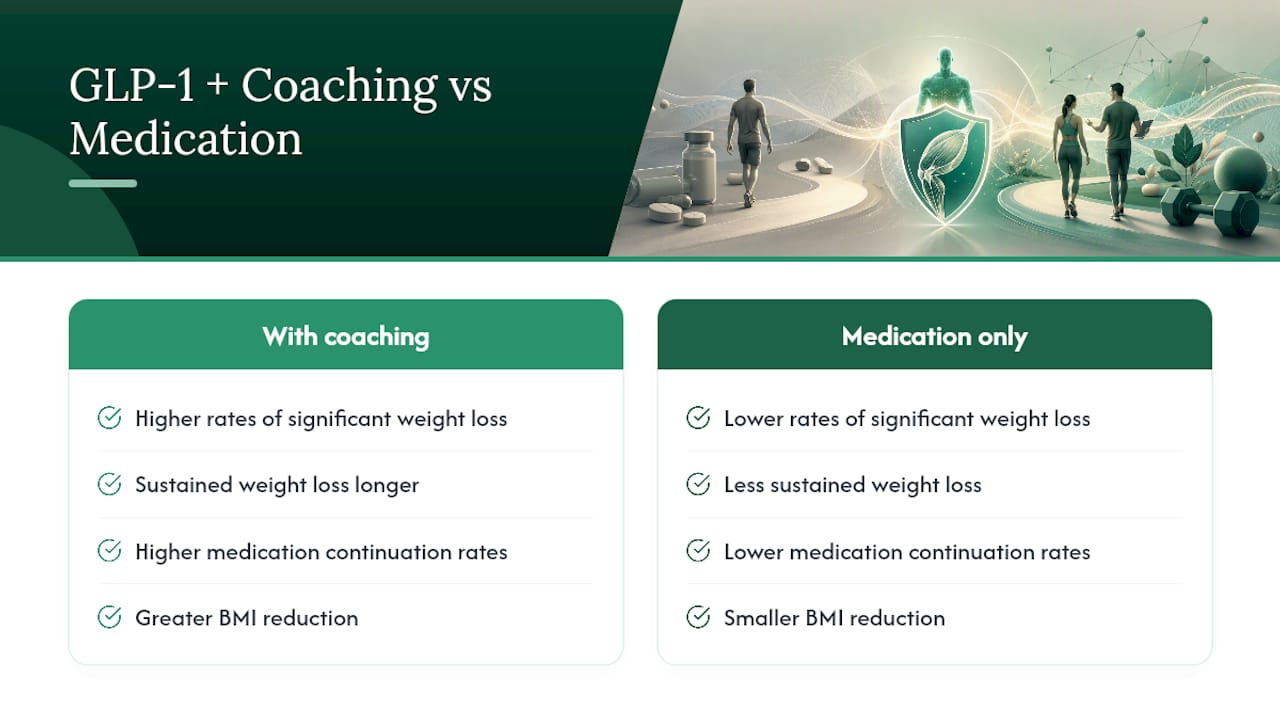
The evidence base here is still young, but it’s already consistent in one direction: pairing behavioral support with GLP-1 medication beats medication alone.
Retrospective cohort analyses found that patients combining GLP-1 treatment with structured behavioral programs reached higher rates of significant weight loss, and sustained it longer, than patients on standard medical care alone.
That finding comes from retrospective analyses of GLP-1 combined with behavioral programs, and it lines up with separate observational data showing that pairing GLP-1 receptor agonists with structured health-behavior and lifestyle therapy is associated with higher medication continuation rates and greater BMI reduction than pharmacotherapy alone.
The digital side of this evidence is newer but promising. The microstep and video-booster trial mentioned earlier showed measurable, if short-lived, shifts in behavioral intention after a single low-cost intervention, standardized effect sizes between roughly 0.3 and 0.77 depending on the outcome measured. That’s a meaningful signal that scalable, low-touch coaching tools have a real role to play, not just expensive one-on-one sessions.
The caveats matter too. Coaching intensity varies enormously across studies, from monthly check-ins to weekly intensive sessions, making direct comparisons difficult. Most trials also track outcomes over months, not years, so how well these gains hold up over a five or ten-year horizon is still an open question researchers haven’t fully answered.
How Does Legacymeds Approach GLP-1 Coaching?
Some GLP-1 programs build coaching into the treatment itself rather than selling it as a separate add-on. Patients typically receive a telemedical provider assessment to confirm the medication and dose fit their metabolic profile, followed by ongoing access to coaching during the program.
That structure reflects the same logic the research supports: medication access and behavioral guidance work better together than apart. Some programs report average weight loss among patients who complete the program that aligns with stronger outcomes when coaching accompanies GLP-1 therapy rather than standing in for it.
Coordination often happens through the same provider relationship a patient has, so questions about side effects, dose adjustments, or plateaus route back to someone with prescribing authority rather than relying on a coach who can’t act on them. Some programs do not require membership fees or insurance, which can reduce barriers to accessing coaching alongside medication.
What Should You Do Before Your First Coaching Session?
Before your first GLP-1 coaching call, get organized. Pull your current medication list, any recent lab work, and a rough history of past diets that failed and why. Coaches work faster with context, and showing up with this information saves the first session from being a fact-finding mission instead of an action plan.
Start with one or two microsteps, not ten. Pick a protein target for breakfast, or commit to a ten-minute walk after dinner. Small, specific habits stick better than sweeping overhauls, especially in the first few weeks when your body is still adjusting to the medication.

For cadence, match the intensity to your phase. If you’re titrating up on a new dose, weekly check-ins make sense given how quickly side effects can shift. Once you’re stable at a maintenance dose, biweekly or monthly is usually enough.
One more thing worth saying plainly: coaching works best when you treat it as a two-way conversation, not a lecture. The patients who get the most out of GLP-1 coaching support are the ones who report symptoms honestly, even the embarrassing ones, because that’s the information that actually changes the plan.
— Bryan
Start Your GLP-1 Program With Coaching Already Built In
Most GLP-1 providers sell you the medication and leave the behavioral work as your problem to solve. Legacymeds folds unlimited coaching, free provider visits, and personalized nutrition guidance directly into the GLP-1 weight loss program itself, with no membership fee and no insurance requirement standing between you and support when you actually need it.
The model generally fits adults who want an accessible path: get assessed by a licensed provider, start medication matched to metabolic needs, and have coaching available during dose changes, side effects, and muscle-preserving habit development. Often there is not a separate coaching subscription to manage or unclear inclusion details.
If you’re weighing costs or wondering how coverage works, the weight loss FAQ breaks down pricing and insurance realities in plain terms. When you’re ready, the intake process starts online and typically leads to a provider assessment within days, not weeks.
This article is general information, not a substitute for advice from a qualified doctor. Consult a qualified healthcare professional about your own circumstances before acting on anything here.
Sources
- Health and Well-Being Coaching Adjuvant to GLP-1 Induced Weight Loss
- Randomized trial of written microsteps plus video boosters for adults using GLP‑1 RAs (digital microstep intervention)
- Combining GLP‑1 receptor agonists and health‑behaviour/lifestyle therapy: observational real‑world studies
FAQ
What Is the Costco $179 Three-Month Weight Loss Program?
This refers to a weight management membership sold through Costco’s partnership with a telehealth provider, bundling GLP-1 prescription access with limited coaching over a three-month period; pricing and inclusions vary by provider and location, so check current terms directly before assuming what’s covered.
Does NASM Offer a GLP-1 Coaching Certification?
The National Academy of Sports Medicine offers general nutrition and behavior-change certifications relevant to weight management, but there is no widely recognized standalone “GLP-1 coaching certification” from NASM as of now; most GLP-1-specific coaching training comes through specialized programs or continuing education for existing dietitians, pharmacists, and health coaches.
What Do People Wish They Knew Before Starting GLP-1 Medications?
Most patients say they underestimated how much muscle loss and GI side effects would matter, and wish they’d started protein tracking and resistance training on day one rather than after the fact, which is exactly the gap GLP-1 coaching support is designed to close.
How Much Do Weight Loss Coaches Typically Charge?
Standalone weight loss coaching often runs as a separate monthly subscription, with costs varying widely by format and credential level; some programs avoid this by including coaching directly in the medication program rather than charging for it separately.
Is GLP-1 Coaching Necessary, or Can I Manage the Medication Alone?
Coaching isn’t strictly required, but retrospective data shows patients pairing GLP-1 medication with structured behavioral support achieve larger and more durable weight loss than those managing the medication without it.