
Yes. GLP-1 medications raise the risk of gallbladder and biliary disease, with pooled trial data showing roughly 1.4 times the risk overall and more than double that in weight-loss dosing, translating to about a modest increase in gallbladder or biliary events per 10,000 patients treated per year. That’s a real but modest increase, not a reason to panic. If you develop steady upper-right abdominal pain, fever, or yellowing skin, call your clinician immediately or go to the emergency room.
TL;DR:
- Higher doses and longer treatment durations, especially beyond six months, increase the risk of gallbladder or biliary disease associated with GLP-1 medications.
- Rapid weight loss, whether from medication or dieting, significantly raises the likelihood of gallstone formation when combined with slowed gallbladder emptying caused by GLP-1s.
- Patients with risk factors such as a history of gallstones, older age, or metabolic dysfunction should consider baseline ultrasound and closer monitoring before and during treatment.
- Recognizing early symptoms like steady upper right abdominal pain, nausea, or jaundice can facilitate prompt medical evaluation and prevent serious complications.
- Slowing weight loss pace, maintaining regular moderate fat meals, and staying physically active can reduce gallbladder risk without compromising medication benefits.
Table of Contents
- What Does the Research Say About GLP-1 Gallbladder Risk?
- How Does GLP-1 Medication Affect Your Gallbladder?
- Who Faces the Highest Gallbladder Risk on GLP-1s?
- What Symptoms Signal a Gallbladder Problem on GLP-1?
- How Do Doctors Diagnose and Treat Gallbladder Disease From GLP-1s?
- Can You Lower Your Gallbladder Risk While Taking GLP-1s?
- Where Is the Science Still Uncertain?
- How Legacy Meds Approaches Gallbladder Risk in GLP-1 Care
- Editorial Take: What the Evidence Actually Demands
- Supervised GLP-1 Care That Watches for More Than Just the Scale
- Sources
- FAQ
What Does the Research Say About GLP-1 Gallbladder Risk?
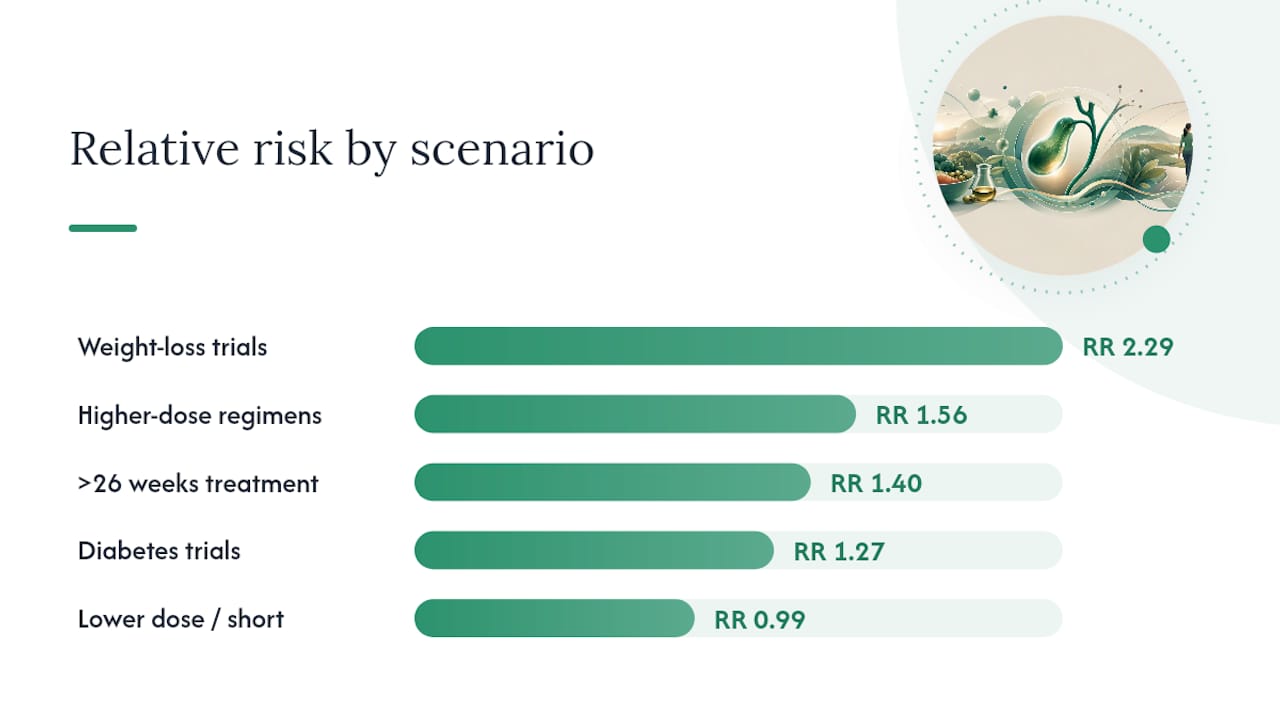
The clearest picture comes from a 2022 meta-analysis in JAMA Internal Medicine that pooled randomized trial data across GLP-1 receptor agonists. The finding: GLP-1 use carries a relative risk of 1.37 for gallbladder or biliary disease, with a 95% confidence interval of 1.23 to 1.52. In absolute terms, that works out to about 27 additional events per 10,000 patients treated for a year, with a range of 17 to 38 depending on the population studied.
The risk isn’t uniform across every use case. Trials designed specifically for weight loss showed a relative risk of 2.29, nearly double the risk seen in diabetes trials, where the relative risk was 1.27. Dose and duration matter too. Higher-dose regimens carried a relative risk of 1.56, and treatment lasting longer than 26 weeks pushed the relative risk to 1.40. Lower doses and shorter courses, by contrast, showed no statistically significant increase at all, with a relative risk near 0.99.
A separate systematic review in the Gastroenterology journal backs this up, reporting cholelithiasis (gallstone) risk in the range of 1.27 to 1.46 and cholecystitis risk around 1.36. The heterogeneity between agents and formulations is real, but the direction of the signal is consistent.
Key numbers to know:
- Pooled data show an increased risk for gallbladder or biliary disease
- Weight-loss trials show a higher relative risk compared with diabetes trials
- There is an absolute excess of some gallbladder events per 10,000 patient years
- Higher doses and treatment durations beyond about six months are associated with increased risk
By the numbers: A patient on a higher weight-loss dose for more than six months sits at the upper end of this risk curve, while someone on a lower diabetes-management dose for a few months sits closer to baseline.
None of this is definitive proof of uniform risk. Many trials never set out to track biliary events in the first place, so undercounting is a real possibility, and not every GLP-1 agent has been studied with the same rigor.
How Does GLP-1 Medication Affect Your Gallbladder?
The gallbladder works like a small storage tank for bile, squeezing out its contents after meals to help digest fat. That squeeze is triggered by a hormone called cholecystokinin, or CCK. GLP-1 medications suppress CCK signaling as part of how they slow digestion and curb appetite, and a gallbladder that contracts less often starts to accumulate bile it would normally release. Stagnant bile is the setup for stone formation.
There’s a second pathway at play. GLP-1 receptor agonists interact with bile-acid signaling systems known as FXR and TGR5, and disrupting these pathways can shift the chemical balance of bile toward higher cholesterol saturation, according to a 2025 mechanistic review. Bile that’s supersaturated with cholesterol crystallizes more easily into stones.
The mechanism, in short:
- Suppressed CCK reduces how often the gallbladder empties, leading to bile stasis.
- Disrupted FXR and TGR5 signaling raises cholesterol concentration in bile.
- Rapid weight loss independently mobilizes cholesterol from fat stores into bile.
These effects don’t operate in isolation. When rapid weight loss overlaps with reduced gallbladder motility, the two forces compound each other. Weight loss alone has long been recognized as a trigger for gallstones, even without any medication involved, according to NIDDK guidance on dieting and gallstones. Add a drug that’s already slowing gallbladder contractions, and you get a cumulative effect rather than two separate small risks.
Who Faces the Highest Gallbladder Risk on GLP-1s?
Some patients carry a meaningfully higher baseline risk than others, and knowing where you fall matters for how closely you and your provider should watch for symptoms.
Personal risk factors:
- Female sex, which carries higher baseline gallstone risk regardless of medication
- A prior history of gallstones or gallbladder disease
- Rapid weight loss, whether from the medication or diet
- Metabolic dysfunction-associated steatotic liver disease (MASLD) or significant insulin resistance
- Older age
Medication-related risk features:
- Higher-dose regimens, particularly those used for weight management rather than glucose control
- Treatment duration beyond 26 weeks
- Indications specifically targeting weight loss, where trial data showed the strongest signal (RR 2.29)
If you have two or more of these factors stacked together, it’s worth raising the topic of a GLP-1 eligibility review with your prescriber before starting or continuing treatment. Clinicians managing higher-risk patients sometimes consider a baseline abdominal ultrasound to check for existing gallstones, since silent stones are common and knowing they’re there ahead of time changes how urgently new symptoms get evaluated. This isn’t standard for everyone starting therapy, but it’s a reasonable conversation for anyone with a stacked risk profile or a personal history of biliary trouble.
What Symptoms Signal a Gallbladder Problem on GLP-1?
Gallbladder trouble tends to announce itself with a fairly recognizable pattern, though the intensity varies a lot from person to person.
- Steady, aching pain in the upper right abdomen or center of the stomach, often starting after a fatty meal and lasting anywhere from thirty minutes to several hours.
- Pain that radiates to the right shoulder blade or back, a classic sign of biliary colic.
- Nausea or vomiting accompanying the abdominal discomfort.
- Bloating or a feeling of fullness that doesn’t match how much you’ve actually eaten.
- Fever or chills, which suggest the gallbladder has become inflamed or infected rather than just irritated by a stone passing through.
- Yellowing of the skin or eyes (yellowing of the skin or eyes indicating bile duct obstruction), dark urine, or pale stools, which point toward a blocked bile duct.
Red flags that mean you should go to the emergency room rather than wait for a callback: a fever indicating potential infection or inflammation, severe persistent pain that does not improve, yellowing of the skin or eyes indicating bile duct obstruction, confusion, or a symptoms such as low blood pressure and lightheadedness indicating severe illness. Any combination of these suggests acute cholecystitis or a duct obstruction, both of which need urgent evaluation.
When you do reach out to a clinician, whether by phone or through a telehealth visit, be ready to report your current GLP-1 medication and dose, how long you’ve been on it, how much weight you’ve lost and over what timeframe, and exactly when the pain started and what makes it worse. That timeline helps a provider distinguish routine GLP-1 side effects like constipation from something that needs imaging right away.
How Do Doctors Diagnose and Treat Gallbladder Disease From GLP-1s?
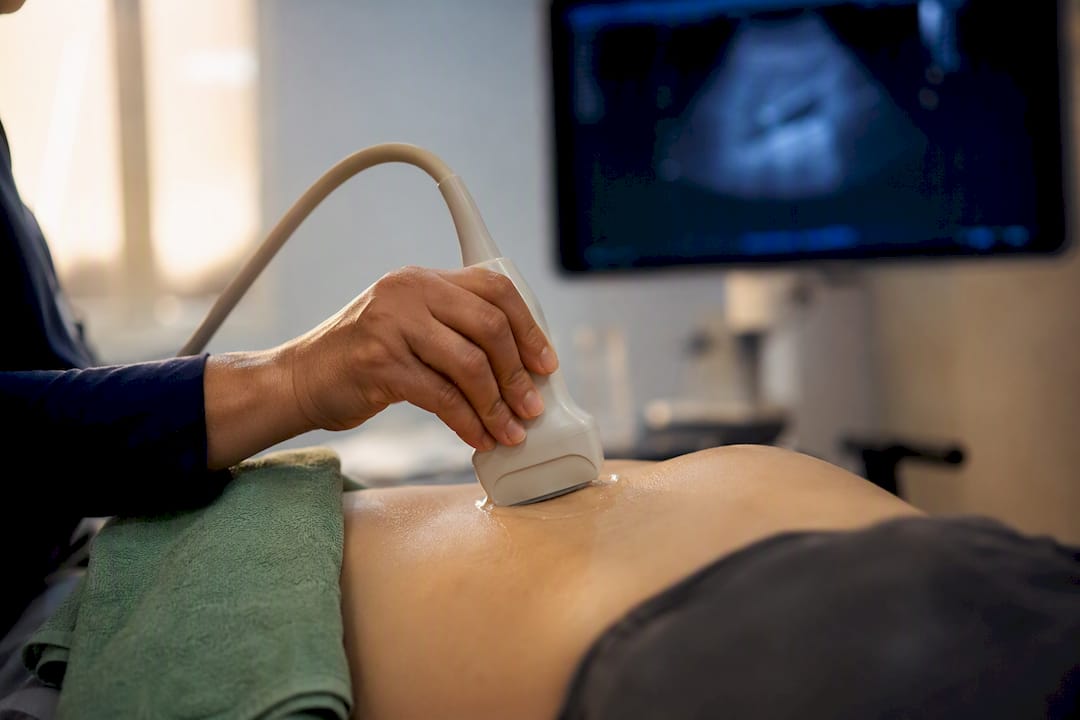
An abdominal ultrasound is the first test almost every clinician will order. It’s quick, doesn’t involve radiation, and reliably shows gallstones, a thickened gallbladder wall, or fluid around the gallbladder, all signs of active inflammation. Alongside imaging, expect blood work: liver function tests to check for bile duct involvement, a complete blood count to look for signs of infection, and sometimes a lipase level to rule out the pancreas as the source of pain. If the ultrasound suggests a stone stuck in the bile duct itself, a procedure called ERCP (endoscopic retrograde cholangiopancreatography) can both diagnose and clear the obstruction in one step.
Treatment depends on severity:
- Uncomplicated biliary colic (pain from a stone that passes on its own, no infection) is often managed with observation, pain control, and dietary adjustment.
- Acute cholecystitis (an inflamed, infected gallbladder) typically requires antibiotics and, in most cases, surgical removal of the gallbladder.
- Cholecystectomy rates were meaningfully higher among patients on GLP-1 therapy in pooled trial data, with a relative risk around 1.70 for needing surgery compared to placebo groups.
Pro Tip: If you’re scheduled for any surgery, including gallbladder removal, tell your surgical team you’re on a GLP-1 well in advance. Slowed stomach emptying from these medications affects anesthesia safety and fasting protocols, and some surgical teams recommend adjusted pre-op prep, including liquid diets or imaging to confirm the stomach is empty.
Whether to pause GLP-1 therapy during an acute gallbladder event or around surgery is a decision made case by case, weighing the medication’s benefits against bleeding risk, wound healing, and the underlying reason for the procedure. This is a shared decision between you, your prescriber, and your surgical team, not something to decide alone based on general advice.
Can You Lower Your Gallbladder Risk While Taking GLP-1s?
You can meaningfully reduce your risk without giving up the metabolic benefits of the medication, and most of it comes down to pacing.
Slower, clinically supervised weight loss is the single biggest lever available. Since rapid weight loss independently drives gallstone formation, working with your provider to moderate the speed of loss, rather than maximizing it, reduces the cumulative burden on your gallbladder. Ask about your weight-loss velocity at follow-up visits, not just your total pounds lost.
Practical habits that support gallbladder health:
- Eat regular meals rather than skipping them, since long gaps between meals reduce the gallbladder-emptying signal it needs
- Include moderate, healthy fat at meals to stimulate normal gallbladder contraction instead of avoiding fat entirely
- Get enough fiber, which supports healthy bile-acid balance
- Stay physically active, which is associated with lower gallstone risk independent of weight
For patients who fall into a very-high-risk category, some clinicians consider prophylactic ursodeoxycholic acid (UDCA), a bile acid that helps prevent cholesterol from crystallizing. This isn’t standard for every GLP-1 patient. It’s a targeted option clinicians reserve for people with strong risk-factor stacking, similar to how bariatric surgery clinics sometimes use it for rapid post-op weight loss.
Pro Tip: Pair your GLP-1 regimen with a structured eating pattern that includes adequate protein, since preserving lean mass while losing weight more gradually reduces strain on the gallbladder and supports better long-term results.
Where Is the Science Still Uncertain?
The evidence base has real gaps worth knowing about. A striking one: in the pooled trials reviewed for the JAMA Internal Medicine analysis, only 20 of 76 studies clearly reported biliary-related events at all, meaning the true incidence could be higher than the published numbers suggest.
It’s also not fully settled whether this is a uniform class effect across every GLP-1 and dual-agonist molecule, or whether risk varies meaningfully by specific agent, formulation, or delivery method. Tirzepatide, semaglutide, and older agents in this class haven’t all been studied with equal depth on this specific outcome.
Researchers generally agree on what needs to happen next: trials need to prespecify biliary outcomes from the start rather than capturing them incidentally, and longer-term observational studies covering years, not months, would clarify whether risk plateaus or keeps climbing with extended use.
How Legacy Meds Approaches Gallbladder Risk in GLP-1 Care
Gallbladder risk assessment can be built into the intake process rather than treated as an afterthought. Before starting treatment, providers can review personal and family history, including prior gallstones, rapid weight changes, and metabolic conditions to flag patients who may warrant closer attention or a discussion about baseline imaging.
Once treatment begins, having the care team reachable for ongoing questions rather than leaving patients to figure out symptoms alone is beneficial. If a patient reports upper abdominal pain, fever, or other biliary warning signs, providers might escalate quickly, whether that means recommending urgent imaging, coordinating with a local emergency department, or adjusting the treatment plan while a workup is underway. Providing unlimited ongoing coaching rather than one-off visits allows symptom changes to be reported and addressed as they happen, not waiting for the next scheduled appointment months later.
Editorial Take: What the Evidence Actually Demands
The conventional framing of GLP-1 gallbladder risk splits into two unhelpful camps: dismissing it as negligible, or treating every patient like they’re one stone away from surgery. Neither holds up against the data. A relative risk of 1.37 overall, climbing to 2.29 in weight-loss trials, is real enough to demand attention and modest enough to not justify panic.
What gets underweighted in most patient conversations is the dose and duration relationship. Higher-dose regimens carry meaningfully more risk than lower ones, and treatment past 26 weeks moves the needle further. That’s a lever patients and clinicians can actually pull together, unlike genetics or sex, which nobody can change. Pacing weight loss deliberately, rather than chasing the fastest possible number on the scale, does more for gallbladder safety than any supplement or prophylactic pill.
The biggest gap I see in typical guidance is treating symptom education as an afterthought instead of a day-one conversation. Every patient starting a GLP-1 should know the warning signs before they ever need them.
— Bryan
Supervised GLP-1 Care That Watches for More Than Just the Scale
Legacy Meds is built for patients who want the metabolic benefits of GLP-1 therapy without navigating the risks alone. The program includes an online provider assessment, personalized dosing plans, free shipping, and unlimited coaching access, all without insurance requirements or membership fees.
That ongoing access matters specifically for something like gallbladder risk, where early symptom reporting changes outcomes. Instead of waiting for a scheduled follow-up months away, patients working with Legacy Meds can flag new abdominal pain or other warning signs to their care team as soon as they appear, and get guidance on whether it warrants urgent evaluation, a dose adjustment, or simply watchful monitoring. Baseline risk factors get reviewed at intake, so higher-risk patients aren’t discovering their risk profile after a problem starts.
If you’re currently on a GLP-1 or considering one and want a program built around continuous provider oversight rather than a one-time prescription, you can start your online assessment with Legacy Meds today.
This article is general information, not a substitute for advice from a qualified doctor. Consult a qualified healthcare professional about your own circumstances before acting on anything here.
FAQ
How likely is a gallbladder problem if you’re on a GLP-1?
Pooled trial data shows about a 37% relative increase in gallbladder or biliary disease risk overall, or roughly a modest increase in gallbladder or biliary events per 10,000 patients treated per year, with a higher relative risk of 2.29 in weight-loss-specific trials.
How can you protect your gallbladder while on a GLP-1?
Pace your weight loss with clinical supervision rather than maximizing speed, eat regular meals with moderate healthy fat, stay physically active, and report any upper abdominal pain to your provider right away.
Is a GLP-1 safe if you don’t have a gallbladder?
Having your gallbladder already removed doesn’t disqualify you from GLP-1 therapy, since the medication’s biliary risk relates to stone formation and gallbladder inflammation, both of which are no longer possible without the organ; discuss your specific history with your prescriber.
How do you avoid gallbladder issues on tirzepatide?
The same principles apply as with other GLP-1 medications: avoid unnecessarily aggressive weight-loss pacing, keep your care team informed of any abdominal symptoms, and discuss baseline risk factors like prior gallstones or MASLD before starting a higher-dose regimen.