
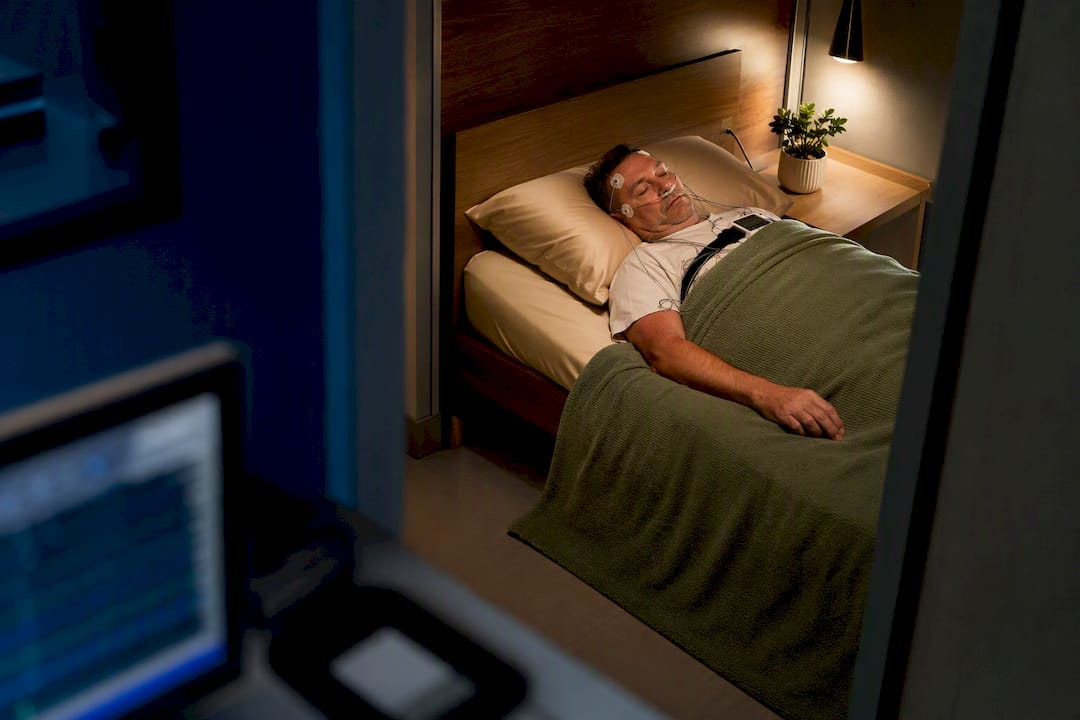
Zepbound (tirzepatide) is now the first FDA-approved drug for obstructive sleep apnea, and the trials behind that approval showed substantial reductions in apnea events per hour in participants with obesity. Benefits are strongest in obesity-driven OSA, and results vary by individual, but the data mark a real shift from “lose weight and see” to a medication with a defined clinical target.
TL;DR:
- Tirzepatide significantly lowers apnea-hypopnea index in obesity-driven sleep apnea, especially in patients who are intolerant to CPAP.
- The drug’s benefits extend beyond weight loss, reducing inflammation, blood pressure, and hypoxic burden, which may lower cardiovascular risks.
- Candidates are primarily adults with obesity and moderate-to-severe OSA, with the best response seen in those whose apnea is caused by excess tissue rather than anatomical or central factors.
- Side effects mainly involve gastrointestinal issues, which can be minimized with gradual dose titration and dietary management, and safety beyond two years remains under study.
- Ongoing treatment requires a partnership with health providers, as GLP-1 drugs work while ongoing weight loss and health improvements are maintained.
Table of Contents
- GLP-1 Sleep Apnea Evidence: What the Trials Actually Found
- How GLP-1 Receptor Agonists Affect Sleep Apnea Beyond Weight Loss
- Who Qualifies for GLP-1 Treatment of Sleep Apnea
- Side Effects and Safety Monitoring for GLP-1 Therapy
- Fitting GLP-1 Treatment Into Your Sleep Apnea Care Plan
- GLP-1s Versus Other Sleep Apnea Treatments
- Does GLP-1 Therapy’s Effect on Sleep Apnea Last?
- How GLP-1 Drugs May Affect Airway Muscle Function and Sleep Architecture
- Where GLP-1 Therapy Fits in Sleep Apnea Treatment Guidelines
- Daytime Sleepiness and Quality of Life on GLP-1 Therapy
- The Real Gap Between the Trial Data and Everyday Practice
- Start GLP-1 Treatment for Sleep Apnea With Legacy Meds
- Sources
- FAQ
GLP-1 Sleep Apnea Evidence: What the Trials Actually Found
The FDA’s December 2024 approval of tirzepatide for moderate-to-severe OSA rested on the SURMOUNT-OSA program, two trials that split participants into those already using CPAP and those who weren’t. Both groups saw significant apnea/hypopnea index (AHI) drops on tirzepatide compared to placebo.
The magnitude surprised a lot of clinicians who had watched weight loss produce modest, inconsistent airway improvement for decades. Those represent notable effects for a sleep disorder that usually only responds to mechanical devices or surgery.
A 2026 systematic review and meta-analysis pooling data across GLP-1 receptor agonists found:
- Mean AHI reduction of about 13.89 events per hour
- Mean weight loss around 12.46 kg
- Systolic blood pressure drops near 4.86 mmHg, with meaningful diastolic reductions too
Trial evidence at a glance: Tirzepatide trial participants achieved remission/mild OSA rates notably higher than placebo, according to FDA trial data.
Earlier work with liraglutide in the SCALE Sleep Apnea trial showed a similar pattern at smaller scale, with AHI reductions in the 6 to 12 events per hour range over roughly 32 weeks. That trial mattered because it established the class effect years before tirzepatide’s larger numbers arrived.
None of this erases the limitations. Trial durations run months, not years. Most participants had obesity as the primary driver of their OSA, so the data says less about apnea caused by jaw structure or neurological factors. Different GLP-1 agents also produced different magnitudes of benefit, with tirzepatide outperforming older agents in subgroup comparisons. The overall picture is consistent, though: clinically meaningful improvement, backed by randomized data, with more long-term evidence still to come.
How GLP-1 Receptor Agonists Affect Sleep Apnea Beyond Weight Loss
Weight loss does most of the work, but it’s not the whole story. GLP-1 receptor agonists act on satiety centers in the brain, reducing appetite and calorie intake enough to shrink fat deposits around the neck and upper airway. Less tissue crowding the airway means fewer collapses during sleep.
That’s the primary mechanism. Several secondary effects layer on top:
- Reduced systemic inflammation, including measurable drops in hs-CRP
- Improved insulin sensitivity, which matters given how tightly insulin resistance and sleep apnea are linked
- Lower blood pressure, easing cardiovascular strain that OSA already worsens
- Possible shifts in autonomic nervous system tone during sleep
Tirzepatide specifically showed reductions in hypoxic burden, the cumulative strain of low oxygen episodes across the night, in pooled analyses. That’s a marker doctors care about because it tracks long-term cardiovascular risk better than AHI alone in some cases.
Pro Tip: Ask your provider whether your OSA is primarily obesity-driven or structural. GLP-1 mechanisms target fat tissue and inflammation, so anatomic causes like a narrow jaw or enlarged tonsils won’t respond the same way.
Who Qualifies for GLP-1 Treatment of Sleep Apnea
The FDA indication is specific: adults with obesity and moderate-to-severe OSA, prescribed alongside a reduced-calorie diet and increased physical activity, not as a standalone pill. Trial populations reflect that scope closely.
- Obesity-driven OSA cases fit best. If excess weight around the neck and abdomen is the dominant factor in your apnea, you match the population these trials studied.
- CPAP-intolerant patients are a strong candidate group. Roughly half the SURMOUNT-OSA participants weren’t using CPAP successfully, and they still saw major AHI improvement.
- People with cardiometabolic comorbidities often see compounding benefit. Improved blood pressure and insulin sensitivity stack on top of airway improvement.
- Structural or central apnea cases are less likely to respond. If your OSA stems from jaw anatomy, enlarged tonsils, or brainstem-related central apnea rather than excess tissue, GLP-1 therapy addresses a different problem entirely.
Some trials excluded patients with uncontrolled diabetes or specific cardiovascular conditions, so eligibility isn’t universal. Reviewing your GLP-1 eligibility criteria with a provider before starting therapy avoids wasted time and expectations.
Side Effects and Safety Monitoring for GLP-1 Therapy
Gastrointestinal symptoms dominate the side effect profile. Nausea, vomiting, constipation, and early satiety show up most often, and they’re the leading reason doses get adjusted downward or titrated more slowly.
Pooled safety data across randomized controlled trials found no significant increase in serious adverse events, though GI adverse events occurred more frequently on active drug than placebo. Some trials also noted small increases in heart rate and shifts in blood pressure worth tracking over time. Long-term safety data beyond a year or two is still limited, which is a fair caveat for any newer indication.
Standard monitoring includes:
- Baseline and follow-up weight, blood pressure, and glycemic status checks
- Ongoing GI symptom tracking, especially during dose increases
- A conversation about contraindications, including personal or family history of certain thyroid conditions
Pro Tip: Slower dose titration and smaller, lower-fat meals in the first few weeks cut GI complaints substantially for most patients starting GLP-1 therapy. Clinician-led approaches to reducing GLP-1 side effects generally combine those two adjustments with timing doses around your lowest-activity day of the week.
Fitting GLP-1 Treatment Into Your Sleep Apnea Care Plan
GLP-1 therapy isn’t positioned as a CPAP replacement, even though trial data included both CPAP users and non-users who each saw benefit. Specialty groups have been explicit that pharmacotherapy works best as part of a broader OSA management plan, not a substitute for mechanical airway support in every case.
Here’s how that plays out practically:
- Poor CPAP adherence is a common trigger for adding GLP-1 therapy. If you can’t tolerate a mask nightly, medication that shrinks the underlying tissue may reduce your reliance on it.
- AHI response typically takes months to assess. Trial data showed meaningful change by the 48-to-52 week mark, so expect a repeat sleep study rather than a quick check-in.
- Success criteria combine AHI reduction with symptom improvement. A lower event count that still leaves you exhausted during the day isn’t the full win clinicians look for.
Bring specific questions to your next appointment: What weight-loss target are we aiming for? How will we track AHI changes, and when do we repeat testing? Should I continue CPAP during titration, or is a trial discontinuation reasonable once we see results? Those three questions structure the entire treatment decision.
GLP-1s Versus Other Sleep Apnea Treatments
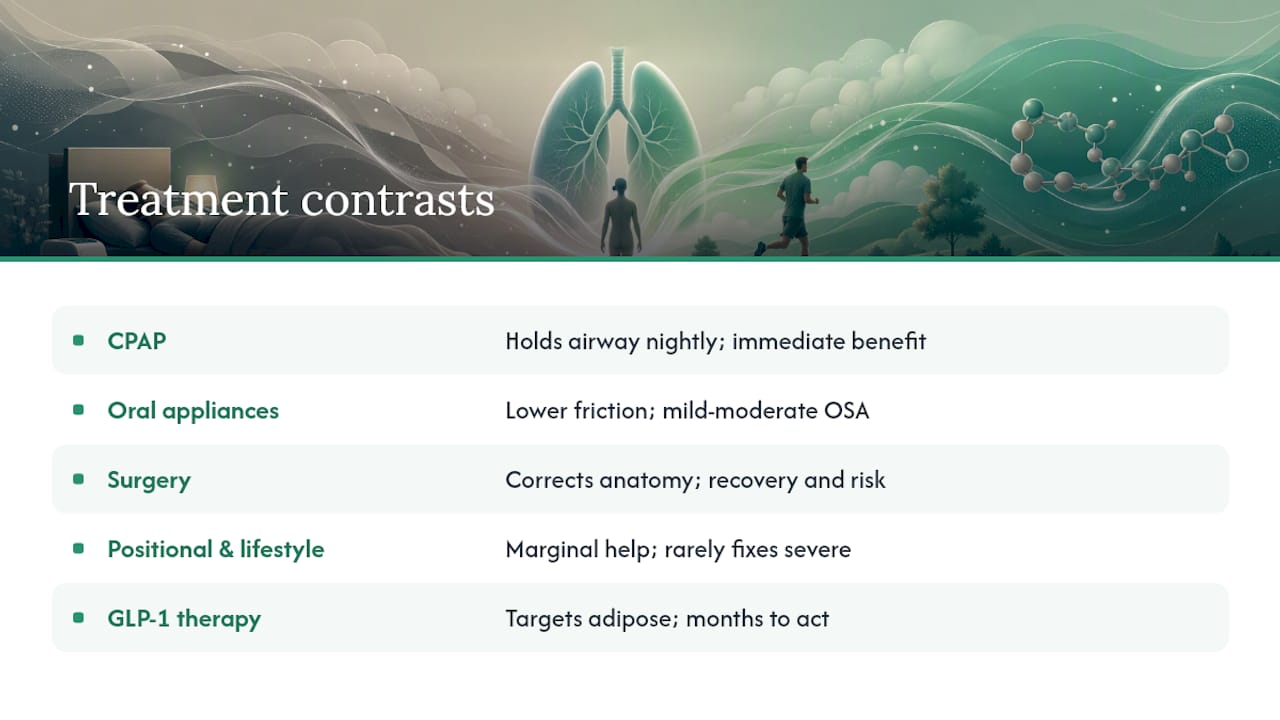
CPAP remains the most studied and immediate treatment for OSA, directly holding the airway open every night regardless of weight status. It works fast but suffers from notoriously poor long-term adherence, largely due to mask discomfort and lifestyle disruption. Oral appliances offer a lower-friction alternative for mild-to-moderate cases but don’t match CPAP’s effectiveness for severe apnea.
Surgical options, from tonsillectomy to more involved airway reconstruction, address anatomic causes directly but carry recovery time and risk that most patients want to avoid unless other approaches fail. Positional therapy and lifestyle changes like alcohol reduction help marginally but rarely resolve moderate-to-severe cases on their own.
GLP-1 receptor agonists occupy a different niche entirely: they treat a root cause (excess adipose tissue affecting the airway) rather than compensating for the anatomy nightly. That’s a meaningful distinction. A CPAP machine manages symptoms every single night indefinitely; a GLP-1 medication, over months, changes the physical situation that’s causing the apnea in the first place. The tradeoff is time. CPAP helps the night you start it. GLP-1 therapy takes months to show its full effect on AHI. For many patients, especially those with obesity-driven disease and CPAP intolerance, the two approaches complement each other rather than compete.
Does GLP-1 Therapy’s Effect on Sleep Apnea Last?
The honest answer is that nobody has multi-year randomized data yet. SURMOUNT-OSA and the meta-analyses backing it track outcomes across roughly a year, which is enough to establish that improvement holds through the trial period but not enough to promise permanence.
What we do know follows a predictable pattern from GLP-1 research in general: benefits track closely with sustained weight loss. Patients who maintain their reduced weight tend to maintain their AHI improvement. Patients who discontinue therapy and regain weight typically see apnea severity climb back toward baseline, since the mechanism driving improvement (reduced airway tissue) reverses when the underlying fat returns.
That makes GLP-1 therapy for OSA look less like a course of antibiotics and more like a blood pressure medication: something that works while you’re on it and requires an ongoing plan, whether that’s continued medication, transition to maintenance dosing, or durable lifestyle changes that hold the weight loss in place. Anyone considering stopping therapy should discuss a monitoring plan for AHI first, since apnea can silently return before symptoms make it obvious.
How GLP-1 Drugs May Affect Airway Muscle Function and Sleep Architecture
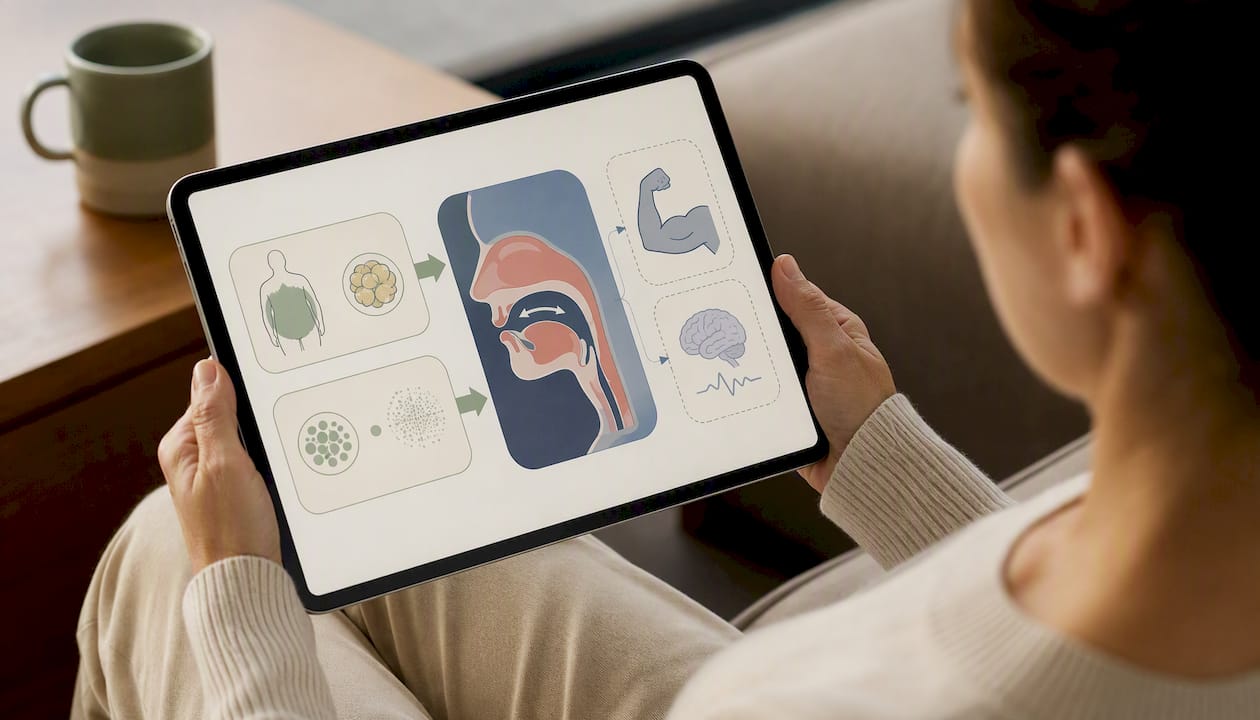
Most of the explanation for GLP-1 effects on OSA centers on reduced fat mass around the neck and upper airway, but researchers have also flagged effects that go beyond simple tissue volume. Reduced systemic inflammation may lower swelling in airway tissue itself, independent of fat loss. Improved insulin sensitivity correlates with better autonomic regulation during sleep, which could influence how easily the airway collapses during specific sleep stages.
There’s also a hypoxic burden angle worth understanding. Tirzepatide trial data showed reductions in cumulative low-oxygen exposure across the night, a metric distinct from simple event counts. Fewer or shorter oxygen dips may reflect changes in how quickly the airway reopens after a collapse, not just how often collapses happen. That’s a subtler form of improvement than “fewer events,” and it may matter more for cardiovascular outcomes than AHI alone.
None of this rises to a fully mapped mechanism for airway muscle tone specifically. The research supports weight and inflammation as the dominant drivers, with muscle function and sleep architecture effects as a plausible but still-developing area of study. If you’re evaluating GLP-1 therapy, weight loss and its downstream effects on inflammation and airway tissue are the evidence-backed story. Direct muscle tone changes remain a research question, not an established mechanism.
Where GLP-1 Therapy Fits in Sleep Apnea Treatment Guidelines
Formal integration of GLP-1 therapy into standard OSA protocols is still taking shape, which makes sense given the FDA approval landed in late 2024. Sleep medicine groups have responded by framing pharmacotherapy as an addition to the toolkit rather than a replacement for existing standards.
The American Academy of Sleep Medicine’s response to the approval emphasized viewing tirzepatide as one option among several, particularly useful for patients whose CPAP adherence has stalled or whose OSA is clearly tied to obesity. That’s a meaningfully different posture than treating it as a first-line universal therapy.
Expect guidelines to keep evolving as longer-term data accumulates. In the meantime, most clinicians are applying a practical filter: confirm the OSA is obesity-related, check that CPAP either isn’t working or isn’t being used consistently, rule out contraindications to GLP-1 therapy, and set a follow-up sleep study to confirm the medication is doing what the trials suggest it should. That’s less a rigid protocol and more a structured judgment call, which is typical for a treatment this new.
Daytime Sleepiness and Quality of Life on GLP-1 Therapy
AHI is the number clinicians track, but daytime function is the thing patients actually feel. Excessive daytime sleepiness, brain fog, and irritability are hallmark OSA symptoms that often improve alongside AHI reductions, though trials measuring quality of life specifically alongside GLP-1 therapy are still catching up to the AHI data.
The logical connection is straightforward: fewer nighttime arousals from apnea events mean more consolidated sleep, and more consolidated sleep tends to reduce daytime sleepiness regardless of what caused the improvement. Weight loss itself also independently improves energy and mood for a lot of patients, separate from any sleep-specific mechanism, which means GLP-1 therapy may deliver a quality-of-life boost through two channels at once.
Patients starting therapy shouldn’t expect immediate transformation. AHI improvement builds over months as weight comes off gradually, so daytime energy improvements tend to lag slightly behind the numbers on a repeat sleep study. Tracking symptoms like how often you nod off during the day, how foggy you feel by afternoon, and whether your mood has shifted gives you a more immediate read on progress than waiting for a formal AHI recheck.
The Real Gap Between the Trial Data and Everyday Practice
The SURMOUNT-OSA numbers are genuinely strong, and it’s tempting to read them as a green light for anyone with a few extra pounds and a snoring problem. That’s not quite right.
What gets underestimated is how much the secondary effects matter. Clinicians focus on AHI because it’s the FDA’s approval metric, but the blood pressure and inflammation reductions may end up mattering more for long-term cardiovascular risk than the sleep study number itself. A patient with a modest AHI improvement but a meaningful drop in systolic blood pressure and hs-CRP is still winning, even if the sleep study doesn’t look dramatically different.
The other underappreciated point: this is a durability question dressed up as a treatment question. GLP-1 therapy works while the weight stays off. That’s not a knock against it. It just means the honest framing is “an effective tool that requires an ongoing plan,” not “a cure.” Anyone weighing this option should walk in expecting a partnership with their provider that extends well past the first prescription.
— Bryan
Start GLP-1 Treatment for Sleep Apnea With Legacy Meds
If the evidence above has you thinking about tirzepatide or another GLP-1 medication, the practical hurdle is usually accessed, not conviction. An example provider runs a fully online prescription pathway: a telemedical provider assessment, a personalized treatment plan, free shipping, and unlimited coaching support built in, all without insurance approvals or membership fees standing between you and a start date.
The program serves adults pursuing medical weight loss who are ready to pay out-of-pocket for a structured, provider-guided plan rather than navigate insurance denials or long specialist waitlists. If sleep apnea is part of your reason for considering GLP-1 therapy, discuss your specific OSA severity and CPAP status with your provider during your online visit so the plan reflects your actual clinical picture. From there, Legacymeds’ free provider visits walk you through eligibility and get a prescription pathway moving quickly. Check your eligibility and start your assessment today, or review pricing and program details first if you want the logistics settled before you commit.
Sources
- FDA Approves First Medication for Obstructive Sleep Apnea
- Efficacy of GLP-1 Receptor agonists in treating Obstructive sleep apnea: A systematic review and meta-analysis
FAQ
Can you get Ozempic if you have sleep apnea?
Ozempic (semaglutide) isn’t FDA-approved specifically for OSA the way Zepbound is, but having sleep apnea doesn’t disqualify you from semaglutide therapy for weight loss or type 2 diabetes. Discuss your OSA severity and CPAP status with your provider so your plan accounts for both conditions.
Why do people feel so good on GLP-1 medications?
Much of the reported improvement in mood and energy ties back to weight loss, better blood sugar control, and reduced inflammation, all of which affect sleep quality and daytime alertness. For OSA patients specifically, reduced apnea events mean more consolidated sleep, which independently boosts how rested you feel.
What is the 3% rule for sleep apnea?
This isn’t an established clinical guideline; the term shows up informally online but doesn’t correspond to a recognized medical standard. If you’ve seen it referenced, ask your sleep specialist what specific criteria they use to define oxygen desaturation, since terminology in scoring guidelines varies.
What is the “Japanese trick” for sleep apnea people mention online?
There’s no verified clinical technique by that name recognized in sleep medicine research. Positional therapy, such as sleeping on your side instead of your back, does reduce mild OSA severity for some people, but it isn’t a substitute for CPAP, oral appliances, or GLP-1 therapy in moderate-to-severe cases.
Does weight loss amount matter for how much sleep apnea improves?
Yes. Meta-analysis data shows AHI improvement correlates with the amount of weight lost, with mean reductions around 13.89 events per hour tied to roughly 12.46 kg of weight loss across pooled GLP-1 trials. Larger, sustained weight loss generally produces larger and more durable AHI improvement.