
GLP-1 is a gut hormone that tells your pancreas to release insulin only when blood sugar is high, tells your liver to stop dumping out extra glucose, slows down digestion, and signals your brain that you’re full. GLP-1 receptor agonist drugs copy and extend that hormone’s action, which is why they lower A1c with minimal hypoglycemia risk and drive meaningful, sustained weight loss when used as prescribed.
TL;DR:
- Short-acting GLP-1 drugs may provide stronger post-meal glucose control but require daily injections, while long-acting versions offer steadier effects with weekly dosing.
- Weight loss typically ranges from 10 to 18 percent of starting body weight, depending on the specific drug, dose, and patient adherence to titration.
- Nausea and gastrointestinal discomfort are common early side effects caused by delayed gastric emptying, but they usually resolve with dose adjustments and proper scheduling.
- Combining GLP-1 receptor agonists with insulin or sulfonylureas increases hypoglycemia risk, requiring medication adjustments for safety.
- Proper medical assessment, structured dose escalation, and avoiding sourcing outside licensed providers are essential for effective and safe GLP-1 therapy.
Table of Contents
- What GLP-1 Is and Why the Incretin Effect Matters
- How GLP-1 Acts on the Pancreas to Control Glucose
- How GLP-1 Affects the Gut and Brain to Curb Appetite
- Why GLP-1 Drugs Are Engineered Differently From the Natural Hormone
- What the Clinical Trial Data Actually Show
- Managing Side Effects and Understanding the Safety Profile
- How GLP-1 Receptor Agonists Are Actually Used in Practice
- What Actually Matters When You’re Considering GLP-1 Therapy
- Sources
- FAQ
What GLP-1 Is and Why the Incretin Effect Matters
GLP-1, short for glucagon-like peptide-1, comes mainly from L cells lining your small intestine, with a smaller supply made by neurons in the brainstem. Eating triggers the release: carbohydrates and fats hitting the gut wall cause L cells to dump GLP-1 into the bloodstream within minutes.
This is the basis of something researchers call the incretin effect, and it explains a strange fact about your body. Drink a glass of sugar water and your pancreas releases far more insulin than if that same glucose were injected straight into your vein. The gut hormones, GLP-1 chief among them, are doing that extra work.
Together, GLP-1 and a related hormone called GIP account for roughly 50 to 70% of the insulin released after a meal in a healthy person. That is not a minor supporting role. It is most of the story.
There’s a catch, though: native GLP-1 barely survives long enough to finish the job.
- Made in the gut, released within minutes of eating
- Signals the pancreas, stomach, and brain simultaneously
- Responsible for most of the insulin your body releases after meals
- Broken down almost immediately by an enzyme called DPP-4, then cleared by the kidneys
That short lifespan is exactly why drug companies spent years engineering longer-lasting versions. Your own GLP-1 does the job perfectly for a couple of minutes and then disappears.
How GLP-1 Acts on the Pancreas to Control Glucose
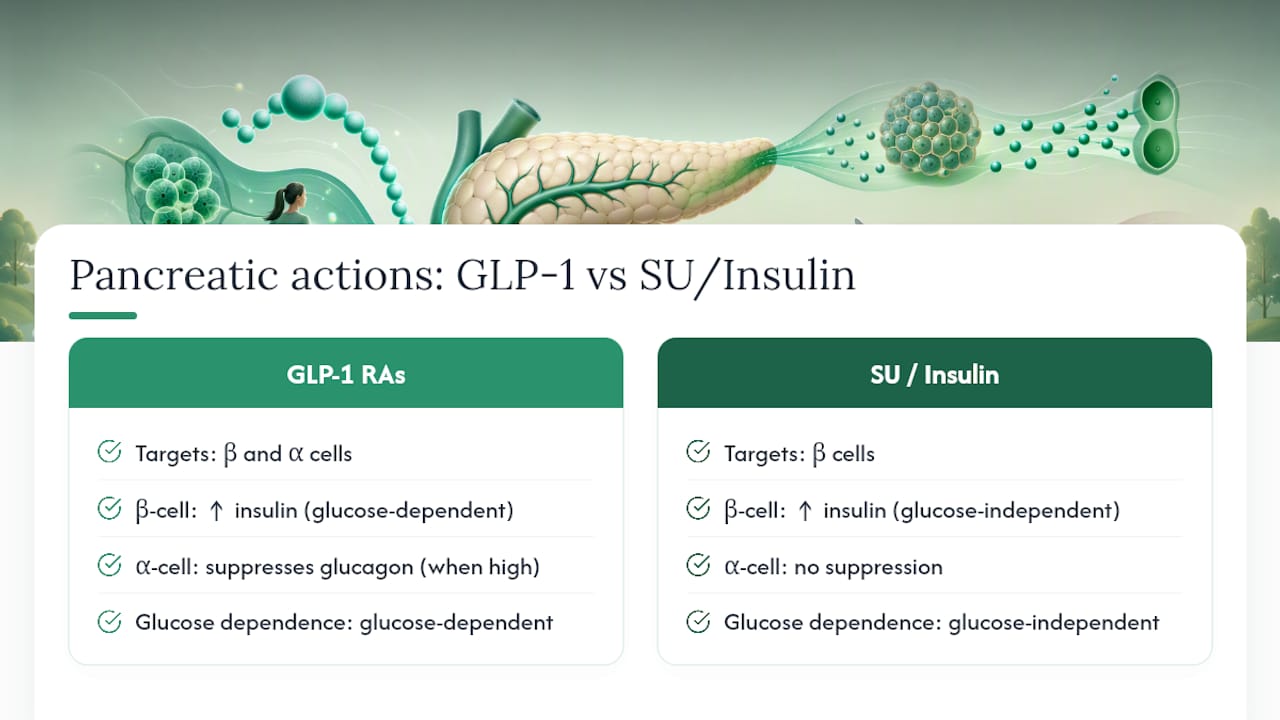
GLP-1’s most direct effect happens inside your pancreas, on two different cell types that work like opposing forces on a dial. Beta cells make insulin; alpha cells make glucagon, a hormone that raises blood sugar by telling the liver to release stored glucose. GLP-1 pushes both of them in the direction that lowers blood sugar.
When GLP-1 binds its receptor on beta cells, it raises a signaling molecule called cAMP inside the cell. Higher cAMP amplifies insulin release, but only when glucose is already elevated. That glucose-dependent qualifier is the whole point: GLP-1 doesn’t force insulin out at random, it waits until there’s a reason. This is fundamentally different from older diabetes drugs like sulfonylureas, which stimulate insulin release regardless of blood sugar level and carry a real risk of dropping it too low.
At the same time, GLP-1 leans on alpha cells to suppress glucagon output when glucose is high. Less glucagon means the liver stops adding sugar to a bloodstream that already has plenty. According to Cleveland Clinic, this glucose-dependent, dual-direction action is precisely what keeps GLP-1 receptor agonists from causing the hypoglycemia that plagues older glucose-lowering drugs.
The combined effect on your lab results is straightforward: less glucose spike after meals, and over months, a meaningfully lower A1c. Add a sulfonylurea or insulin into the mix, though, and that built-in safety margin narrows, since you’re now stacking a glucose-independent insulin push on top of GLP-1’s glucose-dependent one.
How GLP-1 Affects the Gut and Brain to Curb Appetite
Blood sugar control is only half of what GLP-1 does. The other half happens in your stomach and your brain, and it’s the part that drives weight loss.
GLP-1 receptors sit on vagus nerve endings that run between your gut and brainstem, and on neurons in appetite-control centers like the hypothalamus. Activate those receptors and the brain gets a clear message: food has arrived, stop eating. This isn’t willpower. It’s a hormonal circuit that dials down hunger signals and dials up satiety signals at the same time, which is a large part of why GLP-1 helps weight loss beyond simple calorie counting.
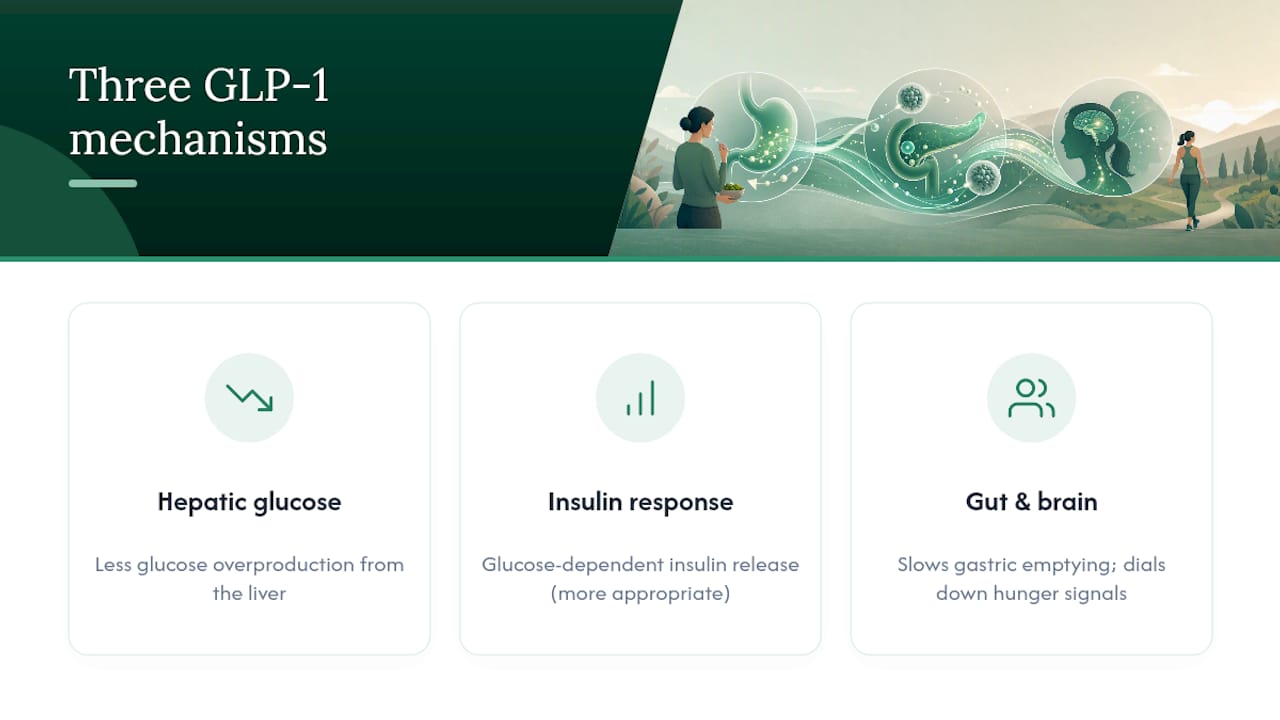
GLP-1 also slows gastric emptying, meaning food sits in your stomach longer before moving into the small intestine. Two things follow from that. First, you feel full longer on the same amount of food. Second, nutrients trickle into your bloodstream more slowly, which blunts the glucose spike that would otherwise follow a meal.
Put the pancreatic effects and these gut and brain effects together, and you get a mechanism that attacks the problem from three directions at once: less glucose overproduction from the liver, more appropriate insulin release, and less food coming in to begin with. That combination is why GLP-1 receptor agonists outperform drugs that only address one piece of the glucose picture.
Why GLP-1 Drugs Are Engineered Differently From the Natural Hormone
Since native GLP-1 survives only about one to two minutes in circulation before DPP-4 breaks it down and your kidneys clear the remnants, no drug company could simply inject the hormone as-is and expect an all-day effect. Every GLP-1 receptor agonist on the market solves this same problem in a slightly different way.
Chemists modify the peptide’s structure so DPP-4 can’t recognize and cut it, then attach it to something that keeps it circulating longer:
- Fatty-acid albumin binding: attaching a fatty acid chain that lets the drug bind to albumin, a large blood protein, acting as a slow-release reservoir
- Fc-fusion technology: fusing the peptide to part of an antibody, which the body clears far more slowly than a small peptide alone
- Microsphere depot formulations: encasing the drug in tiny particles that dissolve gradually after injection
- Absorption enhancers: for oral versions, pairing the peptide with a compound that helps it survive stomach acid and cross the intestinal lining intact
The practical result is a spectrum of products. Short-acting agents tend to exert a stronger, more direct effect on gastric emptying and post-meal glucose spikes, since their action peaks and fades within a day. Long-acting, once-weekly formulations tend to produce steadier receptor activation around the clock, which several trials link to greater weight-loss efficacy over time. Neither approach is universally better. The right choice depends on whether glucose control or sustained appetite suppression is the bigger priority for a given patient.
What the Clinical Trial Data Actually Show
GLP-1 receptor agonists produce weight loss in the range of 10 to 18% of starting body weight with currently available agents, according to trial data compiled across major incretin-based weight-loss studies, with newer dual-acting agents pushing toward the higher end of that range and beyond in some cases. That is a dramatically different result than most oral weight-loss medications have ever managed, and it’s a big part of why these drugs reshaped obesity treatment.
On the glucose side, the same glucose-dependent insulin boost and glucagon suppression described earlier translate into measurable A1c reductions and flatter post-meal glucose curves in people with type 2 diabetes. The size of the effect varies by agent and dose, but the direction is consistent across the drug class.
There’s also a growing, still-developing body of evidence pointing to benefits beyond glucose and weight. Some large cardiovascular outcome trials have reported fewer major cardiac events and reduced markers of kidney strain in patients on GLP-1 receptor agonists, likely from a mix of direct effects on blood vessels and kidneys plus the indirect benefits of better glucose control and lower body weight. Researchers describe this as a supportive, evolving signal rather than a settled fact, and it shouldn’t be the sole reason someone starts the medication.
Managing Side Effects and Understanding the Safety Profile
Nausea, vomiting, and diarrhea are the side effects you’re most likely to notice, and they show up early, usually in the first weeks after starting or after a dose increase. This is the most consistently reported adverse effect pattern across the GLP-1 receptor agonist class, and it’s directly tied to that same delayed gastric emptying that helps with appetite control. Slow things down too much and your stomach protests.
The good news: these symptoms are usually temporary, and dose escalation schedules exist specifically to minimize them. Overall discontinuation rates in trials stay relatively low, which tells you most patients push through the adjustment period successfully.
Hypoglycemia risk stays low when a GLP-1 receptor agonist is used alone, thanks to that glucose-dependent mechanism discussed earlier. Combine it with insulin or a sulfonylurea, though, and the risk climbs, which is why clinicians typically adjust those other medications when adding a GLP-1 drug to the regimen.
A few less common issues deserve mention:
- Antibody formation happens more often with exendin-4 derived molecules than with drugs built on the human GLP-1 sequence, and can occasionally blunt the drug’s effect in affected patients
- Gallbladder and biliary issues have been reported at low rates, likely related to rapid weight loss itself rather than a direct drug effect
- Patients with a personal or family history of certain thyroid conditions or pancreatitis need a specific conversation with their prescriber before starting
Pro Tip: Early nausea often gets mistaken for hunger or a sign the medication “isn’t working.” It’s neither. Eating smaller, more frequent meals and sticking to a slow, structured dose escalation schedule resolves most of it within the first month.
How GLP-1 Receptor Agonists Are Actually Used in Practice
Two main groups qualify for GLP-1 receptor agonist therapy: adults with type 2 diabetes whose blood sugar needs better control, and adults who meet regulator-specified body weight or BMI thresholds for pharmacologic obesity treatment, with agents such as semaglutide commonly used in these treatments. Some agents carry approval for both uses; others are approved for one or the other.
The typical path starts with an assessment covering weight history, current medications, and relevant conditions like pancreatitis or thyroid disease. From there, treatment usually follows a structured titration schedule, starting at a low dose and increasing every few weeks specifically to keep GI side effects manageable. Providers checking in during that early stretch make a real difference in whether someone sticks with treatment long enough to see results.
Before starting, a few conversations matter more than others: pregnancy plans, since these drugs aren’t recommended during pregnancy; any personal or family history of certain thyroid tumors; and a full list of current medications, since interactions with other drugs are worth reviewing up front rather than discovering them later. Setting realistic timelines matters too. Meaningful weight loss builds over months, not weeks, and knowing that in advance prevents people from quitting right before the results show up.
What Actually Matters When You’re Considering GLP-1 Therapy
The mechanism-to-outcome chain here is genuinely elegant: glucose-dependent insulin release plus glucagon suppression plus slower gastric emptying plus central appetite suppression, all from one hormone pathway. That’s rare in medicine. Most drugs hit one target; this one hits four, which is why the results look different from anything that came before it.
Where I’d push back on the typical framing: too many people treat percentage weight-loss figures as a guarantee rather than a range. Individual response varies with dose, agent, and adherence to the titration schedule, and the people who quit during the nausea phase never get to the numbers quoted in the trials.
Get bloodwork and a real medical assessment before starting, and never source these medications outside a licensed telehealth or in-person provider relationship. If GI side effects hit hard, don’t white-knuckle it. Talk to your prescribing clinician about slowing the titration schedule rather than stopping altogether. That single adjustment resolves more dropout cases than anything else.
— Bryan
Sources
- The Roles of Incretin Hormones GIP and GLP-1 in Metabolic and Cardiovascular Health: A Comprehensive Review
- GLP-1 Agonists — Cleveland Clinic
This article is general information, not a substitute for advice from a qualified doctor. Consult a qualified healthcare professional about your own circumstances before acting on anything here.
FAQ
Does GLP-1 Cause Hypoglycemia?
Rarely, when used alone, because GLP-1’s glucose-dependent mechanism only boosts insulin release when blood sugar is already elevated. Risk rises when it’s combined with insulin or a sulfonylurea, so clinicians often adjust those medications first.
How Much Weight Loss Is Realistic With GLP-1 Medications?
Trial data show a typical range of 10 to 18% of starting body weight with current GLP-1 receptor agonists, with some newer dual-acting agents trending higher. Actual results depend on the specific drug, dose, and how consistently the titration schedule is followed.
What’s the Difference Between Oral and Injectable GLP-1 Drugs?
Injectable formulations use fat-binding or antibody-fusion technology to stay active for days or weeks per dose, while oral versions rely on absorption enhancers to survive digestion and tend to require daily dosing. Both work through the same glucose-dependent receptor mechanism.
Why Do GLP-1 Drugs Cause Nausea?
Nausea stems directly from delayed gastric emptying, the same mechanism that helps control appetite and post-meal glucose spikes. Slow dose escalation resolves it for most patients within the first several weeks.
Is GLP-1 the Same as Insulin?
No. Insulin lowers blood sugar directly and independent of your current glucose level, while GLP-1 works by prompting your own pancreas to release insulin only when glucose is already high, plus suppressing glucagon and slowing digestion. That glucose-dependent design is why GLP-1 receptor agonists carry a much lower hypoglycemia risk than insulin therapy.