
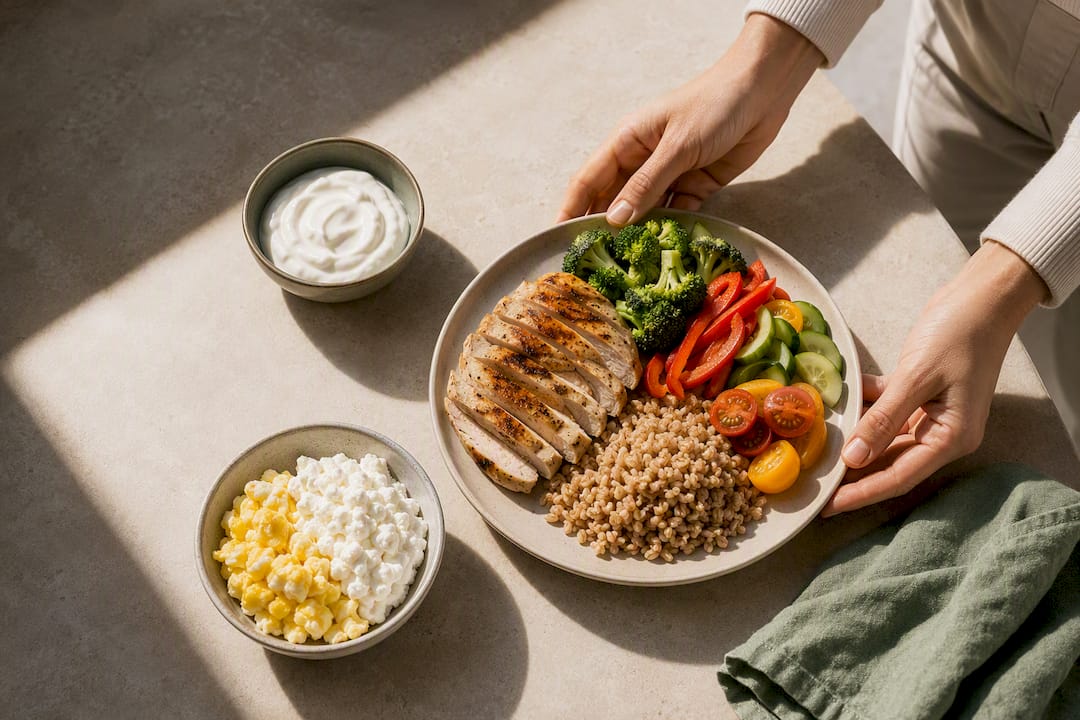
A semaglutide diet plan works when it puts protein first, keeps meals small and nutrient-dense, and treats hydration as non-negotiable. Everything else, from managing nausea to protecting muscle, builds on that foundation. The sample week below shows exactly how to structure it.
TL;DR:
- Consuming small, nutrient-dense meals that prioritize high protein and healthy fats is essential to preserve muscle and prevent nutrient deficiencies during semaglutide treatment.
- Avoiding greasy, heavily processed foods and sugary drinks reduces gastrointestinal discomfort, dehydration risk, and blood sugar spikes, supporting better medication tolerability.
- Spreading three small meals and one or two snacks throughout the day helps manage slower digestion and reduces the likelihood of nausea and bloating.
- Maintaining adequate hydration and using practical meal swaps can improve adherence and nutrient intake without increasing stomach capacity.
- Pairing medication with resistance training and proper protein intake significantly influences fat loss and muscle preservation, preventing rapid muscle loss common in crash dieting.
Table of Contents
- Why Semaglutide Changes What You Should Eat
- Building a Protein-First Plate on a Semaglutide Diet Plan
- Foods That Make Semaglutide Side Effects Worse
- How to Time Meals and Portions on Semaglutide
- Managing Nausea, Constipation, and Other GI Side Effects
- Protecting Muscle While Losing Weight on Semaglutide
- Daily Habits That Make the Plan Easier to Follow
- Clinical Realism and What Actually Moves the Needle
- How a Semaglutide Weight Loss Program Supports Your Diet Plan
- Sources
- FAQ
Why Semaglutide Changes What You Should Eat
Semaglutide works partly by slowing gastric emptying, which is the medical term for how long food sits in your stomach before moving on. That’s a documented mechanism on the drug’s FDA label and postmarket safety communications, and it’s the reason you feel full faster and stay full longer.
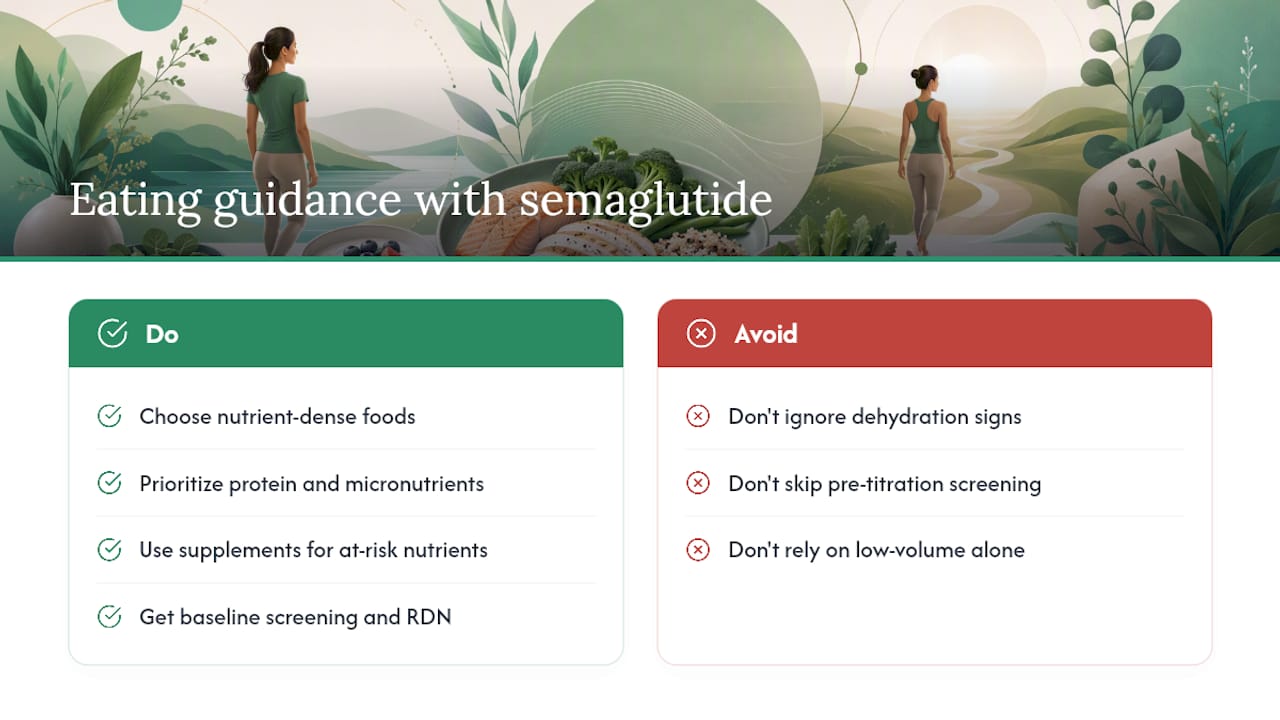
The catch: you’re eating less volume, but your body still needs the same, or in some cases higher, concentration of protein, vitamins, and minerals. A joint advisory in the American Journal of Clinical Nutrition makes this exact point. It calls for nutrient-dense, minimally processed foods within a lower-calorie intake, plus supplementation for nutrients at risk of falling short.
There’s a second, less obvious risk. When nausea or diarrhea hits, delayed gastric emptying combined with reduced fluid intake can tip you toward dehydration faster than you’d expect, something the FDA’s postmarket data flags as a real concern. If you have diabetes, slower digestion also changes how food affects blood sugar timing, which is one more reason a baseline screening and a session with a registered dietitian nutritionist (RDN) are worth arranging before you start titrating up.
Building a Protein-First Plate on a Semaglutide Diet Plan
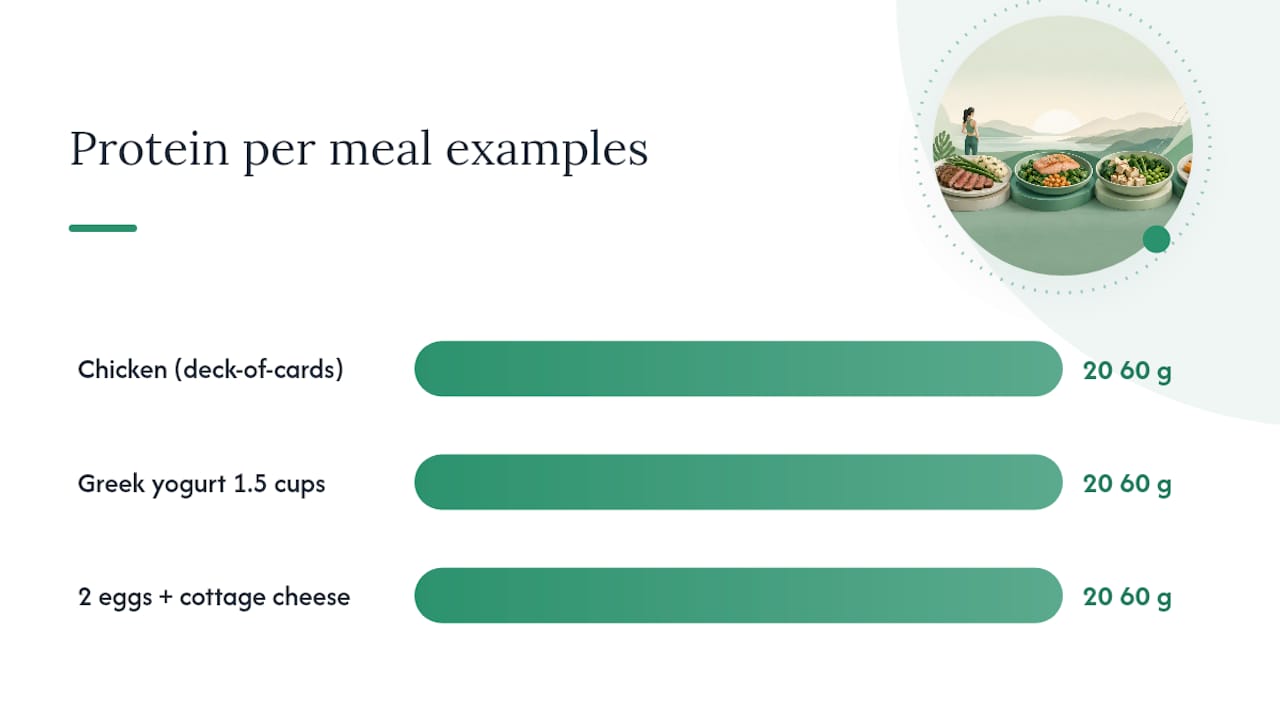
Every meal should start with a protein target, not a food you’re craving. Aim for 20 to 30 grams per meal, a range Mayo Clinic Press recommends specifically because it helps preserve muscle while your calorie intake drops. That’s roughly a chicken breast the size of a deck of cards, one and a half cups of Greek yogurt, or two eggs plus a slice of cottage cheese.
Fiber matters just as much, but it has to come in gradually. Cleveland Clinic’s guidance on managing GLP-1 side effects specifically warns against dumping a big fiber increase onto a stomach that’s already digesting slowly. Add one high-fiber food every few days rather than overhauling your plate overnight.
Healthy fats deserve a place too, in small amounts. A tablespoon of olive oil, a quarter avocado, or a handful of almonds adds satiety without adding volume, which matters when your stomach capacity has effectively shrunk.
Here’s a practical way to swap common meals without losing nutrition:
- Swap a bagel and cream cheese for two eggs with avocado on one slice of whole grain toast.
- Swap a large pasta bowl for grilled chicken over a half-cup of quinoa with steamed vegetables.
- Swap chips for a small container of cottage cheese with berries.
- Swap a sugary latte for a protein-fortified smoothie with unsweetened almond milk.
- Swap a fast-food burger for a lean turkey patty on a lettuce wrap with sliced tomato.
Pro Tip: Build your plate protein first, then add fiber, then fat. If you fill up before finishing all three, you’ve still gotten the most important macronutrient in.
Foods That Make Semaglutide Side Effects Worse
Greasy, fried, and heavily processed foods sit at the top of the list of what to avoid on semaglutide, and the reason is mechanical, not just about calories. Fat slows digestion further, and when you stack that on top of a drug that’s already delaying gastric emptying, food lingers in your stomach much longer than it comfortably should. That’s the direct route to nausea, bloating, and reflux.
Sugary drinks and ultra-processed snacks cause a different problem. They deliver a lot of calories in very little volume, which crowds out the protein and fiber you actually need in an appetite that’s already limited. Harvard Health’s overview of GLP-1 side effects specifically calls out high-fat and heavily processed foods as common triggers worth limiting.
Alcohol compounds the issue further by irritating an already sensitive gut and dehydrating you at the same time your fluid margin is thinner than usual.
Practical adjustments that help:
- Choose baking, grilling, or steaming over frying almost every time.
- Skip heavy cream sauces, gravies, and butter-based dressings.
- Keep portions smaller than you think you need, especially in the hours right around your injection.
- Limit alcohol, and never substitute it for a meal.
How to Time Meals and Portions on Semaglutide
Three small meals plus one or two light snacks, spaced every three to four hours, tends to work better than the traditional three-square-meals rhythm. Your stomach is processing food more slowly, so smaller, more frequent inputs reduce the odds of that overfull, nauseated feeling that hits an hour after eating.
A sample day might look like this:
- Breakfast: Two eggs, a half-cup of cottage cheese, and a small handful of berries.
- Mid-morning snack: A protein shake or a single-serve Greek yogurt cup.
- Lunch: Grilled chicken, a half-cup of brown rice, and steamed broccoli.
- Afternoon snack: A tablespoon of peanut butter with apple slices.
- Dinner: Baked salmon, roasted sweet potato, and a small side salad with olive oil.
Across a full week, rotate the protein source and keep the structure consistent:
- Monday to Tuesday: Chicken and eggs as primary proteins, with quinoa and steamed vegetables.
- Wednesday to Thursday: Fish and Greek yogurt, paired with brown rice and roasted squash.
- Friday to Saturday: Lean beef or turkey, with sweet potato and leafy greens.
- Sunday: A lighter reset day built around soups, smoothies, and soft proteins if appetite is running low.
If solid food feels like too much on a given day, a protein-fortified shake or smoothie can fill the gap without forcing you to push through discomfort. Just don’t let liquid meals become the default for more than a day or two without checking in with your provider about your overall intake.
Managing Nausea, Constipation, and Other GI Side Effects
Most GI side effects respond to a handful of consistent habits, and Cleveland Clinic’s guidance on managing GLP-1 side effects lays out the basics clearly: eat smaller meals, slow down while eating, sip fluids between meals instead of during them, and avoid your personal trigger foods once you’ve identified them.
For nausea specifically, ginger tea, plain crackers, and bland foods like toast or rice tend to settle things faster than anything rich or spicy. For constipation, increase fluids and soluble fiber gradually. Sudden diarrhea calls for a short-term BRAT approach (bananas, rice, applesauce, toast) along with electrolyte replacement.
- Take your dose when your stomach isn’t overly full, especially during the first few weeks.
- Eat slowly. Set your fork down between bites if you have to.
- Sip water steadily rather than gulping a large glass at once.
Pro Tip: Keep a simple symptom log for your first month. Patterns between what you ate and how you felt often show up faster than you’d expect, and that log becomes useful information for your provider.
Persistent vomiting, inability to keep fluids down, or signs of dehydration are red flags that call for immediate provider evaluation. The FDA’s postmarket safety data links severe, unmanaged GI symptoms to dehydration-related kidney complications, which is not something to try to ride out on your own. If you’re struggling with constipation specifically, our guide to fast relief on GLP-1 medications walks through more targeted steps.
Protecting Muscle While Losing Weight on Semaglutide
Rapid weight loss without a plan tends to take muscle along with fat, and that’s the outcome you want to actively prevent here. The math is straightforward: aim for 1.0 to 1.5 grams of protein per kilogram of body weight daily, spread across meals in that 20 to 30 gram range Mayo Clinic recommends. An RDN can tighten that number to your specific activity level and health history.
Resistance training is the other half of the equation. The CDC’s physical activity guidelines recommend muscle-strengthening activity at least two days a week for all adults, and that recommendation carries extra weight when you’re losing weight pharmacologically. You don’t need a gym membership. Bodyweight squats, resistance bands, and push-ups done consistently twice a week make a measurable difference, a point our breakdown of exercise on semaglutide covers in more depth.
- Spread protein across three meals rather than loading it all into dinner.
- Train major muscle groups twice weekly, even with light resistance.
- Ask your provider about monitoring vitamin B12, vitamin D, and calcium, especially if you’re eating a more restricted diet.
Crash dieting without this structure is exactly how muscle loss happens fastest, and semaglutide’s appetite suppression can accidentally recreate crash-diet conditions if you’re not deliberate about protein.
Daily Habits That Make the Plan Easier to Follow
Hydration is the habit most people underestimate. Aim for 2 to 3 liters (8 to 12 cups) a day, per Harvard Health’s guidance, and sip steadily between meals rather than chugging a glass right before eating, which can trigger early fullness and crowd out food.
A few small habits go a long way:
- Set a phone alarm for meals if appetite suppression makes you forget to eat.
- Keep grab-and-go protein on hand: canned tuna, string cheese, hard-boiled eggs, single-serve yogurt cups.
- Stock your freezer with pre-portioned frozen vegetables and lean proteins for nights when cooking feels like too much.
Pro Tip: Choosing lower-glycemic snacks matters more on semaglutide, not less, since your smaller meals leave less room to buffer a blood sugar spike. A primer on insulin response to snacks is worth a read if you’re managing diabetes alongside weight loss.
Clinical Realism and What Actually Moves the Needle
The honest version of this conversation is that the medication does the appetite work, but nutrition and resistance training determine what kind of weight you lose. Muscle or fat. That’s not a minor distinction. Two people on the same dose with the same starting weight can end up in very different places six months out, and the difference usually traces back to protein intake and whether they lifted anything heavier than a coffee cup twice a week.
Timelines vary more than people expect too, and that’s worth setting realistic expectations around early, rather than three months in when frustration sets in.
The approach pairs telehealth prescribing and dose escalation guidance with ongoing coaching, because the medication alone was never the whole plan. Pairing it with an RDN and your prescribing provider gives you a level of individualized care that generic meal plans can’t match.
— Bryan
How a Semaglutide Weight Loss Program Supports Your Diet Plan
Medically supervised GLP-1 treatment combined with nutrition and coaching support can help you, without membership fees or insurance hurdles that slow other programs down.
Programs may include a provider visit, a personalized dose escalation schedule, and coaching access to help with food choices or side-effect management. Initial consultations typically review health history, set starting doses, and provide resources for building a diet plan tailored to individual appetite and lifestyle. Support for managing constipation, nausea, or timing questions can also be available.
None of this replaces individualized medical advice from your own provider, and any dose changes or new symptoms should go through them directly. If you’re ready to see what a personalized plan looks like, start with the GLP-1 weight loss program or check the pricing and program details before booking your first visit.
This article is general information, not a substitute for advice from a qualified doctor. Consult a qualified healthcare professional about your own circumstances before acting on anything here.
Sources
- AJCN: Nutritional priorities to support GLP-1 therapy for obesity (joint advisory)
- Mayo Clinic Press: Eating well on GLP-1 medications
- FDA: Postmarket drug safety information for semaglutide-containing medications
- Harvard Health: GLP-1 drug side effects and management
FAQ
How long will it take to lose 20 pounds on semaglutide?
Timelines vary widely by starting weight, dose, and adherence to nutrition and activity habits, but many patients following a structured protein-first plan see steady, gradual progress over several months rather than a fixed number of weeks. Your provider can give you a realistic estimate based on your dose escalation schedule and history.
What not to mix with semaglutide?
Alcohol and heavy, high-fat meals both amplify GI side effects and should be limited, and certain medications can interact with semaglutide in ways that affect blood sugar or GI tolerance. Review your full medication list with your provider, and see our breakdown of GLP-1 drug interactions for more detail.
How to lose weight faster on semaglutide?
Faster, sustainable results come from combining consistent protein intake, resistance training twice a week, and adherence to your prescribed dose escalation schedule, not from restricting food further. Skipping meals or under-eating protein tends to backfire by triggering muscle loss instead of fat loss.
What foods should you not eat on semaglutide?
Fried, greasy, and heavily processed foods top the list, along with sugary drinks and excess alcohol, since all four tend to worsen nausea, bloating, and reflux while offering little nutritional value for the calories they cost. Small, whole-food meals built around protein are the better alternative.