
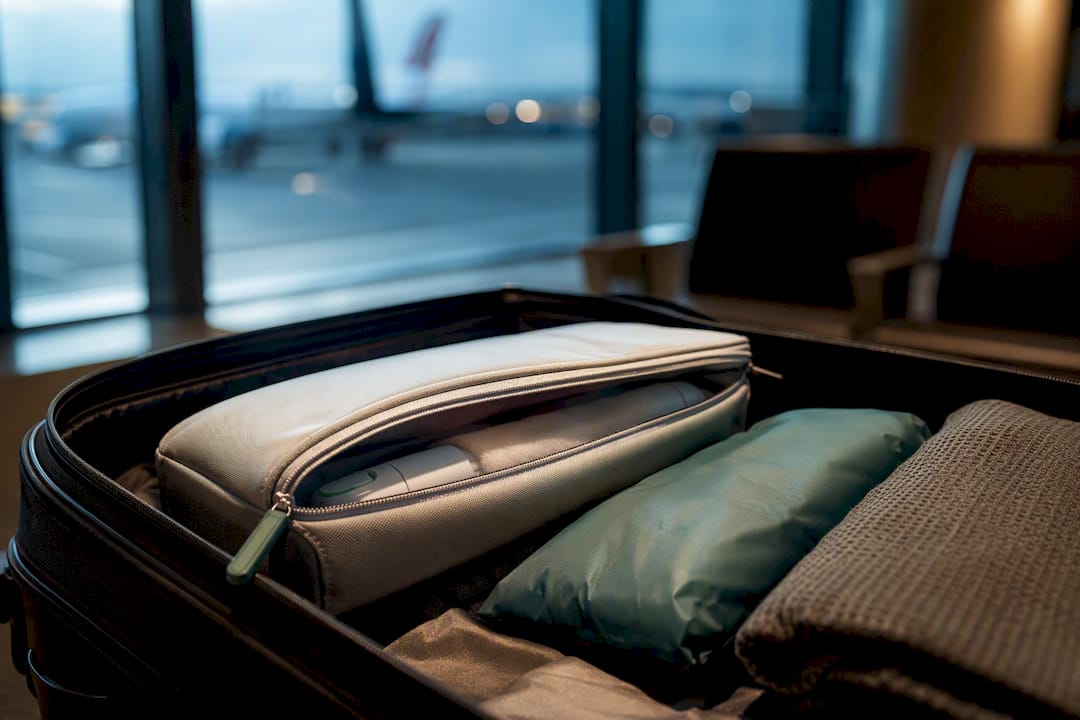
Yes, Zepbound can travel with you. Keep it in your carry-on, tell the TSA officer you’re carrying injectable medication and syringes, and protect the pens or vials from freezing and from heat above 86°F. Bring your prescription label or original carton when you can, though domestic flights rarely require it. Get those three things right and the rest of zepbound travel planning is just logistics.
TL;DR:
- Keep Zepbound in your carry-on inside an insulated case, and never store it in checked luggage to prevent exposure to extreme temperatures.
- Always carry the original prescription label or carton, as it helps verify your medication during security screening or if questioned.
- Avoid exposing the medication to temperatures above 86°F or below freezing, as damage from heat or freezing can be irreversible once the pen is outside refrigeration.
- Declare your medication to TSA officers upfront and request a hand inspection if you prefer not to send it through X-ray, to avoid potential damage or delays.
- Consult your provider before adjusting your dose or traveling for more than 30 days to ensure medication integrity and proper administration during trips.
Table of Contents
- Zepbound Travel Checklist for Packing and Security
- What the Zepbound Label Says About Travel Risks
- How Long Can Zepbound Stay Out of the Fridge?
- How Do You Pack Zepbound for a Flight?
- Can You Bring Zepbound Through TSA Security?
- Driving, Bus, and Train Trips With Zepbound
- Traveling Internationally With Zepbound
- Adjusting Your Weekly Zepbound Dose for Travel
- Handling Dehydration, GI Symptoms, or a Damaged Pen
- How Legacymeds Supports Patients Who Travel
- Get Zepbound Access That Travels With You
- Sources
- FAQ
Zepbound Travel Checklist for Packing and Security
Print this before you leave. It covers the four things that actually go wrong on trips: no proof of prescription, medication packed in checked luggage, temperature exposure, and fumbling at the checkpoint.
- Carry your prescription bottle, printed pharmacy label, or the original carton with your pen or vial.
- Pack Zepbound in your carry-on inside an insulated case, never in checked baggage.
- If you use an ice pack, wrap it in a cloth or foam sleeve so it never touches the pen directly.
- Tell the TSA officer upfront: “I have injectable medication and syringes for personal use.”
- Ask for a hand inspection if you’d rather not send the pen through the X-ray tunnel.
- If a pen or vial freezes solid or gets hot to the touch, don’t inject it. Call your provider or pharmacy first.
Every item here gets its own explanation below, including the exact temperature numbers and the TSA phrasing that tends to speed things up at the checkpoint.
What the Zepbound Label Says About Travel Risks
The FDA prescribing information for Zepbound isn’t written with travelers in mind, but several of its warnings matter more once you’re away from your normal routine, kitchen, and pharmacy. The label flags a boxed warning for thyroid C-cell tumors seen in rodent studies, contraindications for anyone with a personal or family history of medullary thyroid carcinoma or MEN 2, and a caution around low blood sugar risk when tirzepatide is combined with insulin or sulfonylureas. None of that changes how you pack a pen, but it’s worth knowing before you’re two time zones away from your prescriber.
The more immediate travel concern is gastrointestinal. Nausea, vomiting, diarrhea, and constipation are the most commonly reported side effects, and they tend to flare when routines shift, whether that’s plane food, buffet breakfasts, or a sudden change in hydration habits.
Statistic Callout: Clinical trial data cited in the Zepbound prescribing information lists nausea, diarrhea, and vomiting among the most frequently reported adverse reactions, particularly during dose escalation.
A few practical mitigations go a long way:
- Drink water steadily through security lines, layovers, and flights, not just when you feel thirsty.
- Pack bland, low-fat snacks (crackers, pretzels, plain toast) for the first day in a new time zone.
- Avoid alcohol the night before a dose or a long travel day; it compounds dehydration.
- Postpone travel and call your provider if you develop severe abdominal pain, persistent vomiting, or signs of dehydration you can’t manage on your own.
If you’re pregnant, planning to become pregnant, or notice new severe symptoms before a trip, talk to your provider before you leave rather than troubleshooting from a hotel room.
How Long Can Zepbound Stay Out of the Fridge?
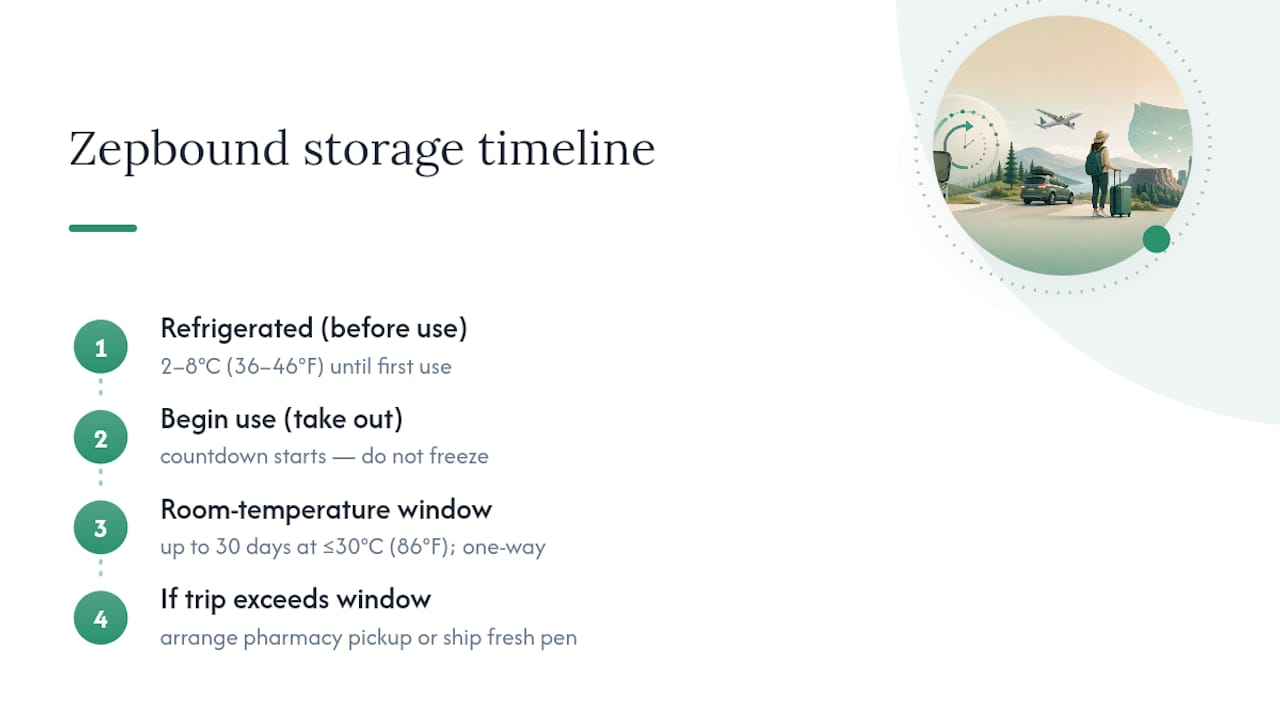
Unused Zepbound KwikPens need refrigeration between 2°C and 8°C (36°F to 46°F) right up until first use. Once you take a pen out of the fridge for active use, the countdown begins: Lilly’s guidance allows room-temperature storage up to 30°C (86°F) for up to 30 days, depending on the pen presentation, and the pen must never be frozen.
Statistic Callout: That 30-day room-temperature window is a one-way clock. Putting a pen back in the fridge after it’s spent time at room temperature does not reset or extend the allowance.
This matters most on multi-week trips. A weekend getaway doesn’t require much planning since the room-temperature window comfortably covers it. A three-week international trip is different math. If your travel dates plus your existing room-temperature exposure will push past that 30-day ceiling, plan for a mid-trip pharmacy pickup or ship a fresh pen to your destination rather than gambling on a pen that’s already near the end of its window.
How Do You Pack Zepbound for a Flight?
Carry-on is the only correct answer here, not a preference. Checked bags sit in cargo holds that can swing well below freezing at cruising altitude, and a frozen pen is a ruined pen. Keep the medication with you, inside a small insulated pouch or a soft-sided cooler bag designed for medication travel.
Inside that case, order matters:
- Place the pen or vial in its original carton if it still fits, since the carton doubles as documentation.
- If you’re using a gel or ice pack, wrap it separately in a cloth, sock, or thin foam layer so it never presses directly against the pen.
- Position the pen away from the case’s outer wall, where temperature swings hit hardest during security screening or a hot car trunk.
- Keep the pharmacy label or a copy of your prescription tucked into an outside pocket, not buried under clothes.
Pro Tip: Freeze the gel pack the night before, but let it sit out for five to ten minutes before packing. A pack straight from the freezer is often cold enough to damage the medication on contact, even through a cloth barrier.
For long layovers or a delay that strands you overnight, ask about hotel or lounge refrigerator access. A dedicated travel case rated for the room-temperature window covers most delays without one, but knowing your backup matters more than owning fancy gear.
Can You Bring Zepbound Through TSA Security?
Yes. TSA guidance exempts medically necessary liquids and injectable medications from the standard 3.4-ounce carry-on limit, and unused syringes are allowed in carry-on bags when they accompany injectable medication. You don’t need a doctor’s note for domestic flights, though having your prescription label handy speeds things up if an officer asks.
Here’s how the checkpoint typically goes:
- Before your bag hits the X-ray belt, tell the officer directly: “I have injectable medication and syringes for personal use.”
- Remove the medication case from your bag and place it in its own bin, separate from laptops and liquids.
- If you’d rather not send the pen through the X-ray tunnel, ask for a hand inspection. TSA allows this, and available guidance indicates no evidence that standard screening equipment degrades tirzepatide, so declining the scan is about personal preference, not safety.
- Expect your gel or ice pack to get extra attention. TSA screens gel and freezer packs separately and may test them, so keep them accessible.
A few notes worth remembering:
- The final call on screening always rests with the TSA officer at the checkpoint, so build in a few extra minutes.
- Used sharps need to travel in a proper sharps container, not loose in a bag; FDA guidance on sharps disposal applies just as much on the road as at home.
- International flights sometimes benefit from a short provider letter, covered in more detail below.
Driving, Bus, and Train Trips With Zepbound
Ground travel gives you more control than flying, but cars bake in summer parking lots and freeze in winter trunks just as easily as an airplane cargo hold does. The rule stays the same: keep Zepbound with you in the cabin, inside an insulated case, out of direct sunlight on the dashboard or in a glove box.
- Use a small reusable cold pack, wrapped and kept separate from direct contact with the pen, the same way you would on a flight.
- At overnight stops, a hotel mini-fridge is ideal, but test it first. Some run warmer than they should; a cheap thermometer or even a glass of water left overnight can tell you if it’s holding a safe temperature.
- If no fridge is available, your insulated case and the room-temperature window (up to 30°C/86°F for up to 30 days once removed from refrigeration) usually cover a short trip without issue.
- On a longer road trip, know your nearest pharmacy chain ahead of time in case you need an early refill rather than pushing a pen past its window.
Traveling Internationally With Zepbound
Crossing a border adds a layer of paperwork most domestic trips skip. Bring your prescription and the original carton every time, since customs officers abroad are far less familiar with U.S. prescribing conventions than TSA officers are.
- For longer international trips, ask your provider for a brief letter listing the medication name, dosage, and a statement of medical necessity. It’s rarely required, but it reduces friction at customs and with airline staff who may not recognize Zepbound by name.
- Check destination-specific rules before you go. CDC’s travel medicine resources and the relevant U.S. embassy site both list country-level import restrictions for prescription medications, and they vary more than most travelers expect.
- Confirm your airline’s specific policy on carrying injectables and ice packs in the cabin; most U.S. and international carriers align with TSA rules, but a quick check avoids a gate-side surprise.
- Plan for the possibility that Zepbound isn’t stocked at a local pharmacy abroad. Contacting your U.S. prescriber or reaching out to the nearest embassy for guidance beats discovering the gap after you’ve run out.
Anyone weighing the cost of an extra pen for a trip, or a refill schedule that spans a vacation, might find it useful to compare what tirzepatide typically costs per month before deciding whether to travel with a slight buffer supply.
Adjusting Your Weekly Zepbound Dose for Travel
Zepbound runs on a weekly schedule, and the FDA label allows some flexibility, which matters the moment you cross time zones or lose a travel day to delays.
- If you’re within a few days of your usual injection day, most guidance allows taking the dose a little early or a little late without resetting your schedule; treat your usual day as a target, not a rigid deadline.
- Time-zone shifts of a few hours generally don’t require any adjustment. Take the dose at roughly the same point in your routine, not at the exact clock time back home.
- If more than a few days pass beyond your normal window, don’t guess. Call your provider before doubling up or skipping outright.
- For a detailed, case-specific breakdown of dosing windows and what counts as “close enough,” the Zepbound dosage schedule guide walks through the standard four-week titration rule and how travel fits into it.
Never take an extra dose to “catch up.” That’s not how tirzepatide works, and it raises your risk of the same GI side effects covered earlier.
Handling Dehydration, GI Symptoms, or a Damaged Pen
Most travel hiccups with Zepbound are manageable with water, rest, and a little patience. A few situations call for faster action.
- Seek urgent care for persistent vomiting, inability to keep fluids down, dizziness on standing, or signs of significant dehydration you can’t reverse with oral fluids alone.
- If a pen or vial has frozen or been left somewhere hot enough to feel warm to the touch, don’t inject it. Damaged medication won’t necessarily look different, and it’s not worth the gamble.
- Contact your pharmacy or your Legacymeds provider for a replacement rather than skipping a dose or using a pen you’re unsure about.
- If symptoms feel severe or you’re unsure whether something is an emergency, call 911 or go to the nearest emergency department. Don’t try to self-diagnose from a hotel room.
How Legacymeds Supports Patients Who Travel
We hear the same question constantly from patients booking trips: “What actually happens if my Zepbound overheats in Cancun or freezes on a ski trip?” That’s exactly why Legacymeds builds travel questions into ongoing provider support, not just the initial prescription. Patients get guidance on documentation, replacement options, and dosing adjustments before a trip, not after something goes wrong. If a trip is coming up, talk to your provider through Legacymeds before you pack.
— Bryan
Get Zepbound Access That Travels With You
Legacymeds is the practical alternative to juggling insurance approvals or hunting for a pharmacy that stocks tirzepatide before a trip. Every patient gets free provider visits, direct shipping, and unlimited coaching, so a travel question doesn’t sit in a call queue for days.
That matters most right before a trip, when a dosing question or a packing concern needs an answer today, not next week. Our providers can walk through your specific itinerary, flag anything worth a heads up letter for customs, and make sure your next shipment lands before you leave rather than while you’re gone. If you’re new to the program, the weight loss FAQ covers pricing and what to expect from your first visit. If you’re ready to start, the GLP-1 weight loss program walks you through online prescribing and shipping in a few minutes.
This article is general information, not a substitute for advice from a qualified doctor. Consult a qualified healthcare professional about your own circumstances before acting on anything here.
Sources
- Medications (Liquid) | Transportation Security Administration
- Travelling with Zepbound® KwikPen® | Lilly
- ZEPBOUND (tirzepatide) injection prescribing information — DailyMed
FAQ
Can I bring Zepbound through TSA security?
Yes. TSA exempts medically necessary injectable medications from the standard liquid limit, and you can bring unused syringes in carry-on when you declare them at the checkpoint.
Can I skip a week of Zepbound for vacation?
Skipping isn’t recommended without checking with your provider first, since it can affect symptom control and your titration schedule. If a trip disrupts your normal injection day by a few days, most guidance allows shifting the dose slightly rather than skipping it entirely.
Can I take Zepbound a day early if I’m traveling?
Taking your dose a day or two early to fit a travel schedule is generally acceptable, but check the Zepbound dosage schedule guidance or call your provider if you’re shifting by more than a few days.
Is the Zepbound travel case TSA approved?
TSA doesn’t certify or approve specific medication travel cases. Any insulated case that fits in your carry-on and lets an officer inspect the contents easily works fine at the checkpoint.
What happens if my Zepbound pen freezes?
Don’t use a frozen pen. Freezing damages the medication, so contact your pharmacy or your Legacymeds provider for a replacement rather than injecting it.