
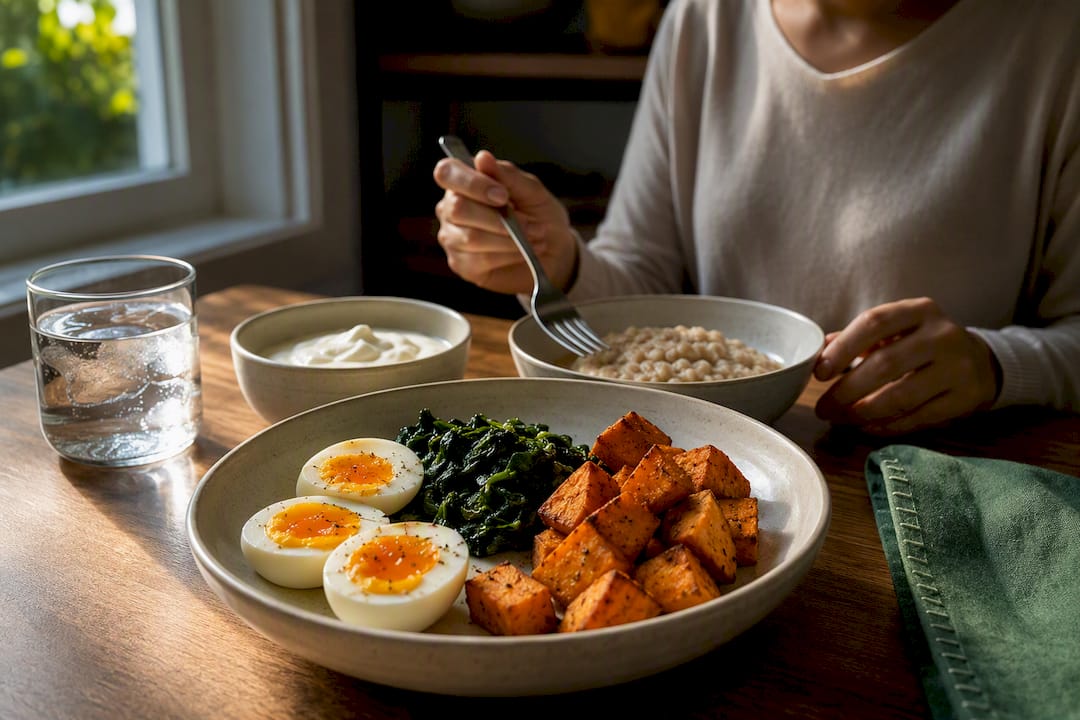
The right GLP-1 diet plan is simple in principle: eat protein first, keep meals small and nutrient-dense, and drink water steadily throughout the day. Hit roughly 1.0–1.5 g of protein per kg of body weight (or about 80–120 g daily), 21–38 g of fiber depending on your sex and aim for more than 2–3 liters of fluid. If nausea or constipation doesn’t quit, talk to your prescriber about slowing your dose increases rather than adjusting the medication on your own.
TL;DR:
- Consuming 80–120 grams of protein daily, with most of it before meals, is crucial to preserve muscle mass during rapid weight loss on GLP-1 medications.
- Small, nutrient-dense meals focused on protein, gentle carbs, and healthy fats help manage nausea and GI side effects caused by slowed digestion.
- Limiting fried, processed, and spicy foods reduces the risk of persistent nausea, reflux, and bloating, especially when gastric emptying is delayed.
- Increasing fiber gradually to 21–38 grams with steady hydration prevents constipation, which is common on GLP-1 therapy.
- Resistance training two to three times weekly supports muscle retention, enhances fat loss, and offsets lean tissue loss associated with rapid weight reduction.
Table of Contents
- How GLP-1 Medications Change Appetite and Digestion
- Which Foods Should You Eat on a GLP-1 Diet Plan?
- What Foods Trigger GLP-1 Side Effects?
- How Much Protein Do You Need on GLP-1 Medications?
- What Are the Fiber and Hydration Goals for GLP-1 Users?
- How Do You Build a Sample GLP-1 Meal Plan?
- How Do You Manage Nausea and Other GI Side Effects?
- How Do You Adjust Carbs to Avoid Low Blood Sugar?
- Do You Need Supplements on a GLP-1 Diet?
- When Should You Eat Relative to Your GLP-1 Dose?
- Can You Exercise Safely on a GLP-1 Diet?
- What Legacy Meds Gets Right About Combining Medication and Nutrition
- Get Personalized GLP-1 Support Without the Membership Fees
- Sources
- FAQ
How GLP-1 Medications Change Appetite and Digestion
GLP-1 receptor agonists like semaglutide and tirzepatide work by slowing gastric emptying and boosting satiety signals to your brain. Food sits in your stomach longer, so you feel full faster and stay full longer. That’s the appetite suppression that drives weight loss, but it comes with tradeoffs.
Slower gastric emptying is also why nausea, early fullness, reflux, and constipation are so common on these drugs. Your stomach is processing food at a fraction of its old speed, and heavy or fatty meals sit there fermenting instead of moving through.
Because you’re eating less overall, nutrient density stops being optional. When you’re only managing 1,200 to 1,500 calories a day, every bite needs to work harder.
- Reduced hunger and increased satiety mean smaller portions feel adequate
- Slowed gastric emptying causes nausea, bloating, and reflux in many patients, according to research on GI symptom management in GLP-1 patients
- Lower food volume raises the risk of missing key nutrients like protein, iron, and B vitamins
Which Foods Should You Eat on a GLP-1 Diet Plan?
The goal of any GLP-1 meal plan is packing the most nutrition into the smallest, most tolerable volume. Protein comes first, always, because it’s the nutrient most at risk when your appetite drops.
Eggs, canned tuna, cottage cheese, Greek yogurt, and whey or plant protein powders deliver substantial protein in a small serving that won’t overwhelm a slowed digestive system. For carbohydrates, gentler options like oatmeal, white rice, and roasted sweet potato tend to sit better than raw vegetables or anything heavy in insoluble fiber, especially early in treatment. Cooked vegetables, peeled when possible, are usually easier to tolerate than raw salads.
Small amounts of healthy fat, a drizzle of olive oil or a few slices of avocado, help meals taste better and support absorption of fat-soluble vitamins without adding the volume that triggers fullness too fast.
Pro Tip: Build every meal backward from protein. Decide your 20 to 30 grams of protein first, then add a fist-sized portion of gentle carbs and a small vegetable serving around it.
A workable template looks like this:
- Start with a sufficient portion of protein (such as 2 eggs plus Greek yogurt, or a scoop of protein powder in milk)
- Add an easily tolerated vegetable, cooked and peeled if raw versions cause discomfort
- Include a small gentle carbohydrate like oatmeal or a half-cup of rice
- Finish with 1 teaspoon of olive oil or a few avocado slices for flavor and satiety
What Foods Trigger GLP-1 Side Effects?
Fried food is the single biggest offender. High-fat meals slow digestion even further on top of what the medication is already doing, which is a recipe for nausea that can last hours.
Processed meats, very spicy dishes, alcohol, and sugary sodas or juices all tend to make GI symptoms worse. Large evening meals loaded with raw vegetables, seeds, or skins can cause bloating precisely when your gut is least equipped to handle bulk.
- Avoid: fried foods, fatty cuts of meat, processed deli meats, heavily spiced dishes, alcohol, and sugar-sweetened beverages
- Limit: large raw-vegetable servings at dinner, seeds and skins if they cause bloating
- Swap fried chicken for baked or grilled; swap soda for seltzer or fruit-infused water; eat fruit earlier in the day when your gut is more active
How Much Protein Do You Need on GLP-1 Medications?
The target is 1.0 to 1.5 grams of protein per kilogram of adjusted body weight, or roughly 80 to 120 grams per day for most adults, according to a joint clinical advisory on nutrition during GLP-1 therapy. That range exists for one reason: rapid weight loss without enough protein pulls disproportionately from muscle, not just fat.
By the Numbers: Adults on GLP-1 therapy should target 1.0–1.5 g of protein per kg of body weight daily, roughly 80–120 g for most people, to protect lean mass during weight loss.
Hitting that number when your appetite has collapsed takes strategy. Front-load a substantial portion of protein at the start of every meal before you touch anything else. Keep fortified protein shakes on hand for days when solid food feels like too much. Lean on lower-volume proteins, eggs, Greek yogurt, canned salmon, that pack more grams into less stomach space.
- Eat protein first, every meal, before carbs or vegetables
- Keep a fortified shake or protein-rich smoothie ready for low-appetite days
- Add resistance training two to three times a week; a consensus statement on GLP-1 supportive care links strength training with better preservation of lean mass during drug-assisted weight loss
What Are the Fiber and Hydration Goals for GLP-1 Users?
Constipation is one of the most common complaints on GLP-1 therapy, and the fix usually starts with fiber and water, not medication. Women should aim for 21 to 25 grams of fiber daily, men for 30 to 38 grams, or about 14 grams per 1,000 calories consumed according to dietary fiber research. Ramp up gradually. Jumping straight to the high end of that range can backfire and cause bloating in a gut that’s already moving slowly.
Fluids matter just as much. Aim for more than 2 to 3 liters daily, roughly 8 to 12 cups, sipped steadily rather than gulped at meals, which is exactly what a JAMA Internal Medicine overview for GLP-1 patients recommends for avoiding dehydration.
- Increase fiber gradually, starting with soluble sources like oats and cooked fruit
- Sip fluids throughout the day instead of drinking large amounts with meals
- Save higher-fiber vegetables for lunch, when digestion tends to be more active, and keep dinner lighter and more readily digestible
How Do You Build a Sample GLP-1 Meal Plan?
Two patterns work well, depending on your appetite. Pattern A is four to six small feedings spaced two to three hours apart. Pattern B is three main meals with one or two protein-rich snacks between them. Neither is objectively better. Pick whichever keeps you from skipping meals entirely.
Set your per-meal protein target by dividing your daily goal across however many times you eat, adjusting intake per meal depending on your total calorie goal and frequency of feedings.
A compressed three-day framework:
- Breakfast: Greek yogurt with berries and a tablespoon of nut butter (25 g protein)
- Lunch: Grilled chicken over rice with cooked carrots (30 g protein)
- Snack: Cottage cheese or a protein shake (15–20 g protein)
- Dinner: Baked salmon with mashed sweet potato and steamed green beans (25–30 g protein)
On injection days, appetite often drops hard for 24 to 48 hours. This is when survival foods matter most: plain crackers, ginger tea, a protein shake, or peeled fruit when solid food feels impossible. A dietitian-built semaglutide meal plan with day-by-day protein targets can take the guesswork out of these low-tolerance windows.
Keep cooking simple. Steaming and baking preserve nutrients and don’t add the fat that slows digestion further. Use your palm as a rough portion guide for protein, and don’t be afraid to lean on a fortified shake when a full meal feels out of reach.
How Do You Manage Nausea and Other GI Side Effects?
Nausea responds best to bland food, small portions, and slower eating. Crackers, toast, ginger tea, and sips of water in the first day or two after a dose increase tend to settle things faster than anything else, based on clinical observations from JAMA Internal Medicine. Skip anything fried or heavily seasoned until symptoms ease.
Reflux improves when you avoid large meals late at night, stay upright for at least 30 minutes after eating, and skip tight waistbands that add pressure on a full stomach. Constipation calls for a gradual fiber increase, consistent hydration, and a stool softener if your provider recommends one.
- Nausea: eat slowly, choose bland low-fat foods, keep ginger on hand
- Reflux: finish eating three hours before bed, stay upright after meals
- Constipation: raise fiber gradually and hydrate consistently
Pro Tip: If symptoms stick around past the first few days, don’t tough it out alone. A slower dose escalation schedule discussed with your prescriber is often more effective than any diet tweak.
How Do You Adjust Carbs to Avoid Low Blood Sugar?
GLP-1 medications lower blood sugar partly by slowing carbohydrate absorption, which is generally good news for people with insulin resistance. But it also raises the risk of hypoglycemia, especially if you’re skipping meals, drinking alcohol, or taking the medication alongside insulin or a sulfonylurea.
The fix isn’t cutting carbs to zero. It’s distributing them evenly and never going more than four to five hours without eating something that includes both carbohydrate and protein. A slice of whole-grain toast with peanut butter, or oatmeal with a scoop of protein powder, releases glucose more slowly than refined carbs alone and gives you a buffer against a crash.
Watch for the classic warning signs: shakiness, sudden sweating, irritability, or lightheadedness between meals. If you notice a pattern of these symptoms at a particular time of day, that’s usually a sign your carb distribution needs adjusting, not that you need to eat less overall.
If you’re on a combination regimen that includes insulin, keep fast-acting glucose sources, glucose tablets or juice, within reach, particularly during the first few weeks after a dose change when your body is still adjusting. People managing type 2 diabetes alongside a GLP-1 should loop their prescriber in on any pattern of low readings rather than adjusting insulin doses independently. Consistent meal timing does more to stabilize blood sugar on these medications than any single food choice.
Do You Need Supplements on a GLP-1 Diet?
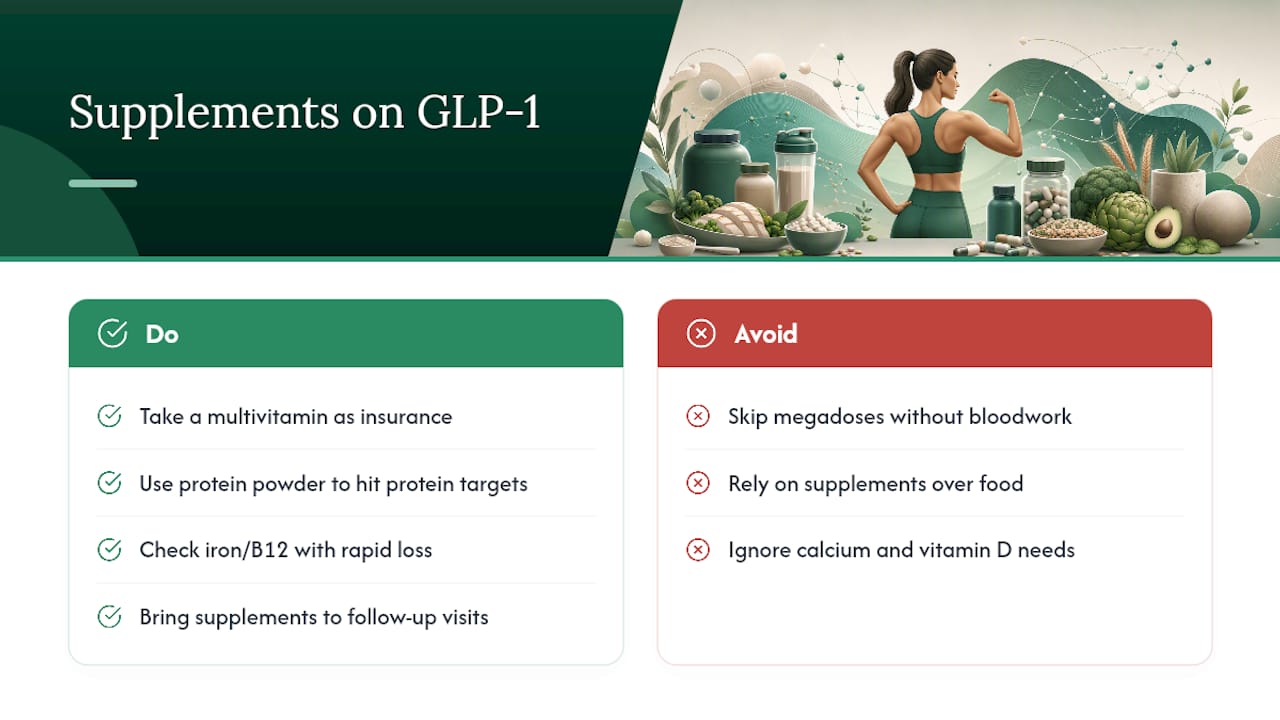
Reduced food intake makes certain nutrient shortfalls more likely, particularly iron, vitamin B12, vitamin D, and calcium, since these depend on eating enough varied food to hit baseline levels. A multivitamin is a reasonable insurance policy for most people on a calorie-restricted GLP-1 plan, but it shouldn’t replace an effort to get nutrients from food first.
Protein powder deserves a mention here too, not as a supplement in the traditional sense, but as a practical tool for hitting your daily protein target when solid food volume is limited. Whey, casein, and plant-based blends all work. Pick whichever sits best with your digestion.
If you’re losing weight quickly or have a history of anemia, ask your provider about checking iron and B12 levels every few months. Bariatric surgery patients have taught the field a lot about this: rapid weight loss combined with reduced intake predictably drains certain nutrient stores over time, and GLP-1 users face a milder version of the same risk.
Calcium and vitamin D matter more than people expect, especially if dairy intake drops because of taste changes or GI discomfort, a side effect some patients report on these medications. A basic multivitamin plus a separate calcium supplement if dairy is limited covers most bases. Skip megadoses of anything unless your bloodwork specifically calls for it. More isn’t better here, and some fat-soluble vitamins can build up to harmful levels if you overdo it. Bring your supplement list to every follow-up visit so your provider can flag anything worth adjusting.
When Should You Eat Relative to Your GLP-1 Dose?
Timing matters less for injectable GLP-1s like weekly semaglutide or tirzepatide than it does for daily oral formulations, but a few patterns hold up across both. Eating a large, heavy meal right before or shortly after a dose increase tends to intensify nausea, since your gastric emptying is already at its slowest point in that window.
Many patients find their appetite dips hardest in the 24 to 48 hours after a shot. Planning lighter, more frequent meals during that stretch, rather than trying to force down a normal-sized dinner, tends to go more smoothly. This is also when bland, low-volume foods earn their keep.
For oral GLP-1 formulations that require fasting before and after the dose, following the specific timing instructions on the label matters for absorption, not just comfort. Injectable users don’t face that constraint, but they still benefit from avoiding rich meals in the hours immediately surrounding dosing day.
Beyond dosing day itself, consistent meal timing throughout the week, roughly the same eating windows each day, helps stabilize both appetite and blood sugar responses. Erratic eating patterns tend to make both nausea and energy crashes worse, regardless of what’s actually on the plate.
Can You Exercise Safely on a GLP-1 Diet?
Yes, and resistance training in particular is one of the most protective things you can do while losing weight on a GLP-1. Rapid weight loss without a strength-training stimulus pulls harder on muscle mass, and a consensus statement on GLP-1 supportive care specifically recommends pairing these medications with structured strength work to protect lean tissue.
Two to three sessions a week of basic resistance training, body weight moves, resistance bands, or weights, is enough to make a measurable difference. You don’t need a gym membership or a complicated program. Squats, push-ups, and rows done consistently outperform an elaborate routine done sporadically.

Light cardio, walking especially, pairs well with GLP-1 therapy and rarely triggers GI symptoms the way intense exercise on a full stomach can. Save harder cardio sessions for a few hours after eating rather than right after a meal, since intense movement on a slow-emptying stomach is a common trigger for nausea.
Hydrate more on workout days. Between the fluid demands of exercise and the baseline hydration target for GLP-1 users, it’s easy to fall short without a deliberate plan to drink more.
What Legacy Meds Gets Right About Combining Medication and Nutrition
The clinical advisory research is consistent on one point: GLP-1 therapy works best paired with structured nutrition and lifestyle support, not medication alone. Legacy Meds builds its model around that finding, pairing medical assessment with ongoing coaching so patients have somewhere to turn when appetite drops or side effects flare, rather than guessing alone. Patients report averaging an 18% reduction in body weight through this combined approach, with unlimited access to coaching support built into the program rather than sold as an add-on. That structure matters more than most people expect once the first few weeks of dose adjustments hit.
— Bryan
Get Personalized GLP-1 Support Without the Membership Fees
This service provides direct access to prescription GLP-1 medications without insurance paperwork or membership fees that gate access at many clinics. Patients receive a provider assessment, a prescription pathway if qualified, and unlimited coaching to help navigate protein, fiber, and side-effect questions.
Here’s what to expect: you complete an online intake, a licensed provider reviews your health history and determines whether semaglutide or tirzepatide fits your situation, and if approved, your medication ships directly to you. Coaching support continues for as long as you’re a patient, which matters most in those first weeks when appetite swings and GI symptoms are hardest to manage on your own. Check the weight loss FAQ for specifics on pricing and what’s included, or start your online assessment today to see if you qualify.
This article is general information, not a substitute for advice from a qualified doctor. Consult a qualified healthcare professional about your own circumstances before acting on anything here.
Sources
- Dietary Recommendations for the Management of Gastrointestinal Symptoms in Patients Treated with GLP-1 Receptor Agonist
- I Am Taking a GLP-1 Weight-Loss Medication—What Should I Know? | JAMA Internal Medicine
FAQ
What Is the Best Diet for GLP-1 Users?
A protein-first, nutrient-dense diet with small frequent meals works best: aim for 80–120 g of protein, 21–38 g of fiber, and more than 2–3 liters of fluid daily while limiting fried and sugary foods.
How Much Weight Can You Lose on GLP-1 in Three Months?
Clinical trials show GLP-1 medications produce weight reductions of roughly 5–18% depending on the drug and dose, according to research on GLP-1 therapy for obesity, though real-world results vary with adherence and individual response.
How Do You Speed Up Weight Loss on a GLP-1?
Prioritizing protein at every meal, hitting your fiber and fluid targets, and adding resistance training two to three times weekly all support steadier fat loss and help preserve the muscle mass that keeps your metabolism working.
What Do You Wish You Knew Before Starting a GLP-1?
Most patients underestimate how much appetite drops in the first weeks and how quickly muscle loss can outpace fat loss without deliberate protein intake and strength training built into the plan from day one.