
TL;DR
- DASH stands for Dietary Approaches to Stop Hypertension. It asks you to eat 4–5 servings of vegetables, 4–5 servings of fruit, 6–8 servings of whole grains, 6 or fewer servings of lean protein, and 2–3 servings of low-fat dairy daily, per Mount Nittany Health.
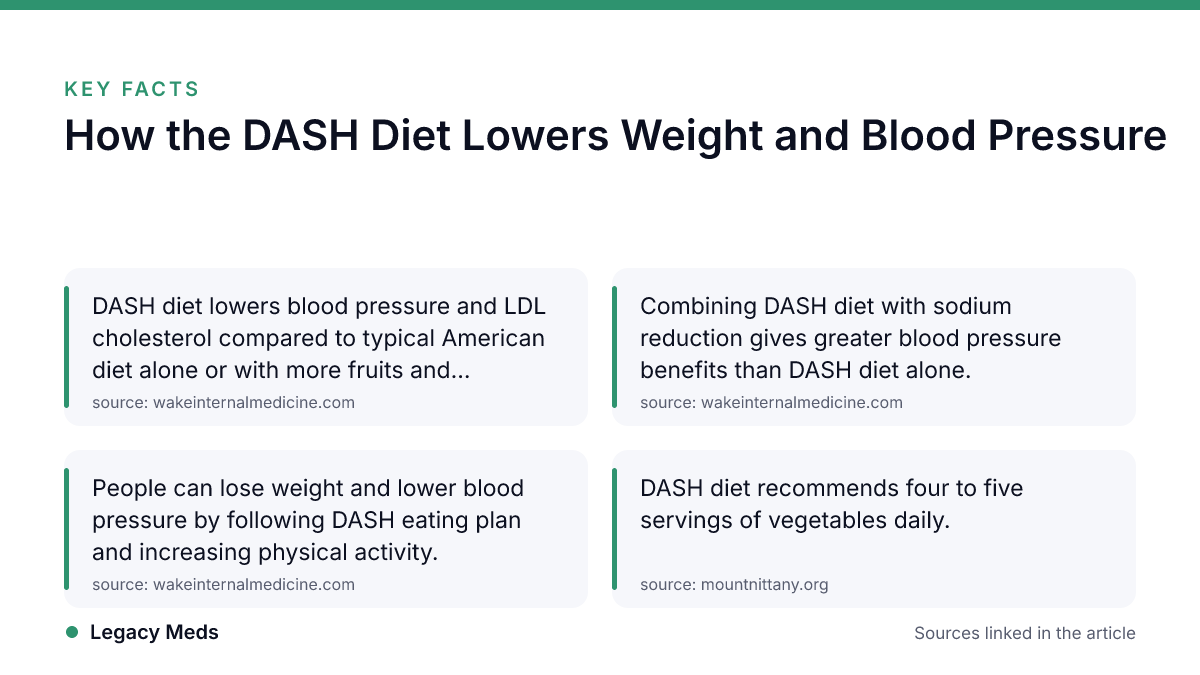
- Yes, you can lose weight on DASH. It was designed to cut blood pressure, but pairing it with more physical activity produces both weight loss and lower blood pressure, according to Wake Internal Medicine.
- Cutting sodium on top of DASH produces a bigger blood pressure drop than DASH alone.
- DASH is a food pattern, not a medication. People who've plateaued on diet changes alone often see more weight loss with clinician-guided GLP-1 care layered on top.
- The two aren't competitors. Most patients on GLP-1 therapy still need a real eating framework, and DASH is one of the few with decades of clinical backing behind it.
If you've typed "dash diet" into Google wondering whether it actually moves the scale or just your blood pressure cuff, here's the direct answer. DASH was built to stop hypertension, not to drive weight loss. But research on the plan shows people following it while increasing physical activity can lose weight and lower blood pressure at the same time, per Wake Internal Medicine. It works by restructuring what's on your plate rather than by restricting calories outright. More produce and whole grains, less sodium and processed protein. That's why it behaves very differently from a straight calorie-deficit diet or a GLP-1 prescription.

Table of Contents
- What is the DASH diet, and why do doctors recommend it?
- Can you lose weight on a DASH diet?
- How does DASH diet weight loss compare to GLP-1 medications?
- How long before you see results on DASH?
- Can you combine DASH with GLP-1 weight loss medication?
- What does a DASH diet food list and meal plan actually look like?
- Next step
- Frequently asked questions
What is the DASH diet, and why do doctors recommend it?
DASH is a structured eating pattern developed to lower blood pressure without medication. It does that by emphasizing produce, whole grains, and lean protein while sharply limiting sodium and saturated fat. No calorie counting. No eliminated food groups. You hit daily serving targets across five categories, and the rest sorts itself out.
| DASH component | Daily target | Source |
|---|---|---|
| Vegetables | 4–5 servings | Mount Nittany Health |
| Fruits | 4–5 servings | Mount Nittany Health |
| Whole grains | 6–8 servings | Mount Nittany Health |
| Lean protein (meat, poultry, fish) | 6 or fewer servings | Mount Nittany Health |
| Low-fat dairy | 2–3 servings | Mount Nittany Health |
| Blood pressure & LDL effect | Lower than typical American diet | Wake Internal Medicine |
| Sodium + DASH combined | Greater BP benefit than DASH alone | Wake Internal Medicine |
Here's the part most people miss about those numbers. A "serving" of grains is one slice of bread or half a cup of cooked rice, not the two cups of pasta on a restaurant plate. Six to eight servings sounds enormous until you realize a sandwich and a side of rice already account for four of them. The same goes for protein: six or fewer servings caps out well below what most Americans eat, because a single restaurant chicken breast can run two to three servings on its own.
Doctors like DASH because it has a large body of clinical research behind it instead of anecdote and marketing. The Pennington Nutrition Series booklet and the Kaiser Permanente DASH eating plan guide are built around the identical serving structure. That consistency tells you something. This isn't a diet one clinic invented to sell a book; it's a standard.
Can you lose weight on a DASH diet?
Yes, but weight loss on DASH is a side effect of the pattern, not its design goal. Research cited by Wake Internal Medicine shows people can lose weight and lower blood pressure by following the DASH eating plan and increasing physical activity. The combination is what matters. DASH eaten at the same calorie level as your current diet mostly shifts food quality rather than quantity.
That distinction matters if you came here looking for fast weight loss. DASH isn't built for speed. It's built for sustainability and cardiovascular health, and the weight tends to come off gradually as you swap processed, high-sodium food for produce and grains that are naturally less calorie-dense. If you want the scale to move in two weeks, DASH alone will frustrate you. If you want a pattern you can still be eating in three years while protecting your blood pressure, it's one of the better-studied options available.
Pro tip: Track blood pressure, not just the scale, for the first month. In our experience, plenty of patients see their systolic number move before their weight does. That's DASH working as designed, and it's a reason to stay the course instead of quitting at week three.
How does DASH diet weight loss compare to GLP-1 medications?
DASH changes what you eat. GLP-1 medications change how hungry you feel while you eat it. For a lot of patients, that second lever moves more weight more consistently.
DASH depends entirely on your ability to hit serving targets day after day. That works beautifully for people who are motivated by structure. It stalls for people who've already spent years trying to "eat better" without lasting results, usually because hunger wins by 8 p.m. GLP-1 therapy acts on appetite-regulating hormones, which is why patients who plateaued on diet-only approaches often see progress start again once medication is added.
They aren't mutually exclusive. In practice they work best stacked: DASH gives you a food framework that becomes genuinely easy to follow once a GLP-1 medication has turned down the appetite noise. If you're weighing a structured diet program against medication, our breakdown in Weight Watchers vs GLP-1: Which Actually Works? compares a points-based plan to pharmacological treatment for long-term results.
Show the math: Say you weigh 200 lbs and currently eat around 2,400 calories a day of fairly processed food. Shifting to DASH portions while cutting soda, chips, and fast food often lands you around 1,900 calories a day without consciously dieting. That's a 500-calorie daily deficit. Using the standard estimate that roughly 3,500 stored calories equal about one pound of body fat: 500 × 7 = 3,500 calories, or about one pound per week, roughly four pounds in a month. Treat that as an illustrative scenario rather than a promise, since activity level, starting weight, and consistency all shift the result. Re-run it with your own numbers: take your current daily intake, subtract your estimated DASH intake, multiply by 7, divide by 3,500. If the answer comes out under half a pound a week, your current diet probably isn't the main lever. For the mechanics of building that deficit without constant hunger, our guide on building a calorie deficit diet that sticks goes deeper.
How long before you see results on DASH?
Blood pressure usually responds before body weight does. In our experience, patients tend to notice measurable movement in their systolic readings within the first few weeks of consistent DASH eating, especially once sodium comes down alongside it. Weight tends to lag, showing up gradually over the following month or two as the lower calorie density compounds. That mirrors what we see with GLP-1 patients: in our piece on what month one really looks like on GLP-1 therapy, the first few weeks are mostly appetite and habit shifts, with the scale catching up afterward.
A few things that speed up the timeline:
- Cut sodium alongside DASH. Combining the two produces a bigger blood pressure benefit than DASH eating alone, and it's the single highest-return addition to the plan.
- Add regular activity. This is the variable research ties directly to actual weight loss on DASH, not just blood pressure improvement.
- Prep protein and produce on one set day. Roast a tray of vegetables and cook a batch of chicken or salmon Sunday afternoon so the plan survives a busy Tuesday night instead of folding into takeout.
- Track two numbers, not one. Weight and blood pressure, so you can see progress in the weeks the scale sits still.
Pro tip: Don't judge DASH by week two. Give it a full eight weeks before deciding whether it's working for your body, because the blood pressure response often runs several weeks ahead of the weight response.
Can you combine DASH with GLP-1 weight loss medication?
Yes, and for most patients it beats either approach alone. DASH supplies the nutrient-dense structure. GLP-1 medication reduces the appetite and cravings that make sticking to any diet the hardest part. There's no known conflict between the two. If anything, appetite suppression makes it easier to stay inside DASH's lean protein and dairy limits instead of blowing past them.
A few practical considerations if you're layering them:
- Protein can drop too low. Appetite suppression is powerful enough that some patients drift to two or three protein servings a day without noticing. Aim to stay close to DASH's six-or-fewer target rather than skipping meals entirely, and front-load protein at breakfast when appetite is usually highest.
- Hydration and fiber matter more. Both DASH and GLP-1 medications shift digestive patterns, and the produce-heavy structure of DASH helps offset the GI side effects some patients report early on.
- Tell your prescribing provider about major diet changes. Sodium reduction especially, since blood pressure medication dosing sometimes needs adjusting once DASH starts working and readings fall.
If your care needs extend past weight loss, whether that's blood pressure medication, mental health, or other ongoing treatment, a telehealth provider like FitRx can coordinate that online.
What does a DASH diet food list and meal plan actually look like?
Simpler than most dieters expect. Whole, minimally processed foods across the five categories above, with sodium as the one thing you actively limit.
A realistic day: oatmeal with berries and a splash of low-fat milk at breakfast. A vegetable-forward salad with grilled chicken at lunch. An apple and a handful of unsalted nuts mid-afternoon. Baked salmon with roasted vegetables and quinoa or brown rice at dinner. That single day covers your fruit, vegetable, whole grain, protein, and dairy targets without one processed item.
The quiet killer on DASH is the condiment shelf. Patients nail their produce servings and then pour on soy sauce, jarred pasta sauce, bottled dressing, and deli meat, which is where most of the sodium in an otherwise clean day comes from. Swap in vinegar, citrus, garlic, and dried herbs, and you solve the biggest leak in the plan without changing a single meal.
If you're hunting for a free DASH meal plan PDF or printable food list, the reputable versions all follow the same serving structure outlined above, including the Kaiser Permanente DASH eating plan guide and the Diabetes Food Hub's DASH eating pattern overview. You're not missing a secret framework. You're just looking for recipes.
Pro tip: Build your grocery list around the serving categories, not specific recipes. Buy whatever vegetables and fruit are in season and cheap that week, then build meals around what's in the cart. It keeps the plan affordable and kills the "I don't have the right ingredients" excuse before it derails a week.
Next step
DASH is a strong foundation if blood pressure and food quality are your main concerns, and it costs nothing to start. You don't need a prescription to eat more vegetables. But if you've been eating well for months and the scale still won't move, that's usually a sign your body needs pharmacological help rather than more willpower. Legacy Meds' online quiz takes a few minutes and tells you whether clinician-guided GLP-1 care, including injections starting at $159 or dissolvable tablets starting at $249, makes sense alongside the eating changes you're already making. If you're paying out of pocket, using HSA or FSA funds for weight loss injections can take some of the sting out of the cost.
Frequently asked questions
What does DASH stand for?
Dietary Approaches to Stop Hypertension. It's a clinically studied eating pattern developed specifically to lower blood pressure through food choices rather than medication alone.
Is DASH the same as a low-sodium diet?
No. DASH is broader than sodium restriction. It's a full eating pattern covering vegetables, fruit, whole grains, lean protein, and dairy, and research shows combining DASH with sodium reduction produces a bigger blood pressure benefit than DASH alone.
Do I need a doctor's approval to start DASH?
You don't need a prescription to eat more vegetables and whole grains. But if you're on blood pressure medication or considering weight loss medication alongside DASH, loop your provider in so dosing can be adjusted as your numbers improve. If cost without insurance is the barrier, getting weight loss medication online without insurance is often more accessible than patients expect.