

Yes, you can use HSA or FSA funds for prescription weight-loss medication, including GLP-1 drugs like Wegovy and Zepbound, but only when a provider prescribes them to treat a diagnosed disease such as obesity, type 2 diabetes, or heart disease. A prescription alone isn’t a guarantee. Your plan administrator will likely want a Letter of Medical Necessity and an itemized receipt before releasing funds or approving reimbursement, so treat their paperwork process as the real gatekeeper, not the IRS rule itself.
TL;DR:
- HSA and FSA funds can cover prescription weight-loss medications like Wegovy and Zepbound only when a healthcare provider prescribes them for a diagnosed disease such as obesity, diabetes, or heart disease.
- Proper documentation, including a detailed Letter of Medical Necessity and an itemized receipt matching the diagnosis, is essential to avoid claim denial.
- Confirm your plan’s rules beforehand, especially whether your account allows direct pharmacy charges or requires reimbursement, and ensure the diagnosis code aligns with IRS-recognized conditions.
- In ongoing treatments, renew the Letter of Medical Necessity before the original expires to prevent delays or denials in reimbursement.
- The tax-free advantage of HSA over FSA is most notable for long-term GLP-1 therapy, due to indefinite rollover and the requirement of a high-deductible health plan for HSA eligibility.
Table of Contents
- HSA FSA Weight Loss Medication Rules: What the IRS Actually Says
- What Documentation Your Administrator Will Actually Request
- The Step-by-Step Workflow for Paying With HSA or FSA Funds
- HSA vs. FSA: Which One Actually Works Better for GLP-1s
- Real Scenarios: What Gets Approved and What Gets Denied
- A Practical Note on Playing It Safe With Tax-Advantaged Accounts
- Getting the Prescription and Paperwork Right From the Start
- Where to Verify These Rules Yourself
- Sources
- FAQ
HSA FSA Weight Loss Medication Rules: What the IRS Actually Says
The IRS doesn’t care what a drug is marketed as. It cares what it treats. Under IRS guidance on medical expenses related to nutrition, wellness, and general health, weight-loss treatment qualifies as a reimbursable expense from an HSA, FSA, Archer MSA, or HRA only when it’s used to treat a diagnosed disease like obesity, hypertension, or heart disease. Weight loss pursued for appearance or general health doesn’t clear that bar.
This is where GLP-1 drugs get an advantage most over-the-counter supplements never had. Wegovy (semaglutide) and Zepbound (tirzepatide) carry FDA approval specifically for chronic weight management in adults with obesity, or adults who are overweight with at least one weight-related condition. Zepbound’s label goes further, covering moderate-to-severe obstructive sleep apnea in adults with obesity.
That labeling matters because it gives your provider’s diagnosis something concrete to point to. Still, a written prescription is necessary but not automatically sufficient:
- Your diagnosis code has to match a condition the IRS recognizes as disease-based, not cosmetic.
- Your plan administrator reviews the paperwork independently of what your pharmacy or doctor already approved.
- FSAFEDS lists weight-loss drugs and programs as eligible with documentation, while flatly excluding gym dues and general wellness spending.
What Documentation Your Administrator Will Actually Request
Most denials trace back to missing paperwork, not ineligible medication. Get ahead of it before you fill the first prescription.
Your Letter of Medical Necessity (LMN) needs to include:
- Your name and identifying information as the patient.
- The diagnosed condition (obesity, diabetes, or another qualifying disease).
- A description of the treatment, including the specific drug, dosage, and frequency.
- The expected duration of treatment.
- Your provider’s name, signature, and the date.
FSAFEDS specifies these exact elements for a reason: a letter missing dosage or duration is one of the most common triggers for a follow-up request or outright denial. Get the full letter before you buy, not after your administrator asks for it.
An itemized invoice matters just as much as the LMN. A credit card slip showing a pharmacy charge tells your administrator nothing about what you bought. You need a receipt that separates the medication cost, the date of service, and the provider or pharmacy name, matching what IRS recordkeeping guidance requires the account holder to retain.
Pro Tip: If you’re starting a GLP-1 prescription you expect to renew monthly, ask your provider to write the LMN for the full expected treatment duration up front. Renewing it every few weeks creates unnecessary friction with your administrator.
The Step-by-Step Workflow for Paying With HSA or FSA Funds
Here’s the order that actually avoids denials and delays:
- Confirm your account’s rules first. Some HSA debit cards accept pharmacy charges directly; some FSAs, especially limited-purpose ones tied to an HSA, exclude general medical expenses entirely. Check your plan document before you assume anything.
- Get the prescription and LMN together. Ask your provider to issue both at the same visit so the diagnosis and treatment plan are documented in one place.
- Request an itemized invoice from the pharmacy or telehealth provider. Make sure medication cost, provider visit fees, and shipping are broken out as separate line items, not bundled into one total.
- Pay and file. If your HSA or FSA card is accepted at checkout, use it directly. If not, pay out-of-pocket and submit a reimbursement claim with your itemized invoice and LMN attached.
Keep every document. IRS recordkeeping rules put the burden of proof on you, the account holder, not the administrator, even years after a claim gets approved.
If a claim comes back denied:
- Request the specific reason in writing from your administrator.
- Resubmit with a corrected or expanded LMN that addresses the gap.
- Include a note from your provider confirming the diagnosis and treatment necessity.
Most denials get resolved on the second submission once the paperwork actually matches what the administrator asked for.
HSA vs. FSA: Which One Actually Works Better for GLP-1s
The two accounts operate under different rules, and that difference shows up the moment you try to pay for an expensive monthly prescription.
- Tax treatment: HSA distributions for qualified medical expenses are tax-free, and the money is yours permanently. FSA reimbursements are also tax-free, but the funds belong to your employer’s plan structure.
- Eligibility to contribute: You need a high-deductible health plan (HDHP) to open or fund an HSA. FSAs come with employer-sponsored coverage and don’t require an HDHP, per IRS Publication 969.
- Rollover: HSA balances carry over indefinitely. Most FSAs operate on a use-it-or-lose-it calendar, though some allow a grace period or limited carryover.
- Plan restrictions: A limited-purpose FSA, often paired with an HSA, may only cover dental and vision, excluding prescription weight-loss drugs entirely. Read your specific plan document, not the general FSA rules.
If you’re on a GLP-1 regimen expected to last a year or more, an HSA’s rollover feature makes it the more forgiving account for ongoing costs. An FSA works fine if you’re confident you’ll use the full election within the plan year.
Real Scenarios: What Gets Approved and What Gets Denied
Scenario A, likely reimbursable: A patient is diagnosed with obesity (BMI over 30) and prescribed semaglutide. Their provider issues an LMN covering the diagnosis, dosage, and a six-month treatment duration. The pharmacy provides an itemized receipt listing the drug name and cost separately from any consultation fee. This claim has everything an administrator is trained to look for.
Scenario B, likely denied: A patient asks for tirzepatide to lose ten pounds before an event, with no documented diagnosis of obesity or a related condition. Even though the drug is the same, there’s no disease being treated on paper, and the IRS specifically excludes weight loss pursued for appearance alone.
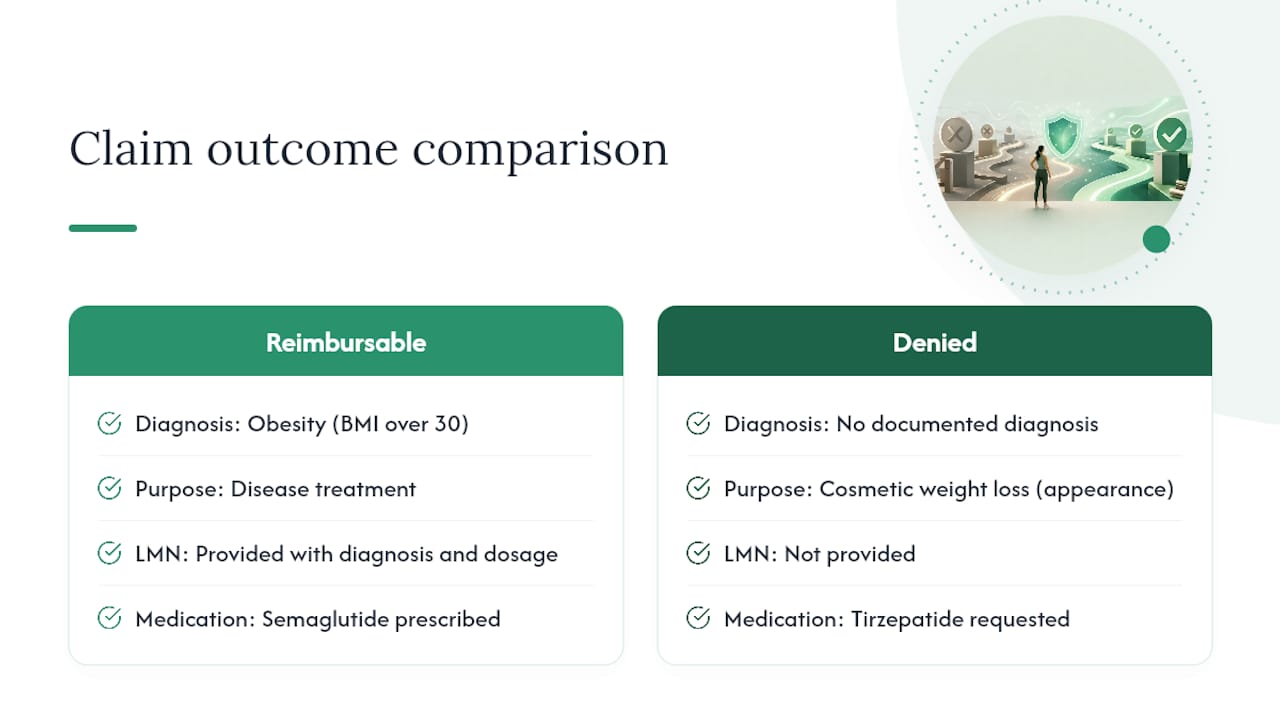
The difference between those two outcomes is entirely documentation, not the medication itself. This is where a structured telehealth process helps. Legacymeds builds its program around clear clinical eligibility criteria, and patients working through a documented provider assessment tend to leave with the diagnosis and treatment record their HSA or FSA administrator will ask for.
Pro Tip: Ask your provider to renew your LMN before the original duration expires, not after. A lapsed letter can stall reimbursement on an otherwise eligible claim.
For ongoing GLP-1 therapy, keep a running file: prescription, diagnosis note, LMN, itemized receipts, and proof of payment for every fill as outlined in clinical guidance on managing common GLP-1 GI side effects.
A Practical Note on Playing It Safe With Tax-Advantaged Accounts
The safest approach with GLP-1 reimbursement is boring on purpose: get the full documentation before you spend, not after an administrator flags the claim. Congress has floated proposals to expand what counts as a qualified expense, but pending bill language isn’t law, and building a claim around a bill that hasn’t passed is a bad bet. When your situation involves a limited-purpose FSA, a mid-year plan change, or a denial you don’t understand, a quick call to your plan administrator or a tax professional beats guessing.
— Bryan
Getting the Prescription and Paperwork Right From the Start
Most of the friction in using HSA or FSA funds for weight-loss medication doesn’t come from the IRS. It comes from incomplete paperwork submitted after the fact. Legacymeds runs an online provider assessment that documents your diagnosis at the point of prescribing, not weeks later when your administrator asks for proof.
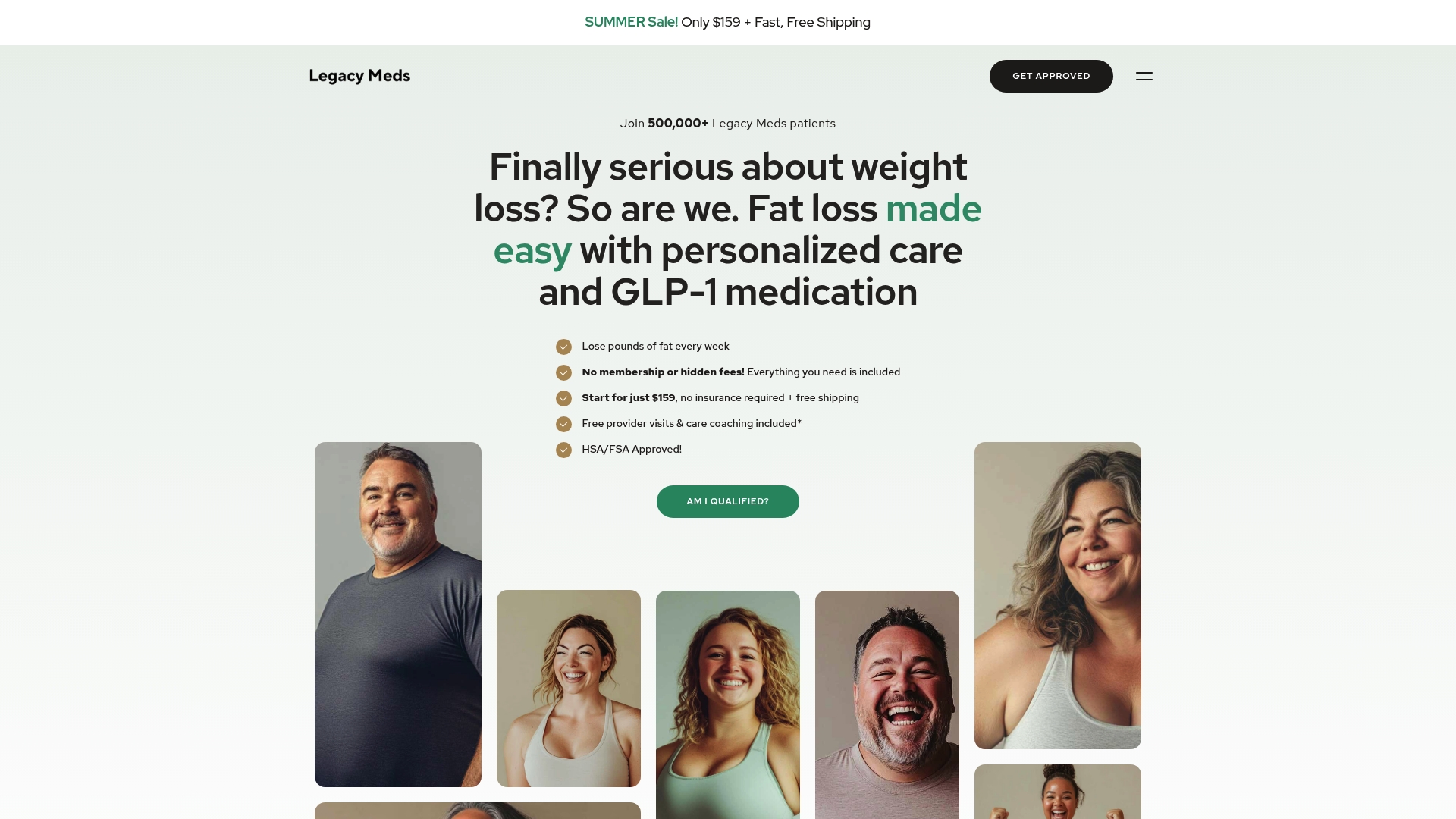
An online provider offers GLP-1 injections, GLP-1 tablets, and a semaglutide program, along with Wegovy® and Zepbound® options, without insurance requirements or membership fees. The service includes a provider visit and ongoing guidance, plus itemized invoices needed for HSA or FSA claims. Before you start, confirm with your plan administrator whether your account covers prescription weight-loss drugs directly, since rules vary by employer and plan type. Once you know your account supports it, you can start your assessment at Legacymeds and get a documented prescription plan built around your specific diagnosis.
Where to Verify These Rules Yourself
- IRS FAQ on medical expenses related to nutrition, wellness, and general health
- IRS Publication 502, Medical and Dental Expenses
- IRS Publication 969, Health Savings Accounts and Other Tax-Favored Health Plans
- FSAFEDS Letter of Medical Necessity guidance
- FSAFEDS eligible expenses table
This article is general information, not a substitute for advice from a qualified doctor. Consult a qualified healthcare professional about your own circumstances before acting on anything here.
Sources
- Frequently asked questions about medical expenses related to nutrition, wellness and general health | Internal Revenue Service
- Publication 969 (Health Savings Accounts and Other Tax-Favored Health Plans) | Internal Revenue Service
- FAQs - FSAFEDS
- FDA press materials on semaglutide approval
FAQ
Can I pay for weight-loss meds with my HSA?
Yes, when the medication treats a diagnosed disease such as obesity or type 2 diabetes and you have supporting documentation. The IRS treats weight-loss treatment as eligible when it addresses a specific medical condition rather than general appearance goals.
Which weight-loss pills are FSA-eligible?
Prescription weight-loss drugs, including GLP-1 medications prescribed for a diagnosed condition, are generally FSA-eligible with a Letter of Medical Necessity. Over-the-counter diet pills and supplements typically aren’t covered under the same FSAFEDS eligibility rules.
Can I use HSA funds to pay for Zepbound?
Yes, Zepbound is FDA-approved for chronic weight management in adults with obesity or overweight plus a related condition, which supports medical necessity documentation for HSA use. You’ll still need an itemized receipt and, in most cases, an LMN from your provider.
Does FSA cover GLP-1 drugs for weight loss?
FSA plans commonly cover GLP-1 drugs like semaglutide and tirzepatide when prescribed for a diagnosed condition, though limited-purpose FSAs tied to dental and vision may exclude them entirely. Check your specific plan document, since FSA coverage rules vary by employer.
Does Legacymeds provide the documentation my HSA/FSA administrator needs?
Legacymeds’s provider assessment documents your diagnosis at prescribing time and provides itemized invoices with each fill. Pricing starts from $159 per month for the semaglutide program, with current details available on the Legacymeds site.