
The GLP-1 medication class centers on a handful of active ingredients: semaglutide, liraglutide, dulaglutide, exenatide, lixisenatide, and the dual GIP/GLP-1 agonist tirzepatide. As of 2026, four of these agents carry FDA approval specifically for chronic weight management: Wegovy, Zepbound, Saxenda, and the oral drug Foundayo. The rest are approved for type 2 diabetes, though some get prescribed off-label for weight loss. The categorized list below breaks down formulations, dosing schedules, and approved uses for each one.
TL;DR:
- Tirzepatide generally produces larger average weight losses than semaglutide, mainly due to its dual GLP-1 and GIP receptor activity.
- Once-weekly injections tend to lead to better adherence and more consistent results than daily or multiple daily dosing regimens.
- Patients with a family history of thyroid cancer or with pancreatitis or severe gastroparesis should avoid GLP-1 medications due to safety risks.
- Supervision and personalized dosing adjustments by a healthcare provider are more influential on success than simply choosing the “strongest” drug.
- Generic options like liraglutide and exenatide may reduce out-of-pocket costs, especially when purchased through providers offering cash-pay plans.
Table of Contents
- Glp-1 Medication List by Active Ingredient
- How GLP-1 and Dual-Agonist Drugs Differ in Practice
- Safety Warnings, Contraindications, and What to Tell Your Doctor
- Getting Supervised GLP-1 Care Through Legacymeds
- Why the Real Question Isn’t Which Drug Is “Best”
- Start Your GLP-1 Program With Legacymeds
- Sources
- FAQ
Glp-1 Medication List by Active Ingredient
Every GLP-1 drug on the market traces back to one of these active ingredients. Brand names differ, but the molecule (and often the manufacturer) determines what a drug is approved for and how it’s dosed.
- Semaglutide comes in three forms: Ozempic (injectable, once weekly, approved for type 2 diabetes), Wegovy (injectable, once weekly, approved for chronic weight management and cardiovascular risk reduction), and Rybelsus (oral, once daily, approved for type 2 diabetes). Semaglutide is a human GLP-1 backbone peptide, meaning its structure closely mirrors the body’s own version of the hormone.
- Tirzepatide is sold as Mounjaro (injectable, once weekly, type 2 diabetes) and Zepbound (injectable, once weekly, chronic weight management and moderate to severe obstructive sleep apnea). Unlike the others on this list, tirzepatide activates two receptors at once: GLP-1 and GIP.
- Liraglutide appears as Victoza (injectable, once daily, type 2 diabetes) and Saxenda (injectable, once daily, chronic weight management). A generic version of the once-daily liraglutide injection received FDA approval that lowered the cost barrier for patients paying out of pocket.
- Dulaglutide, marketed as Trulicity, is an injectable dosed once weekly and approved for type 2 diabetes, with some data supporting cardiovascular risk reduction in that population.
- Exenatide exists in two formulations: Byetta (injectable, twice daily) and Bydureon (injectable, once weekly, extended-release). Both are exendin-4 backbone agents, a structurally distinct family from semaglutide and liraglutide, and both are approved for type 2 diabetes. Exenatide is also the first GLP-1 to get a generic competitor, alongside liraglutide.
- Lixisenatide, sold as Adlyxin, is an injectable dosed once daily for type 2 diabetes. It’s less commonly prescribed today than the newer weekly agents, largely because of the daily injection burden.
- Orforglipron, branded as Foundayo, is the newest entry: an oral, nonpeptide GLP-1 agonist approved for chronic weight management. Because it isn’t a peptide, it doesn’t require the injection or the strict fasting rules that older oral options like Rybelsus need.
The StatPearls clinical overview groups these agents into two structural families: human GLP-1 backbone drugs (semaglutide, liraglutide, dulaglutide) and exendin-4 backbone drugs (exenatide, lixisenatide). Tirzepatide and orforglipron don’t fit neatly into either bucket, which is part of why researchers treat them as a distinct next generation of therapy.
How GLP-1 and Dual-Agonist Drugs Differ in Practice
The biggest split in this drug class isn’t brand versus brand. It’s mechanism: selective GLP-1 agonists versus the dual GIP/GLP-1 agonism found in tirzepatide.
Selective agents like semaglutide and liraglutide bind only the GLP-1 receptor, slowing gastric emptying, increasing insulin secretion, and suppressing appetite signals in the brain. Tirzepatide adds a second target. Its dual receptor activity is linked to greater average weight loss and glycemic improvement compared with selective GLP-1 drugs in head-to-head trial data, though individual results vary widely based on dose, diet, and metabolic history.
Dosing cadence matters more than people expect:
- Once-weekly injectables (Ozempic, Wegovy, Mounjaro, Zepbound, Bydureon) tend to have the best adherence, since patients only manage one injection day per week.
- Once-daily injectables (Victoza, Saxenda, Byetta twice daily, Adlyxin) demand more consistency and carry a higher risk of missed doses.
- Oral options (Rybelsus, Foundayo) skip needles entirely, which matters for patients with injection anxiety, but Rybelsus still requires strict fasting rules that Foundayo does not.
Efficacy signal to know: trial data consistently shows tirzepatide producing somewhat larger average weight reductions than semaglutide at comparable doses, a difference researchers attribute to the added GIP activity. That doesn’t mean tirzepatide is the right choice for every patient. Response to any GLP-1 drug depends on starting weight, insulin resistance, and how well someone tolerates the gastrointestinal side effects that come with dose increases. A detailed breakdown of how the two compare head to head is worth reading if you’re weighing semaglutide against tirzepatide for your own treatment plan.
Safety Warnings, Contraindications, and What to Tell Your Doctor
Every GLP-1 and dual-agonist drug carries a boxed warning for thyroid C-cell tumors, based on findings in rodent studies. Anyone with a personal or family history of medullary thyroid carcinoma (MTC) or Multiple Endocrine Neoplasia syndrome type 2 (MEN 2) should not take these medications. That warning language appears directly on product labeling for agents like liraglutide, and it applies across the class, not just to one brand.
Beyond the boxed warning, a few other conditions rule GLP-1 therapy out or require extra caution:
- History of pancreatitis. These drugs can increase pancreatitis risk, so a prior episode is a major flag for your provider to evaluate.
- Severe gastrointestinal disease, especially gastroparesis. Since GLP-1 drugs slow stomach emptying, existing motility disorders can get significantly worse.
- Pregnancy or plans to conceive. GLP-1 therapy isn’t recommended during pregnancy, and most guidance calls for stopping the medication well before a planned pregnancy.
- Interactions tied to delayed gastric emptying. Oral contraceptives and other oral drugs can absorb differently when stomach emptying slows down, which is why birth control timing with tirzepatide deserves a direct conversation with your prescriber.
Before starting, tell your provider about every current medication, any pancreatitis history, whether you’re pregnant or trying to conceive, and any upcoming surgery.
Pro Tip: Tell your anesthesia team you’re on a GLP-1 medication before any surgery, even a minor one. Delayed gastric emptying raises aspiration risk under sedation, and most pre-op protocols now ask patients to pause GLP-1 dosing for a set window beforehand.
Getting Supervised GLP-1 Care Through Legacymeds
A typical GLP-1 care path looks the same regardless of provider: online intake, a medical assessment by a licensed clinician, a prescription decision based on your history, medication shipped to your door, and ongoing follow-up to adjust dosing or address side effects.
A typical GLP-1 care path involves no membership fees or insurance requirements, and may include free provider visits plus unlimited coaching support once treatment starts. The company reports over 500,000 patients served, with an average reported body weight reduction of 18% among patients who complete treatment.
| What to have ready | Why it matters |
|---|---|
| Current medication list | Flags interaction risks before prescribing |
| Recent weight and health history | Helps match dosing to your metabolic profile |
| Pregnancy plans, if applicable | Determines if GLP-1 therapy is appropriate now |
| Insurance status (not required) | Confirms cash-pay pricing applies to your case |
Have your medical history organized before your intake visit. It speeds up the assessment and gives your provider a clearer picture from the start.
Why the Real Question Isn’t Which Drug Is “Best”
Most coverage of this drug class treats it like a leaderboard, ranking semaglutide against tirzepatide against liraglutide as if one crown fits everyone. That framing misses what the trial data actually shows: response varies enormously by individual, and the drug with the biggest average effect isn’t automatically the right first choice for a given patient’s history, tolerance, or budget.
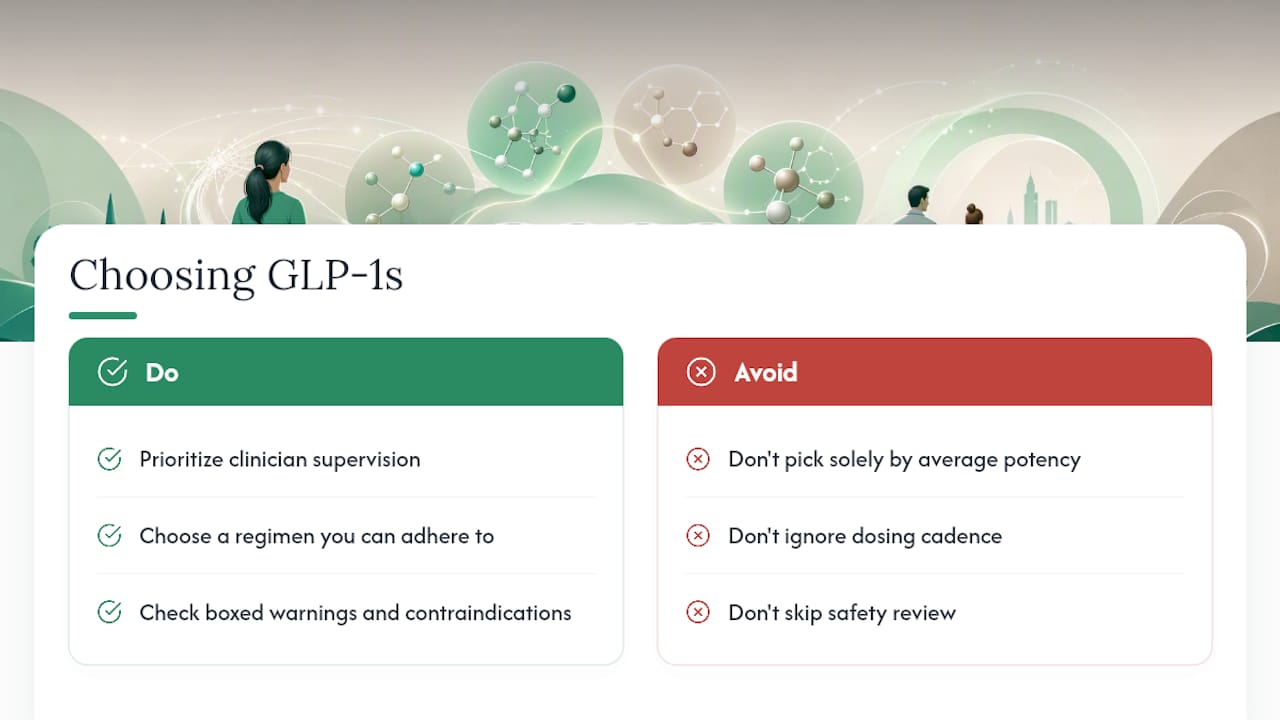
What gets underrated is dosing cadence. A once-daily injection that gets skipped twice a month works worse in practice than a once-weekly drug with a slightly smaller average effect, simply because consistency drives results more than peak potency does. The safety conversation gets shortchanged too. Boxed warnings and contraindications aren’t fine print. They’re the first filter that should narrow your options, before efficacy comparisons even enter the picture.
The reader’s real priority should be supervision, not brand selection. A clinician who reviews your full history, adjusts your dose as side effects emerge, and catches contraindications early will do more for your outcome than picking the “stronger” molecule off a list.
— Bryan
Start Your GLP-1 Program With Legacymeds
Comparing drug names only gets you so far. What determines whether treatment actually works is the provider behind it: someone who assesses your history, prescribes the right agent and dose, and adjusts course when side effects show up. Some providers deliver that entire path online, with no membership fee and no insurance requirement standing between patients and a prescription.
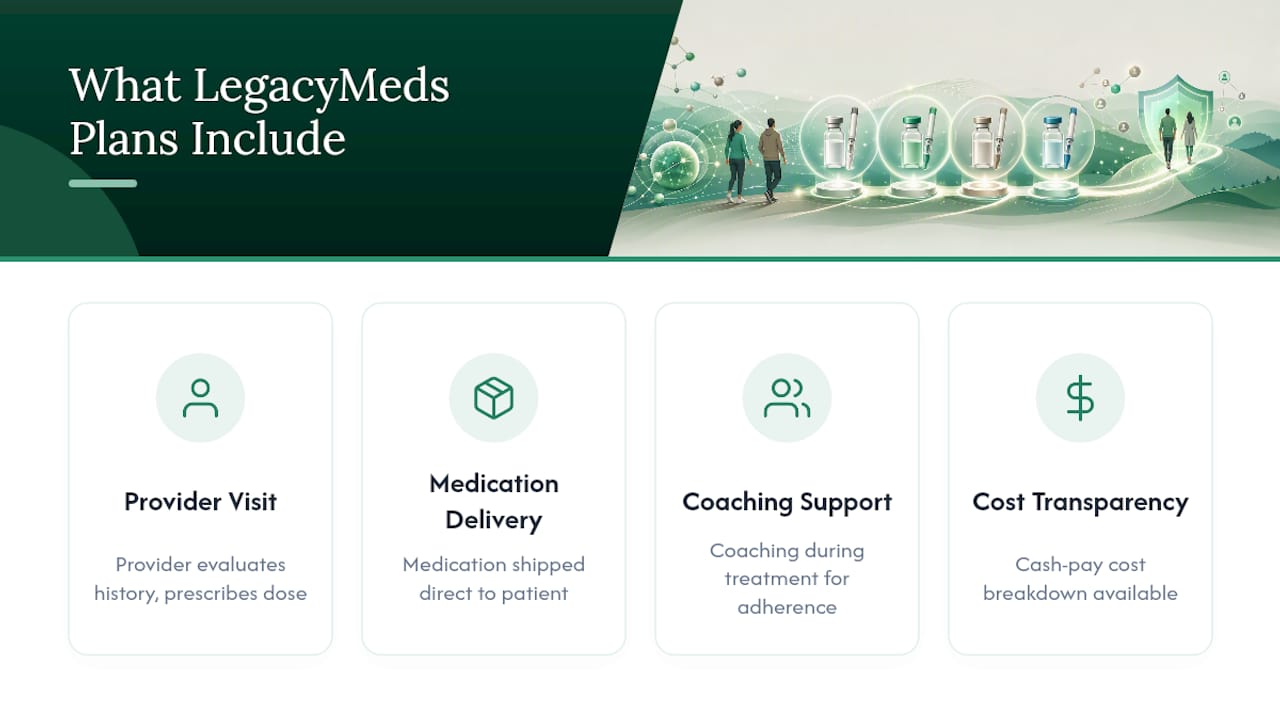
Plans may include a provider visit, medication shipped directly to patients, and coaching support for the duration of treatment. That combination matters more than which brand name ends up on your prescription, since ongoing support is what keeps people on track through dose adjustments and side effect management. If cost without insurance is your main concern, Legacymeds’ cash-pay cost breakdown walks through what to expect before you commit.
Start your online weight loss evaluation today to see which GLP-1 option fits your health history and goals.
This article is general information, not a substitute for advice from a qualified doctor. Consult a qualified healthcare professional about your own circumstances before acting on anything here.
Sources
- FDA approves first new molecular entity under national priority voucher program
- Insights into the Mechanism of Action of Tirzepatide: A Narrative Review - PMC
- Glucagon-Like Peptide-1 Receptor Agonists - StatPearls
- DAILYMED - VICTOZA (liraglutide) injection label
FAQ
Which GLP-1 drugs are FDA-approved for weight loss?
Four agents carry FDA approval specifically for chronic weight management: Wegovy, Zepbound, Saxenda, and Foundayo. Other GLP-1 drugs, like Ozempic and Mounjaro, are approved for type 2 diabetes but sometimes prescribed off-label for weight loss.
What is the alternative to Ozempic?
Alternatives include other semaglutide products like Wegovy, other GLP-1 agents like Mounjaro or Trulicity, and the dual-agonist Zepbound, which has shown greater average weight loss in trials. The right substitute depends on whether you’re treating diabetes, obesity, or both.
Who cannot take GLP-1 medications?
Anyone with a personal or family history of medullary thyroid carcinoma or MEN 2 syndrome should avoid this drug class entirely, per product labeling requirements. People with a history of pancreatitis, severe gastroparesis, or pregnancy plans also need careful evaluation before starting.
What is the cheapest GLP-1 drug without insurance?
Generic liraglutide and generic exenatide are now available following FDA approval of generic versions, typically costing less out of pocket than brand-name weekly injectables. Some providers offer cash-pay pricing without membership fees, which can lower the total cost compared to paying list price through a pharmacy alone.