
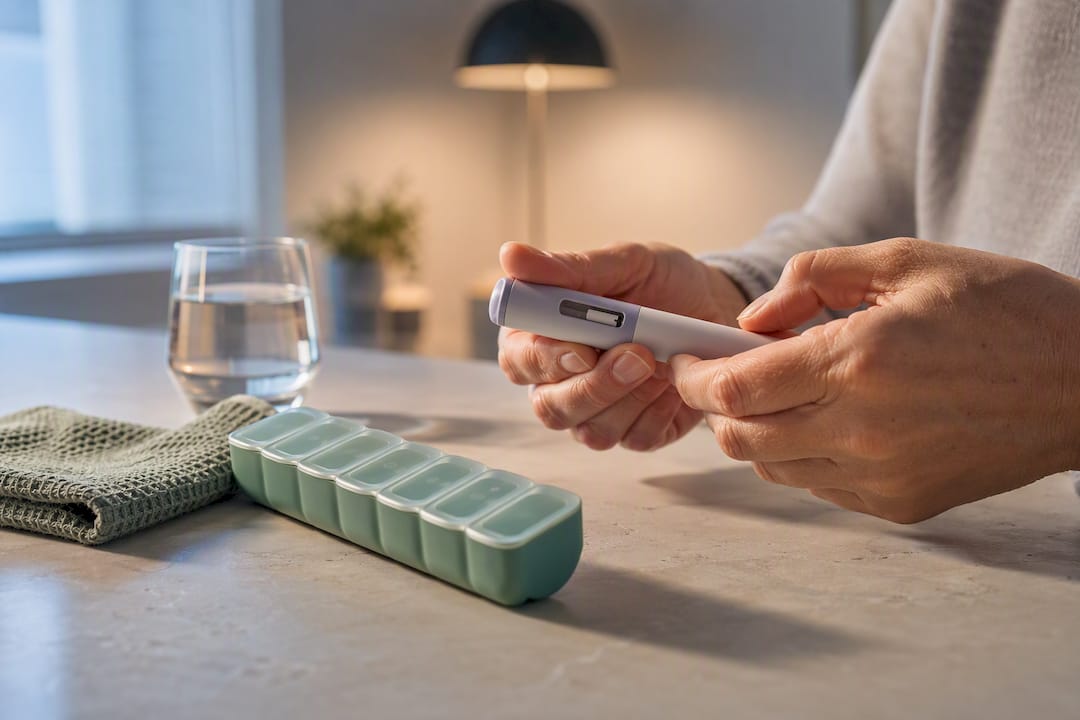
The standard tirzepatide initiation is 2.5 mg injected once weekly for 4 weeks, followed by increases of 2.5 mg every 4 weeks or longer until you reach a maintenance dose, capped at 15 mg once weekly. That starting dose isn’t meant to produce major weight loss. It’s a runway to help your body adjust before the dose climbs. If you miss a dose, take it within four days when possible, and let tolerability, not the calendar, decide how high you ultimately go.
TL;DR:
- Most people start tirzepatide at 2.5 mg weekly for four weeks to allow the body to adapt before increasing the dose gradually.
- Maintenance doses are typically 5 mg, 10 mg, or 15 mg weekly, with higher doses producing greater weight loss and blood sugar control.
- Side effects such as nausea are most common during dose increases, but slowing titration can reduce intolerance and dropout rates.
- Missed doses should be taken within four days, and doses should be spaced at least 72 hours apart if schedule changes are needed.
- The optimal dose is the highest tolerated dose that can be maintained weekly without significant side effects, not necessarily the maximum approved dose.
Table of Contents
- What Is the Standard Tirzepatide Dosing Schedule?
- A Simple Titration Chart With Two Real-World Examples
- How Do You Inject Tirzepatide Correctly?
- What Happens If You Miss a Tirzepatide Dose?
- Managing Nausea and Other Side Effects During Titration
- Does Tirzepatide Affect Other Medications or Birth Control?
- When Should You Expect Follow-Up and Reassessment?
- How Legacy Meds Approaches Individualized Titration
- A Clinician-Minded Take on Finding Your Right Dose
- Get Supervised Titration Support From Legacy Meds
- Where This Information Comes From
- Sources
- FAQ
What Is the Standard Tirzepatide Dosing Schedule?
Every tirzepatide plan starts the same way: 2.5 mg once weekly for the first 4 weeks. This introductory dose isn’t a therapeutic one. It exists to let your digestive system adapt before the medication starts working at a level that actually drives appetite reduction and blood sugar control, according to StatPearls’ clinical overview.
After 4 weeks, the dose increases by 2.5 mg, and it keeps increasing at intervals of at least 4 weeks, never faster, until you land on a dose you can tolerate long term. The ceiling is 15 mg once weekly. Nobody goes higher than that on-label.
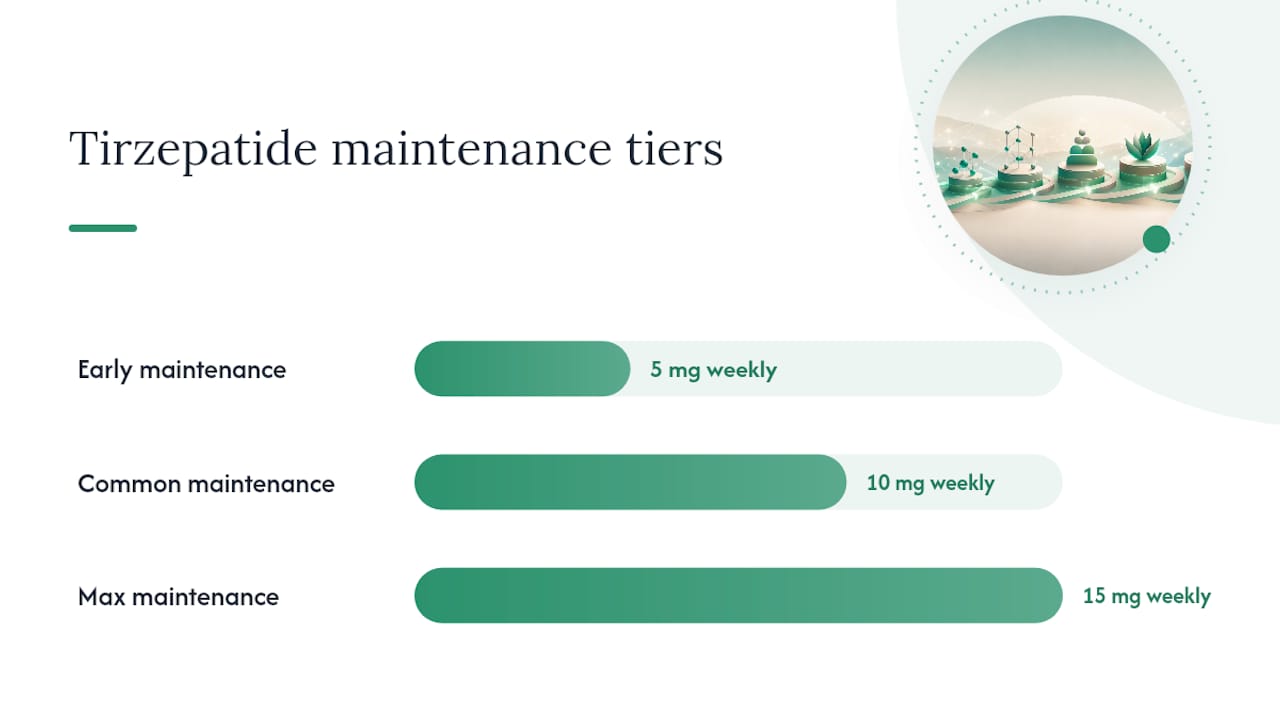
Maintenance doses fall into three tiers, per the prescribing information:
- 5 mg weekly — an early maintenance option, sometimes sufficient for people with modest goals or lower tolerance for GI side effects.
- 10 mg weekly — a common middle ground that balances stronger appetite suppression with manageable side effects.
- 15 mg weekly — the maximum dose, generally used when someone tolerates the climb well and wants the strongest effect on weight or blood sugar.
Weight-loss outcomes scale with dose. The SURMOUNT trial data shows reductions ranging from roughly 16.5% to 22.4% of body weight over 72 weeks, depending on which maintenance dose participants landed on, and about 92.5% of trial participants tolerated the 15 mg dose without needing to step back down.
A few scheduling rules matter as much as the numbers:
| Rule | Detail |
|---|---|
| Time of day | Any time, with or without food |
| Weekly consistency | Same day each week works best |
| Changing your day | Allowed, but keep at least 72 hours between doses |
| Missed dose window | Take within 4 days (96 hours); otherwise skip and resume your normal schedule |
A Simple Titration Chart With Two Real-World Examples
Here’s the schedule mapped out week by week, assuming no delays for side effects:
Two people rarely follow the identical path, though. Here’s how it plays out in practice:
- Conservative path to 10 mg: Someone with a sensitive stomach might stay on 5 mg for 8 weeks instead of 4, check in with their provider at each plateau, and settle at 10 mg for the long haul rather than pushing further.
- Full titration to 15 mg: Someone tolerating each increase well might follow the standard 4-week intervals straight through, hit 15 mg around week 21, and stay there as their long-term maintenance dose.
Clinicians commonly pause or extend a step when nausea or diarrhea shows up. The StatPearls overview notes that rapid titration raises the risk of GI intolerance and dropout, so slowing down is a legitimate, expected part of the process, not a failure of the plan.
How Do You Inject Tirzepatide Correctly?
Tirzepatide is injected subcutaneously, meaning just under the skin, in the abdomen, thigh, or upper arm. Rotate sites weekly to avoid irritation building up in one spot.
The basic injection flow: wash your hands, let a refrigerated pen sit at room temperature for about 15 to 30 minutes if your provider recommends it, pinch a fold of skin, insert the needle at a 90 degree angle, and press the plunger fully before withdrawing.
A few handling basics matter more than people expect:
- Store unused pens in the refrigerator; once in use, some formulations can stay at room temperature for a limited window, so check your specific product’s instructions.
- Never share a pen or needle with anyone else, even if you change the needle.
- Dispose of needles in a sharps container, not the household trash.
- Pick a consistent day and rough time each week. “Once weekly” means every 7 days, not “whenever you remember.”
Pro Tip: Injecting at night, right before bed, is a trick many patients use to sleep through the first wave of mild nausea that can follow a dose increase.
What Happens If You Miss a Tirzepatide Dose?
Miss your usual day? The rule is straightforward, and it comes straight from the product labeling: take the missed dose as soon as you remember, as long as it’s within 4 days (96 hours) of when it was due.
- Within 4 days: Inject the missed dose, then resume your normal weekly schedule from your original day.
- More than 4 days late: Skip that dose entirely and wait for your next scheduled day. Do not double up.
- Changing your regular day: You can shift your weekly schedule, but keep at least 72 hours between the last injection and the next one.
- Accidentally took an extra dose: Contact your provider. Repeated missed doses or accidental doubling both warrant a call, since either can throw off tolerability or effectiveness.
Managing Nausea and Other Side Effects During Titration
Gastrointestinal side effects are the most common issue with tirzepatide, and they tend to cluster around dose increases rather than staying constant. The FDA prescribing label lists nausea, diarrhea, vomiting, and constipation as the most frequently reported reactions.
A few adjustments make a real difference during the first week or two after any dose change:
- Eat smaller, more frequent meals instead of three large ones.
- Cut back on greasy or heavy foods right around dose increase week.
- Stay ahead of hydration, especially if diarrhea shows up.
- Ask your provider about an antiemetic if nausea is disrupting daily life.
- Talk to your provider about extending time at your current dose rather than pushing forward on schedule.
Pro Tip: If nausea hits hard after an increase, ask your provider about staying at that dose for 6 to 8 weeks instead of the standard 4. Nobody fails titration by going slower.
Severe or worsening abdominal pain, signs of dehydration, or symptoms suggesting pancreatitis are different from routine nausea. Those warrant stopping the medication and contacting your provider immediately, not waiting out the discomfort.
Does Tirzepatide Affect Other Medications or Birth Control?
Tirzepatide slows gastric emptying, which can change how quickly your body absorbs other oral medications, including oral contraceptives. MedlinePlus recommends telling your provider about every medication and supplement you take before starting.
- Use a non-oral contraceptive method, or add a barrier method, for 4 weeks after starting tirzepatide and for 4 weeks after each dose increase.
- If you take insulin or a sulfonylurea for blood sugar, your provider needs to reassess those doses, since combining them with tirzepatide raises hypoglycemia risk.
- Read more about the specifics in this breakdown of tirzepatide and birth control interactions.
When Should You Expect Follow-Up and Reassessment?
Most titration plans include a check-in roughly every 4 weeks, aligned with each dose change, according to clinical practice guidance. Those visits typically track weight, side effects, and, for people managing diabetes, HbA1c and kidney function.
- The 5% benchmark: If you haven’t lost at least 5% of your starting body weight after adequate titration and roughly 6 months of treatment, your provider will likely reassess the plan, according to obesity management guidance.
- De-escalation: Persistent GI side effects might prompt a step back to a previous dose rather than stopping altogether.
- Switching or stopping: Limited response despite adequate titration, or a serious adverse reaction, are the main reasons a provider would discontinue therapy entirely.
How Legacy Meds Approaches Individualized Titration
Legacy Meds builds titration around tolerability, not a rigid calendar. If a patient reports rough side effects at week 5, the plan adjusts. If someone handles each increase easily, escalation continues on schedule toward a stronger maintenance dose.
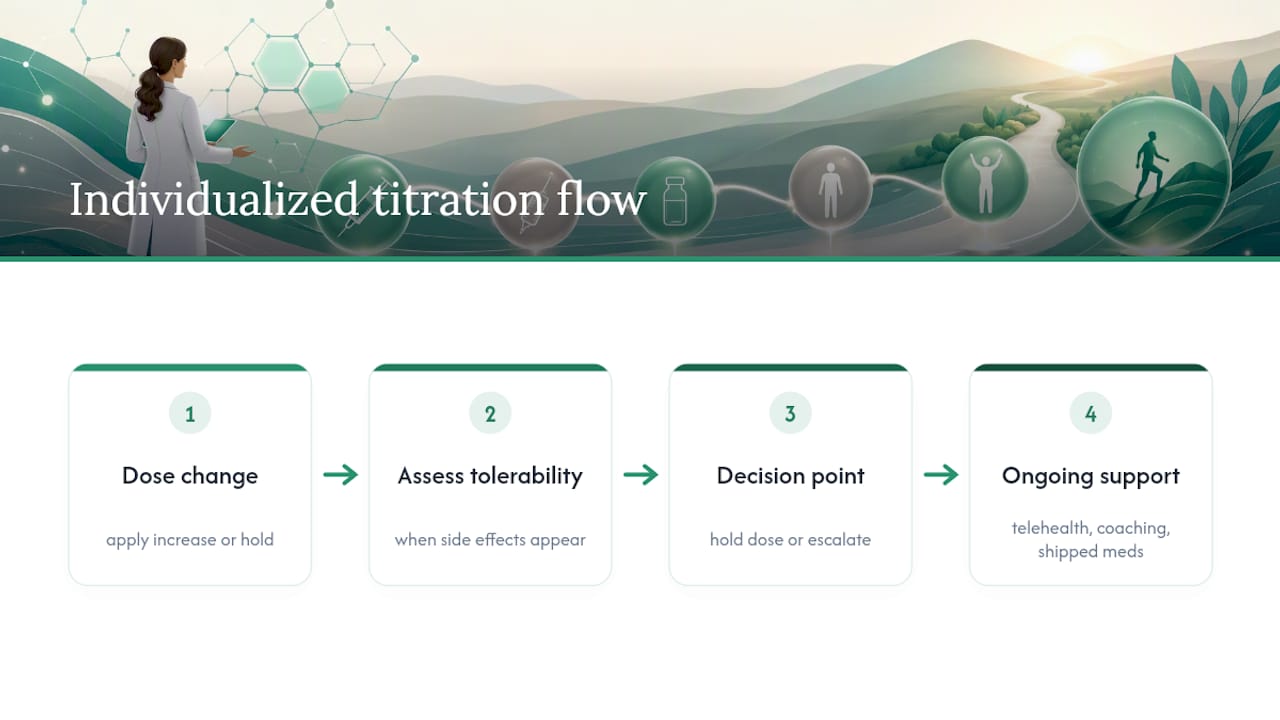
Patients get telehealth check-ins timed around dose changes, unlimited coaching for questions that come up between visits, and medication shipped directly rather than picked up. That structure matters because titration isn’t a one-time decision. It’s a running conversation between patient and provider over months.
Come to appointments ready to report specifics: which days side effects hit, how severe, and whether they’re improving or worsening. That detail is what actually shapes whether your provider holds your dose steady or moves you forward.
A Clinician-Minded Take on Finding Your Right Dose
The best tirzepatide dose isn’t the highest one on the label. It’s the highest dose a person can tolerate consistently, week after week, without white-knuckling through side effects or quietly skipping injections. That distinction gets lost in a lot of dosing conversations, which tend to frame 15 mg as the goal everyone should chase.
Use the schedule as a shared plan with your provider, not a fixed contract. Report side effects honestly, and don’t be afraid to ask for more time at a dose before moving up.
— Bryan
Get Supervised Titration Support From Legacy Meds
Following a titration schedule on paper is one thing. Having a provider adjust it in real time based on how your body actually responds is another. Some online weight loss programs pair GLP-1 prescriptions, including tirzepatide, with provider visits and coaching, so dose changes happen with medical oversight rather than guesswork.

An initial visit covers your health history, current medications, and goals, then your provider sets your starting dose and titration pace. From there, ongoing check-ins let your care team slow the schedule, hold a dose steady, or move forward, whatever your side effects and progress call for. Shipping may be included, and some programs do not charge membership fees on top of prescription costs. Start your GLP-1 weight loss program online, or review the weight loss prescription options to see what an initial visit involves before you book one.
Where This Information Comes From
The dosing rules in this guide come from the prescribing information on DailyMed, MedlinePlus patient guidance, the SURMOUNT trial results, and a StatPearls clinical overview. For a comparable stepwise approach on a related GLP-1 medication, see this Zepbound dosage schedule guide, and for general titration pacing across GLP-1 therapies, Unity by MD’s semaglutide dosing overview covers similar principles.
This article is general information, not a substitute for advice from a qualified doctor. Consult a qualified healthcare professional about your own circumstances before acting on anything here.
Sources
- SURMOUNT trial summary (peer-reviewed clinical trial report)
- StatPearls: Tirzepatide clinical overview
- DailyMed - Prescribing information highlights and dosing schedule
- MedlinePlus: Tirzepatide patient information
FAQ
Can You Stay on 2.5 mg of Tirzepatide?
Staying on 2.5 mg long term isn’t the standard approach since it’s meant as an initiation dose rather than a therapeutic one, but a provider might keep you there longer than 4 weeks if side effects require a slower start.
Is 7.5 mg of Tirzepatide a Lot?
No, 7.5 mg sits in the middle of the titration schedule, reached around week 9 to 12 for most patients, and it’s a normal step on the way to a maintenance dose rather than a high or unusual amount.
Should You Take Tirzepatide Every 5 or 7 Days?
Tirzepatide is dosed once every 7 days, not every 5. You can shift your weekly injection day if needed, but keep at least 72 hours between doses when you do.
Is 20 mg of Tirzepatide Too Much?
Yes, 20 mg exceeds the approved maximum dose of 15 mg once weekly, and dosing above that ceiling isn’t supported by the prescribing information or clinical trial data.