
TL;DR
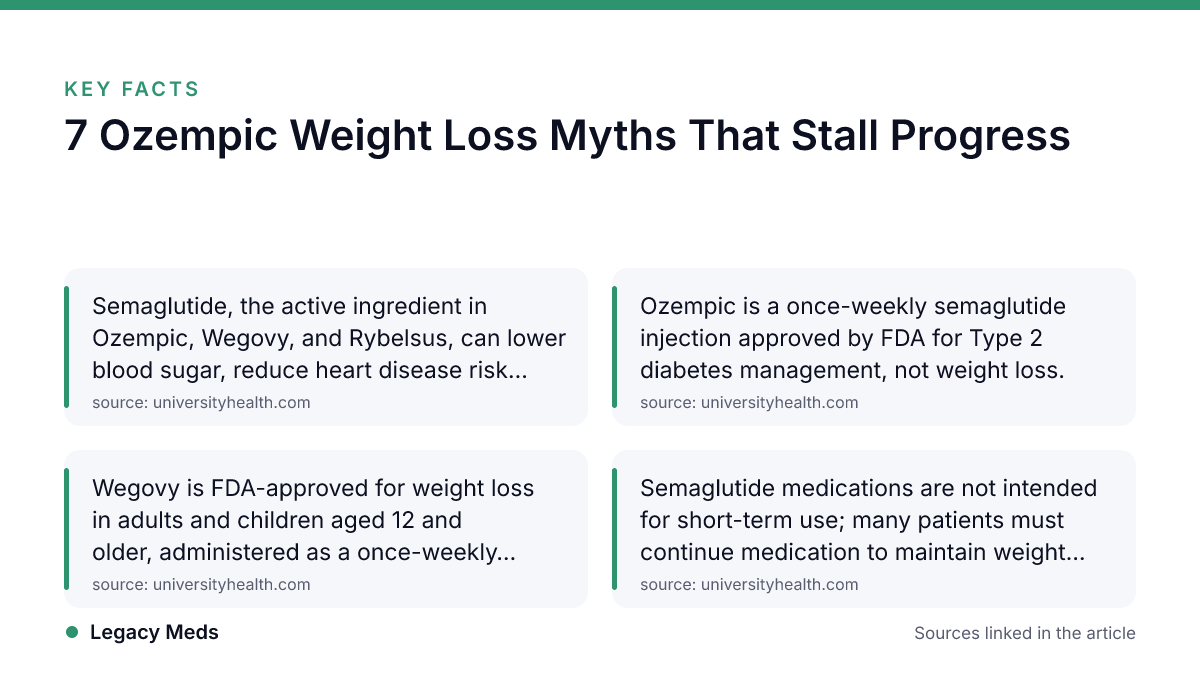
- Ozempic is FDA-approved for Type 2 diabetes, not weight loss. Wegovy is the semaglutide the FDA cleared specifically for weight loss in adults and children 12 and older (University Health).
- There is no FDA-approved generic semaglutide. Anything sold as "generic Ozempic" outside a licensed provider's prescription isn't authentic medication (University Health).
- Weight loss on semaglutide builds over months, not weeks. In our experience, the first several weeks are about tolerating the dose, and the bigger changes stack up once titration is complete.
- Stopping the medication often means regaining the weight. Semaglutide drugs aren't designed for short-term use, and many patients need to stay on them to hold their results (University Health).
- Cost is the biggest barrier for most patients. Legacy Meds' GLP-1 injections start at $159/month and dissolvable tablets start at $249/month, with HSA/FSA dollars accepted on either.
Ozempic weight loss happens because semaglutide slows digestion and quiets appetite signals in the brain, so most patients eat less without fighting themselves at every meal. Here's the catch almost nobody searching "ozempic weight loss" knows: Ozempic is approved by the FDA for Type 2 diabetes management, not weight loss. The semaglutide injection actually approved for shedding pounds is Wegovy (University Health).
That distinction matters more than most articles admit. It's one of several myths quietly costing patients time, money, and progress.
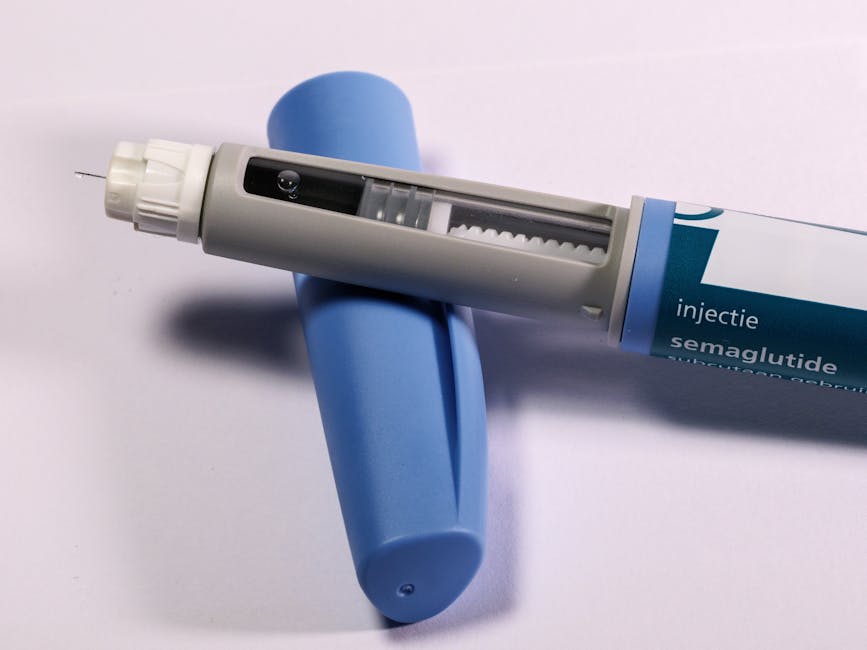
Table of Contents
- What does Ozempic actually do for weight loss?
- What are the biggest myths about Ozempic weight loss?
- What are the potential side effects of taking semaglutide?
- How much does Ozempic cost with and without insurance?
- How is Rybelsus different from Ozempic and Wegovy?
- How do you take Ozempic for weight loss, and what happens in month one?
- Is a GLP-1 tablet or injection better for you?
- What's the right starting point if you've tried everything else?
- Frequently asked questions
What does Ozempic actually do for weight loss?
Semaglutide, the compound inside Ozempic, Wegovy, and Rybelsus, mimics a gut hormone called GLP-1 that signals fullness to your brain and slows how fast your stomach empties. You feel satisfied on less food. Your blood sugar steadies. Your appetite drops without white-knuckling every meal.
University Health notes semaglutide can lower blood sugar, reduce heart disease risk, and reduce appetite to support weight loss (University Health). That's why it anchors most modern GLP-1 care. If you want the clinical detail on how the drug interacts with receptors in the pancreas and brain, University of Florida's physiology program lays it out well.
What it doesn't do is work overnight. If you're hunting for a 6-week plan or wondering what Ozempic weight loss results look like at the one-month mark, the honest answer is modest and highly individual. Our breakdown of what month one really looks like on GLP-1 explains why the first few weeks are mostly your body adjusting, not the scale moving.
What are the biggest myths about Ozempic weight loss?
We've worked with patients who tried every diet, app, and program before landing on GLP-1 care. These are the misconceptions that actually derail people.
- Myth: Ozempic and Wegovy are interchangeable. Same active ingredient, but only Wegovy carries FDA approval for weight loss. Ozempic's approval is for diabetes management (University Health). Your provider may still prescribe semaglutide off-label. Just know which drug you're taking and why.
- Myth: You'll lose weight fast with zero effort. The medication reduces appetite. It still works best paired with real changes to how you eat, which is where our guide on building a calorie deficit that sticks comes in.
- Myth: Once you hit your goal weight, you can stop cold turkey. Semaglutide isn't a short-term fix. Many patients have to stay on some form of maintenance dose to hold their results (University Health).
- Myth: A higher dose always means faster results. Dosing is titrated gradually to minimize side effects like nausea. Jumping ahead is how people end up quitting the medication entirely in week three.
- Myth: Generic Ozempic exists and it's cheaper. There is no FDA-approved generic version of semaglutide. Anything sold as one outside a licensed prescription isn't verified medication (University Health).
- Myth: Insurance always covers it. Semaglutide medications are expensive and plenty of plans exclude weight loss drugs entirely, which is exactly why so many patients move to self-pay telehealth (University Health).
- Myth: Diet and exercise alone would've worked if you'd tried harder. If that were true, nobody searching "ozempic weight loss" would have gotten this far. Our comparison of Weight Watchers vs. GLP-1 breaks down where lifestyle-only programs plateau and where medication changes the equation.
Pro tip: Bring your full history to your intake visit. Not "I've tried a lot of things," but the specifics: which diets, how long you stayed on them, how much you lost, how fast it came back, and any past weight loss medication. A provider who knows you regained 30 pounds in four months after a 1,200-calorie plan is going to make different titration decisions than one starting from a blank chart.
What are the potential side effects of taking semaglutide?
The most common complaints are gastrointestinal: nausea, diarrhea, constipation, and occasional vomiting, usually in the first couple of weeks after a dose increase. They tend to ease as your body adapts. That's the whole reason providers start low and step up slowly instead of jumping to a therapeutic dose.
Less common but more serious concerns include gallbladder problems and pancreatitis, plus kidney strain tied to dehydration when GI symptoms get bad enough that you stop drinking normally. Hydration during a dose increase isn't a nice-to-have. It's part of the protocol.
Anyone with a personal or family history of medullary thyroid cancer or multiple endocrine neoplasia syndrome type 2 generally shouldn't take semaglutide. If a provider never asks you that question before prescribing, that's a red flag about the provider.
Pro tip: For the first two weeks on any new dose, eat slower and stop at roughly three-quarters full. Most of the nausea we hear about traces back to patients eating the same portion at the same speed as always, on a stomach that's now emptying far more slowly. Heavy, greasy meals are the usual trigger. A grilled chicken bowl goes down fine when a plate of fettuccine alfredo won't.
How much does Ozempic cost with and without insurance?
Semaglutide medications are expensive, and University Health says plainly that not all insurance plans cover them (University Health). That leaves a lot of patients paying self-pay rates no matter which brand they're prescribed. Telehealth GLP-1 providers exist to close that gap.
Here's how Legacy Meds' pricing breaks down:
| Option | Starting price | What's included |
|---|---|---|
| GLP-1 injections | $159/month | Provider visits, care coaching, free shipping, no membership fee |
| Dissolvable GLP-1 tablets | $249/month | Provider visits, care coaching, free shipping |
| Wegovy® pill / Wegovy® injection / Zepbound® injection | $99/month membership plus medication cost | Provider visits, care coaching, free shipping |
Show the math. Compare the starter injection plan against the dissolvable tablet plan over a 3-month stretch. Injections: $159 × 3 = $477. Tablets: $249 × 3 = $747. That's $270 more per quarter for the tablet, or $1,080 a year, which is real money when nothing is being reimbursed.
An HSA or FSA improves the math, because you're paying with pre-tax dollars. Here's an illustrative scenario, not a quoted statistic. Say you're in the 22% federal bracket and you fund the $249/month tablet plan from your HSA. You avoid 22% of $249, or $54.78, so your effective cost lands near $194.22 a month. Run it on your own bracket: monthly price × your marginal rate = your savings. Our full breakdown on using HSA or FSA funds for weight loss injections covers eligibility rules in more depth. For a wider look at the category, what weight loss injections really cost in 2026 and our Wegovy cost page are both worth reading before you commit.
Pro tip: If cost is the only thing holding you back, ask specifically about starter injection plans with no membership fee attached. A $99 monthly membership adds $1,188 a year on top of the drug itself, which changes the comparison entirely. Legacy Meds' $159 tier has no membership attached. Our guide to getting weight loss medication online without insurance walks through what to expect if you've never gone the no-insurance telehealth route.
How is Rybelsus different from Ozempic and Wegovy?
Rybelsus is the oral, once-daily tablet form of semaglutide. Ozempic and Wegovy are once-weekly injections. Same active ingredient, different delivery and schedule. WeightWatchers' comparison of Wegovy and Ozempic points to the same core distinction we do: approved use and dose, with Wegovy approved and dosed for weight management while Ozempic's indication is Type 2 diabetes (WeightWatchers).
Rybelsus adds a third wrinkle. Because it's a pill, absorption is finicky, which is why the manufacturer's dosing instructions insist on taking it first thing in the morning on an empty stomach with a small sip of water, then waiting at least 30 minutes before eating, drinking, or taking other oral medications (Ozempic.com).
Read that again if you're a coffee-first person. No coffee for half an hour after the tablet. No thyroid medication at the same time either. Patients who can't rearrange that morning window usually do better on the weekly injection, and it's better to admit that upfront than to spend three months absorbing a fraction of your dose.
How do you take Ozempic for weight loss, and what happens in month one?
Semaglutide dosing starts low and increases gradually, a titration schedule built to reduce nausea while your body adapts. For injections, that generally means holding a starter dose for about four weeks before any increase. The pill form follows a similar step-up over the first months (Ozempic.com). If you miss a dose, don't double up. Skipped-dose instructions differ by form, so ask your care team instead of guessing.
Month one is about tolerance, not transformation. Appetite changes usually show up within the first couple of weeks. Visible weight loss tends to lag behind that by several more. We cover it week by week in our GLP-1 month one guide, the piece we point nervous new patients to when they're convinced the medication "isn't working" on day 19.
A few practical habits that make month one smoother:
- Pick an injection day you're always home. Sunday evening works for most people. Weekly dosing only stays weekly if the day is boring and predictable.
- Rotate sites. Abdomen, thigh, back of the arm, and not the same spot two weeks running.
- Protect your protein. When appetite drops hard, patients often cut protein first by accident. Aim to eat the protein portion of the meal before anything else.
- Plan for travel. Keep the pen in its original packaging with a small insulated pouch, and pack it in your carry-on, never checked luggage.
Pro tip: Track more than the scale in month one. Waistband fit, energy, and how full you feel at meals are better early signals than a daily weigh-in, since water weight swings can mask real fat loss for weeks.
Is a GLP-1 tablet or injection better for you?
Neither is objectively better. It comes down to your routine, your comfort with needles, and whether you can hold the pill's empty-stomach window every single morning. Injections are once a week and forgiving when your schedule falls apart. Tablets skip the needle but demand consistency.
| Factor | GLP-1 injection | Dissolvable GLP-1 tablet |
|---|---|---|
| Frequency | Once weekly | Once daily |
| Starting price at Legacy Meds | $159/month | $249/month |
| Timing requirements | Any day, any time | Morning, empty stomach, wait 30+ minutes to eat |
| Travel friction | Needs cool storage, carry-on only | Easy to pack, harder to time across zones |
| Best for | Chaotic schedules, needle-comfortable patients | Daily-habit people, needle-averse patients |
Frequent travelers almost always land on the weekly injection, because one dose a week survives a bad week. Shift workers and anyone whose mornings are genuinely identical often do better on the tablet.
If your weight struggles are tangled up with other issues like poor sleep, hormone shifts, or stress-driven skin flare-ups, get those evaluated alongside your GLP-1 plan instead of treating them as separate problems. We've referred patients to a local telehealth company for parallel care when something outside our scope, like sleep apnea screening or hormone testing, needed its own provider.
What's the right starting point if you've tried everything else?
Start with an honest inventory. Not "I've tried everything," but a written list: Weight Watchers for seven months, keto for six weeks, intermittent fasting that collapsed during the holidays, a gym membership you used eleven times. Write down what you lost on each and how long it stayed off. That list is the single most useful document you can bring to a first visit, and most people have never actually written it down.
The pattern we see over and over: the diet worked while hunger was tolerable, then hunger won. Our Weight Watchers vs. GLP-1 comparison lays out why lifestyle-only programs plateau around the same point for most people, and why medication changes the trajectory when appetite, not willpower, was always the real obstacle.
From there, the fastest way to find out if you qualify is a short online quiz. No office visit, no insurance requirement. If you're weighing providers in the mid-Atlantic, our comparison of weight loss medicine providers in Dover is a useful gut-check first.
Frequently asked questions
What's the maximum dose of Ozempic for weight loss?
Dosing is individualized and titrated up by your provider based on tolerance and response, so there's no universal "max dose for weight loss." The manufacturer's guidance emphasizes a step-up schedule rather than a fixed ceiling (Ozempic.com). Your highest effective dose gets set by how your body responds, not by matching a friend's dose or a number from a forum thread.
Can I stop taking semaglutide once I reach my goal weight?
Most patients need to continue some form of the medication to maintain results. These drugs aren't designed as a short-term intervention, and weight regain after stopping is common (University Health). Talk to your care team about a maintenance dose or a tapering plan instead of quitting outright.
Does a 6-week plan actually produce noticeable Ozempic weight loss results?
Six weeks usually falls inside the titration window, so what you see at that point tends to be early signals: smaller portions feeling satisfying, less food noise, fewer evening cravings. The more significant changes typically stack up later, once you're holding a stable dose.
Ready to see where you stand? Take Legacy Meds' free online quiz to find out if you qualify for clinician-guided GLP-1 care, with provider visits, coaching, and shipping included from day one.